 On 20 October 1947, a new Czechoslovak training aircraft took to the air for the first time. Designed by Karel Tomáš at the Zlín aircraft factory in Otrokovice, the Zlín Z-26 marked the beginning of a long and successful line of training and aerobatic aeroplanes known as Trenér (English: trainer).
The aircraft was developed shortly after the Second World War in response to a requirement from the Czechoslovak Ministry of Defence for a new two-seat trainer capable of performing aerobatics. Two designs were proposed – the Praga E-122 and the Zlín Z-26. The latter, a mixed-construction monoplane powered by a Walter Minor 4-III inline engine, performed its maiden flight on 20 October 1947 and was subsequently selected for series production.
The first production aircraft were delivered to the Czechoslovak Ministry of Defence in 1949, receiving the civil designation Zlín Z-26 Trenér and military designation C-5. More than 160 examples were built, with aircraft also exported to Poland and Romania.
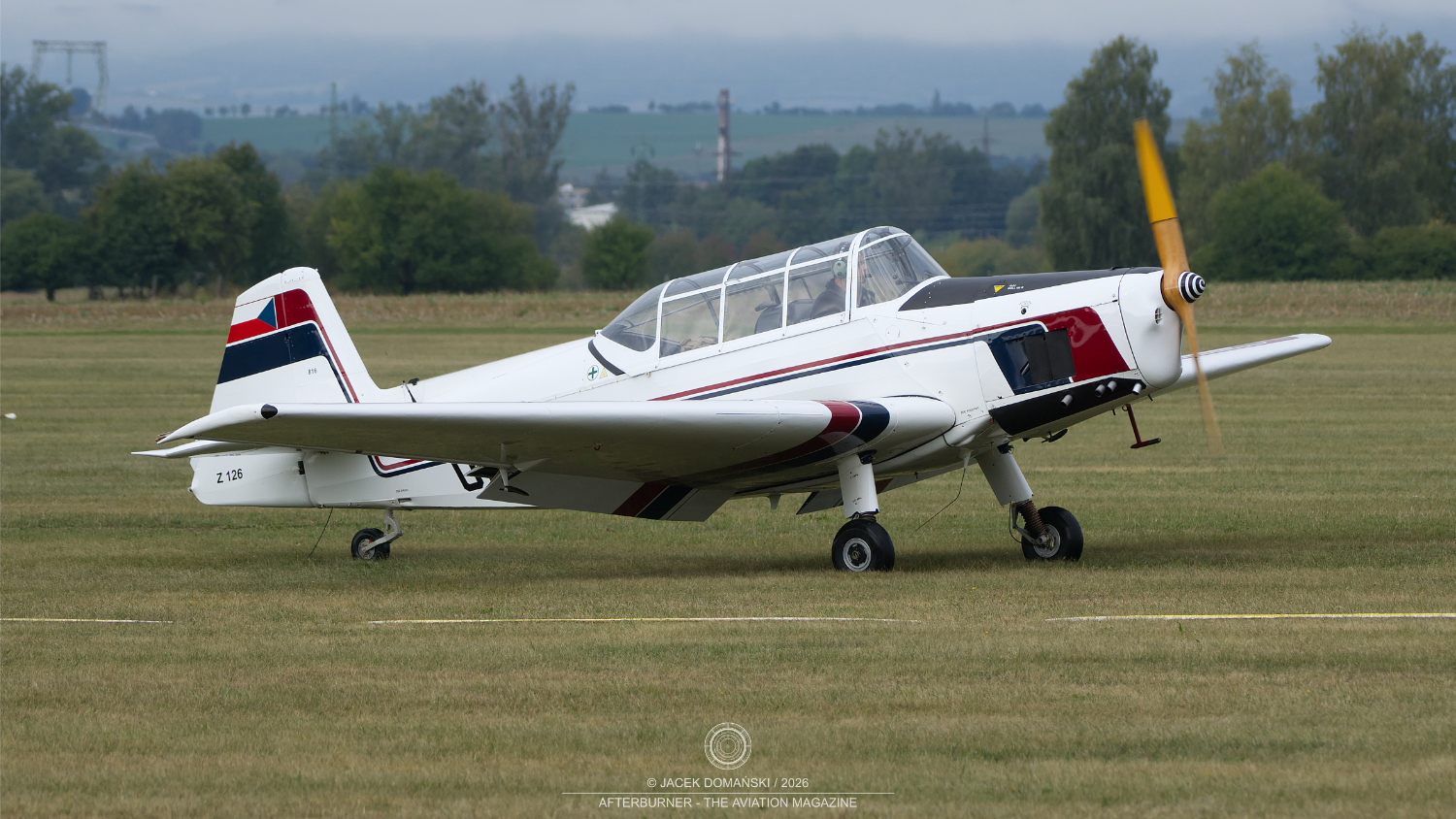
The Z-26 was soon followed by a number of improved and specialised variants. The Z-126 Trenér 2 introduced all-metal wings and tail, while the Z-226 family had a more powerful engine and became particularly successful in both training and aerobatic roles. The later Z-326 Trenér Master and Z-526 families brought further major changes, including retractable landing gear, redesigned wings and new engines. The final production variant, the Z-726 Universal, appeared in 1973.
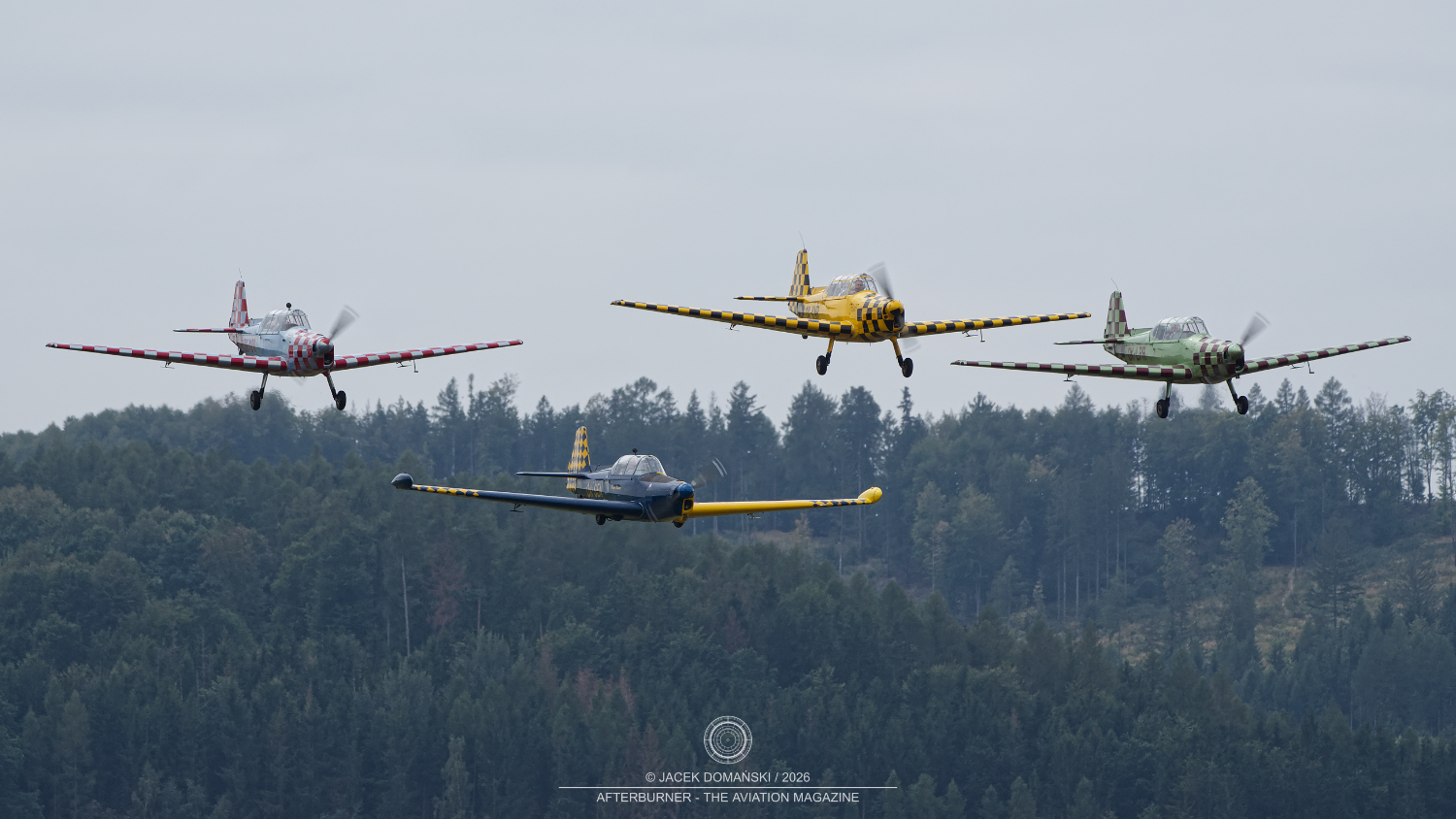
By the time production ended in 1974, almost 1,500 aircraft based on the original Z-26 design had been built in numerous variants and modifications. Trenér´aeroplanes were exported to countries across Europe and beyond, and became particularly successful in aerobatic competitions. Czechoslovak and foreign pilots flying Zlín aircraft won numerous national and international titles, including several victories at the FAI World Aerobatic Championships.
Although the Trenér family gradually disappeared from top-level international aerobatics from the 1980s onwards, many examples are still in use today. They can still be found in aeroclubs, particularly in the Czech Republic, where they continue to perform such duties as glider towing, sightseeing flights and pilot training.
To learn more about the history, development and numerous variants of the legendary Zlín Trenér family, read our full article dedicated to this iconic Czechoslovak aircraft, Made in Czechoslovakia – Zlín Trenér family.