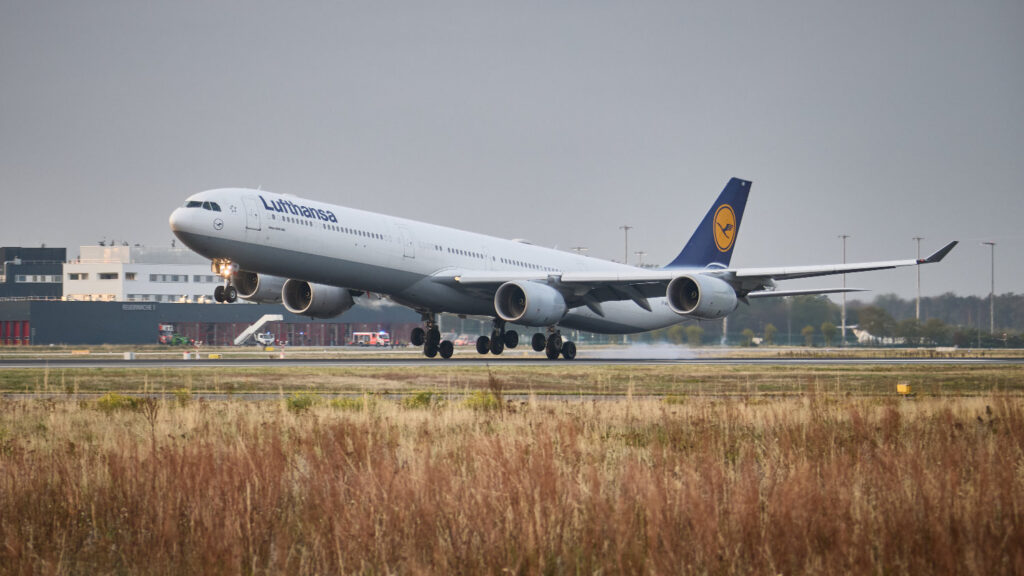
 On 19 October 2026, Lufthansa operated its final scheduled Airbus A340-600 passenger flight, LH419, from Washington Dulles International Airport to Frankfurt Airport. The landing marked the end of nearly 23 years of the type’s service with the German flag carrier.
The final service was operated by A340-600 D-AIHW, which landed in Frankfurt after eight hours and five minutes in the air, carrying 267 passengers and 15 crew members. For many on board, it was more than an ordinary journey. Some had booked their tickets specifically for the occasion, while aviation enthusiasts gathered at Frankfurt Airport to welcome the retiring airliner. Passengers applauded after landing, and each received a specially produced commemorative booklet.
The flight was commanded by Francesco Sciortino, a member of the Lufthansa Airlines Board and Frankfurt Hub Manager, who had himself flown the A340-600 for many years. “We will never forget this last flight with the A340-600,” he said.
Lufthansa’s history with the Airbus A340-600 began in December 1997, when the German carrier placed an initial order for 10 examples. Two further orders, each comprising 7 aeroplanes, followed in December 2004 and December 2006, bringing the eventual fleet to 24.
The first A340-600, registered D-AIHB, was delivered to Lufthansa on 25 November 2003. Entering scheduled passenger service the following month, it initially operated on the Frankfurt–Buenos Aires–Santiago de Chile route. In 2004, the airliner was named ‘Bremerhaven’, in keeping with Lufthansa’s tradition of naming its aircraft after German cities and federal states.
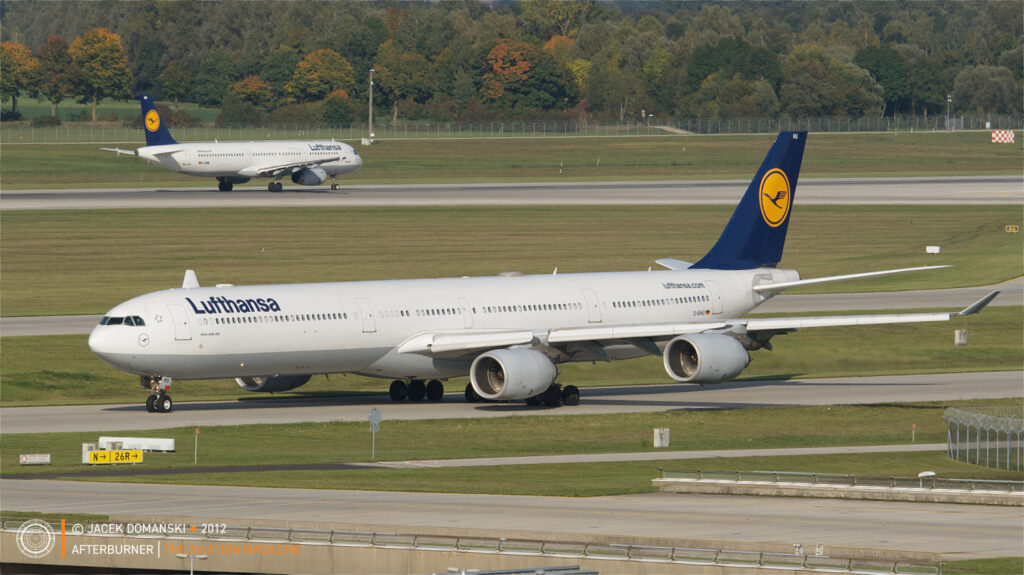
The A340-600 had made its commercial debut with launch customer Virgin Atlantic in August 2002. Measuring 75.3 metres in length, it was the world’s longest passenger aeroplane at the time, being longer than both the Boeing 747-400 and the later Airbus A380. It retained that distinction until the introduction of the 76.3-metre Boeing 747-8 Intercontinental in 2012. Powered by four Rolls-Royce Trent 500 engines, the A340-600 also featured an additional four-wheel centre landing gear to distribute its weight more evenly and reduce loading on runway surfaces.
Developed as a stretched, higher-capacity version of the A340-300, the A340-600 initially offered Lufthansa 345 seats in a two-class configuration, comprising 66 in Business Class and 279 in Economy Class. With a range of approximately 12,400 kilometres, it was well suited to long-haul routes requiring greater passenger capacity. The type was introduced primarily to replace the airline’s ageing Boeing 747-200s and Airbus A340-200s.
One lesser-known chapter in the A340-600’s history with Lufthansa was its contribution to atmospheric research. D-AIHE, named ‘Leverkusen’, participated in the CARIBIC programme, carrying a specially equipped measurement container on selected scheduled flights. Between December 2004 and March 2020, the aeroplane completed around 500 research missions, collecting data on trace gases, aerosols and other atmospheric parameters at cruising altitude.
Another notable occasion came in June 2014, when Lufthansa used A340-600 D-AIHQ to transport the German national football team to the FIFA World Cup in Brazil. Operating as flight LH2014, the jet departed Frankfurt for Salvador da Bahia on 7 June, wearing special ‘Fanhansa’ titles in place of the carrier’s usual branding. Following Germany’s victory, the team returned home aboard a Boeing 747-8, later remembered as the ‘Siegerflieger’ (Champions´ aircraft).
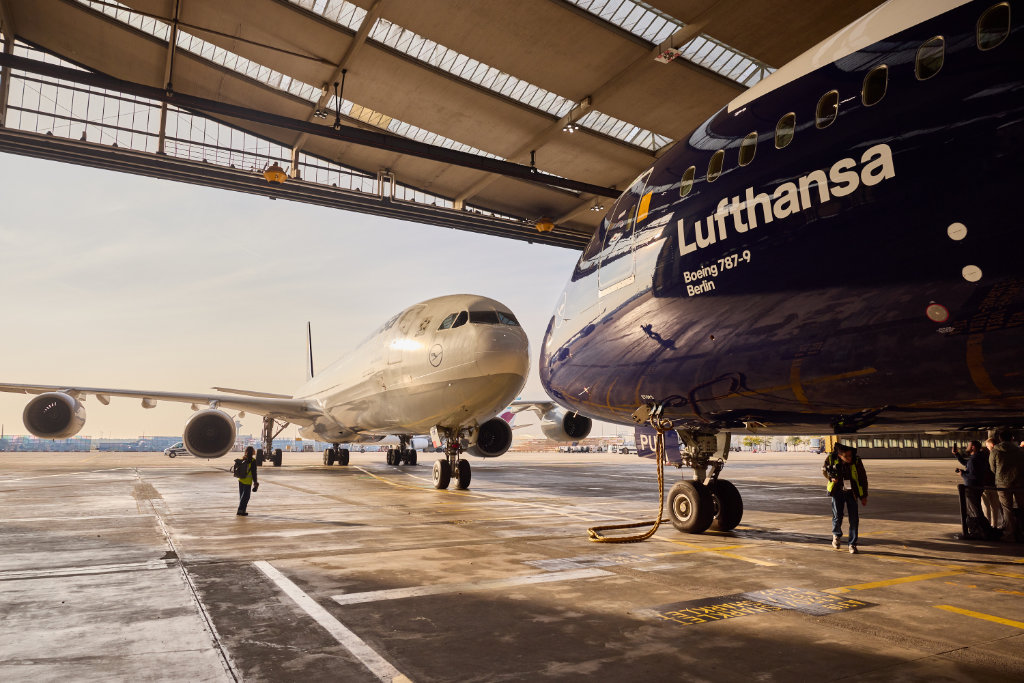
Across nearly 23 years of operation, Lufthansa’s 24 A340-600s carried more than 40 million passengers worldwide. According to the airline, the type completed its entire career with the German carrier without a single accident.
The outbreak of the COVID-19 pandemic in 2020 brought Lufthansa’s A340-600 operations to an abrupt halt. Faced with collapsing demand for air travel and anticipating a prolonged recovery, the carrier began reducing its fleet, prioritising the withdrawal of older, less economical types. On 7 April 2020, it announced the permanent retirement of seven A340-600s. Nine days later, Lufthansa confirmed that the remaining 17 would be placed in temporary storage at Teruel Airport in Spain, with no scheduled services planned for at least 12 to 18 months.
By September 2020, the outlook for air travel had deteriorated further, prompting a revision of the restructuring plans. On 21 September, Lufthansa announced that the ten A340-600s previously earmarked for a possible return would instead be placed in long-term storage and removed from operational planning. Reactivation would only be considered if demand recovered unexpectedly quickly.
The decision was reversed less than a year later. On 25 June 2021, Lufthansa announced plans to reactivate five A340-600s in response to renewed demand for premium travel. Featuring four-class cabins with eight First Class seats, the jets were scheduled to return to service from Munich in summer 2022, primarily on routes to North America and Asia.
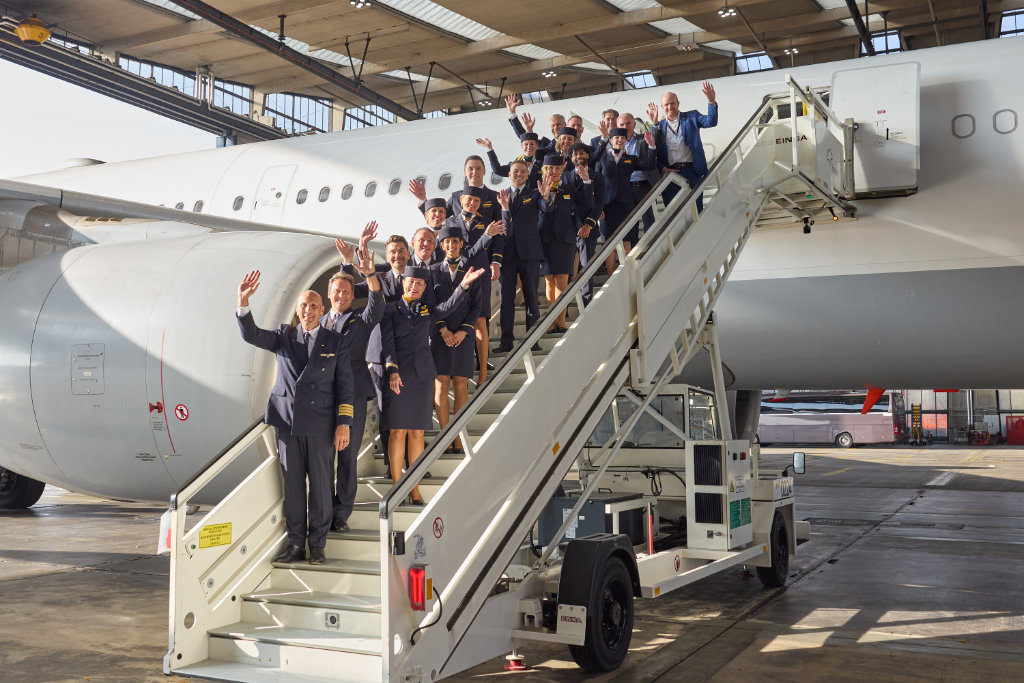
Scheduled passenger operations resumed on 11 March 2022, when D-AIHT returned to Lufthansa’s Frankfurt–Washington Dulles route, nearly two years after the fleet had been grounded. Reactivated A340-600s subsequently began flying from Munich to destinations including Boston, New York and Los Angeles. In total, Lufthansa eventually brought ten examples back into service, with five initially based at Munich and the remaining five at Frankfurt.
In 2024, the Munich-based A340-600s began moving to Frankfurt as reactivated Airbus A380s and newer A350-900s increasingly took over their routes. However, delays in deliveries of new long-haul jets meant the older four-engined airliners were still needed elsewhere in Lufthansa’s network. The last two Munich-based examples, D-AIHF and D-AIHP, were transferred to Frankfurt on 1 October 2024, bringing all ten reactivated A340-600s together at the airline’s main hub. However, at the time, Lufthansa was already considering retiring the type by summer 2025.
But those plans were subsequently extended, allowing a small number of A340-600s to remain in operation into 2026. In April, Lufthansa confirmed that its final four examples, registered D-AIHW, D-AIHX, D-AIHY and D-AIHZ, would be withdrawn by October as part of an accelerated fleet modernisation programme. Until their retirement, the aeroplanes continued serving long-haul routes from Frankfurt, primarily to New York JFK and Washington Dulles. The D-AIHW was the last to complete a scheduled passenger service, bringing the type’s commercial career with Lufthansa to an end on 19 October 2026.
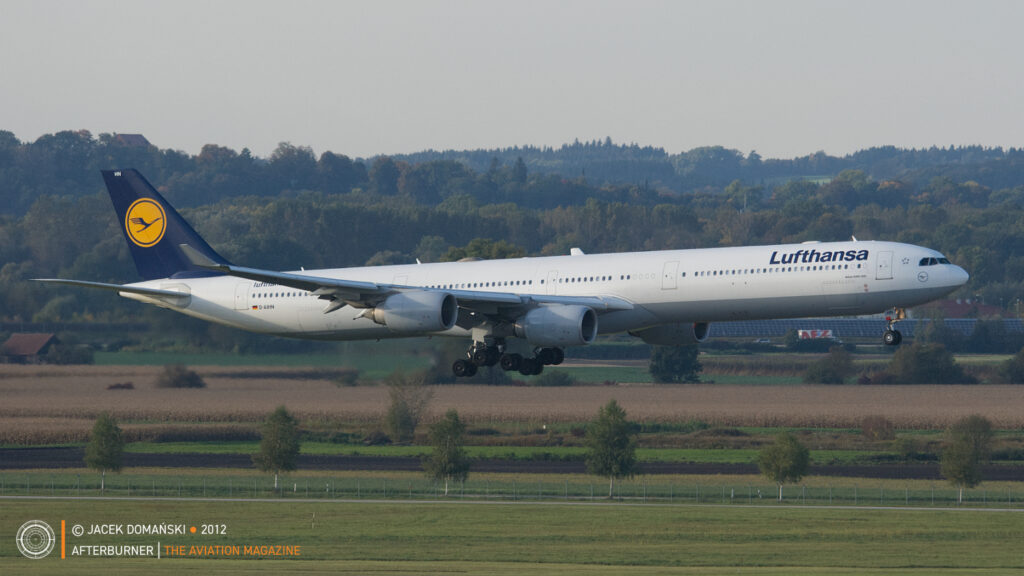
The withdrawal of the A340-600s forms part of the largest fleet renewal programme in Lufthansa’s history. The airline also intends to retire its remaining Airbus A340-300s, A330-200s and Boeing 747-400s by 2027, replacing older types with modern twin-engine airliners, including the Airbus A350-1000, Boeing 787-9 and Boeing 777-9. At the time of the A340-600’s retirement, Lufthansa already operated 18 Boeing 787-9s, with another 11 expected to join the fleet by 2027.
Fuel efficiency is a major factor behind the transition. According to the manufacturers, the new-generation airliners consume around 30 per cent less aviation fuel than the older types they replace, with correspondingly lower emissions and reduced noise levels. Operating fewer different types also helps Lufthansa simplify maintenance, crew training and operational planning, reducing costs and complexity across its long-haul network. By 2028, the airline expects approximately 70 per cent of its long-haul fleet to consist of next-generation aeroplanes.
Although Lufthansa will continue operating four-engine aircraft such as the Airbus A380 and Boeing 747-8 in the years ahead, the retirement of the A340-600 marks the end of a distinctive chapter in its long-haul history and reflects the wider shift towards more efficient twin-engine airliners.
Cover photo: Lufthansa Airbus A340-600 D-AIHW lands at Frankfurt Airport on 19 October 2026, completing flight LH419 from Washington Dulles and bringing nearly 23 years of scheduled passenger operations with the type to an end. Photo © Lufthansa
Lufthansa press releases and materials, as well as information published by AeroTime and aeroTELEGRAPH, were used in preparing this article.