 On 11 November 1956, the prototype of the Convair B-58 Hustler performed its maiden flight. It was the world’s first operational supersonic strategic bomber and a product of early Cold War ambitions.
The origins of the aircraft lay in the 1949 Generalised Bomber Study (GEBO II), issued by the US Air Research and Development Command shortly after the Bell X-1 broke the sound barrier. This study called for a long-range bomber capable of sustained supersonic flight, beyond the reach of enemy fighters. At the time, many within the military and industry considered such expectations to be overly ambitious, given the limited research into supersonic aerodynamics and the associated technological challenges.
By 1952, competing proposals from the Boeing and Convair companies had been shortlisted. Ultimately, Convair’s proposal prevailed after redesigning its concept around the transonic area rule and the new General Electric J79 turbojet engines. The development contract was awarded on 10 December 1952, and the aircraft was designated the B-58.
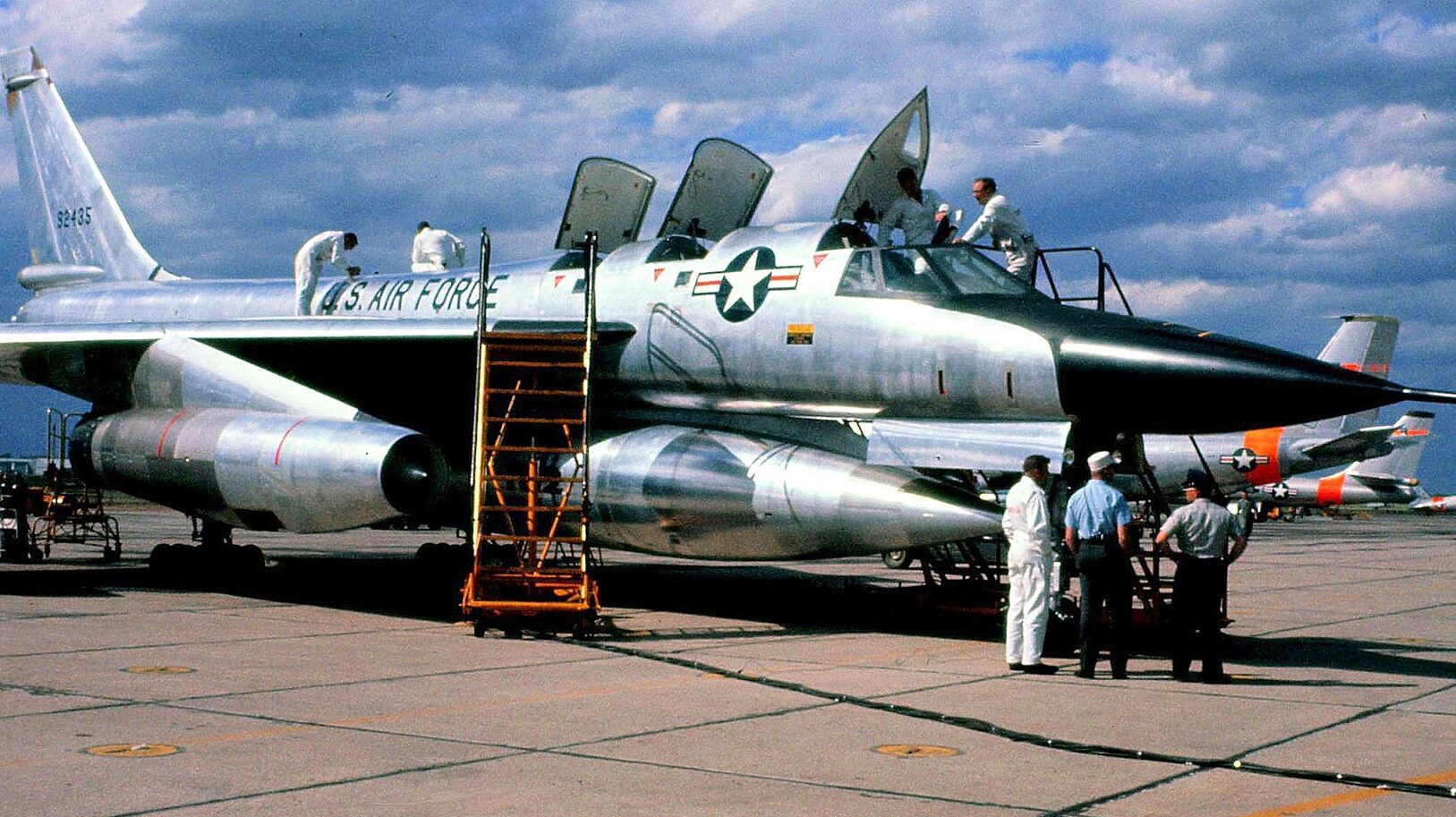
The final design featured a slender delta wing with a 60-degree sweep at the leading edge and four J79 engines. Capable of reaching Mach 2, the Hustler was optimised for high-altitude penetration. Unusually, it lacked an internal bomb bay; nuclear weapons and fuel were carried in streamlined external pods beneath the fuselage and wings. Extensive pressurisation of critical compartments mitigated aerodynamic heating during sustained supersonic flight.
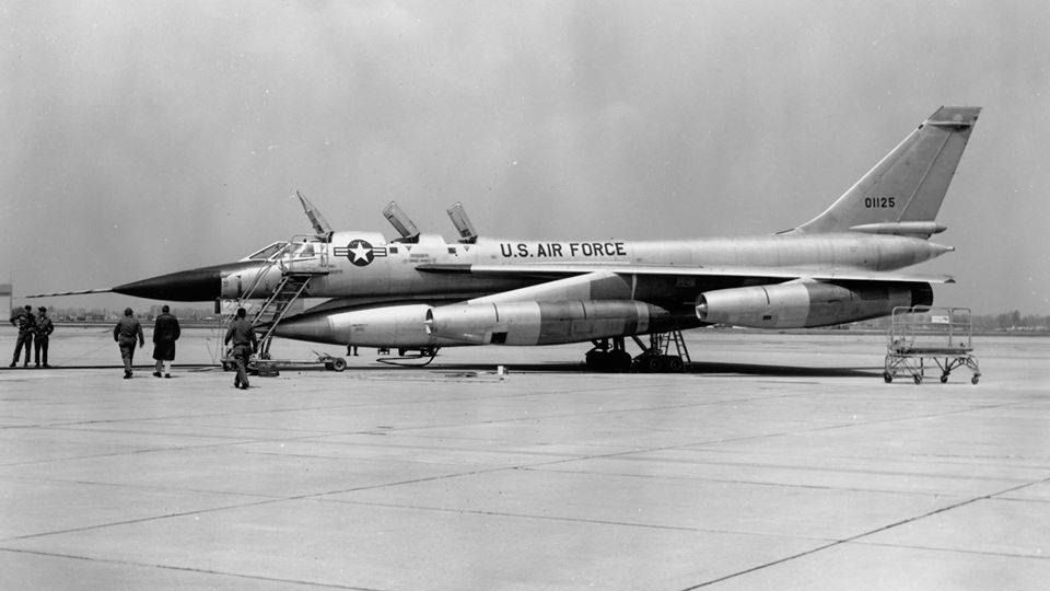
The first production aircraft was delivered to the USAF in March 1960, and initial operational capability was declared later that year. Designed primarily as a high-speed, high-altitude nuclear strike platform, the B-58 set several world speed and altitude records, thereby demonstrating the aerodynamic validity of its concept.
However, its operational relevance was short-lived. The rapid development of Soviet surface-to-air missile systems, particularly the S-75 (SA-2 Guideline), fundamentally altered the strategic equation. High-altitude invulnerability became illusory, as demonstrated by downing of a U-2 reconnaissance aircraft over the Soviet Union in 1960. Consequently, the B-58 was reassigned to low-level penetration missions, a role for which the Hustler had not been optimised. Its effectiveness was further reduced by increased fuel consumption, heavy reliance on aerial refuelling and high operating costs
In October 1969, the USAF announced the retirement of the B-58 fleet. Most aircraft were withdrawn from service by early 1970 and subsequently scrapped, bringing an end to a bold but transitional chapter in supersonic bomber development.
More information about the B-58 Hustler can also be found in our previous articles: 11 November 1956 – maiden flight of Convair B-58 Hustler and Operation Greased Lightning – the record-breaking supersonic flight.
Cover photo: Convair B-58A Hustler 59-2435, January 1968 (unknown author, USAF photo via Wikipedia, Public Domain)