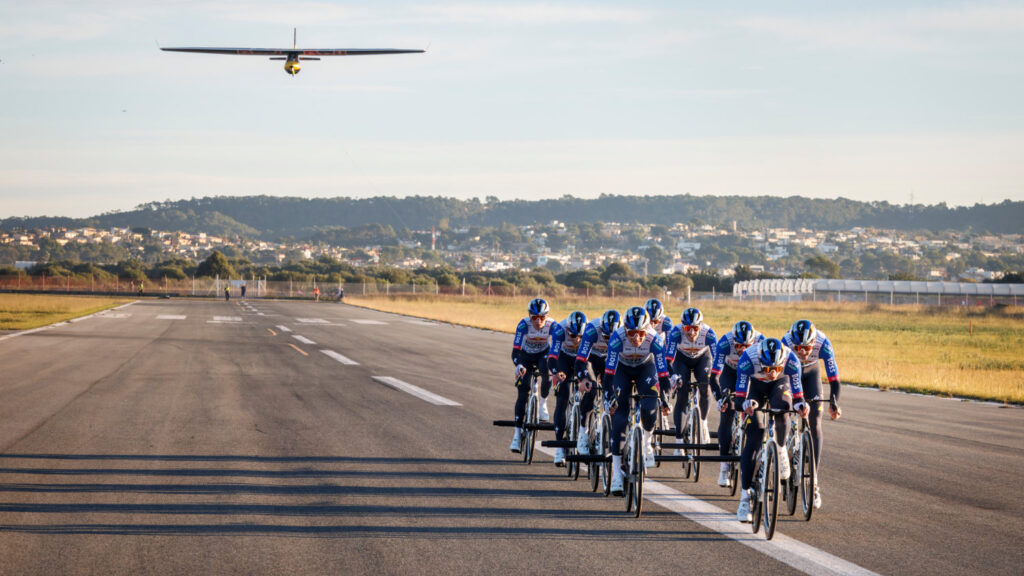
 On 4 December 2025, at Son Bonet Airfield in Mallorca, Spain, a group of cyclists from Red Bull-BORA-hansgrohe achieved the world’s first human powered aircraft take-off.
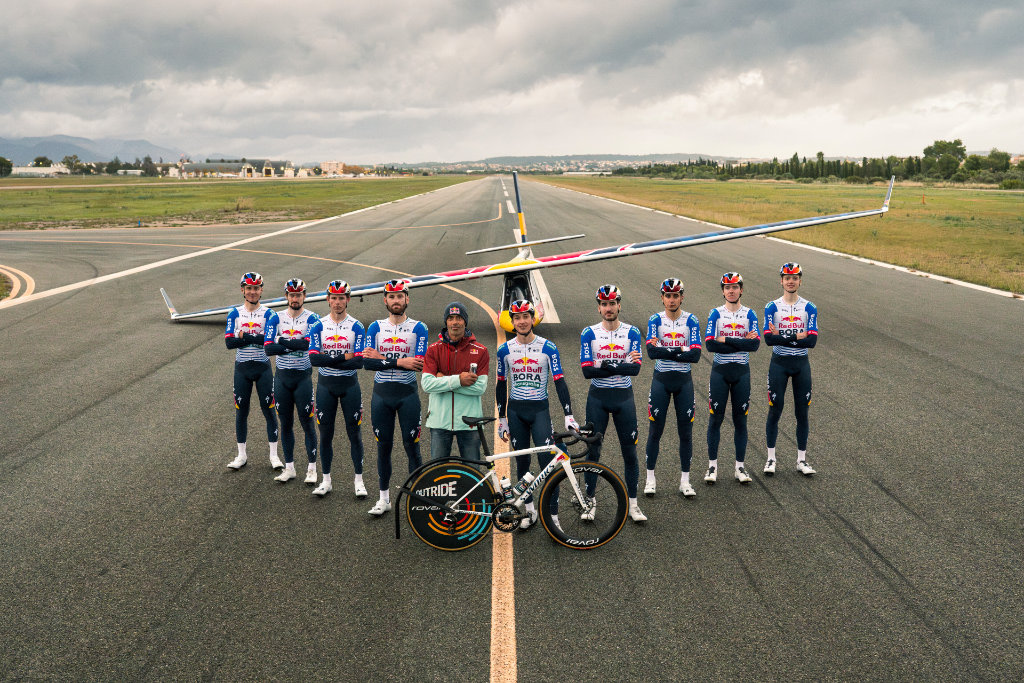
Known as Peloton Takeoff, the project involved a nine-rider peloton comprised of Florian Lipowitz, Callum Thornley, Davide Donati, Nico Denz, Jordi Meeus, Tim van Dijke, Laurence Pithie, Gijs Schoonvelde and Adrien Boichis. The cyclists accelerated to 54 kph along a 1,500-metre-long runway and the force they generated together was enough to lift pilot Andy Hediger and his aircraft into the air, with no engine or mechanical tow required.
The achievement was preceded by months of intensive engineering work. The project was led by Dan Bigham, Head of Engineering at Red Bull-BORA-hansgrohe and Olympic silver medallist. It relied on translating elite cycling power into aerodynamic lift. To do so, the project used data modelling, system design, and precise execution.
It is well known that for take-off, an aeroplane needs to reach a speed sufficient to generate lift, which is typically achieved by using engines or towing vehicles. Human power, however, introduces additional constraints, including biological limitations, variability of force, and sensitivity to wind conditions. The Peloton Takeoff project combined the fields of cycling physiology, aerodynamics and aeronautical engineering to investigate whether a group of cyclists could operate together as a single, controlled propulsion system.
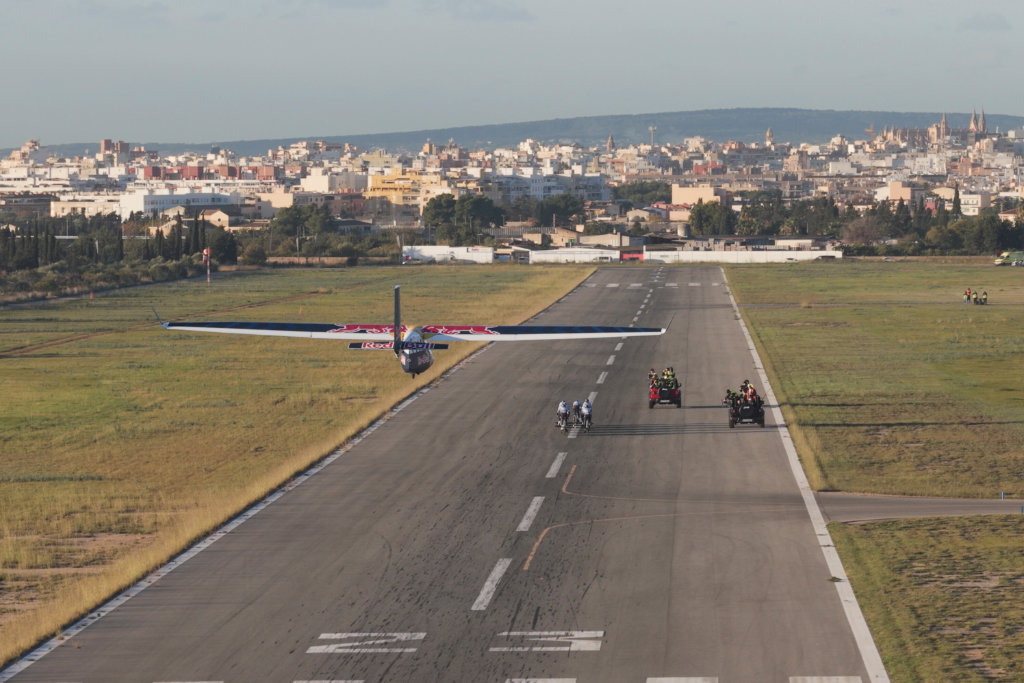
In order to determine whether human-powered take-off was feasible, several factors were analysed. First, the engineers modelled the lift-to-drag profile of the glider across a range of airspeeds and wind conditions. Next, the riders power data and aerodynamic drag coefficients were integrated into a unified performance model. In addition, a custom harness system featuring a 150-metre cord was designed to allow safe transfer of force from nine bicycles to the aircraft. Finally, bespoke computational model was created. It combined three independent systems into one: the cyclists, the aircraft, and the environment.
“We pulled together a really interesting model where we looked at how the lift and drag of the aeroplane varied with speed,” – explained Bigham, “whereas with the riders, we have both airspeed and ground speed that matter.”
That distinction was crucial. While cyclists generate power relative to their ground speed, aircraft generate lift based on their airspeed. In result their success or failure could be determined by wind conditions, even if the riders produced the same physical effort.
“That made it a tool we could use to assess the weather conditions, the wind conditions and the power requirements.” – said Bigham.
The most complex challenge during the feasibility phase was ensuring the safe and efficient transfer of human force to the aircraft.
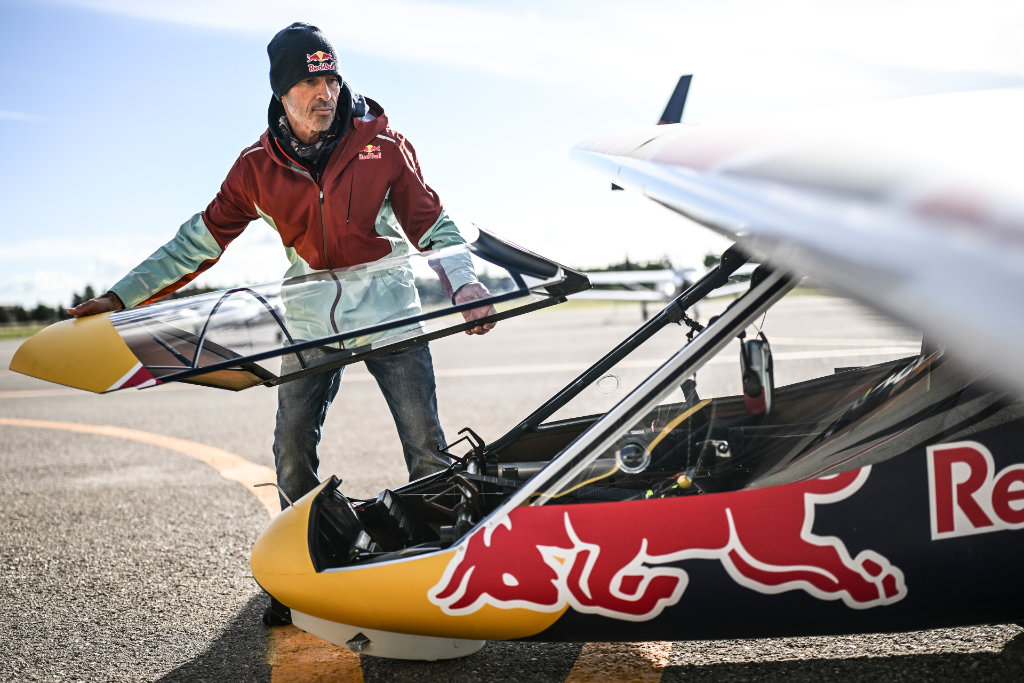
Therefore, the previously mentioned harness system was developed to help deliver sustained force efficiently, while avoiding interference with the bicycle wheels and allowing the cyclists to brake safely. It also had to maintain stable tension for the pilot and provide the riders with the confidence they needed to perform at maximum intensity. After trialling multiple prototype iterations, including early testing in Austria, the design was further refined at the Niederöblarn airfield.
“We actually learned that there are a few fairly significant flaws with that,” – Bigham said about earlier versions. “That brought us to a final concept where everyone was super happy that they could ride full gas without any worries.”
Once connected to the glider via the harness, the cyclists faced the physical challenge of accelerating together precisely to 45–50 kph, which is the minimum airspeed required by the aircraft for take-off and flight.
Based on the collected data, the engineers were able to establish clear performance thresholds. They determined that approximately 550 watts per cyclist would be sufficient for take-off, with any additional power directly translating into climb altitude. In practice, the group of nine cyclists produced an average power output of about 650 watts per rider, sustaining this effort for up to 90 seconds. This is comparable to the power typically observed in the final sprint to win a race such as the Tour de France.
However, in contrast to a traditional race sprint, in this case the cyclists had to remain seated and work in perfect synchronisation to maintain stability of the system.
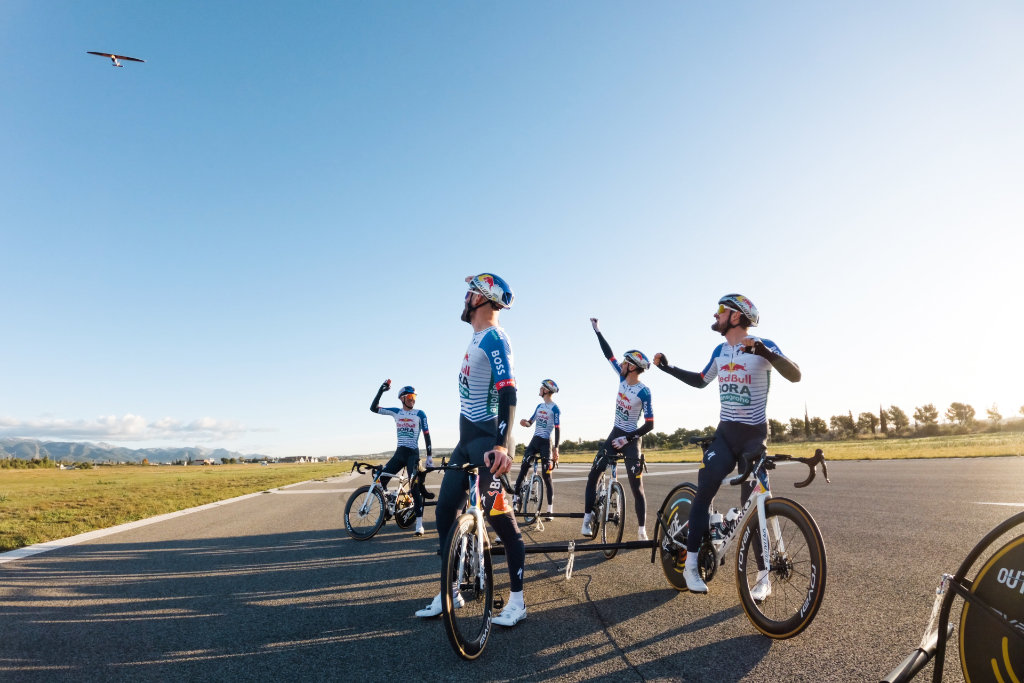
“You have to do the exact same effort as your partner in the group,” – said Bigham, “because you have to balance the forces in a seated, tucked aero position while towing a plane.”
Furthermore, the order of the riders within the peloton was also determined mathematically. Each cyclist’s position was assigned based on their aerodynamic drag coefficient and individual power profile. This created an optimised formation similar to a team time trial, except in this case the riders were towing a glider into flight, which added an extra layer of complexity to their task.
The Peloton Takeoff project shows how elite sport can function as applied engineering. Through modelling athletes as dynamic power units within a larger mechanical system, the project demonstrates how data analysis, aerodynamics, and human physiology can be combined to overcome real-world physical constraints. The outcome is a rare and remarkable illustration of engineering principles manifested through the human endeavour.
This unprecedented achievement highlighted the potential of interdisciplinary cooperation to translate human performance into tangible engineering outcomes. The event combined the disciplines of professional cycling and aviation in a manner that was rarely witnessed before.
“It’s been really helpful to dig into the physiological side of things we use to explain rider performance, and then apply that to something absolutely history-making.” – said Dan Bigham and added – “On this day, we’ve done something monumental. Projects like this are game-changing.”
Cover photo: Samo Vidic / © Red Bull Content Pool. Information from the Red Bull company press release were used.