 On 29 May 1951, Charles F. Blair Jr. flew over the North Pole in a P-51C Mustang fighter aircraft.
Born in Buffalo, New York, in 1909, Blair was one of those pilots for whom flying meant much more than just a fast way of travelling. His extensive and remarkable aviation career saw him work as a commercial pilot for United Airlines and American Export Airlines, own and operate his own airline, named Associated Air Transport, serve in the Naval Air Transport Service and the Air Transport Command, and work as a test pilot for Grumman, Lockheed and Boeing. In 1944, Blair was the pilot in command of the fastest seaplane flight across the Atlantic Ocean, completing the journey in just 14 hours and 17 minutes.
However, it was Blair´s flight over the North Pole that brought him worldwide fame.
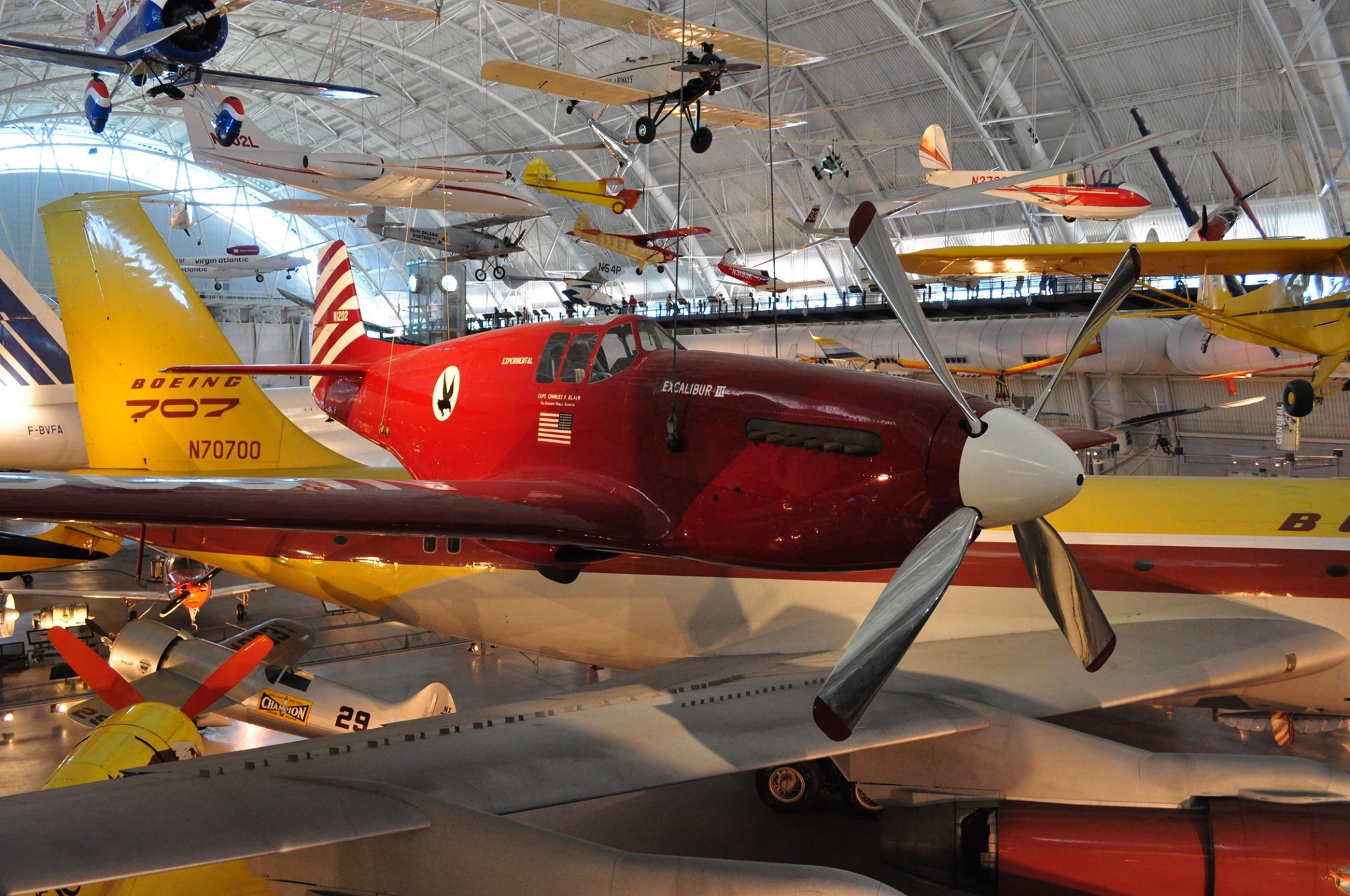
In 1950, Charles Blair Jr. bought a P-51C Mustang from Paul Mantz. The aircraft had already been modified for long-distance air racing and had achieved top placings in the Bendix Trophy races, but Blair introduced several further modifications. These included a more powerful 1,650 hp Rolls-Royce Merlin engine and his own navigational equipment. The upgraded Mustang was eventually renamed “Excalibur III”.
On 31 January 1951, Charles Blair Jr. flew his Mustang from New York to London, covering a distance of 5,597 kilometres in just 7 hours and 48 minutes and thereby setting a new record for the fastest Atlantic crossing by a piston-engined aircraft. Remarkably, this record still stands today.
Four months later, on 29 May 1951, Blair took off from Bardufoss in Norway and flew through the Arctic and over the North Pole, eventually landing in Fairbanks, Alaska. Having covered 5,246 kilometres and spent 10 hours and 27 minutes in the air, he became the first pilot in the world to complete a solo flight through the Arctic and over the North Pole.It was also the first solo polar flight in a single-engined aircraft.
Following this record-breaking achievement, Blair went on to enjoy a further 27 years in his aviation career. Tragically, he died on 2 September 1978 while flying a Grumman G-21 “Goose” flying boat. The flight was a routine passenger service between the Caribbean islands of St. Croix and St. Thomas. After one of the engines failed, Blair attempted an emergency landing, but the aircraft crashed, broke apart and overturned in the water during the manoeuvre. Charles Blair Jr. and three passengers were killed.
The “Excalibur III” is currently displayed at the Steven F. Udvar-Hazy Center of the Smithsonian National Air and Space Museum.
Cover photo: Eric Salard, Flickr, used under CC license BY-SA 2.0/4.0