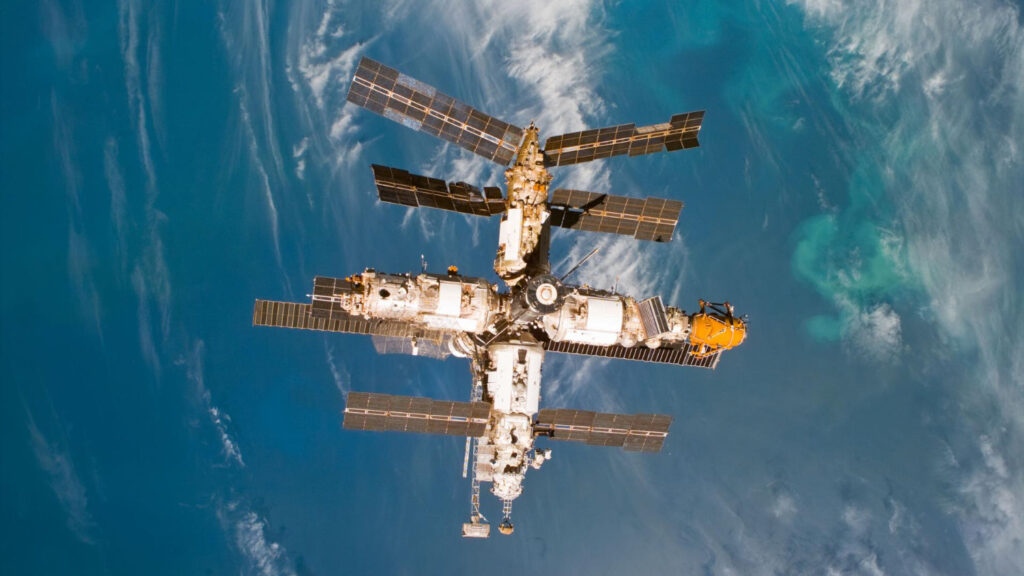
 On 19 February 1986, a new chapter in human space exploration began with the successful launch of the DOS-7 core module of the Soviet space station “Mir”, marking the beginning of the first modular orbital space station ever built. The pioneering module was placed into Earth’s orbit using a Proton-K rocket launched from the Baikonur Cosmodrome in the Kazakh Soviet Socialist Republic (now Kazakhstan).
Developed as part of the Soviet space programme and coordinated by NPO Energia (НПО “Энергия”), the space station Mir represented a significant advance over earlier monolithic stations such as those used in the Salyut programme. It incorporated multiple docking ports and was designed to allow for the sequential addition of specialised modules. Over the next decade, the base block of Mir was progressively expanded with six further modules – Kvant-1, Kvant-2, Kristall, Spektr and Priroda. Through successive expansion, each of these modules brought unique scientific, technological and observational capabilities to this orbital laboratory.
Originally developed during the technological rivalry of the Cold War, Mir quickly evolved beyond its initial role as a symbol of Soviet space supremacy. During its operational lifetime, the space station became a centre for international collaboration. Crews from various countries, including Syria, Bulgaria, France, Germany, Canada and the United States, lived and worked on the station, promoting scientific cooperation and mutual understanding that reached beyond geopolitical divisions.
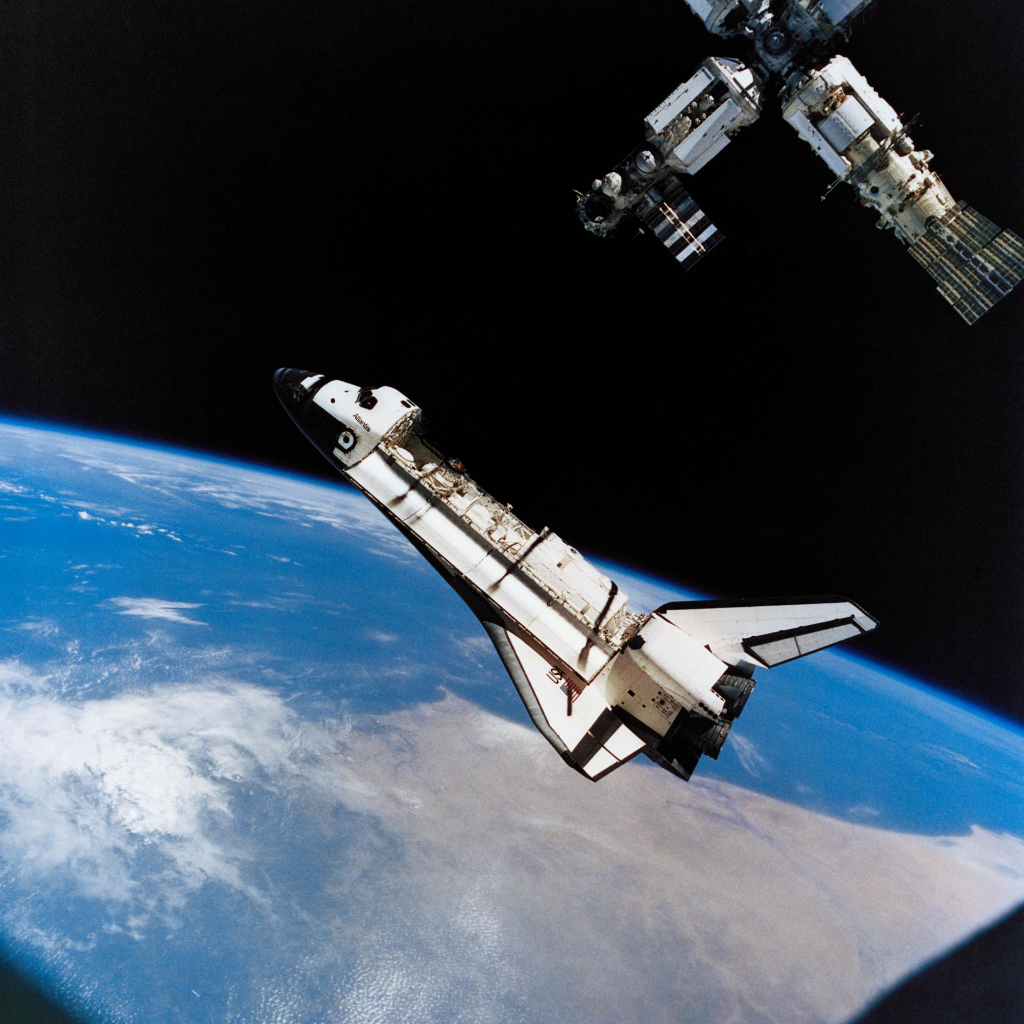
Mir also served as the foundation for pioneering bi-national initiatives such as the Shuttle – Mir programme, which saw American astronauts visit the station and paved the way for a series of joint missions that strengthened the collaboration between the Soviet (and subsequently Russian) and American space agencies.
The Mir space station remained in orbit for nearly fifteen years, far exceeding its originally planned lifespan. At the time, it was the largest human-made spacecraft, enabling several records for human presence in space to be set, including the longest stay in orbit.
The knowledge gained through Mir in the field of modular space station design, as well as that acquired during long-term human spaceflight and international cooperation on board, contributed directly to the creation of the International Space Station (ISS), which today represents another step forward in humanity’s journey into space.
For more detailed information, please refer to the full article: Space Station ‘Mir’ – the symbol of Soviet supremacy in space, that reconciliated nations.
Cover photo © NASA: s89e5397 (29 Jan 1998) – Russia’s Mir Space Station is backdropped against the blue ocean as it continues to move further and further away from the Space Shuttle Endeavour, from which this electronic still camera (ESC) image was recorded at 18:05:24 GMT, Jan. 29, 1998.