 On 6 February 1916, the Russian naval aviation carried out an airstrike on the Turkish port of Zonguldak and sank the German cargo vessel SS Irmingard, the largest ship to be sunk by an air attack during the First World War.
During the Great War, Zonguldak was one of the most important harbours. Established in 1849, the city was originally a port town serving the numerous coal mines located in the area. At the time, coal was one of the strategic raw materials, particularly for the war effort, and the Zonguldak region was the only area in Turkey with mineable coal deposits. It was therefore unsurprising that the port and its surroundings soon became targets of Черноморский флот (the Russian Black Sea Fleet).
Initially, the Black Sea Fleet conducted direct naval attacks on Zonguldak and the surrounding area. However, bombardment from the sea failed to achieve the desired results. The alternative solution was to intercept coal-carrying vessels, but this quickly led to confrontations with the Turkish fleet. Consequently, Admiral Andrey Augustovich Ebergard, Commander of the Black Sea Fleet, proposed the use of naval aviation to carry out an airstrike.
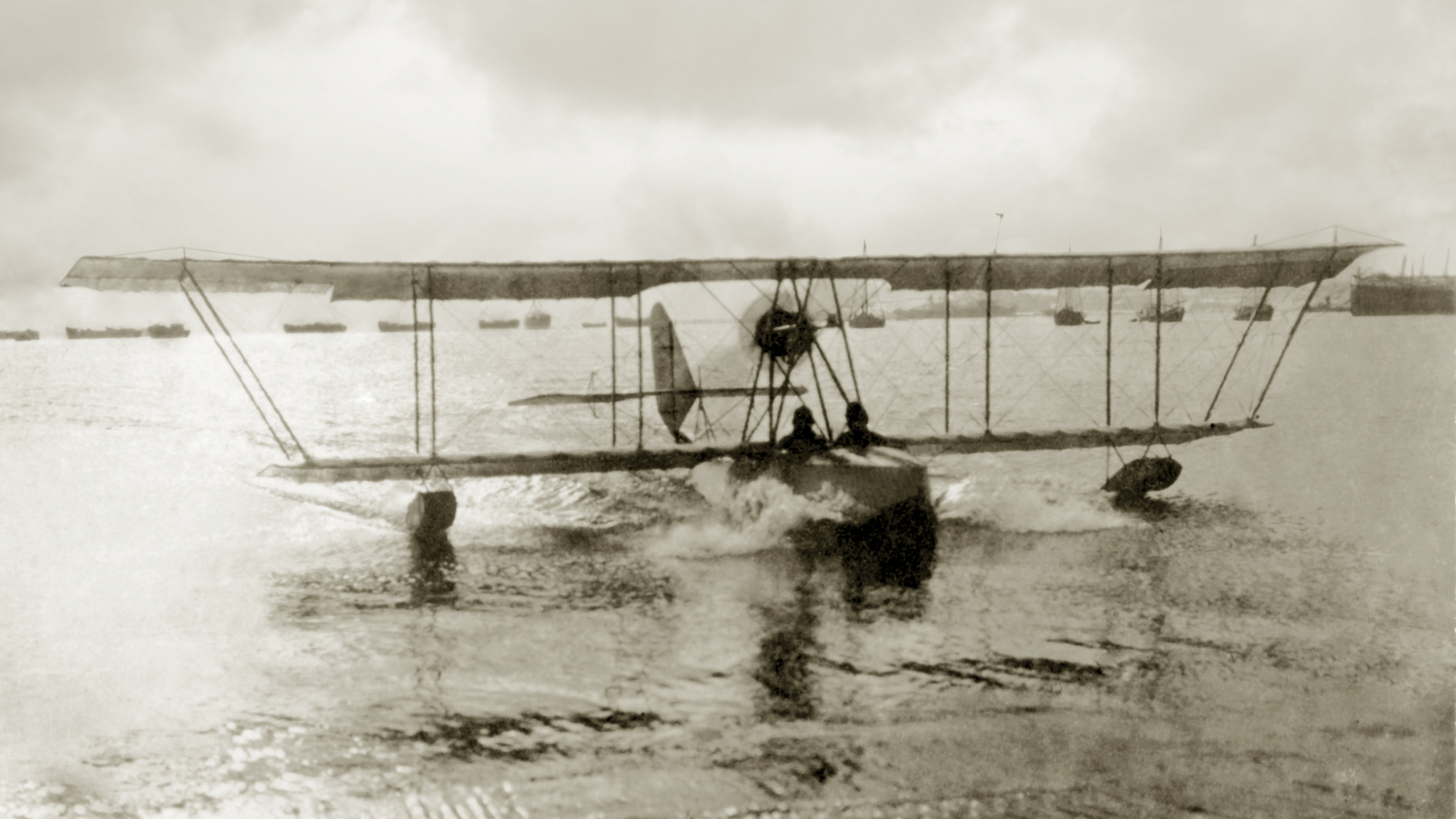
In the summer of 1915, the Black Sea Fleet received two seaplane tenders, Император Николай I (Imperator Nikolai I) and Император Александр I (Imperator Alexander I). The ships were equipped with Grigorovich M-5 two-seat flying boats.
The M-5 was a highly successful design in its class and became the first mass-produced flying boat in Russia. Although primarily intended for reconnaissance duties, the aircraft was armed with a machine gun on a pivot mount and could carry up to eight bombs – two one-pood bombs (пуд, sometimes romanised as “pud”, an old Russian unit of mass equal to approximately 16.38 kg or 36.11 lb), combined with four-, ten- or fifty-pound bombs (meaning the Russian pound, equal to 0.4095 kg or 0.9 lb).
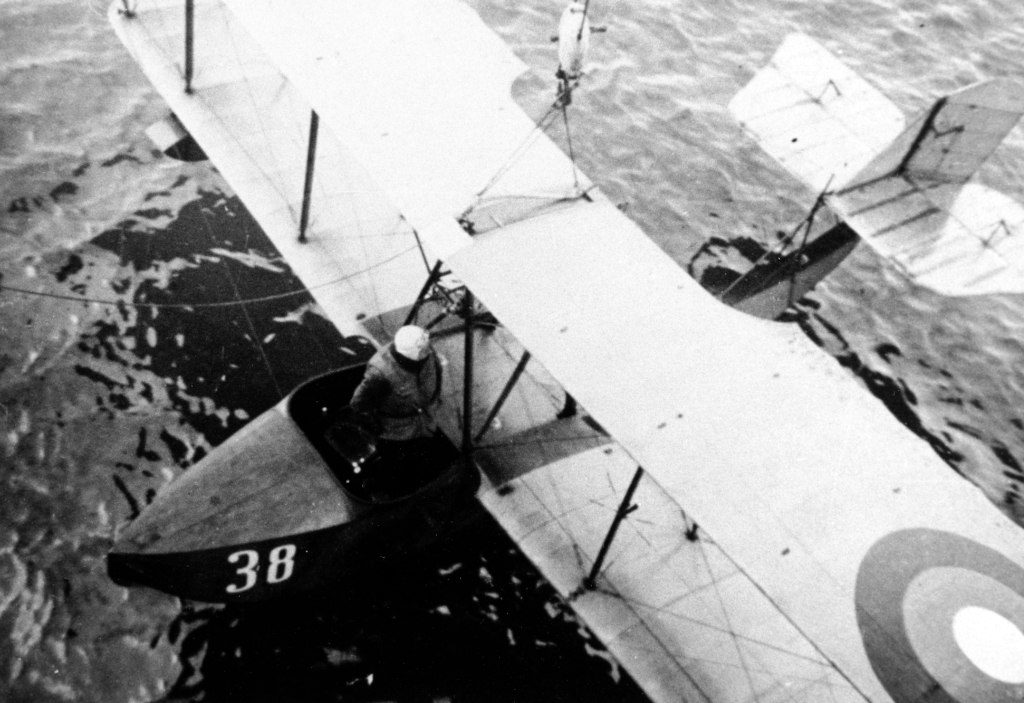
At the beginning of February 1916, Russian intelligence learned that a large coal transport was expected to be sent from Zonguldak in a short time. On 5 February (23 January, Old Style), a Russian task force departed Sevastopol and headed for the Turkish coast.
The Black Sea Fleet formation assigned to the operation included the two aforementioned seaplane tenders, supported by the battleship Императрица Мария (Empress Maria) and two destroyers (as well as one cruiser, according to some sources). This force is often regarded as the first carrier battle group in the history of naval aviation.
Both Imperator Nikolai I and Imperator Alexander I were carrying the maximum possible number of seven M-5 seaplanes each. The first squadron was led by Lieutenant Alexander Konstantinovich Juncker, and the second by Lieutenant Raymond Fedorovich von Essen. In the early hours of 6 February, the Russian task force anchored approximately twenty nautical miles from the Turkish coast and began preparing the seaplanes for the attack.
The air raid on Zonguldak began before midday. Only nine of the fourteen aircraft successfully reached the port, with two being unable to take off, one inadvertently releasing its bombs en route, and two crews failing to locate the target.
Although the Russian attack lasted only a few minutes, the Black Sea Fleet seaplanes managed to hit the railway junction and coal-handling facilities. Moreover, Russian bombs hit SS Irmingard, the German cargo vessel, which sank soon afterwards and settled on the harbour bottom. The Russian crews reported no losses during the raid and returned safely to the carrier group in less than one hour after take-off.
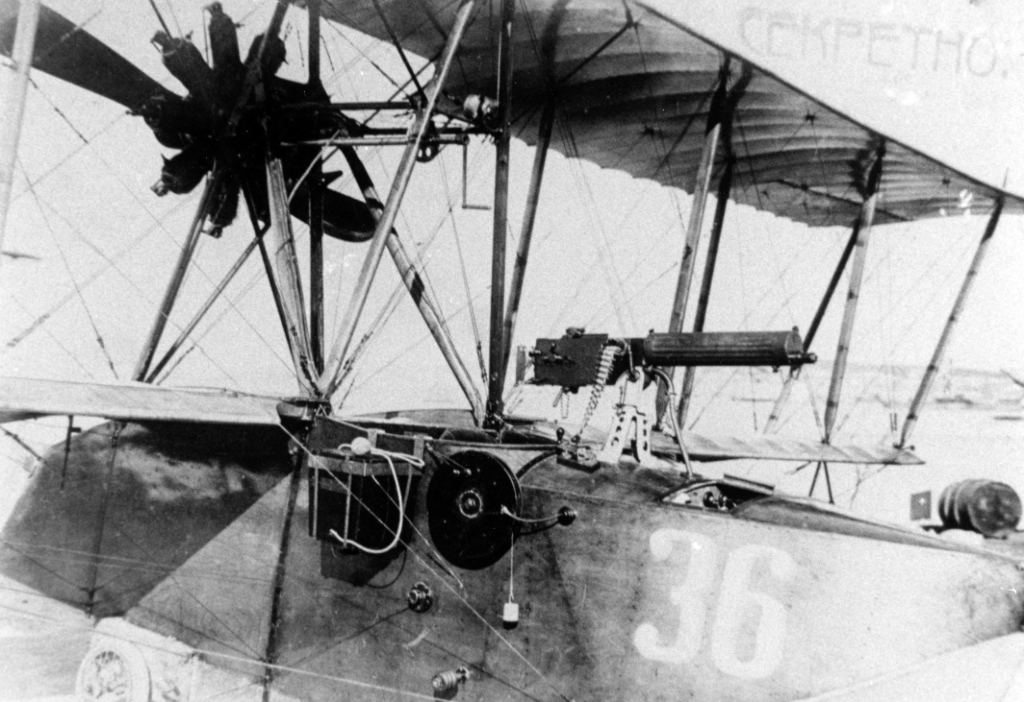
Interestingly, two torpedo incidents were reported during the return flight. The first occurred when Lieutenant von Essen’s aircraft was about to be hoisted aboard Imperator Alexander I. Just at that moment a torpedo was reportedly sighted, reached the seaplane, but sank without exploding. Shortly afterwards, the M-5 took off again to search for the submarine, but no enemy vessel was located.
However, the German submarine UB-7 was subsequently sighted by another returning M-5. The crew marked the enemy’s position with smoke, and the submarine was soon engaged by Russian artillery fire and forced to withdraw.
SS Irmingard, launched in 1906 by Northumberland Shipbuilding Co. Ltd. at Howdon, had a gross registered tonnage of 4,211 and became the largest vessel sunk by an air attack during the Great War. Nevertheless, the damage proved relatively light, and the ship was raised and repaired by the end of the month. In October 1916, SS Irmingard was damaged again, first by mines off the Bosphorus and then successfully torpedoed by the Russian submarine Narval and finally abandoned.
The successful air raid on Zonguldak was well received by the Russian naval authorities. By the end of 1916, the Black Sea Fleet had been authorised to expand its naval aviation arm. Now, it comprised four seaplane tenders – the two veterans of the Zonguldak raid, Алмаз (Almaz/”Diamant”) and Румыния (Romania) – and four aviation groups, each equipped with eight flying boats.
The raid on Zonguldak marked several important milestones in aviation history. It was the first airstrike conducted by Russian naval aviation and the first time a combined carrier battle group was used in combat. In addition, the airstrike was also the first bombing raid on an enemy port.
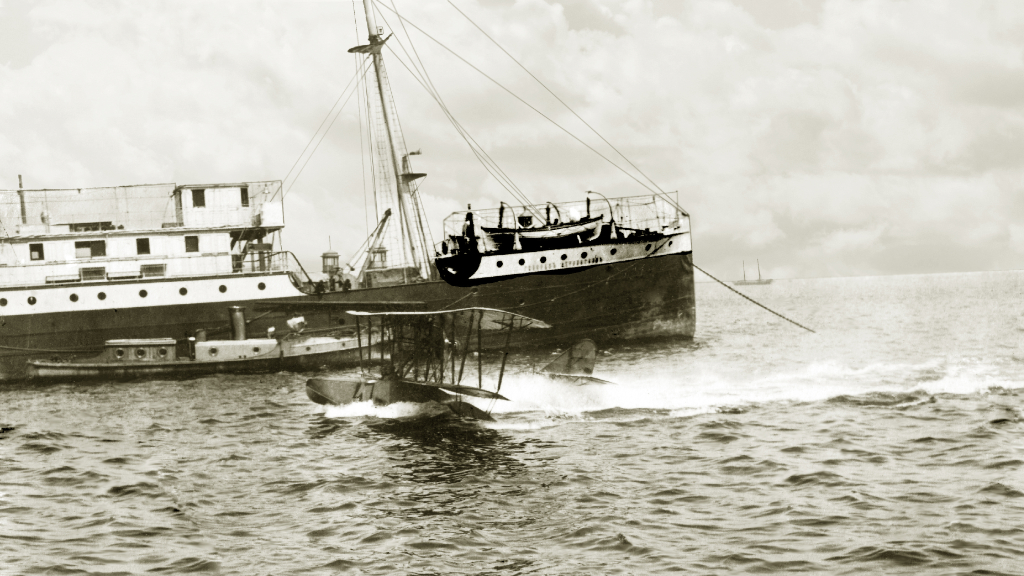
Cover photo: Grigorovich M-5 used by the Naval Aviation Officer’s School in Baku (photo: Wikipedia, Корвин-Кербер В. Л., CC BY-SA 4.0)