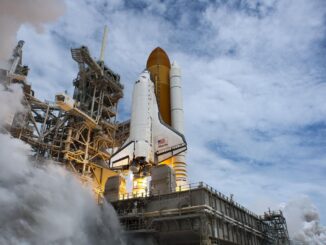
 On 16 January 2003, the Space Shuttle Columbia launched on STS-107 mission. The flight ended on 1 February with the Columbia disaster, resulting in the deaths of all seven crew members and the destruction of the space shuttle.
The STS-107 mission was the 113th flight of the Space Shuttle programme and the 28th flight of Columbia. The spacecraft was launched on 16 January 2003 from Kennedy Space Center in Florida and spent in orbit 15 days, 22 hours, 20 minutes and 32 seconds.
The space shuttle was commanded by Rick Husband, for whom it was his second spaceflight. The crew also included William C. McCool as Pilot, Kalpana Chawla as Flight Engineer, Ilan Ramon as Payload Specialist and David M. Brown, Michael P. Anderson and Laurel B. Clark as Mission Specialists.
During its last space mission, Columbia carried on board the SPACEHAB Research Double Module, the FREESTAR (Fast Reaction Experiments Enabling Science Technology Applications and Research) experiment and the Extended Duration Orbiter.
The crew was tasked with conducting several international scientific experiments. Among them, there was one created by students from Glen Waverley Secondary College in Australia, which investigated the behaviour of the Australian garden orb weaver spider in a zero-gravity environment.
Other experiments and investigations included the Mediterranean Israeli Dust Experiment, the Solar Constant Experiment-3, the Miniature Satellite Threat Reporting System, more than twenty-three investigations for NASA´s Office of Biological and Physical Research and fourteen investigations for the European Space Agency, as well as twenty-one commercial projects.
When Columbia was launched, a piece of foam (measuring 53–63 cm in length and 30–40 cm in width) broke off from the left bipod of the external tank. It hit the leading edge of the left shuttle wing, damaging the thermal protection system made of reinforced carbon panels and thermal protection tiles.
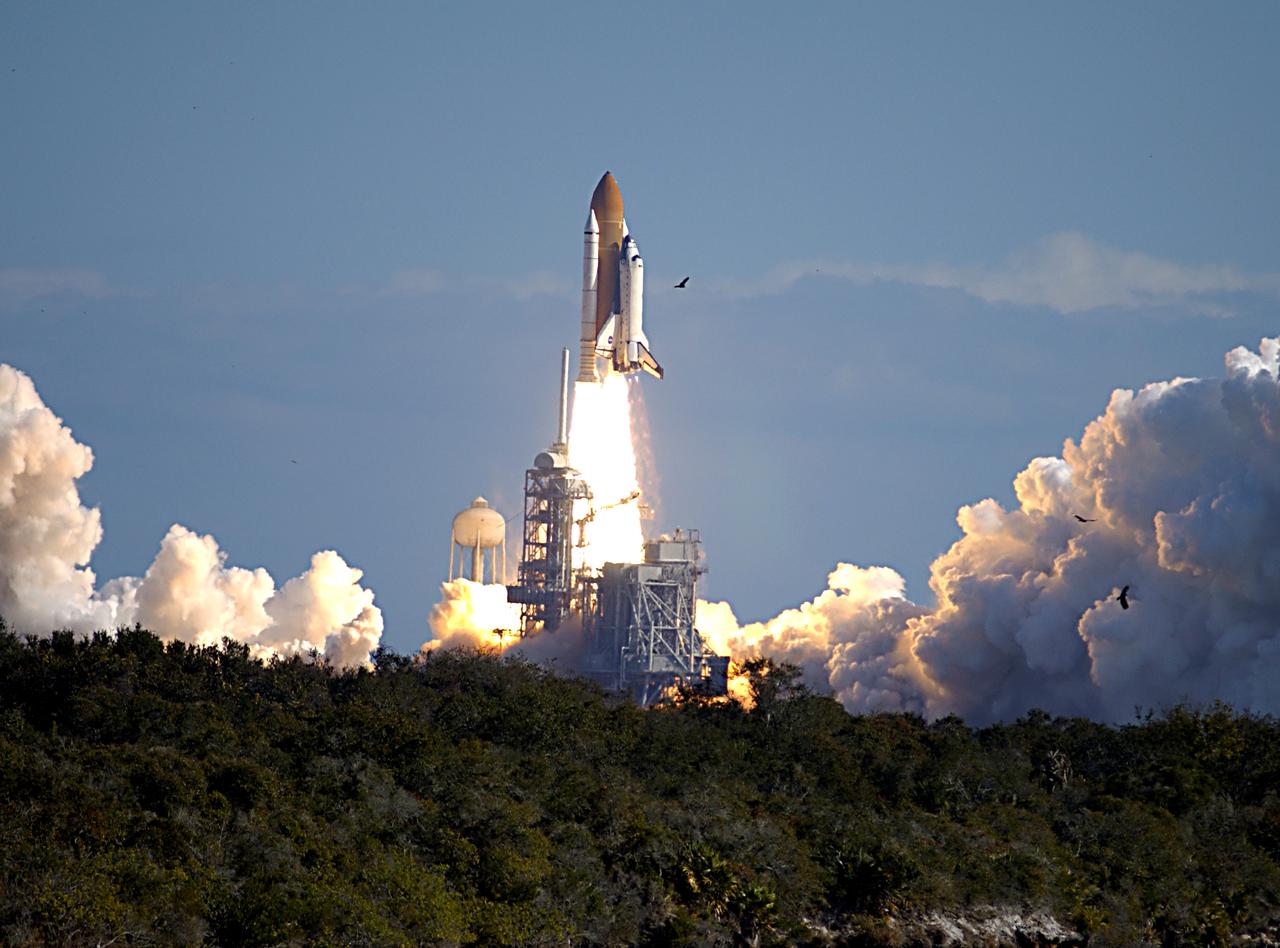
The incident was only spotted on the second day of the mission, when videos and photos from the launch were routinely revised by the NASA Intercenter Photo Working Group. Immediately, the Debris Assessment Team was established, including specialists from NASA, United Space Alliance and Boeing.
The debris strike was assessed to determine whether the orbiter had been damaged. However, foam strike events have already occurred on previous space shuttle flights, with no catastrophic results. Therefore, the Mission Management Team informed the crew that there is no reason for any concerns related to the debris strike.
On 26 January, the Debris Assessment Team confirmed there were no safety concerns regarding the incident. Shortly after, Columbia was scheduled to re-enter the atmosphere.
The space shuttle re-entered the atmosphere on 1 February 2003, at 8:44:09 hours EST, at altitude of 400,000 feet (120 km). However, the aforementioned damage to the thermal protection tiles allowed the hot air to enter the left wing of the orbiter and, in consequence, to start melting its aluminium structure.
It took approximately four minutes for the Columbia flight control system to respond. Firstly, the sensors recorded increased strain on the left wing, followed by abnormal drag which caused the orbiter to yaw to the left. However, neither the crew nor the ground control noticed that, as the data were collected and analysed by the flight control system internally, and necessary corrections of the course were automatically applied.
The first debris shed from the shuttle was observed on the ground when Columbia entered California airspace at an altitude of 231,600 feet (70.6 km). Then, the spacecraft flew over Utah, Arizona, New Mexico and Texas, with reports of debris being shed along the way.
At 8:58:39 hours EST, the crew was alarmed by multiple fault messages. Shortly after, the flight control system was not able to correct the yaw any longer. Columbia, flying at speed of about Mach 15, entered into a flat spin and at 9:00:18 the breakup of the orbiter began. The shuttle continued to break apart into small pieces which, together with crew remains, hit the ground by 9:35 hours.
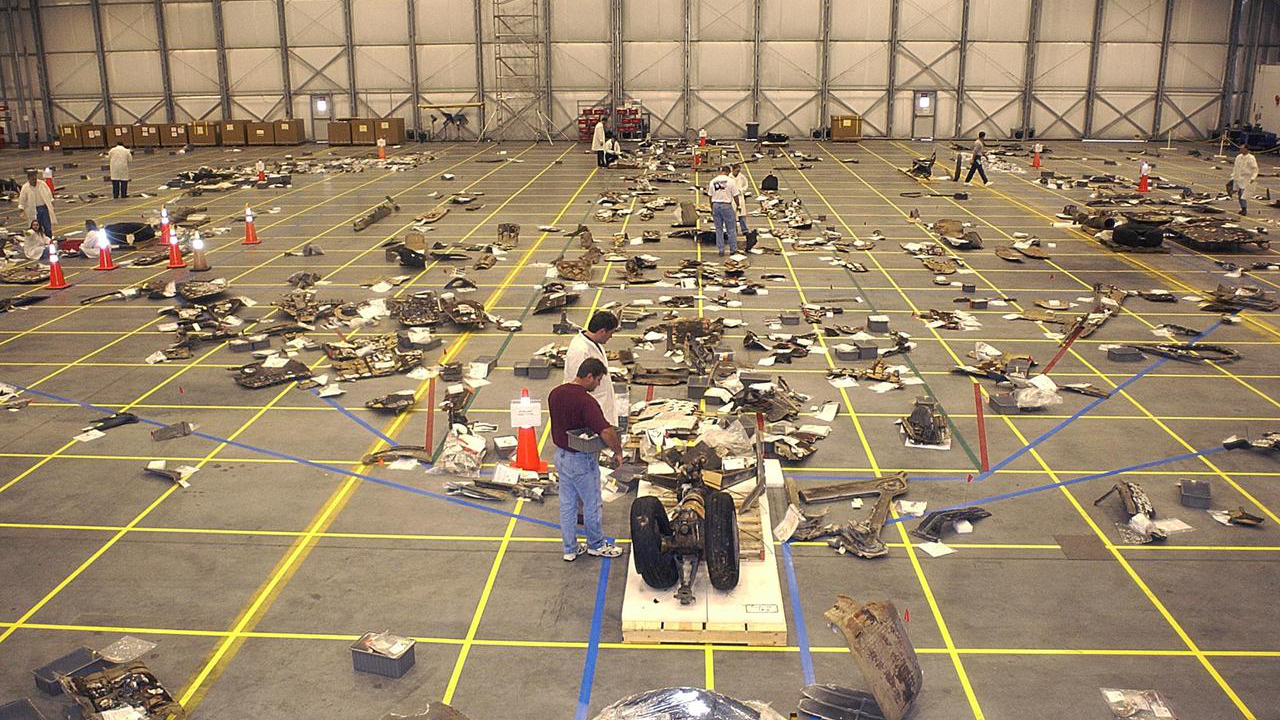
Investigation of the accident lasted for about seven months. Approximately 38 per cent of the space shuttle were collected in form of over 83,900 pieces of debris.
The Space Shuttle programme was suspended for more than two years, causing the delay in construction of the International Space Station. During this time, NASA implemented several upgrades into the shuttle construction, redesigned the external tanks and improved ground imaging capability at Kennedy Space Center.
The next shuttle mission, STS-114 performed by Discovery, was launched only on 26 July 2005. However, the first “Return to Flight” mission, as the flight was commonly called, resulted in sixteen pieces of foam lost from the external tank during the launch. After the thorough examination at the ISS, Discovery was permitted to return to Earth, though the Space Shuttle programme was suspended again.
The second “Return to Flight” mission, STS-121 by Discovery, was launched on 4 July 2006. Despite the further upgrades to the external tanks, at least one piece of foam was seen breaking off during the launch. Similar to the previous mission, Discovery was only approved to re-enter the atmosphere after a safety check at the ISS.
The Columbia disaster and the returning issues with the foam debris had a significant impact on the cancellation of the Space Shuttle programme. Moreover, all missions were scheduled to dock at the ISS for the necessary safety check before landing.
STS-135, the final flight of the Space Shuttle programme, took place between 8 and 21 July 2011, and was performed by Atlantis orbiter. No further crewed spacecraft were launched from the United States until 2020, when SpaceX successfully began its manned space exploration programme, using the Crew Dragon spacecraft and Falcon 9 rocket.
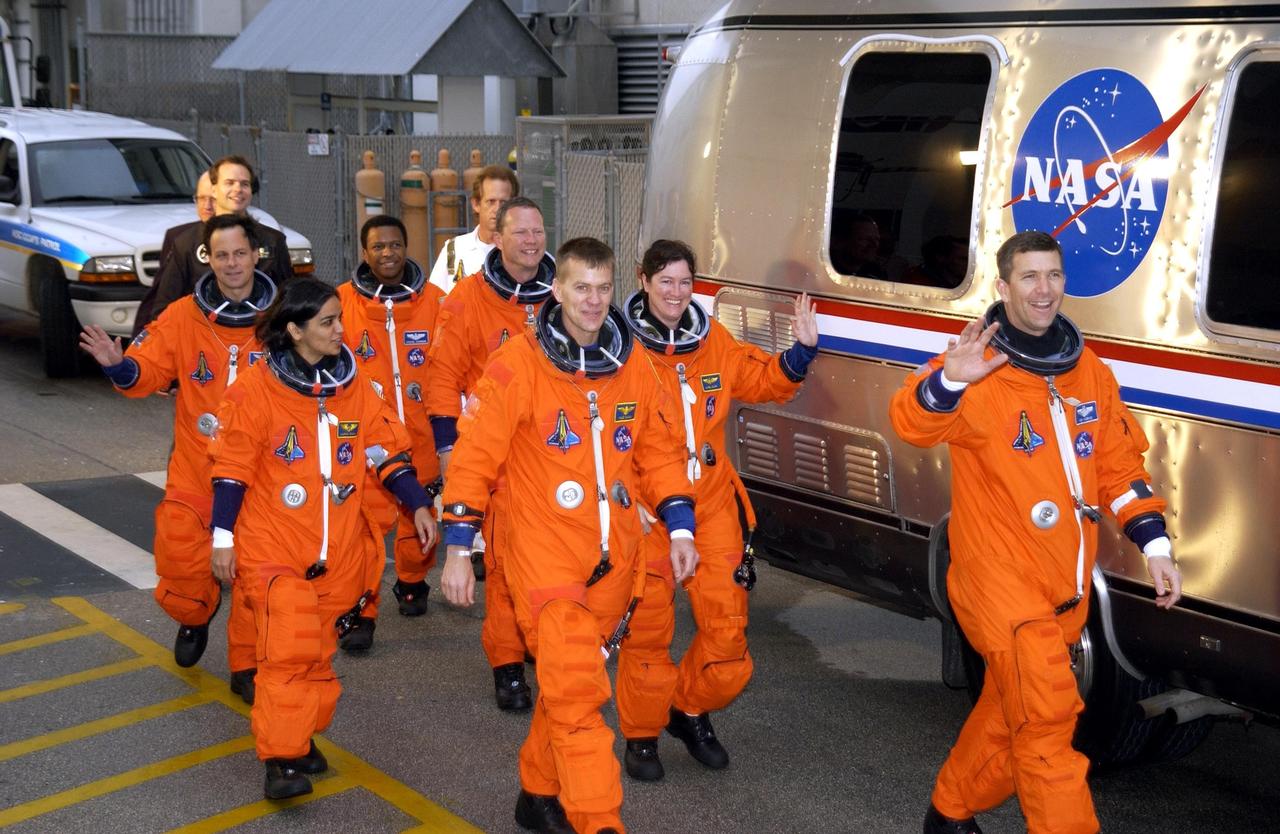
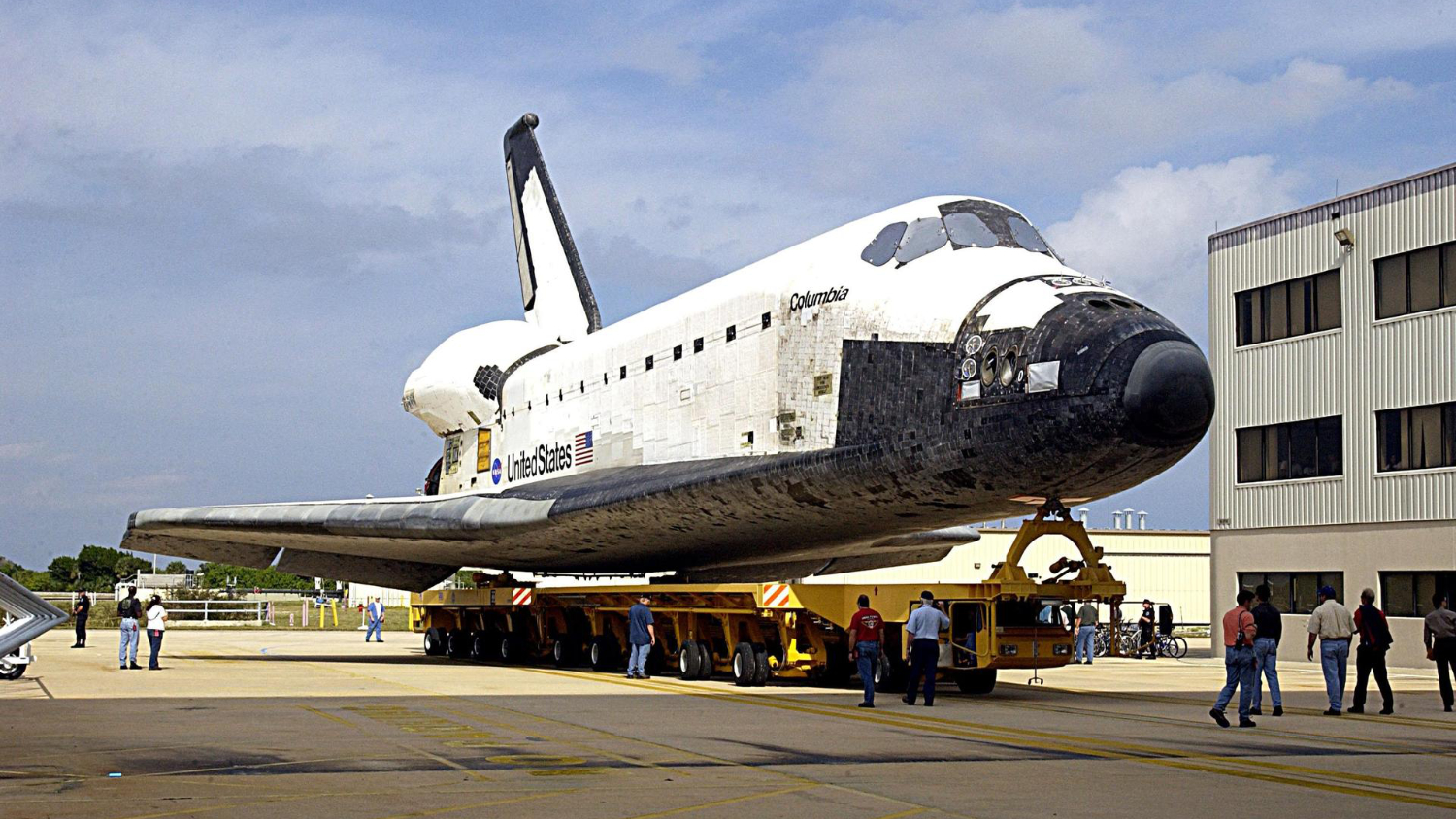
Cover photo: Space Shuttle Columbia is being moved to the Vehicle Assembly Building where processing will continue for the flight of mission STS-107 (NASA, KSC-02pd1763). All photos © National Aeronautics and Space Administration.