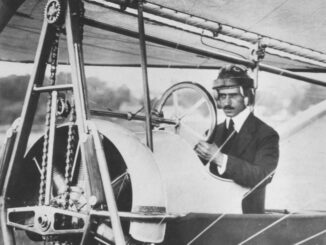
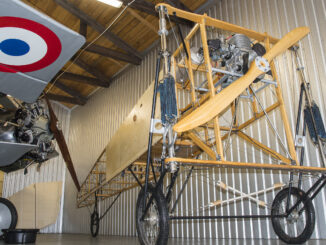
 On 23 January 1909, at Issy-les-Moulineaux, the first example of the Blériot XI monoplane successfully performed its maiden flight. The aircraft travelled approximately 200 metres and reached a speed of 75 km/h.
Louis Charles Joseph Blériot, the famous French aviator and aircraft designer, began his aviation career in the early 1900s. His first experiments were related to ornithopters and led to the creation of his first, albeit unsuccessful, flying machine, the Blériot I.
In 1905, after meeting Gabriel Voisin, Louis Blériot developed his next aircraft, the Blériot II glider. It was based on Voisin’s earlier developments and crashed during its first flight, which took place on 18 July 1905.
Subsequently, Blériot created two powered aircraft, known as the Blériot III and the Blériot IV. However, the former never took off, while the latter was damaged during taxiing trials.
As the saying goes, patience is a virtue, and Blériot proved this to be true in 1907. On 21 March that year, the Blériot V – an aircraft in a canard configuration – carried out its first ground runs. On 19 April 1907, it finally completed its first successful flight. Not only was the Blériot V the first successful aeroplane for Blériot, but it was also one of the world’s first airworthy monoplanes.
Following the Blériot V came the Blériot VI, a tandem-wing aeroplane, and the Blériot VII, VIII and IX, which were monoplanes. Next came the Blériot X, a three-seat pusher biplane. Although all of these aircraft were significant milestones in early aviation and brought fame to their constructor, Louis Blériot still dreamed of a better and more efficient aeroplane.
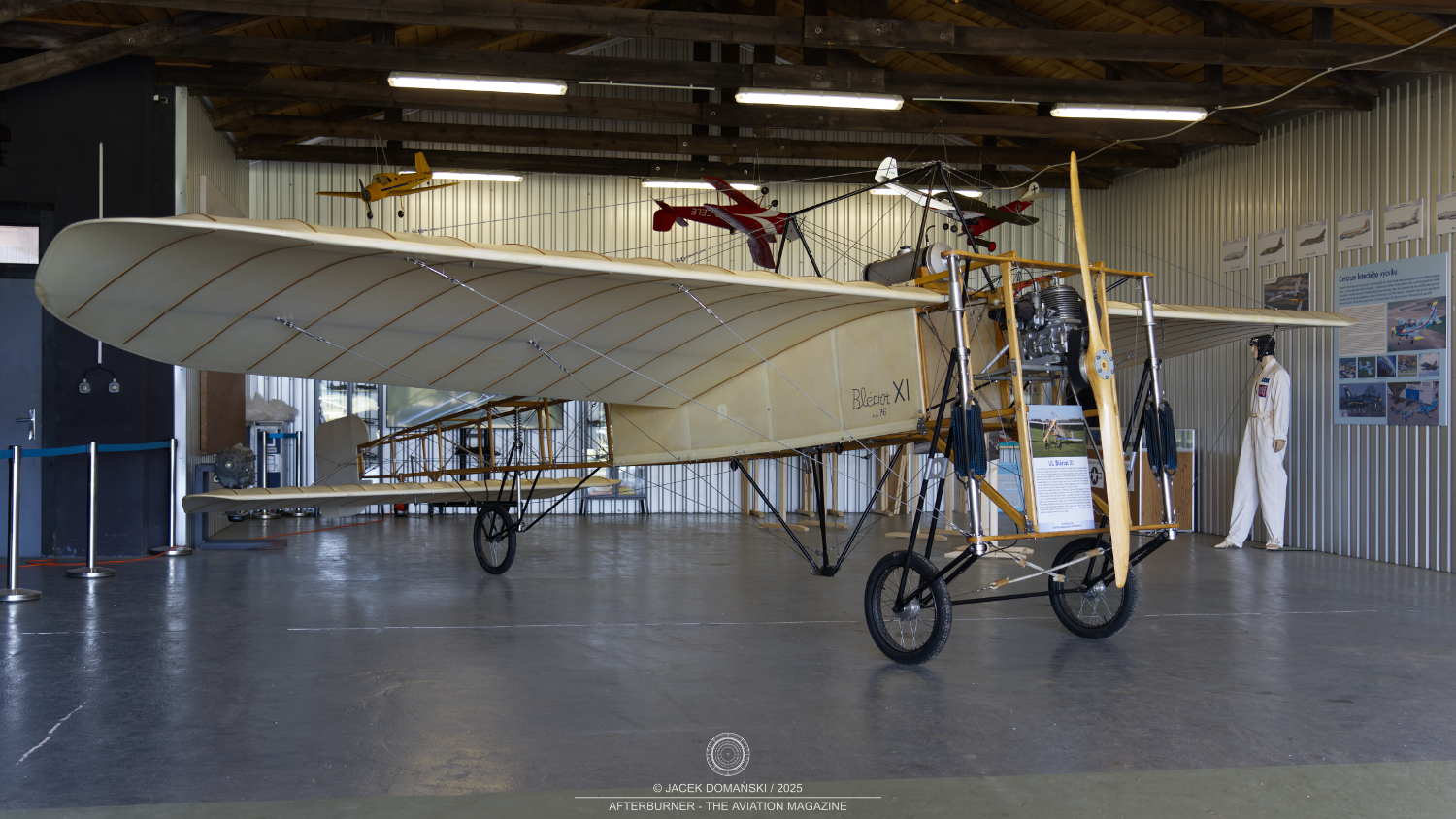
This dream was realised with the Blériot XI, a tractor monoplane developed by Blériot in collaboration with Raymond Saulnier. The aeroplane was first presented to the public in December 1908 at the Paris Aero Salon. On 23 January 1909, the aircraft made its maiden flight.
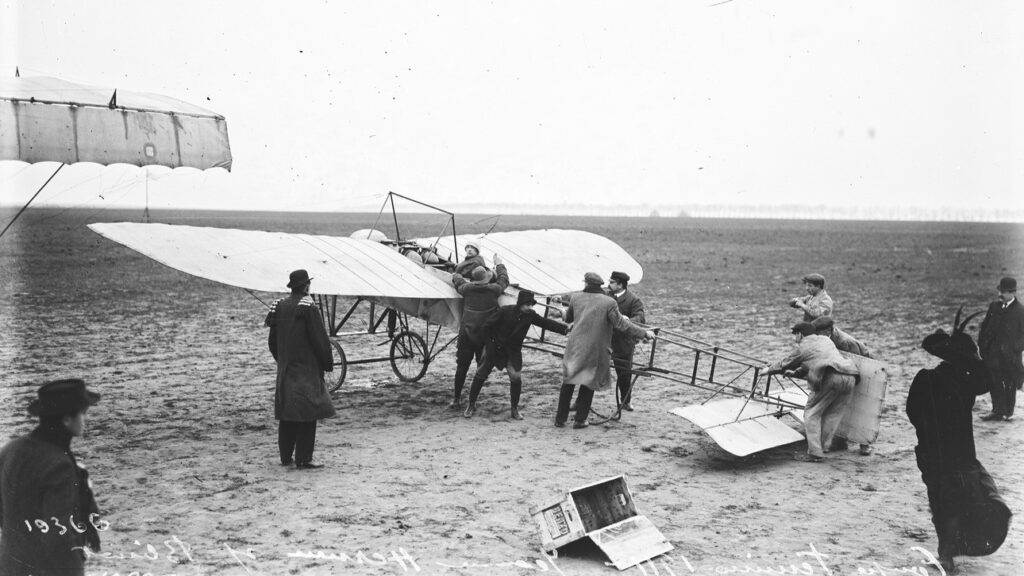
Initially, the Blériot XI was powered by 35 hp seven-cylinder R.E.P. engine. After a series of evaluation flights, the powerplant was replaced by an Anzani three-cylinder semi-radial engine, generating 25 hp.
On 25 July 1909, Louis Blériot and the Blériot XI aeroplane made aviation history by completing the first crossing of the English Channel in a heavier-than-air aircraft. This achievement generated significant interest in the Blériot XI worldwide, with orders for over one hundred aircraft received shortly afterwards.
In the following years, the Blériot XI was flown by numerous aviation pioneers around the world and was used for many pioneering flights that pushed the boundaries of early aviation.
Nowadays, several airworthy replicas of Blériot’s aircraft have been built worldwide. They usually can be seen at air shows, serving as vivid reminders of the pioneering years of aviation.
Additional information about Louis Blériot, his life and aviation achievements, can be found in our article, 1 July 1872 – Louis Blériot is born.
For more details related to aviation “firsts” and records set with the Blériot IX monoplane please refer to the following articles from the Aviation History series:
- 25 July 1909 – Louis Blériot performs the first successful flight across the English Channel,
- 12 April 1911 – the first non-stop flight from London to Paris,
- 23 September 1910 – Jorge Chávez flies through the Pennine Alps,
- 24 May 1910 – death of Émile Taddéoli, Swiss aviation pioneer.
A brief review of the Czech-based replicas of the Blériot XI can be found in Blériot XI for the Aviation Fair Squadron and Blériot replica is officially launched.
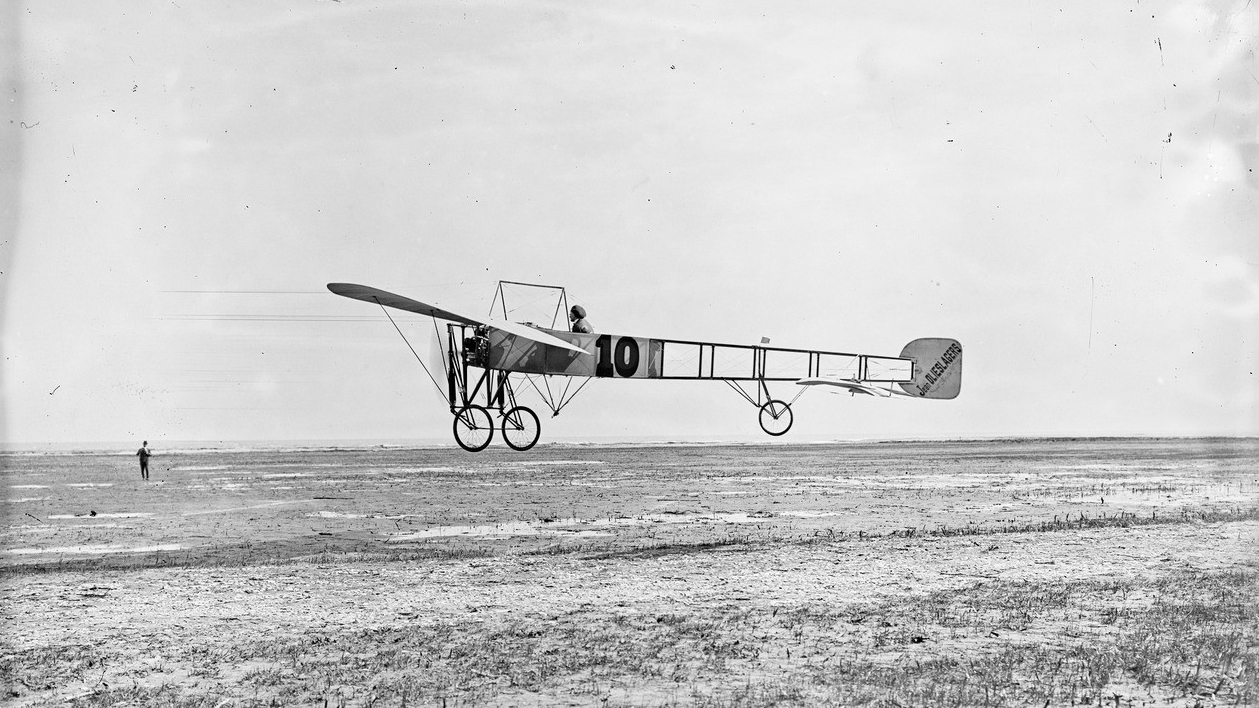
Cover photo: Jean Olieslagers in his Blériot XI, aviation meeting in Nice, 1910 (gallica.bnf.fr / Bibliothèque nationale de France, ark:/12148/btv1b532405840, cropped)