 On 10 April, Allied Air Command (AIRCOM) reported on its website that it had recently hosted the first of its biannual NATO Air Chiefs’ Symposia (NACS) for 2026.
The event represents a vital strategic forum where Allied and NATO Partner Air Chiefs come together to discuss the evolution of air and space power, harmonise multinational capabilities, and coordinate national contributions to collective defence within the Alliance. The main goal of the symposium is to enhance strategies, ensuring that NATO is prepared to defend its territory.
The theme for the first edition of the symposium in 2026 is “Operationalising the Shift to Air Defence”. It reflects the new strategic approach adopted by NATO to defend its territory. This evolution transforms traditional air policing into a robust air defence strategy, adapted to the high-threat landscape of the contemporary battlefield.
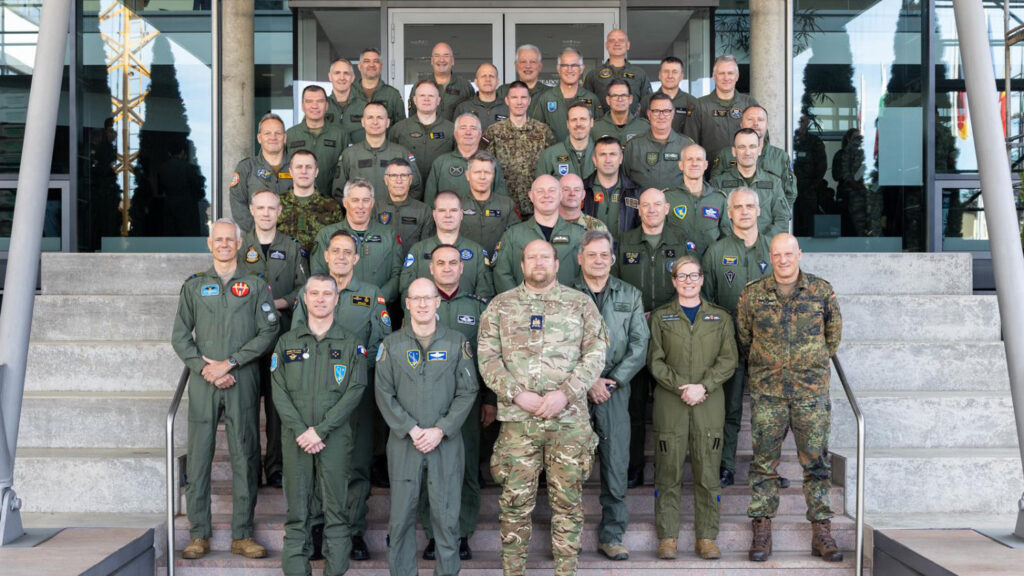
The two-day event was attended by Air Chiefs and Senior Representatives from twenty-seven NATO member countries and five NATO partner countries, who met in Ramstein to define this new defensive posture and confirm their nations’ commitment to it.
“We gather at a time where air and space power is more critical than ever,” said Lieutenant General Jason Hinds, Commander of AIRCOM. His words emphasised the importance of adapting to the constantly changing and competitive security environment.
Main discussion points of the Symposium included the NATO Command and Control (C2) framework, the Integrated Air and Missile Defence (IAMD) system, and the reinforcement of the eastern flank through the enhanced Vigilance Activity (eVA) Eastern Sentry and Agile Combat Employment (ACE) concepts, which are designed to ensure resilience and sustainment. The NACS 26-I event also symbolises unity and collaboration.
“Your presence here demonstrates our shared commitment to Airpower’s contribution to the defence of the Alliance,” said Hinds, underlining the overall aim of the symposium and added, “It is our chance to exchange insight, tackle emerging threats and advance Airpower’s contribution to the multi-domain operations that make our nations safe”.
The symposium enabled the sharing of lessons learned and gave AIRCOM the opportunity to discuss Exercise Ramstein Flag 26, the largest Multi-Joint Operating Area Live Exercise of the Alliance. This forum offered participating nations the unique opportunity to share relevant intelligence in a secure, multinational setting. Further identifying the need for technological adaptation, the meeting also featured static displays of counter-unmanned air systems (C-UAS), which complemented the subject matter of the gathering and demonstrated NATO’s rapid response to modern air defence requirements.
As AIRCOM underscored, the NACS 26-I sends a clear message to any potential adversary that the Alliance is constantly adapting to an increasingly complex and contested environment. Initiatives such as eVA Eastern Sentry demonstrate that NATO is determined to maintain a persistent and credible defensive presence. By fostering interoperability among the thirty-two NATO nations and their partners, AIRCOM ensures that Allied air and space power remains the foundation of a robust and unified air defence position, fully prepared to deter aggression from any potential adversary.
Air Chiefs and Senior Representatives from 27 NATO nations and 5 NATO partner nations attended the two-day event to define this new defensive posture and confirm national commitments. Photo © Allied Air Command.
Press materials of the Allied Air Command Public Affairs Office were used.