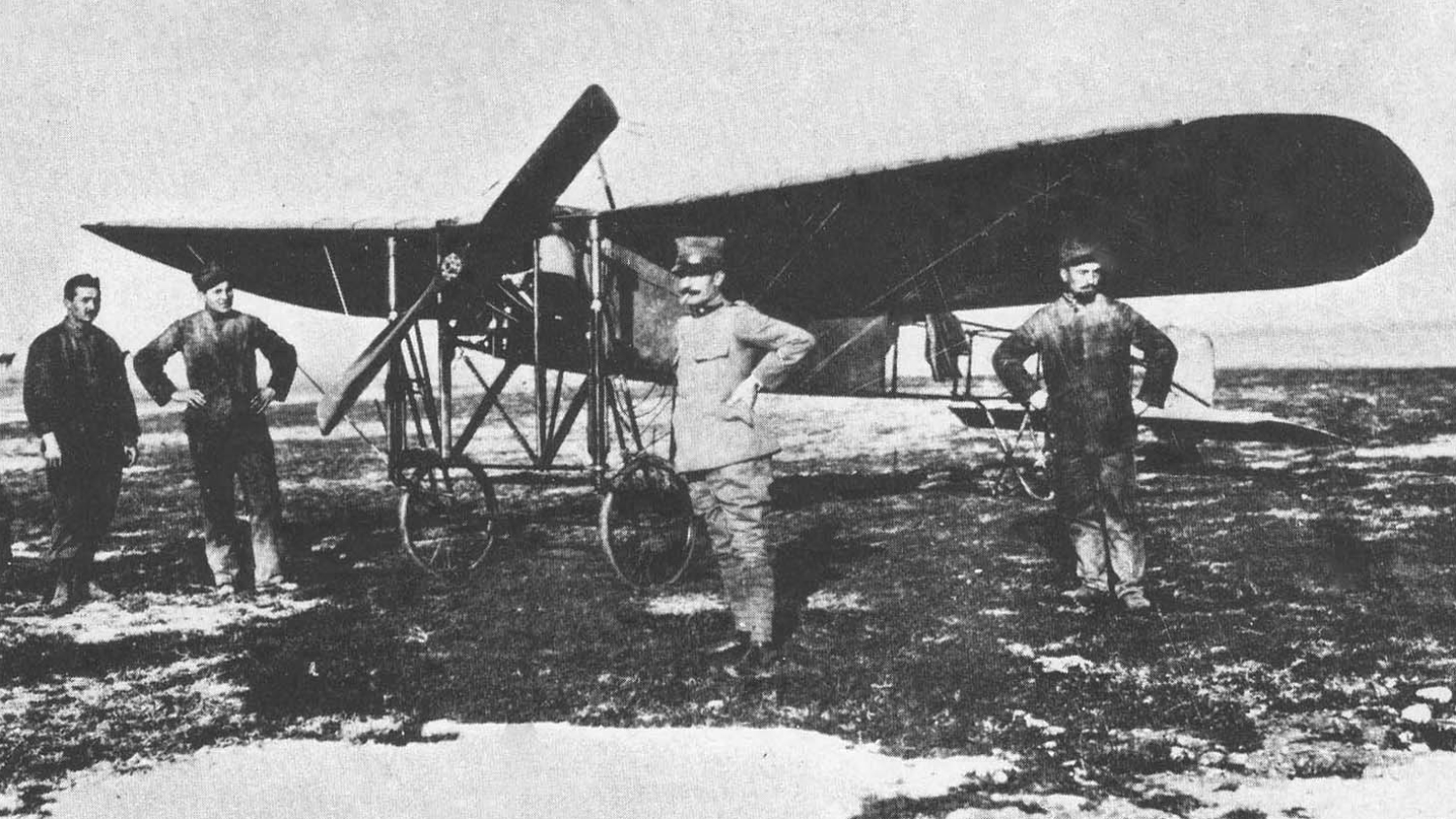
 On 23 October 1911, the Italian aviator Captain Carlo Piazza performed a reconnaissance flight over Libya. This marked the first use of a heavier-than-air aircraft in combat, as well as the first reconnaissance flight conducted using this type of aircraft.
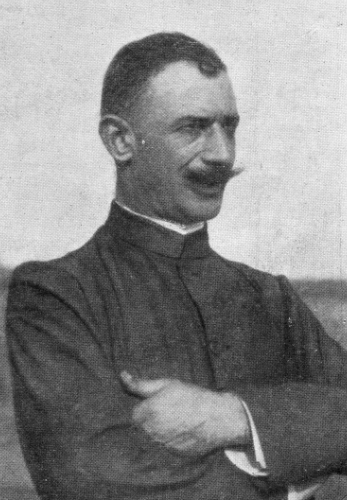
Carlo Maria Piazza was born in 1871 in Busto Arsizio, Lombardy. Even before the establishment of an air force, he had already enjoyed a distinguished military career. Piazza’s early interests included horse riding, a field in which he achieved considerable success. His achievements included earning a diploma in Novara in 1896 and winning a gold medal at a horse-racing competition in Pesaro in 1899.
Carlo Piazza was also a pioneer of Italian military intelligence and photographic reconnaissance, as well as an experienced specialist in producing topographic maps.
In 1910, Piazza was among the first Italian officers to join the aviation section of the newly established Specialists Battalion of the Aeronautical Service (Sezione Aviazione del Battaglione Specialisti del Servizio Aeronautico). On 30 June 1911, he received his official civil pilot’s licence, followed by his military pilot’s licence on 1 August of the same year.
As early as the end of August 1911, Piazza took part in army manoeuvres. Flying a Blériot XI monoplane, he went down in aviation history as the first Italian military pilot to use a heavier-than-air aircraft in military operations, marking the second such instance worldwide, after France.
Shortly afterwards, together with other military pilots, Piazza took part in the first Italian air competition, organised by the newspaper Il Resto del Carlino along the Bologna–Venice–Bologna route. He excelled at every stage of the race and eventually won four gold medals and a silver cup. However, as he had been invited to participate as a guest only, Piazza did not receive the prize money, which went instead to Andrea Frey, who finished second in the competition.
In September 1911, the Italo-Turkish War (also known as the Tripolitanian War or the War of Libya) broke out. Piazza travelled to Libya as a member of 1ª Flottiglia Aeroplani (the 1st Aeroplane Flotilla), which comprised seven aircraft and their crews.
On 23 October 1911, Carlo Mario Piazza flew his Blériot XI over the Turkish lines, thereby carrying out the first reconnaissance mission using a heavier-than-air aircraft. This was also the first time this type of aircraft had been used in combat. Moreover, Piazza became the first person to photograph enemy troop positions from an aeroplane.
After the war, Piazza was one of the founders of the modern Italian Air Force. He also served as an instructor at the newly established military aviation school and became a prominent ambassador for aviation. In recognition of his contribution to the development of Italian military aviation, Piazza received several awards and was eventually made a Knight of the Military Order of Savoy.
On 20 October 1913, Piazza undertook his most famous aviation adventure. Flying his Blériot XI, he reached the Alpine valley of Val di Susa, attained an altitude of 3,200 metres and then landed at approximately 2,000 metres above sea level. It was the first successful landing of a heavier-than-air aircraft in the high mountains.
With the outbreak of the Great War, Piazza devoted himself to organising Italian combat squadrons. He was promoted to colonel and received the silver Medaglia al valor militare (Medal for Military Valour) twice, in 1915 and 1917. In 1917, he was also awarded the French Croix de Guerre (War Cross) with a silver palm.
Regrettably, during his military service in the First World War, Piazza contracted a fatal illness. He died on 24 June 1917, aged 46.
Today, Carlo Mario Piazza is recognised as one of the most important pioneers of military aviation. He was the first person to establish a practical link between early aviation and tactical military operations.
In 1923, the military section of Turin-Mirafiori airfield was named after this Italian pioneer of military aviation. However, the airfield was officially closed in 1947 due to damage caused by Allied bombing raids.
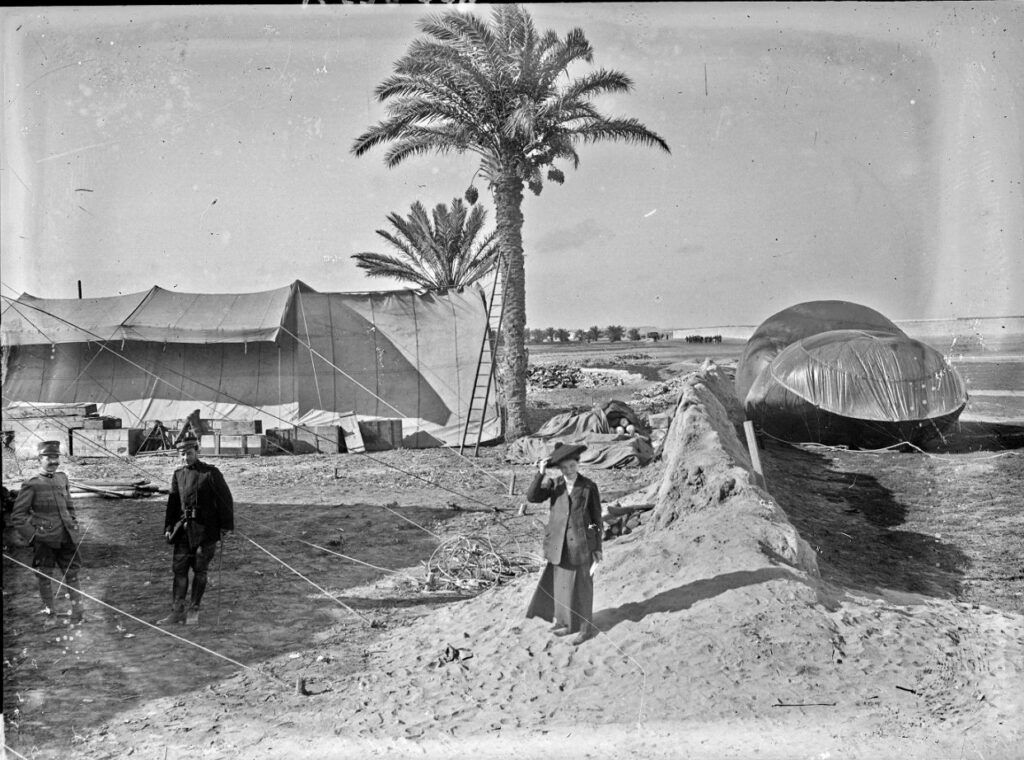
Cover photo: Carlo Piazza at his Blériot XI, Tripoli, 1912 (photo: Wikipedia, Public Domain)