 Nearly eighty years ago, on 22 December 1945, the Model 35 Bonanza – a light American utility aircraft developed by the Beech Aircraft Corporation – made its first flight. The aeroplane entered serial production in March 1947 and soon revolutionised the general aviation market, becoming a symbol of a new era in popular aviation.
The Bonanza was developed at the end of the Second World War by a team led by Ralph Harmon. At the time, financial forecasts predicted rapid economic growth, together with a boom in general aviation to follow. The forthcoming sale of surplus military aeroplanes was generally considered sufficient to satisfy market demand. Nevertheless, two aircraft manufacturers decided to try a different approach.
The first of those companies was Cessna, which developed a family of light aircraft, designated the 190 and 195 Businessliner. The prototype made its maiden flight in 1945, and serial production began two years later. Although the 190/195 series featured several innovations – such as being the first all-aluminium Cessna aircraft and employing the NACA 2412 aerofoil – the aeroplane still represented a classic, pre-war design.
The Cessna 190/195 series was a high-wing aircraft with a radial engine and a fixed tailwheel undercarriage, as well as roll-down side windows. Moreover, it proved to be expensive to buy and maintain, and its engines were notorious for excessive oil consumption. In total, only 1,180 aircraft were built, and production of the Cessna 190/195 ceased in 1954.
At the same time, a completely different aircraft was being developed by the Beech Aircraft Corporation of Wichita, Kansas. Ralph Harmon’s team created a modern, sleek aeroplane of a low-wing configuration, a retractable tricycle undercarriage, and a horizontally opposed six-cylinder engine.
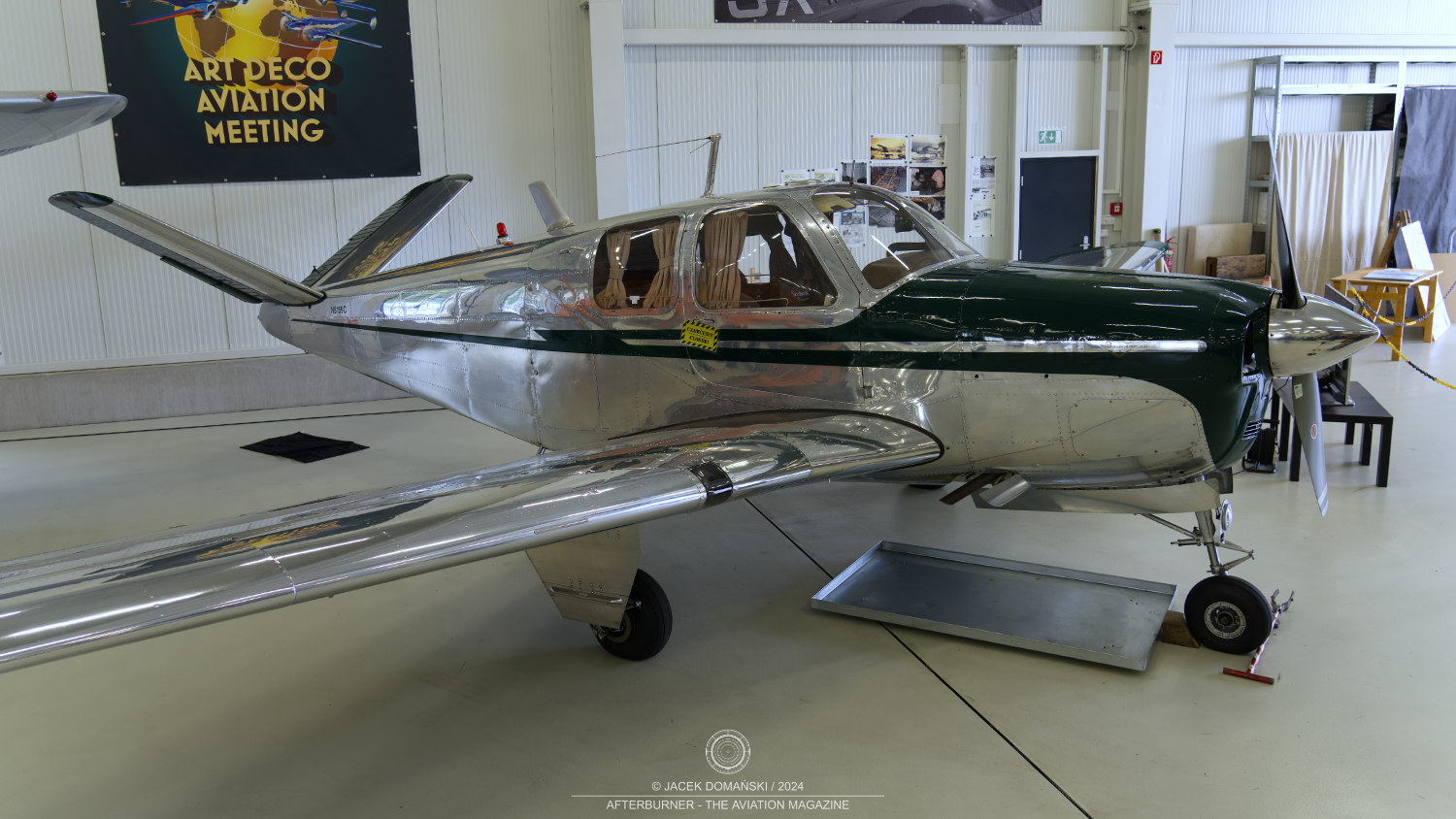
The aircraft, designated the Model 35 Bonanza, was also made of aluminium and featured a distinctive V-shaped tail (commonly known as the “butterfly tail”). Its performance, equipment and overall design were intended to appeal to customers who preferred a new, modern and stylish aeroplane rather than surplus military aircraft embodying pre-war technology and aesthetics.
It soon became clear that Beech management had struck gold. The Bonanza quickly became popular among affluent amateur pilots who often already owned a luxury car and wanted to buy an aircraft of similar quality.
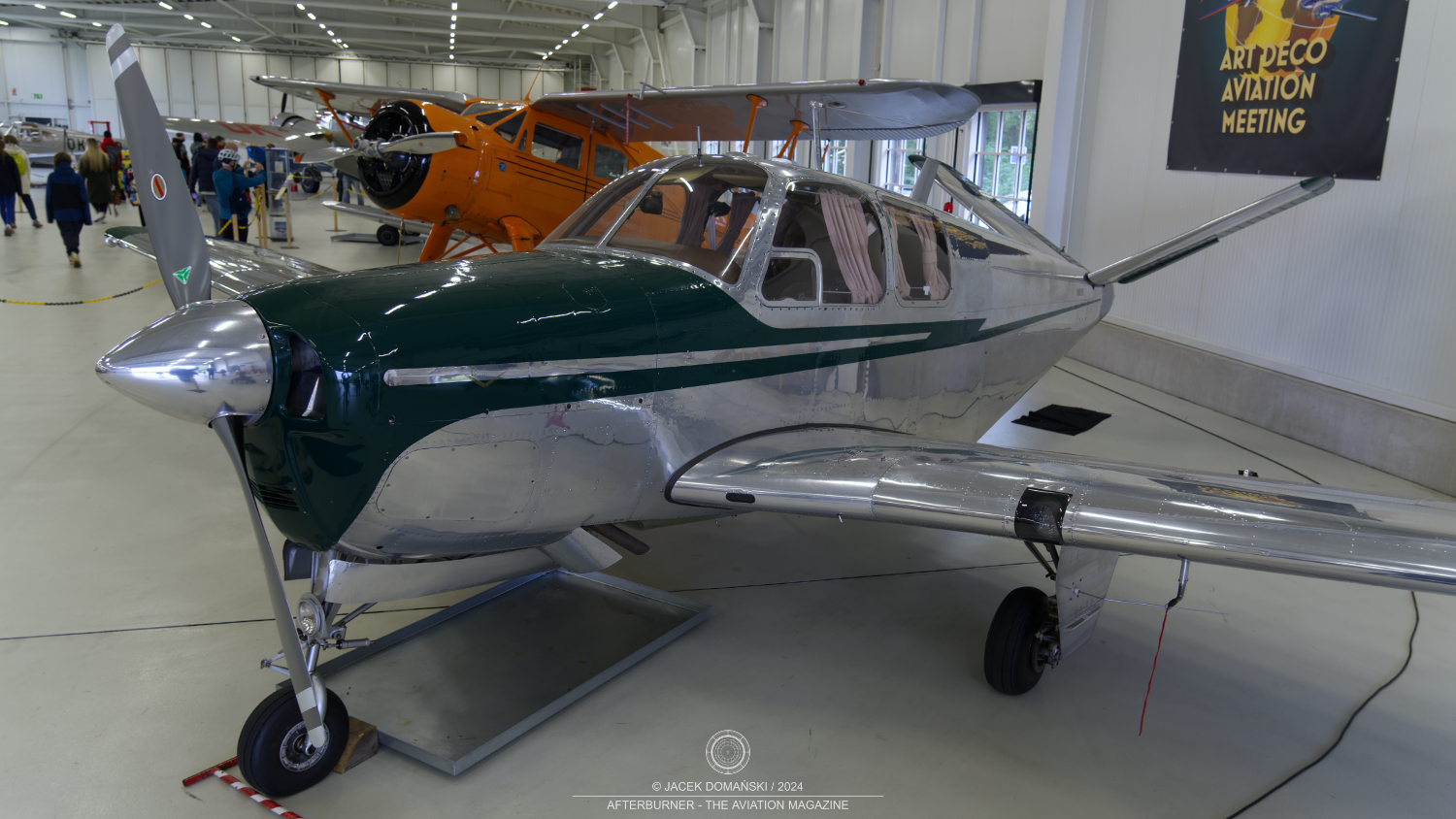
The Model 35 was a single-engine, low-wing monoplane with retractable tricycle undercarriage. The initial version was powered by a 165 hp Continental E-185 six-cylinder engine and could carry four persons, including the pilot.
Over the years, the Bonanza was produced in numerous variants differing in engines, avionics, equipment and interior finish. However, three main versions can be distinguished: the initial V-tail Bonanza, known as the Model 35 and built between 1947 and 1982; a low-priced, simplified model with a conventional tail, designated the Model 33 (also known as the Debonair) and manufactured between 1960 and 1995; and the final, stretched variant, the Model 36, in production since 1968.
In 1951, Beechcraft introduced a twin-engine utility aircraft intended for executive transport. Although marketed as the Model 50 Twin Bonanza, it had little in common with the original Model 35 and achieved limited success.
The company learned from this experience and, in 1961, developed another, smaller twin-engine utility aircraft. This aeroplane, designated the Model 95-55 Baron (or simply the Baron 55), was based on the earlier Beechcraft 95 Travel Air but incorporated the Bonanza’s fuselage. This time, the market responded favourably, and more than 3,600 examples of the Model 55 were built by 1983. Production of two modernised variants – the short-body Baron 56 and the extended-body Baron 58 – continued until 2025.
Paradoxically, market success of the Model 35 and the “Bonanza boom” that followed led to undeserved bad publicity, earning the aircraft the nickname “doctor killer”.
This nickname originated from a series of fatal accidents involving inexperienced but wealthy pilots – usually doctors or lawyers – who were sufficiently affluent to purchase an aircraft but insufficiently trained to fly it in difficult weather, or simply overconfident in their abilities. Unfortunately, this contributed to an unjustly negative reputation for the Beech 35 Bonanza.
Research conducted by the Aircraft Owners and Pilots Association revealed that between 1982 and 1989 pilot error was responsible for 73% of accidents involving the V-tail Bonanza and 83% involving the conventional-tail variants. Overall, the Beech Model 35’s accident rate was comparable to that of other light general-aviation aircraft. The myth of the “doctor killer” was thus debunked.
Walter Beech, the co-founder and CEO of the Beech Aircraft Company, died in 1950. The company was subsequently managed by his wife, Olive Ann Beech, until 1980. In the same year, Beechcraft was acquired by Raytheon and a few years later sold to Goldman Sachs, forming the Hawker Beechcraft Company. Following Hawker Beechcraft’s bankruptcy, the company was taken over by Textron. Despite numerous changes in the ownership, both the Bonanza and the Baron remained in production for most of the time.
This changed in November 2025, when both types disappeared from the list of new aircraft offered on the company’s website. Concerned by this development, the American aviation press and the American Bonanza Society asked Textron to clarify whether the iconic general aviation aircraft had been withdrawn.
The company soon issued a statement confirming the end of Bonanza and Baron production due to low sales. The iconic piston-powered aircraft developed by Beechcraft would be replaced by the new turboprop aeroplane, the Denali.
Thus, another chapter in aviation history came to a definitive close. According to Textron, more than 6,000 Barons and over 18,000 Bonanzas were delivered to customers over nearly eight decades since the Model 35’s first flight.
According to the American Bonanza Society, more than 13,000 Bonanza and Baron aircraft remain in operation worldwide.
You can find more information about Walter Beech and the aircraft developed by his company can be found in our article from the Aviation History series: 29 November 1950 – Death of Walter Beech.
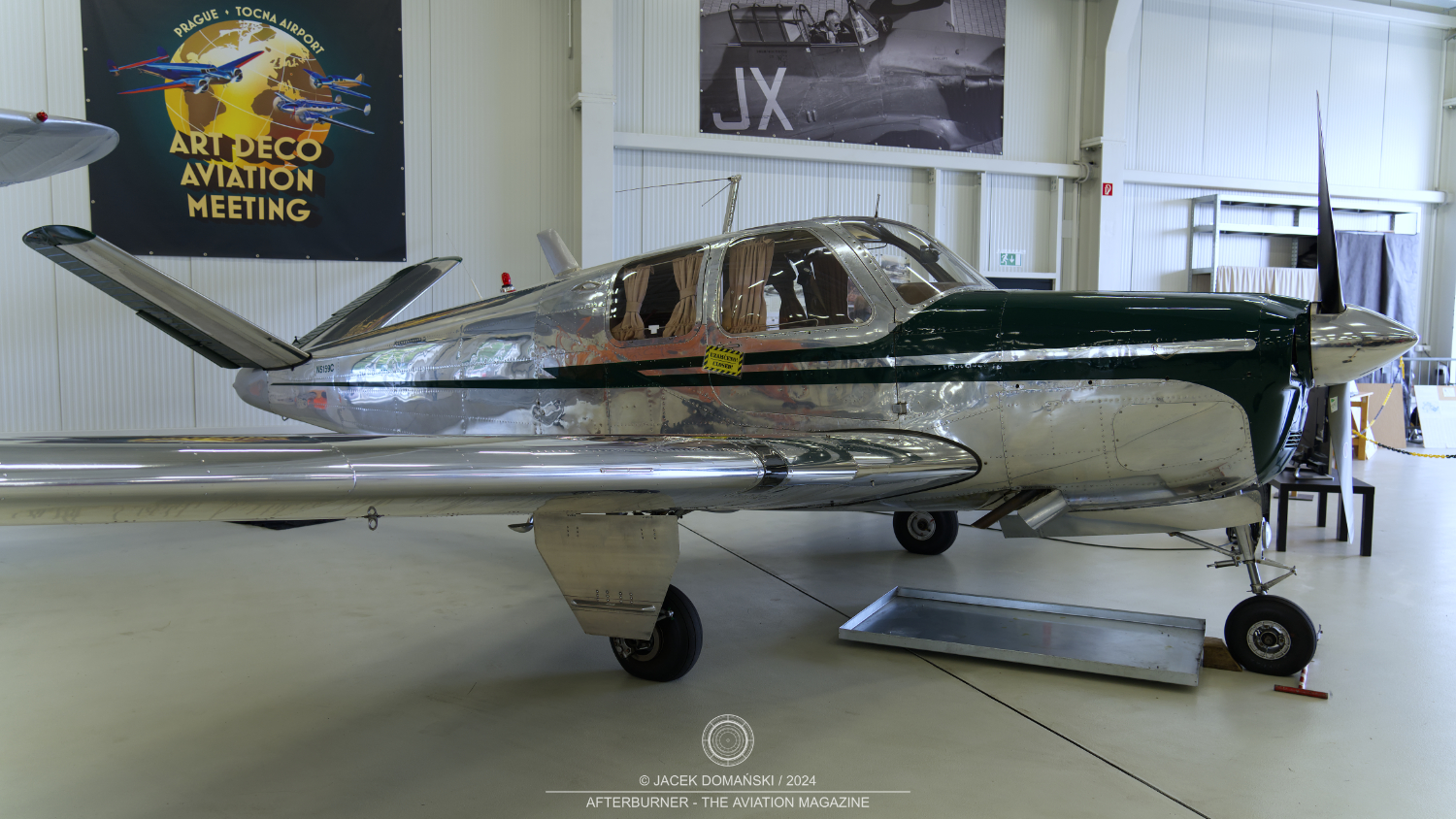
Pictured above – for illustrative purposes – is Beech Model 35 Bonanza, manufactured in 1950 and currently being part of the aviation collection at Letiště Točná / Točná Airport in Prague, the Czech Republic