 Those roaring twenties, the “golden years” of aviation… This was a time when aviators outdid themselves, pushing the limits of what was possible. Aviation records were set one after another, and reports of new outstanding achievements circulated in the media on a regular basis. Among those amazing aviation pioneers was a Polish pilot – Stanisław Skarżyński. Nowadays, it has been exactly 87 years since the day he went down in a magnificent way in the history of aviation.
Stanisław Jakub Skarżyński was born on 1 May 1899 in Warta, a city situated in the bend of the river of the same name. Since his childhood, Skarżyński had a penchant for aviation and started by making aeroplane models. However, his road to aviation did not happen immediately, being a long and winding one.
Starting his elementary education in Warta, Skarżyński often moved and changed second-grade schools. Finally, between 1915 and 1918, he attended the Secondary Modern School in Włocławek. There he joined the local independence organisation and also the Polish Military Organisation. Within the latter, Skarżyński graduated from the underground military school and received the rank of Sergeant Officer Cadet.
In 1918, Skarżyński passed all his secondary school exams and moved to Warsaw, where he intended to continue his education at Warsaw University, Faculty of Chemistry. Nevertheless, in the same year he returned to Warta and volunteered for the Polish Army. Shortly after, he became commander of a unit responsible for disarming German soldiers and restoring Polish authority in the area. Finally, he became the city commandant of Warta.
In December of that year, Skarżyński was promoted to staff sergeant and enlisted in the 29th “Kaniów” Rifles Regiment in Kalisz, starting his military career in the infantry. In the following years, he graduated from the School of Cadets, was promoted to second lieutenant, and took part in the Polish–Soviet War. On 16 August 1920, during the Battle of Radzymin, Skarżyński was seriously injured in his leg. Despite long treatment, he began to limp and therefore had to abandon infantry service – and aviation seemed the best choice.
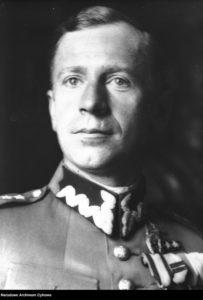
Skarżyński’s determination won him a transfer to the air force, and he soon began flight training at the School of Pilots in Bydgoszcz. Sometimes things are not easy at the beginning, and Skarżyński experienced this himself. During his first flight, the aeroplane caught fire – fortunately, he managed to land it safely.
Eventually, Skarżyński finished his aviation training in 1925 and, as a young pilot, was assigned to the 1st Air Regiment in Warsaw, based at the Pole Mokotowskie airfield. Two years later he was appointed captain, and in 1928 he was given command of the 12th Combat Squadron, where he stayed until January 1930. During this period, Skarżyński additionally interned in the Romanian Air Force.
This was also the beginning of his dreams about long-distance flights. And soon, Skarżyński started to make them happen.
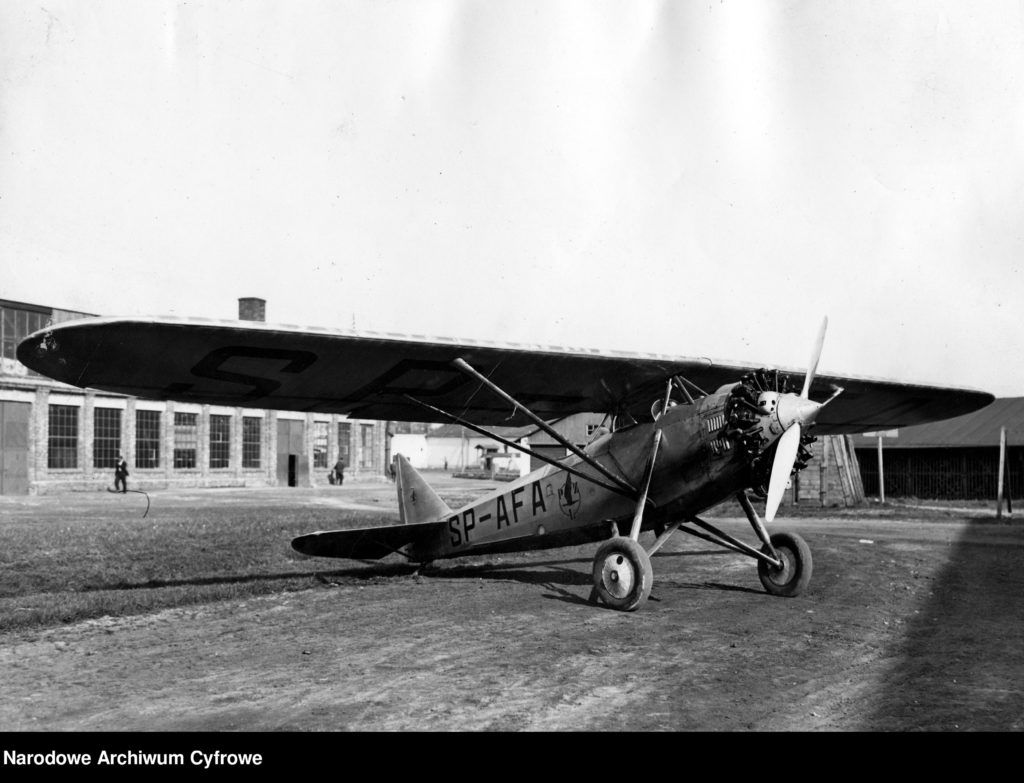
He first gained attention in 1931 when, together with Lt. Andrzej Markiewicz, he made a flight around Africa. Flying a Polish liaison aeroplane PZL Ł.2 “SP-AFA”, they flew a route of 25,770 kilometres from Warsaw through Athens, Cairo, Khartoum, Kisumu, Abercon, Elisabethville, Luebo, Léopoldville, Lagos, Abidjan, Bamako, Dakar, Port Etienne, Agadir, Villa Cisneros, Casablanca, Alicante, to Paris, and then back to Warsaw.
It was a long and dangerous flight, quite eventful due to technical problems. The engine had to be repaired several times and, in addition, one of the cylinders broke away during the flight, forcing Skarżyński to perform an emergency landing at Riberac, France. Despite all the engine issues, Skarżyński refused to replace it, insisting on completing the flight with the originally installed unit.
That African adventure made him a famous figure in Polish aviation, but the biggest surprise was still ahead. During the Africa flight, the idea of crossing the Atlantic Ocean first appeared in Skarżyński’s mind, and from then on he worked to make it happen.
Obviously, he would not be the first pilot to do so – there were already John Alcock and Arthur Brown in 1919 and Charles Lindbergh in 1927 – but he would be the first Pole to achieve it. There had already been two unsuccessful Polish attempts, made by Major Ludwik Idzikowski and Major Kazimierz Kubala, flying an Amiot 123. The first flight in 1928 ended in an emergency landing off the coast of Spain, and a year later, during the second attempt, their aircraft crashed on Graciosa Island, killing Idzikowski.
However, crossing the Atlantic Ocean was not the goal itself. Skarżyński’s idea was even more ambitious – he wanted to perform a record-breaking flight from Warsaw to Rio de Janeiro, covering approximately 18,000 kilometres. What he needed was an aircraft suitable for such an adventure.
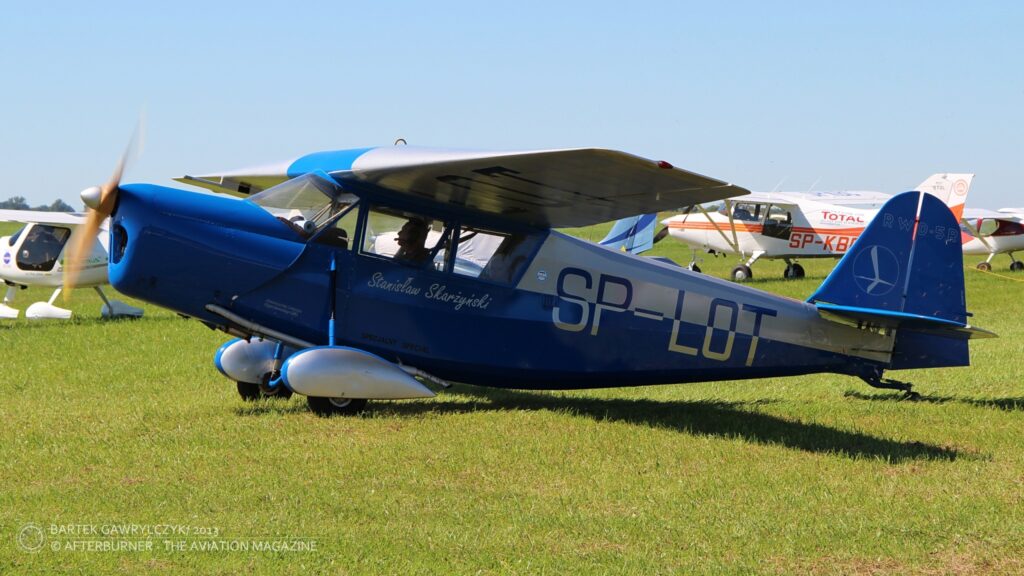
The choice was the new Polish sport aircraft RWD-5, a small two-seat monoplane in high-wing configuration, originally powered by a 120 hp de Havilland Gipsy Major engine with a wooden two-blade propeller. However, the extreme flight to Rio required several modifications.
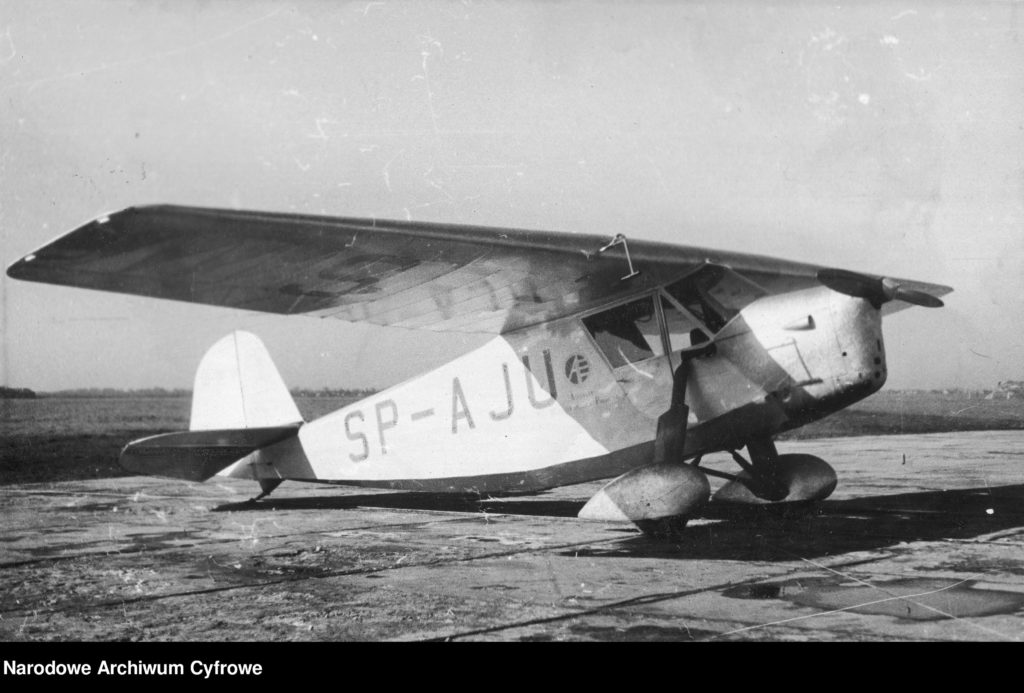
The rear cabin equipment was removed and replaced by a 300-litre fuel tank. Two additional tanks of 113 litres each were installed in the wings, next to the standard ones. With the new fuel system, the take-off weight increased to 1,100 kg, compared to the original 760 kg, requiring many standard components to be removed, including not only the passenger seat and other redundant items but also the radio and even the instrument panel backlight system. On the other hand, the pilot’s seat was equipped with rubber cushions, improving comfort during the long flight and allowing inflation in case of a sea landing. Finally, the empty weight was reduced to 446 kg, while the maximum take-off weight remained 1,100 kg.
After successfully completing flight tests, the silver-painted aeroplane was designated RWD-5bis and registered as SP-AJU. Skarżyński completed his medical examination, and both pilot and aircraft were ready for the journey. Unlike other record-breaking adventures, this flight had no media coverage and was kept secret for as long as possible.
There are several explanations for this decision. First, he did not seek attention and wanted to avoid public disappointment in case of cancellation or failure. Second, he preferred to make decisions without external pressure. This worked well, but it meant the purpose of the flight had to remain hidden throughout the route.
On 28 April 1933, around 8:00 in the morning, Stanisław Skarżyński took off from Okęcie Airport in Warsaw in his RWD-5bis, heading for Lyon, France – beginning the first stage of his long journey to Brazil. After two weeks of travel through Lyon, Perpignan, Casablanca, and Port Etienne, he reached Saint-Louis in Senegal. The longest and most difficult stage was still ahead…
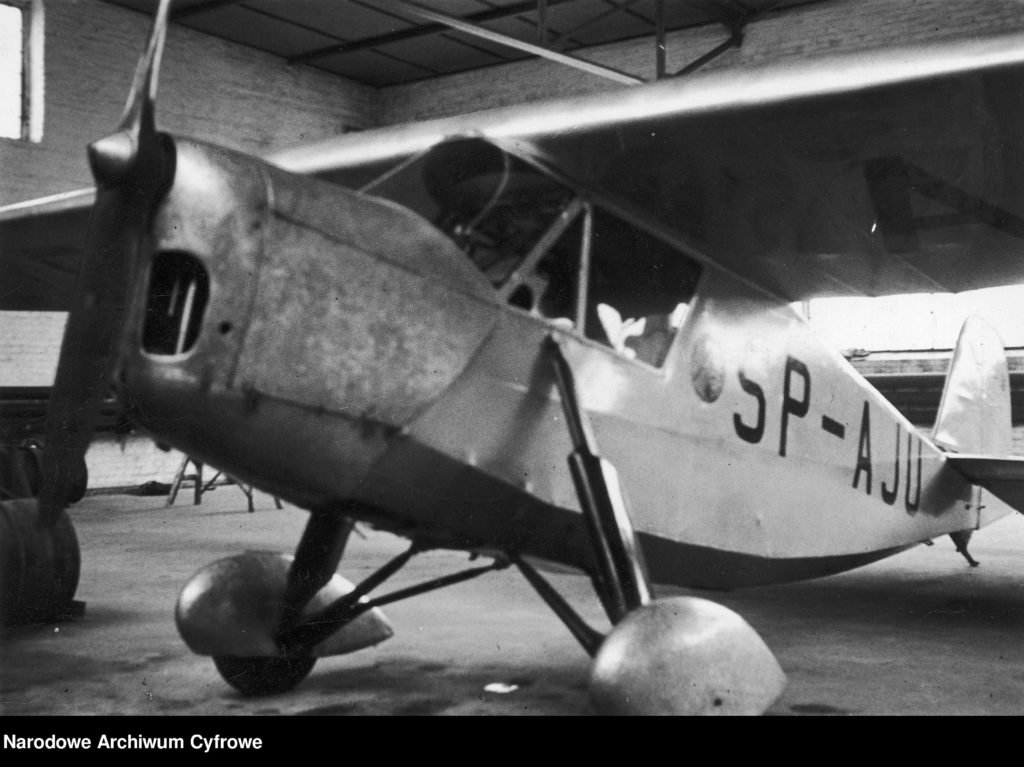
The big day came on 7 May 1933. Supplied with fruits, sweets, and a headlamp (one of the most important items due to the lack of instrument panel backlighting), Skarżyński took off from Saint-Louis at 11:00 p.m. GMT, beginning his Atlantic crossing. He did not disclose his real destination, officially claiming to be heading for Western Europe.
Taking off at night was intentional. The flight was expected to last more than a dozen hours, and starting at dusk helped reduce sleepness. The small aircraft flew on a 240-degree course, initially at 50–100 metres above the ocean due to fog.
Around half an hour before sunrise, he climbed to 1,700–2,500 metres, adjusting for wind drift. Most of the time there were no visual reference points, so he relied entirely on navigation and calculations.
After twelve hours over the ocean, Skarżyński spotted small islands, barely identifiable on the map. At 4:00 p.m. GMT, land appeared on the horizon, and at 4:15 p.m. he reached it – officially crossing the Atlantic. Then the pilot realized he was between Cape São Roque and Natal, only about 15 kilometres off course.
He initially planned to land in Natal, but with about 150 litres fuel remaining, he continued to Maceió. After another three hours, at 7:30 p.m. GMT, he landed there. Thus, Stanisław Skarżyński became the first Polish pilot to cross the Atlantic. He still had enough fuel for a few additional hours of flight but was afraid to continue the journey beyond Maceió and flying over the unknown land in the evening.
Skarżyński was not enthusiastically welcomed by crowds there. In fact, the airfield seemed quite deserted, but after a while airport service representative appeared. When Skarżyński, a lone man dressed in a casual suit and bareheaded, announced that he was a Polish Air Force captain who had come directly from Saint-Louis de Senegal, no one believed him at first.
Although Maceió had been informed about the possible flight across the Atlantic, the airport authorities expected a large transatlantic aircraft. Only after checking the RWD-5bis registration did everything become clear. Shortly thereafter, an airport commandant arrived from the city to meet Skarżyński and assist with formalities required to officially recognize the record flight – including checking seals on the aircraft and securing the barogram by varnishing it (barogram was then a common method of recording flight altitude, by the variations of atmospheric pressure for a given time).
On the next day, the official documents necessary for recognizing Skarżyński’s achievement were signed by the airport commandant, the French consul in Maceió, and the airport radio station manager. The 3,640 km route from Saint-Louis to Maceió was flown in 20 hours and 30, including 17 hours and 15 minutes over the Atlantic Ocean, with an average speed of 177.6 kph,
Captain Stanisław Skarżyński became the first Polish pilot ever to cross the Atlantic. In addition, the RWD-5bis was at that time the smallest and lightest aircraft to fly across the Atlantic Ocean. Skarżyński also set another record for non-stop flight distance in FAI Category II – touring aircraft with an unladen weight up to 450 kg. Eventually, the entire route from Warsaw to Rio de Janeiro covered 17,885 kilometres in the air (18,305 km including the return flight from France to Poland).
Skarżyński did not return to Poland immediately, staying in Brazil for several weeks. As news of his achievement spread, he flew across the country, visiting Rio de Janeiro, Santos, Curitiba, Porto Alegre, and Buenos Aires, and attending numerous meetings. He was welcomed by Stanisław Grabowski, the Polish envoy extraordinary and minister plenipotentiary, and also met Getúlio Vargas, the President of Brazil.
During this tour, he was greeted by crowds at every stop and once was even accompanied by three DH-82 Tiger Moths of the Brazilian Air Force.
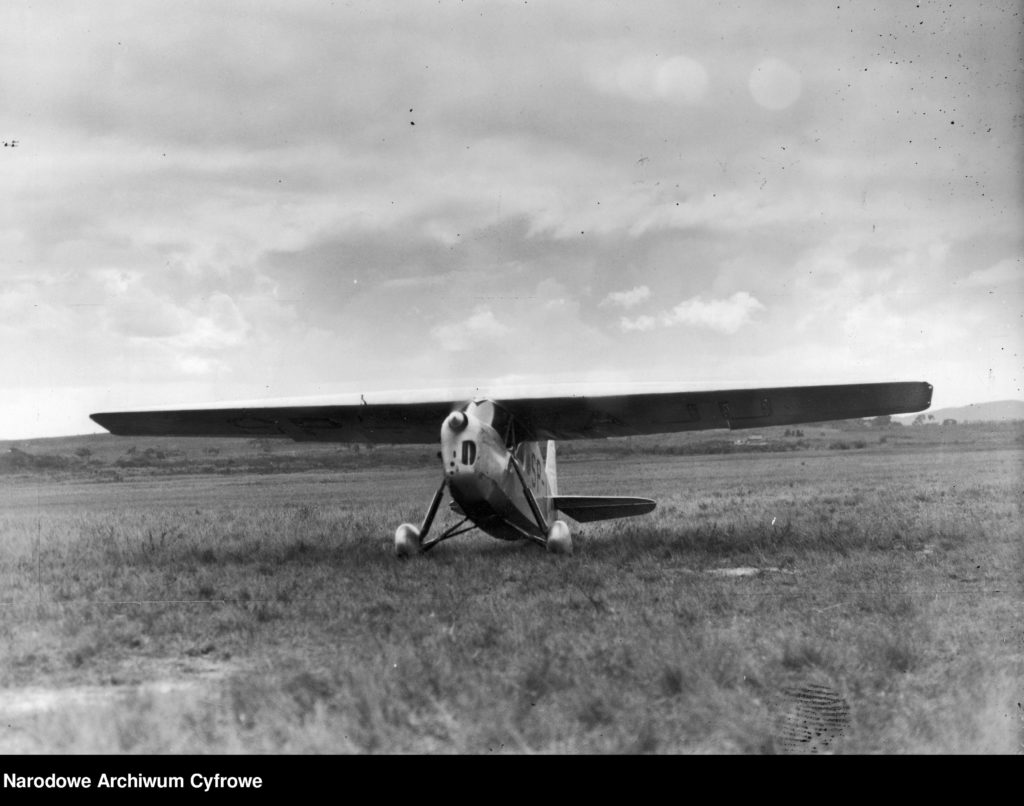
On the way back, the RWD-5bis and its pilot crossed the Atlantic aboard the liner Avila Star. Then, from the French airfield in Boulogne, Skarżyński again took off in his tiny aeroplane and headed for Poland. His incredible adventure officially ended on 2 August 1933, when the silver RWD-5bis landed at Pole Mokotowskie in Warsaw. On the way back, he also made a short stop in Lublinek near Łódź, where he was warmly welcomed by his wife Julia.
After returning to Poland, Skarżyński was enthusiastically welcomed and became a well-known public figure. However, being rather a humble person, he was not comfortable with this situation.
Less than a year later, he returned to active military duty and was promoted to major on 5 March 1934. He later finished the Higher School of Aviation in Warsaw and again took command of a combat squadron.
Over the following years, his military career progressed smoothly. In 1938, Skarżyński became Deputy Commander of the 4th Aviation Regiment in Toruń, and later that year he was appointed lieutenant colonel. He was also active in sport aviation and became President of the Aero Club of the Polish Republic on 26 April 1939.
During all those years he was widely admired as aviation pioneer and adventurer, often nicknamed as ´Polish Lindbergh´. In 1936, with the establishment of Louis Blériot medal in France – awarded to record setters in speed, altitude and distance categories in light aircraft – Skarżyński was one of its first four recipients and the only Polish pilot awarded with that medal.
Skarżyński´s adventures were documented in two books he wrote. His first publication, ´25,700 kilometres over Africa´, told about the African tour of 1931 and the second book entitled ´Across the Atlantic with RWD-5´ was sharing his memoirs from the record-breaking flight.
Interestingly, he also served as a model for the Monument of Aviators in Warsaw, designed by Edward Witting and erected in 1932.
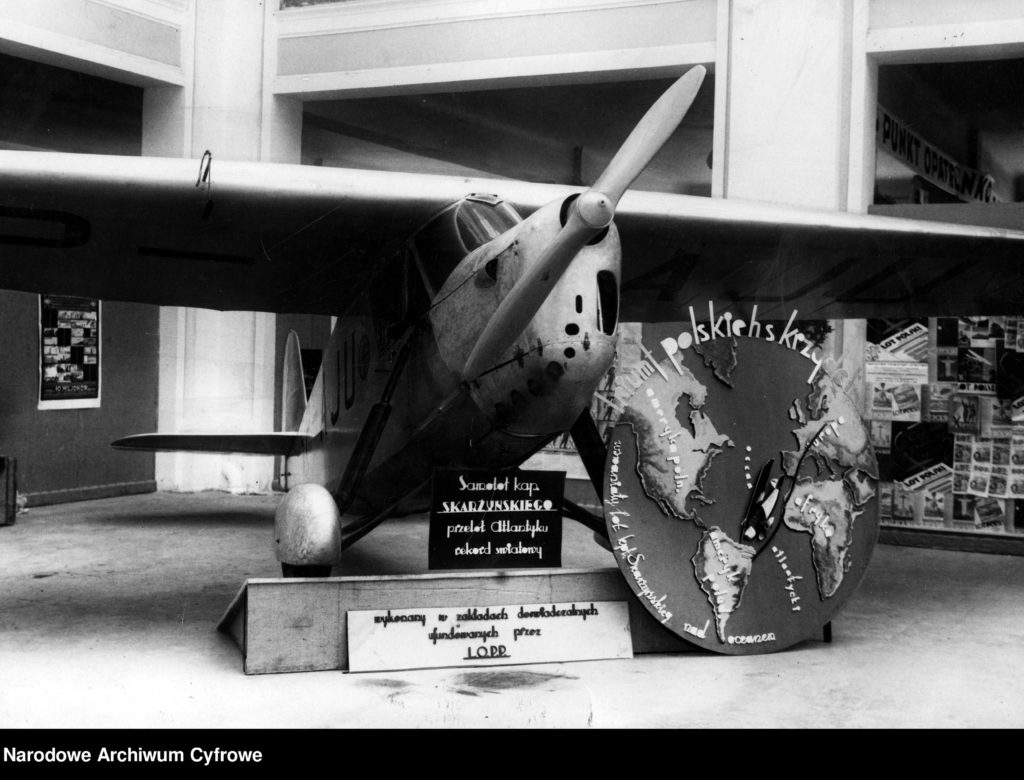
In August 1939, shortly before the outbreak of the World War II, Skarżyński was additionally appointed the Chief of Staff of the Pomeranian Army and he held this position during the Invasion of Poland. After the defeat, Skarżyński was evacuated to Romania, sharing the fate of many other Polish soldiers. There, acting as Deputy Air Force Attaché, he coordinated the transfer of Polish pilots to France.
Eventually, Skarżyński followed the same path, and in 1940 came to France, soon becoming the Deputy Chief of Staff in the Polish Air Force there. After the fall of France, he continued to Great Britain with other Polish refugees.
Shortly after arriving to Britain, Skarżyński was assigned a new task of educating Polish cadet airmen and become the commander of their training course. The experience and flying skills of the pioneer aviator were supposedly noted by Polish authorities as a valuable asset, so it seemed that Skarżyński´s future career would be related to pilot training.
At the beginning of 1941 Skarżyński was transferred to Polish Flying Training School at RAF Hucknall and assigned the Chief Flying Instructor. With the development of the Polish Air Force, the flying school at Hucknall was soon split into No. 25 Polish Elementary Flying Training School at RAF Hucknall and No. 16 Polish Secondary Flying Training School at RAF Newton. Skarżyński was initially assigned to 16. PSFTS, then becoming the Polish commander of RAF Hucknall.
However, the flying school environment was not enough for such an adventure pilot as Skarżyński was. He asked several times for being transferred to a combat post and finally the prayers were answered – in April 1942 Skarżyński was appointed the commanding officer of RAF Lindholme, in the rank of Acting Group Captain.
Lindholme was then a home for two Polish bomber squadrons, flying Vickers Wellington aircraft – No. 304 (Polish) Bomber Squadron RAF ´Ziemi Śląskiej´ (the Land of Silesia) and No. 305 (Polish) Bomber Squadron RAF ´Ziemi Wielkopolskiej´ (the Land of Greater Poland) – that arrived there in July 1941. Those two Polish squadrons were operating hand-in-hand from Lindholme until May 1942, when 304 was transferred to the Coastal Command.
No. 305 Squadron remained the only squadron at the base and during the next two months worked intensively in a joint effort of the RAF Bomber Command. Among other missions taking part in the first ´thousand-bomber-raid´ against Cologne in May, then in the second one against Essen, on 1-2 June.
Presumably, the commanding officer duties did not allow Skarżyński to fly on a regular basis. He managed to fly just a few missions in May and June with No. 305 Squadron, as an additional crew member. At the beginning of May he accomplished three raids over France, with targets in Paris and Nantes. Then, during the night of 30 – 31 May, Skarżyński participated in the first ´thousand-bomber-raid´ ever, the famous ´Operation Millennium´ over Cologne. In the night of 1 – 2 June, he completed the second ´thousand raid´ to Essen, dropping bombs through the clouds at the altitude of 18,000 feet. Most of those missions were flown in the Wellington Z8339, SM-N.
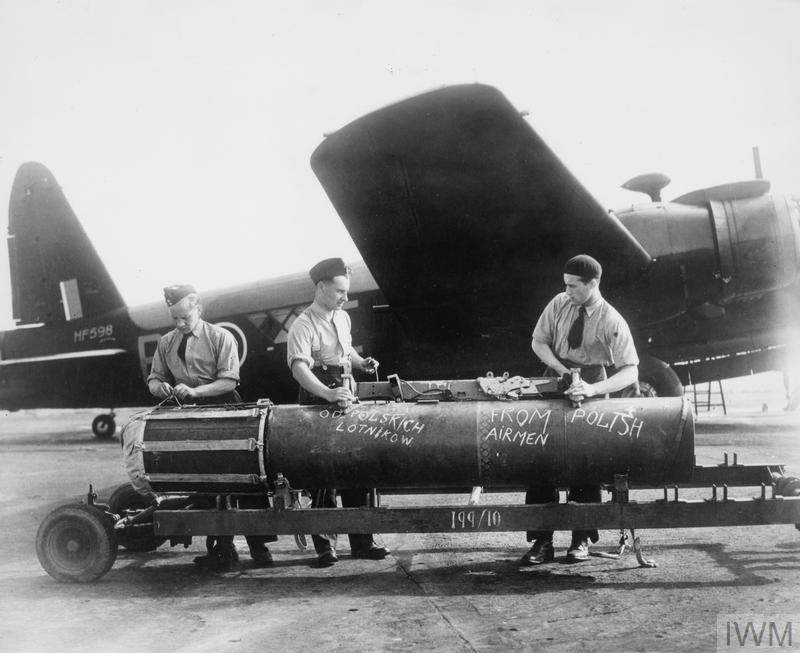
The third ´thousand-bomber-raid´ of the summer offensive was scheduled for the night of 25 – 26 July. The target of that night was Bremen – the north German harbour town, despised by the Bomber Command crews for its extremely heavy anti-aircraft defence.
In order to meet the demand for another spectacular air raid, the Bomber Command planned to use all available aircraft, including Blenheims, Hampdens, Whitleys and Bostons. However, this still made just 960 aircraft. After the personal intervention of Winston Churchill, the Coastal Command additionally assigned 102 of its aircraft for Bremen.
Among 1,067 bombers that took-off this night for Bremen, was Vickers Wellington Mk.II Z8528, SM-R, commanded by F/Lt Edward Rudowski. However, for this raid it had an additional crew member – after a gap of almost one month, G/Capt Stanisław Skarżyński joined the crew for his third ´thousand-bomber raid´. The records about this flight are not clear, but most probably the Wellington was captained by P/O Józef Szybka, with Skarżyński being his second pilot and Rudowski as one of the gunners.
During the third ´thousand-bomber raid´ the Bomber Command lost 48 aircraft, including the Wellington SM-R, the sole loss of No. 305 Squadron. There are many versions about what happened this night, that could be found in publications and studies about Skarżyński and his life. Sadly, most of them stretches the truth while telling about the last flight of the ´Polish Lindbergh´.
The Vickers Wellington SM-R took-off at 23:15 hours, as the first one from the squadron and carrying one 4,000 lbs bomb (commonly nicknamed as ´cookie´). On the way to the target, somewhere over the Dutch coast, the left engine stalled. The crew had no other choice than abandon the mission and, after jettisoning the ´cookie´, set course back home.
Sadly, the pilot was not able to maintain the altitude and SM-R, reportedly piloted by Skarżyński himself, at 02:00 hours ditched in the North Sea, 14 miles off Yarmouth (however, the Operations Record Book of the squadron indicates 40 miles). The sea was heavy that night, but the crew managed to abandon the aircraft, and board the dinghy launched by the navigator. All but one – as Skarżyński was hit by a wave and washed to the port side of the Wellington bomber, while leaving the aircraft.
Although the official Bomber Command records say laconically that ´Skarżyński was hit by a wave as he left the aircraft and was drowned´, the very end of his life was probably a much bitter moment. The crew of SM-R reported that they could hear Skarżyński calling for help for about thirty minutes. Sadly, it was neither possible to determine his position nor to control the dinghy turning randomly on the rough sea.
The Polish airmen were then found by Sgt Marchand from No. 279 Squadron, flying the air-sea rescue Lockheed Hudson aircraft. A Lindholme gear was jettisoned for them, landing just 4 yards away, but the sea was so heavy that the Wellington crew could not reach it. They were finally rescued a bit later, picked up by a high-speed-launch – eight hours after abandoning the aircraft, according to the Operations Record Book. Skarżyński´s body was carried back by the North Sea streams and washed up on the Isle of Terschelling, the Netherlands. He was buried at the West-Terschelling General Cemetery, grave No. 62.
Admittedly, operational flying in the Bomber Command was extremely dangerous duty. The death rate among the crews within the Command exceeded 44 percent. Regrettably, Skarżyński was among those that never got the chance to finish his combat tour.
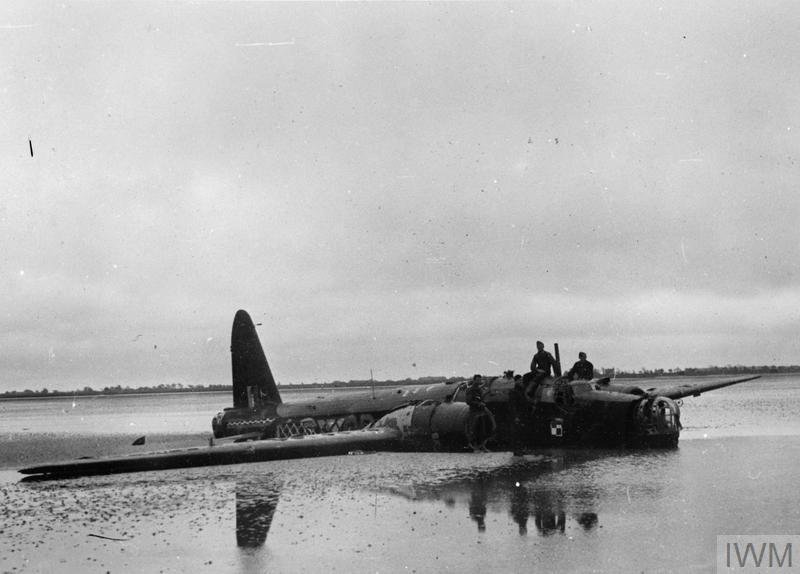
Stanisław Skarżyński was posthumously awarded the Order of Polonia Restituta 2nd Class and promoted to the rank of Colonel. This was the final addition to the long list of his awards, including the French Legion of Honour, the Brazilian National Order of the Southern Cross, the Order of the Crown of Romania and many others.
Nowadays, the remembrance about the brave pilot is still alive in Poland. Skarżyński is the patron of Aeroclub of Włocławek, was the patron of the 13th Airlift Regiment of the Polish Air Force (1985 – 2000), the 13th Airlift Squadron (2001 – 2010) and currently of the 8th Air Transport Base in Kraków (since 2012). In most of the Polish cities the street named after him can be found. Skarżyński is also a patron of several schools, colleges and scouting teams.
The famous small aircraft that crossed the Atlantic, later nicknamed ´Amerykanka´ (an American woman) was – after the record flight – again restored to the standard, two-seat variant, and donated to Skarżyński as a gift. When the war broke out, the last known location of the SP-AJU was the Lviv airport (now Ukraine). The city was then captured by the Soviet Army on 23rd September 1939 and the further fate of silver RWD-5bis remains unknown.
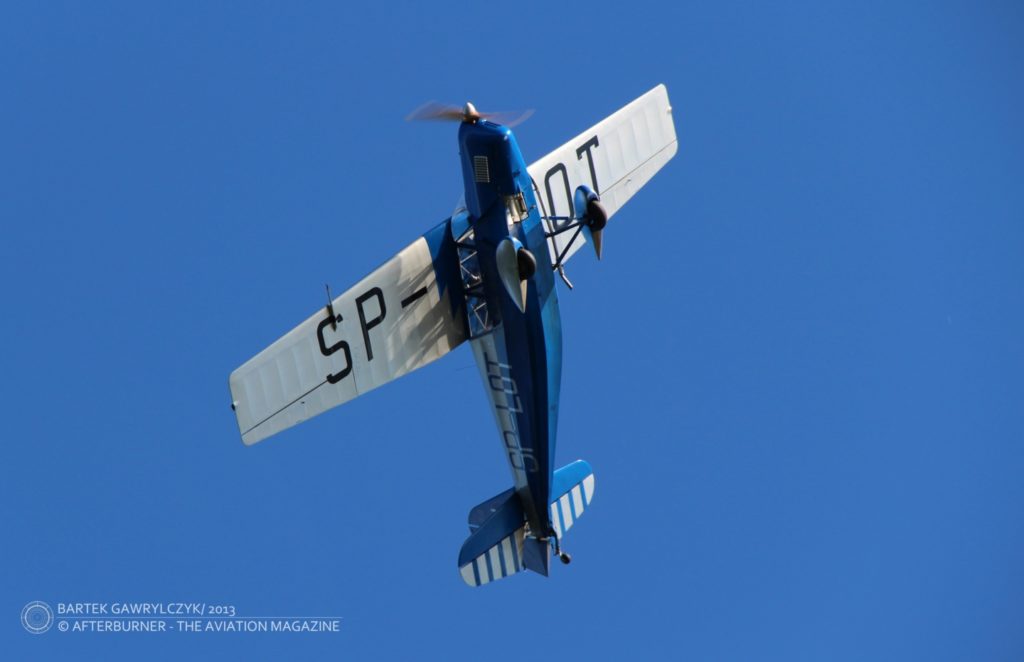
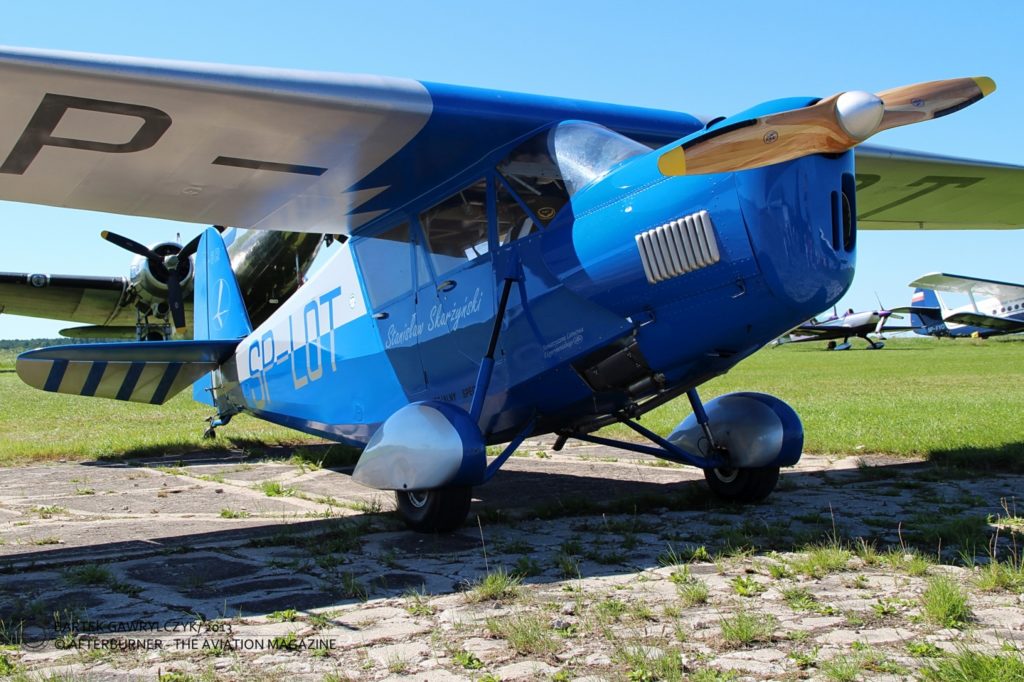
On 26th August 2000, the replica of Skarżyński´s aeroplane, designed as RWD-5R (R meaning ´replica´) took-off for its maiden flight. In appearance, this aircraft was almost identical to SP-AJU, with just small details changed, as required by the current aviation regulations. Over the next years SP-LOT, as the replica was registered, was a frequent participants of the Polish air shows and was also offered for the sightseeing flights. Unfortunately, on 1st September 2018, during the air show in Bielsko-Biała, the RWD-5R SP-LOT crashed. Fortunately, two persons on board survived the accident without any injures, but the aircraft was heavily damaged and was not repaired until today. Hopefully, according to some initial statements the aircraft is planned to be repaired and yet restored to flying condition.
Sources:
-
- Tom Docherty, Dinghy Drop: 279 Squadron RAF, 1941–46
- Peter Jacobs, Bomber Command Airfields of Yorkshire
- Martin Bowman, The Heavy Bomber Offensive of WWII
- Martin Bowman’s comprehensive study of Bomber Command: Reflections of War: Battleground Berlin (July 1943 – March 1944)
- No 305 Squadron: Operations Record Book
- International Bomber Command Centre, online resources
- Jerzy Cynk, Polish Aircraft 1893-1939
- Wikipedia – The Free Encyclopedia
- Cover photo and photos 8, 9 by Bartek Gawrylczyk