 On 27 February 1965, prototype of the Antonov An-22 Antey, a heavy turboprop strategic transport aircraft (NATO reporting name: “Cock”), performed its maiden flight from Kyiv to Uzyn.
The An-22 was intended as the third – and largest – Soviet military transport aircraft. It followed the Antonov An-8 and the Antonov An-12, which entered operational service in 1958 and 1959 respectively.
Work on the aircraft, initially then designated изделие 100 (“izdeliye 100”), began in 1960. As with the two earlier transports, the development of what was to become the heaviest Soviet airlifter was entrusted to the Antonov design bureau, officially known as Опытно-конструкторское бюро ОКБ-153 (the Research and Design Bureau No. 153).
The performance requirements for the new strategic airlifter were highly ambitious. It was expected to carry any existing military or civilian equipment weighing up to 50 tonnes within its cargo hold and to be able to operate from short, unpaved airstrips.
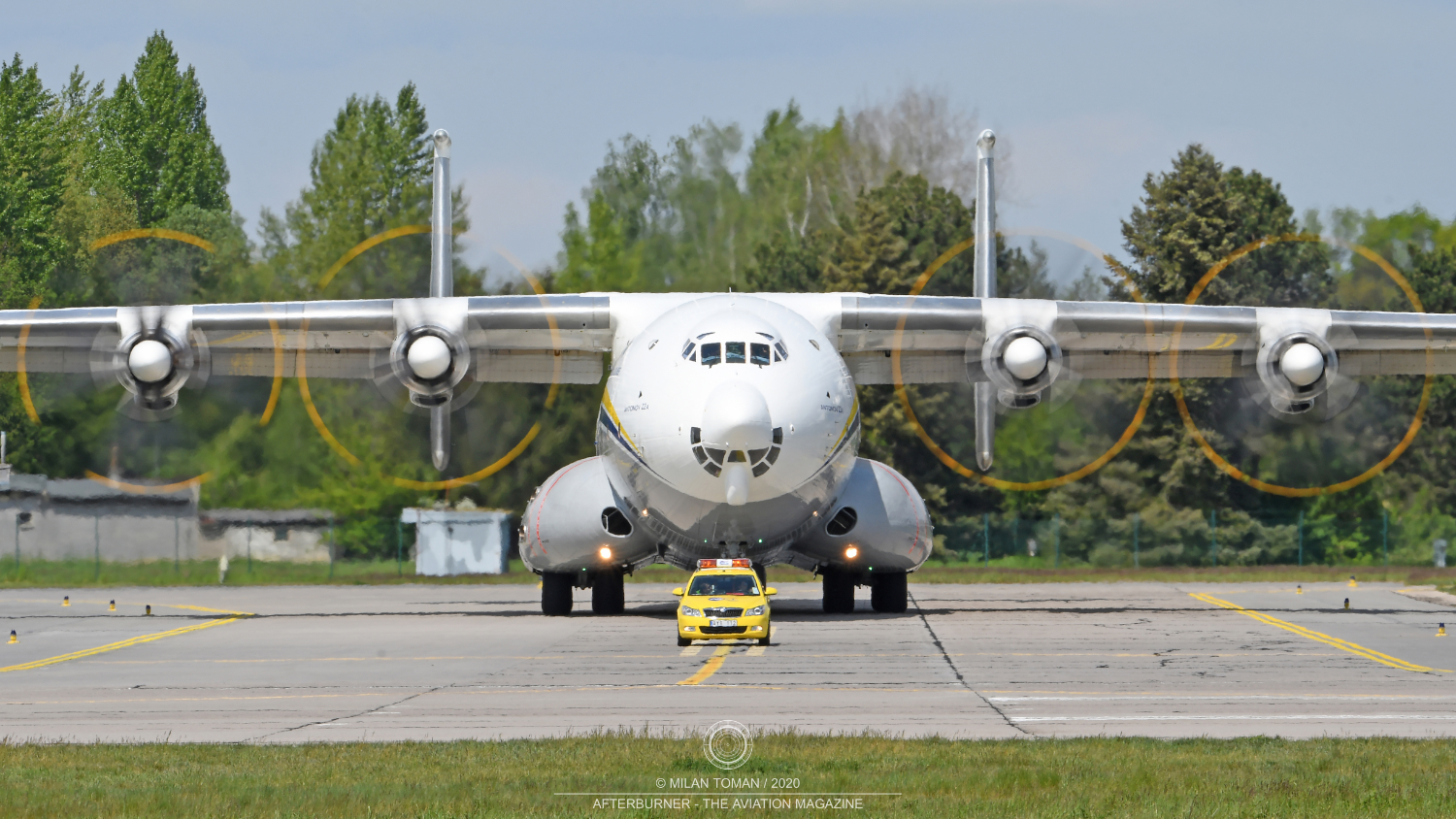
By mid-1961, the initial design concept had been finalised and a full-scale mock-up presented to the state commission. The aircraft featured a high-mounted wing and was powered by four Kuznetsov NK-12MA turboprop engines, each developing 15,265 shp. Each engine drove a pair of four-bladed contra-rotating propellers, similar to those used on the Tupolev Tu-114 airliner. This configuration, combined with low-pressure tyres and a multi-wheel landing gear arrangement, enabled short take-off and landing (STOL) operations from unprepared airfields.
The first prototype was completed in August 1964 and subsequently cleared for flight testing. At this point, the airlifter received its official designation An-22 Антей (“Antaeus”, the giant from Greek mythology, although the aircraft name is commonly romanised as “Antey” or “Antei”).
On 27 February 1965, the An-22 performed its maiden flight from the Antonov aviation plant in Kyiv to the Uzyn military airfield. The aircraft was crewed by seven people and commanded by experienced test pilot Yuri Vladimirovich Kurlin. In June of the same year, the prototype was disclosed to public for the first time at the Paris Air Show. In early 1969, the first production aircraft was delivered to a Soviet Military Transport Aviation unit.
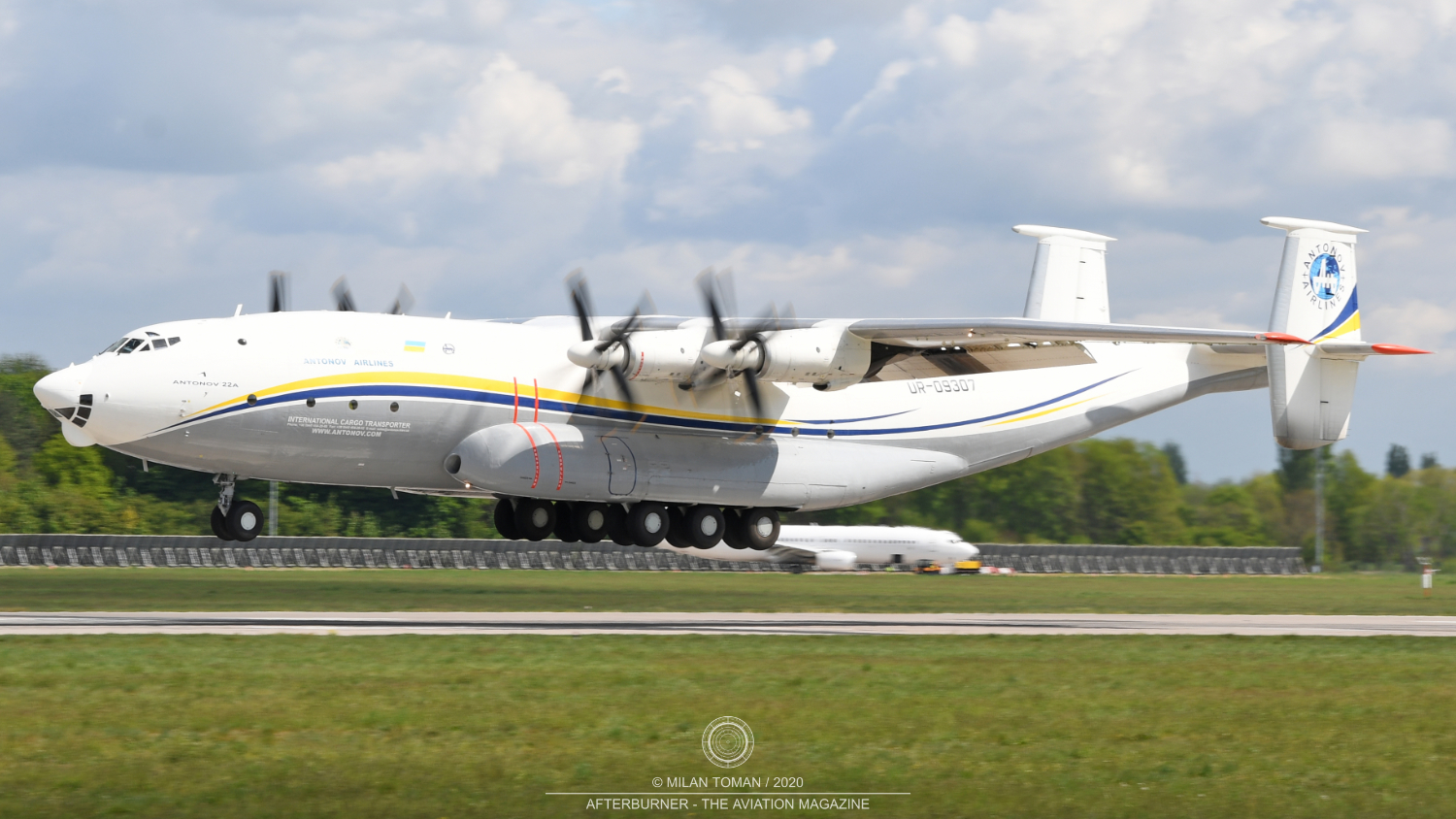
The An-22 significantly improved the long-range lifting capability of the Soviet Armed Forces, particularly its airborne branch. The aircraft could transport up to 80 tonnes of payload over a distance of 5,000 km. With the payload reduced to 45 tonnes, its range increased to approximately 10,950 km. While the An-12 could carry only a single BMD-1 airborne combat vehicle, the Antey could carry up to four of them in its cargo compartment.
The operational history of the An-22 was both extensive and relatively brief. The aircraft was widely used during the Soviet military intervention in Afghanistan (1979–1989, 25 December 1979 – first Soviet troops landed in Kabul and Bagram), the Chernobyl disaster in 1986, and the Armenian earthquake crisis of 1988. In the longer term, however, turboprop propulsion was considered less economical than turbojet engines, requiring intensive maintenance. Ultimately, the Antey shared the fate of the Tu-114, soon being overshadowed by jet-powered strategic transport aircraft, such as the Ilyushin Il-76 and the Antonov An-124.
Serial production of the An-22 ceased in January 1976, with a total of 68 aircraft built.
Following the dissolution of the Soviet Union, An-22 aircraft were used to withdraw the Soviet troops from Eastern Europe. For a short period, two examples of the turboprop heavy airlifter were operated by commercial carriers.
However, the Antey fleet aged rapidly. By the beginning of the 21st century, only around ten An-22 aircraft remained airworthy. One example was operated by Antonov Airlines, the cargo division of Antonov, while the other served with the Russian Air Force.
The last civil-operated An-22 suffered severe damage during the Battle of Hostomel Airport in February 2022. There are conflicting reports related to its current status, ranging from potentially repairable to beyond economical repair or even being destroyed.
The Russian-operated aircraft were officially retired in mid-2024. In December 2025, the last airworthy example of the An-22 was lost in a tragic accident. During a test flight, the aircraft reportedly broke up in mid-air and crashed in the Ivanovo region, killing all seven crew members on board.
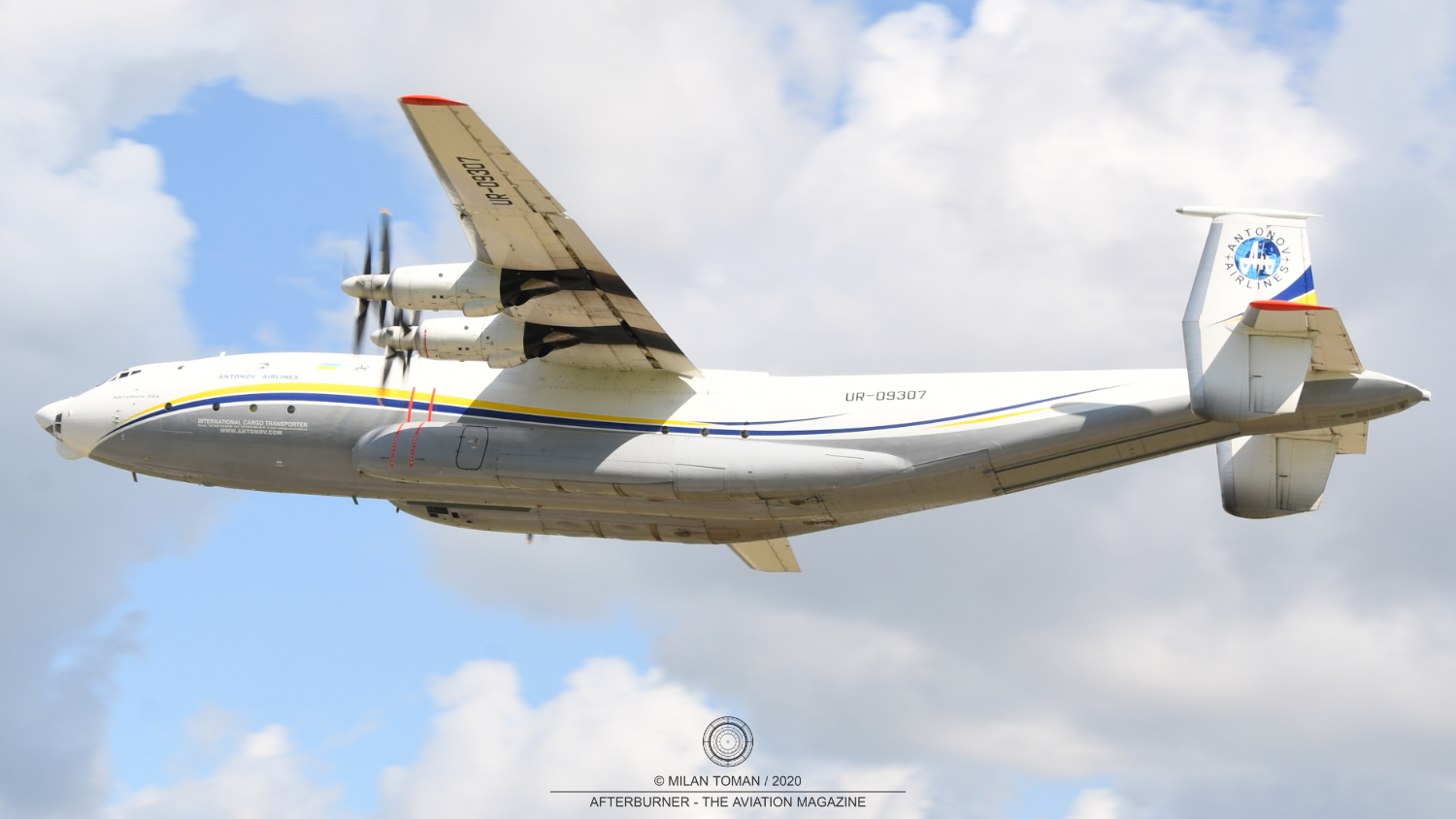
Pictured is the Antonov An-22 UR-09307, the abovementioned sole example used by the Antonov Airlines and then damaged at Hostomel in 2022.