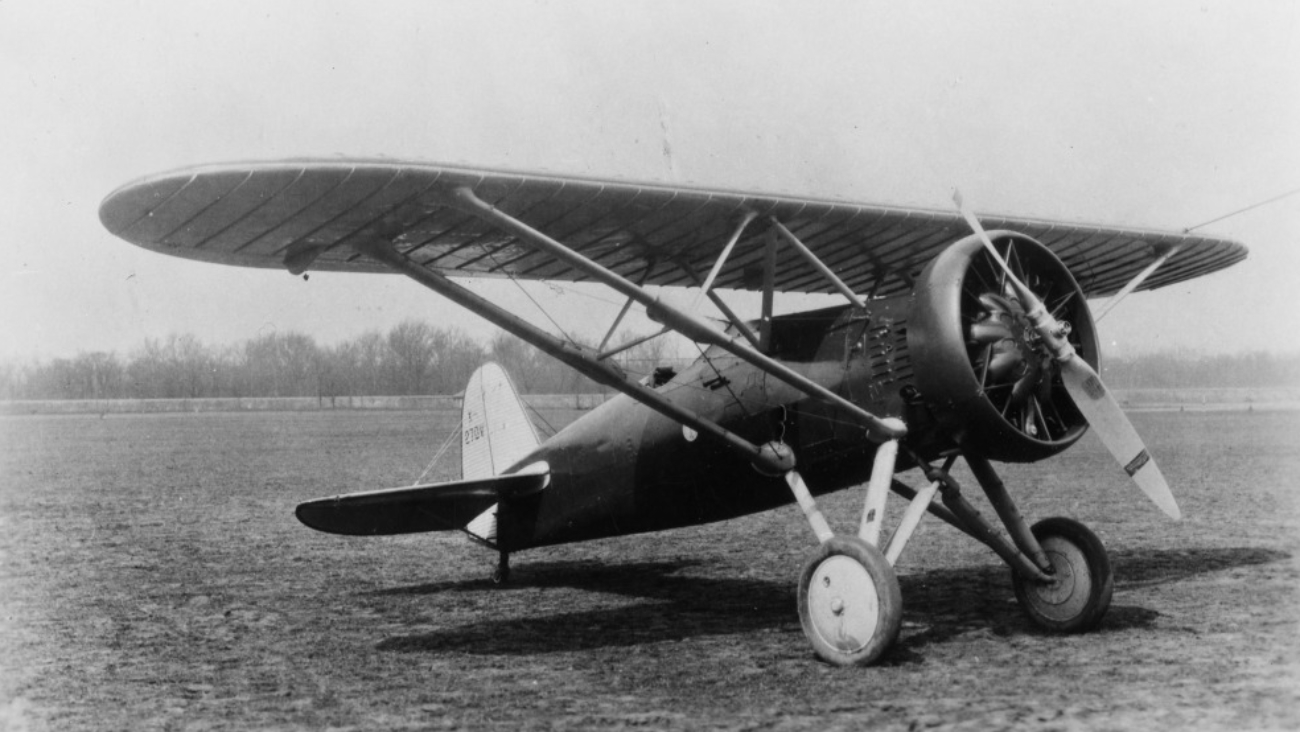
 On 30 January 1930, the prototype of the Boeing XP-15, a monoplane fighter aircraft, performed its maiden flight.
In the late 1920s, the Boeing Company developed the Model 99, a biplane fighter aircraft powered by a Pratt & Whitney Wasp radial engine. Built as a private venture, the aeroplane made its first flight in June 1928. Subsequently, the Model 99 was offered to the US Navy as a possible replacement for the Boeing F2B and F3B.
Following a positive evaluation, the Model 99 was approved by the Navy, receiving the military designation F4B-1. Then, an initial production batch of twenty-seven aircraft was ordered. Shortly afterwards, the fighter was also adopted by the United States Army Air Corps (USAAC), where it became known as the P-12.
The Model 99 quickly became the primary fighter aircraft in the American service, with 586 examples built by 1932. The aircraft underwent continuous development, resulting in several modified variants being created and designated by the company as the Model 223, 235, and 261.
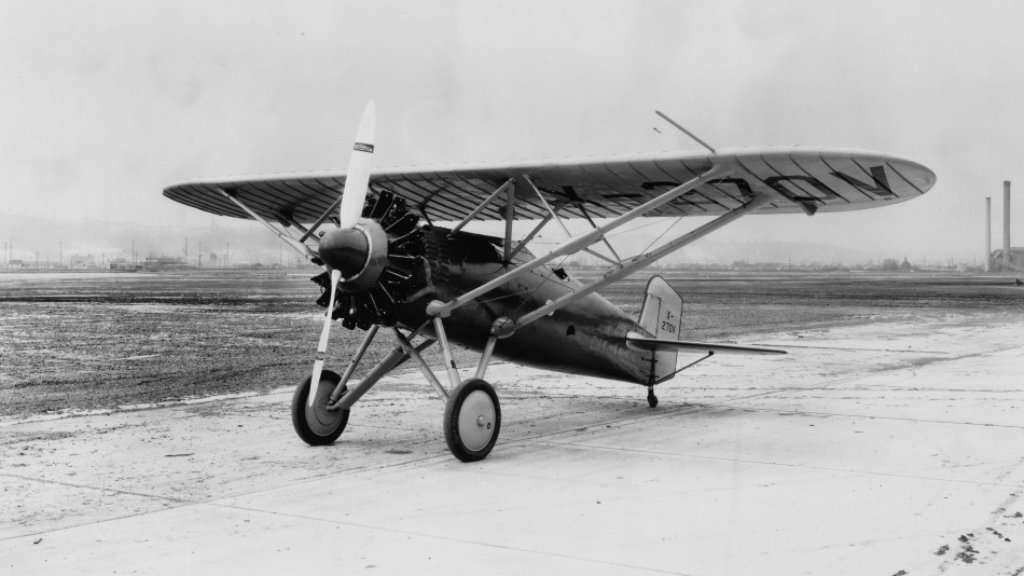
Bearing in mind the latest developments in aviation and the favourable reception of the P-12 by the USAAC, the Boeing Company created a high-wing monoplane variant of the fighter, known as the Model 202.
The aeroplane featured an all-metal construction and a split-axle undercarriage. The Model 202 was powered by a single 525 hp Pratt & Whitney SR-1340D Wasp radial engine, enclosed within a Townend ring cowling. The USAAC approved the fighter for testing and designated it as the XP-15.
On 30 January 1930, the Boeing XP-15 made its first flight and it was immediately found that the monoplane configuration necessitated redesign of the vertical stabiliser. Although this change was implemented quickly, further evaluation flights demonstrated that the fighter was unsuitable for service due to its poor overall performance. In February 1930, the XP-15 was damaged beyond repair during one of the test flights, which led to the cancellation of the evaluation programme.
A navalised variant of the aircraft was also offered to the US Navy. Designated the Model 205 by the company and the XF5B-1 by the Navy, the aircraft made its first flight in February 1930. However, following a series of evaluation flights, the aeroplane was not approved for service.
Cover photo: Boeing XP-15 (San Diego Air and Space Museum, 41899444 of the Ray Wagner Collection, via Flickr Commons)