 The Battle of Jianqiao, also known as the 814 Aerial War, was part of the Second Sino-Japanese War and the first aerial combat that was a prelude to the Second World War.
On 7 July 1937, the Marco Polo Bridge Incident marked the beginning of the Japanese invasion of China. Tensions between the Empire of Japan and the Republic of China increased exponentially, and soon focused on Shanghai, the world’s fifth-largest city at the time.
On 13 August, the Chinese Peace Preservation Corps and Japanese forces exchanged fire in the city, beginning the Battle of Shanghai, which lasted until 26 November 1937. It was one of the largest and longest battles of the Second Sino-Japanese War, resulting in a Japanese victory, the capture of Shanghai and heavy damage to the city.
On the second day of the battle, the Imperial Japanese Navy Air Service (IJNAS) carried out an air attack on Jianqiao Air Base, an airfield today known as Hangzhou Jianqiao Airport or Hangzhou Air Base. In 1937, the airfield housed the Chinese Central Aviation School and then served as the home base for the 4th Air Group of the Republic of China Air Force (ROCAF), which had been deployed there just an hour before the Japanese attack.
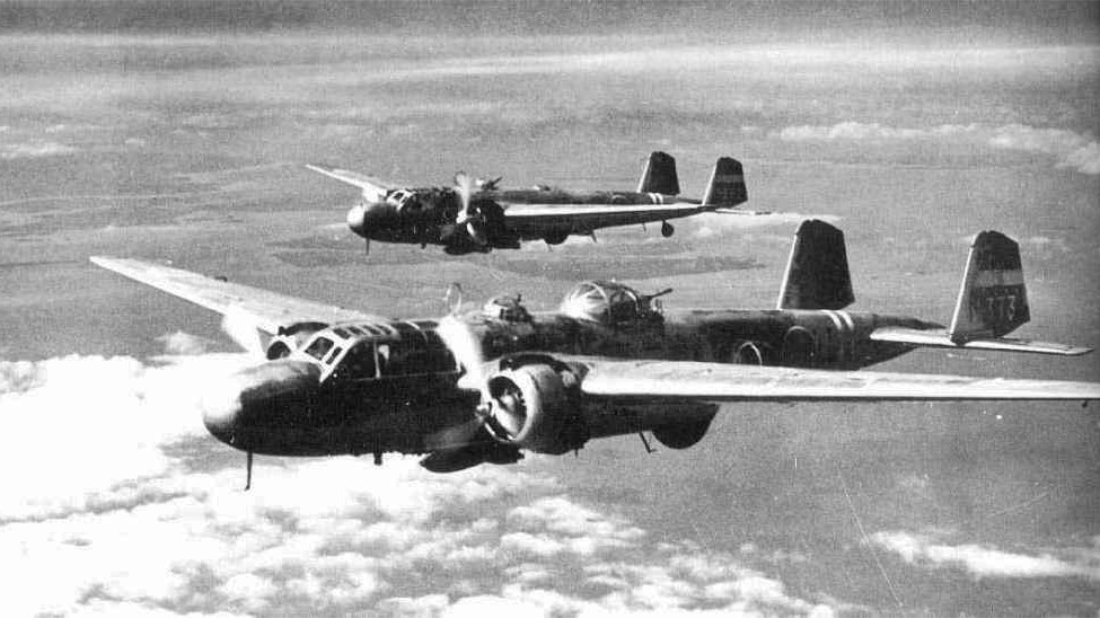
The first air battle of Jianqiao took place on 14 August 1937, in the afternoon. The airfield was attacked by nine Mitsubishi G3M (Allied reporting name “Nell”) medium bombers of the Kanoya Air Group. Due to poor weather conditions and low clouds, the IJNAS bombers were unable to carry out a formation air raid. Instead, the G3Ms approached the target individually, flying at an altitude of approximately 500 m.
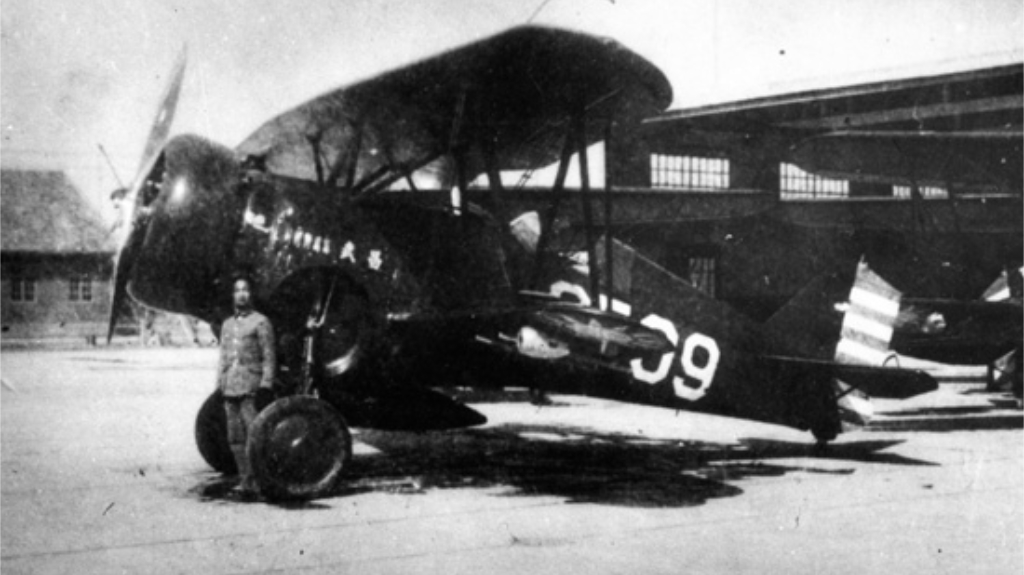
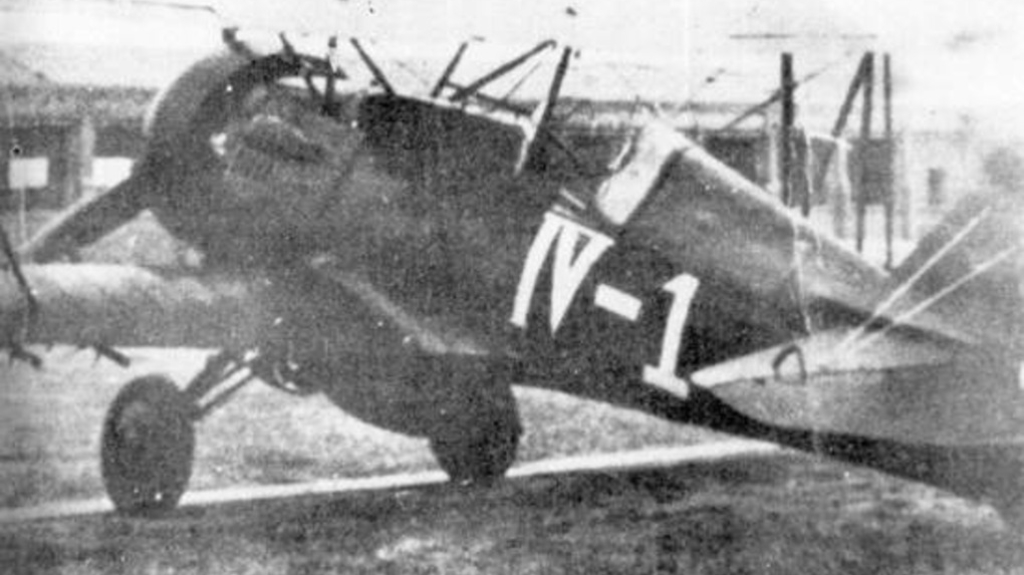
The Chinese Curtiss Model 68 Hawk III biplane fighters (an export variant of the BF2C Goshawk / Model 67) of the 4th Air Group were immediately scrambled to intercept the Japanese bombers. The fighters managed to shoot down one of the G3Ms and pursued another until it crashed. It was reported that another Japanese bomber was severely damaged.
The second wave of Japanese bombers, also consisting of nine G3M aircraft, arrived in the early evening of the same day. This time, they headed for Guangde Air Base, located in Anhui Province. However, the Japanese force was intercepted by patrolling Chinese aircraft and failed to reach its target. On the return flight, the IJNAS bombers were spotted by the 4th Air Group. Despite the approaching night, the Hawk IIIs managed to intercept one of the G3Ms, which suffered heavy damage and crashed on landing.
However, the second scramble also resulted in the first Chinese casualties. Two of the Hawks ran out of fuel and crashed, one pilot was killed.
The Battle of Jianqiao ended in a Chinese victory. Although the ROCAF lost two aircraft and one pilot, its fighters successfully intercepted the Japanese bombers, preventing the enemy force from carrying out effective raids on Chinese airfields. Reportedly, the only damage inflicted was to two trucks and an empty hangar. Initially, the ROCAF pilots were credited with six aerial victories; however, later research revised the score to four IJNAS bombers destroyed.
On 14 August that same year, the Nationalist Government of China officially declared it to be Air Force Day. Although the observance was later cancelled by the communist Chinese authorities, the Battle of Jianqiao is still commemorated as Air Force Day in Taiwan to this day.
Interestingly, the Battle of Jianqiao also marked the beginning of the combat career of Gao Zhihang, one of the most famous Chinese fighter pilots. Zhihang, originally named Gao Mingjiu, officially became the first ROCAF pilot to shoot down an enemy aircraft. Nicknamed the “God of the Air Force”, the Chinese fighter pilot scored three (or four, according to some sources) more aerial victories before being killed by Japanese bombs during an air raid on Zhoujiakou Air Base on 21 November 1937.
The first ROCAF air combat was also commemorated by the Taiwanese war drama “Heroes of the Eastern Sky” (originally titled “Heroic Martyrs of Jianqiao”), released in 1977.
Although the Battle of Jianqiao occurred in 1937 and was part of the Second Sino-Japanese War, some historians consider it to be the first air combat – and the Battle of Shanghai the first battle – of the Second World War. Nonetheless, given that it took place two years before the German invasion of Poland, and was a result of a conflict that began in 1931, it should rather be more accurately considered a prelude to the war than an integral part of it.
Cover photo: A pair of Mitsubishi G3M “Nelly” bombers in flight, Model 22 and 21 (photo: Wikipedia, Public Domain)