 In September 2026, the PÉGASE 26 deployment by the French Air and Space Force entered another important phase, with French crews operating alongside their American, Japanese and South Korean counterparts. Following the crossing of the North Atlantic and the Arctic, the deployment continued across North America and the Indo-Pacific. This provided the crews with an opportunity to train in unfamiliar environments and strengthen their cooperation with key partners.
After a tactical stop in Greenland, the French crews reached Eielson Air Force Base (EAFB) in Alaska, where they took advantage of the vast training areas available in the region. The airspace, comparable in size to the territory of France, provided suitable conditions for a wide range of activities, including low-level flying, basic fighter manoeuvring (BFM) scenarios and air-to-air refuelling.
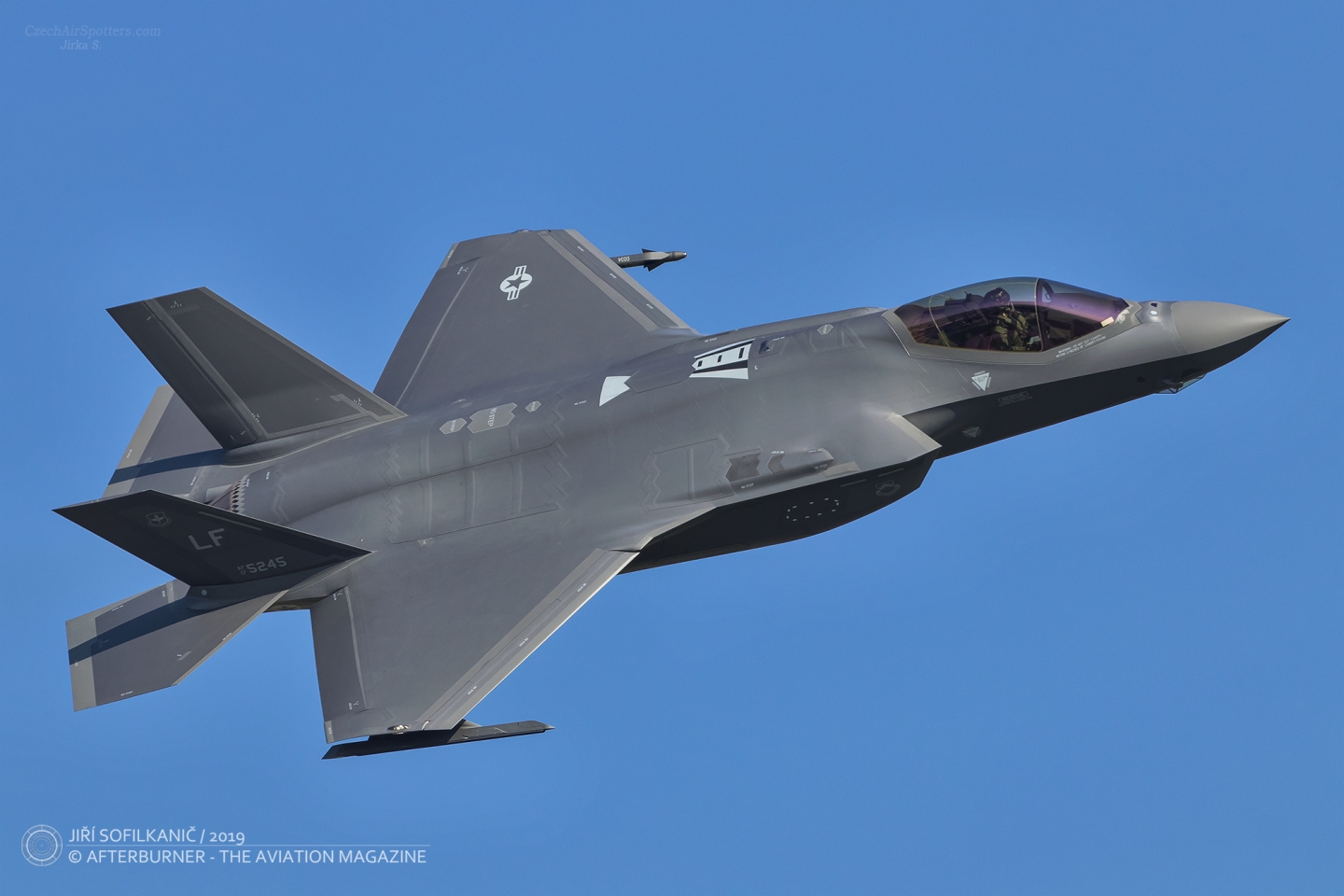
A particularly valuable aspect of the Alaskan deployment was the opportunity to train against the United States Air Force’s F-35 Lightning II and F-22 Raptor fighters. For the French Rafale crews, working with these highly capable fifth-generation fighters provided valuable experience in adapting their tactics to an opponent with different capabilities.
“We adapt our combat tactics to them. We try to bring them into areas where we have an advantage and thus make the most of the Rafale,” explained Captain Valentin, a weapons systems officer.
Following the Alaskan stage, the PÉGASE 26 deployment continued across the Pacific towards Japan. Between 14 and 20 September, French crews operated with the Japan Air Self-Defence Force (JASDF), conducting a series of exercises involving Rafale fighters, Japanese F-2s and the A330 MRTT.
The Japanese phase not only provided an opportunity to train together, but also to exchange experience and develop a better understanding of each other’s procedures. For the French crews, operating alongside the JASDF was particularly valuable due to the limited opportunities to encounter Japanese aircraft during exercises in Europe and NATO environments.
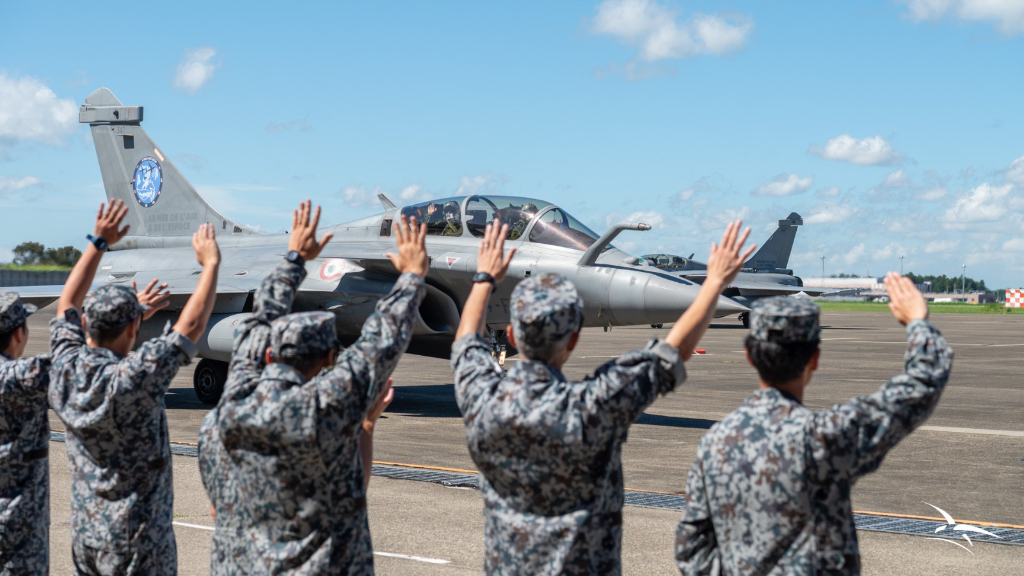
“We very rarely have the opportunity to operate with them and their aircraft,” said Lieutenant Colonel Mathilde, commander of the Rafale detachment. “The F-2, although it strongly resembles the F-16, is an aircraft we never encounter in Europe or during NATO exercises. Flying here allows us to become familiar with a new environment and acquire the necessary references for working with our partners.”
Another element of the Japanese deployment was the movement of a French detachment from Hyakuri Air Base to Cheongju Air Base in South Korea, where French and Republic of Korea Air Force (ROKAF) crews trained together between 15 and 17 September.
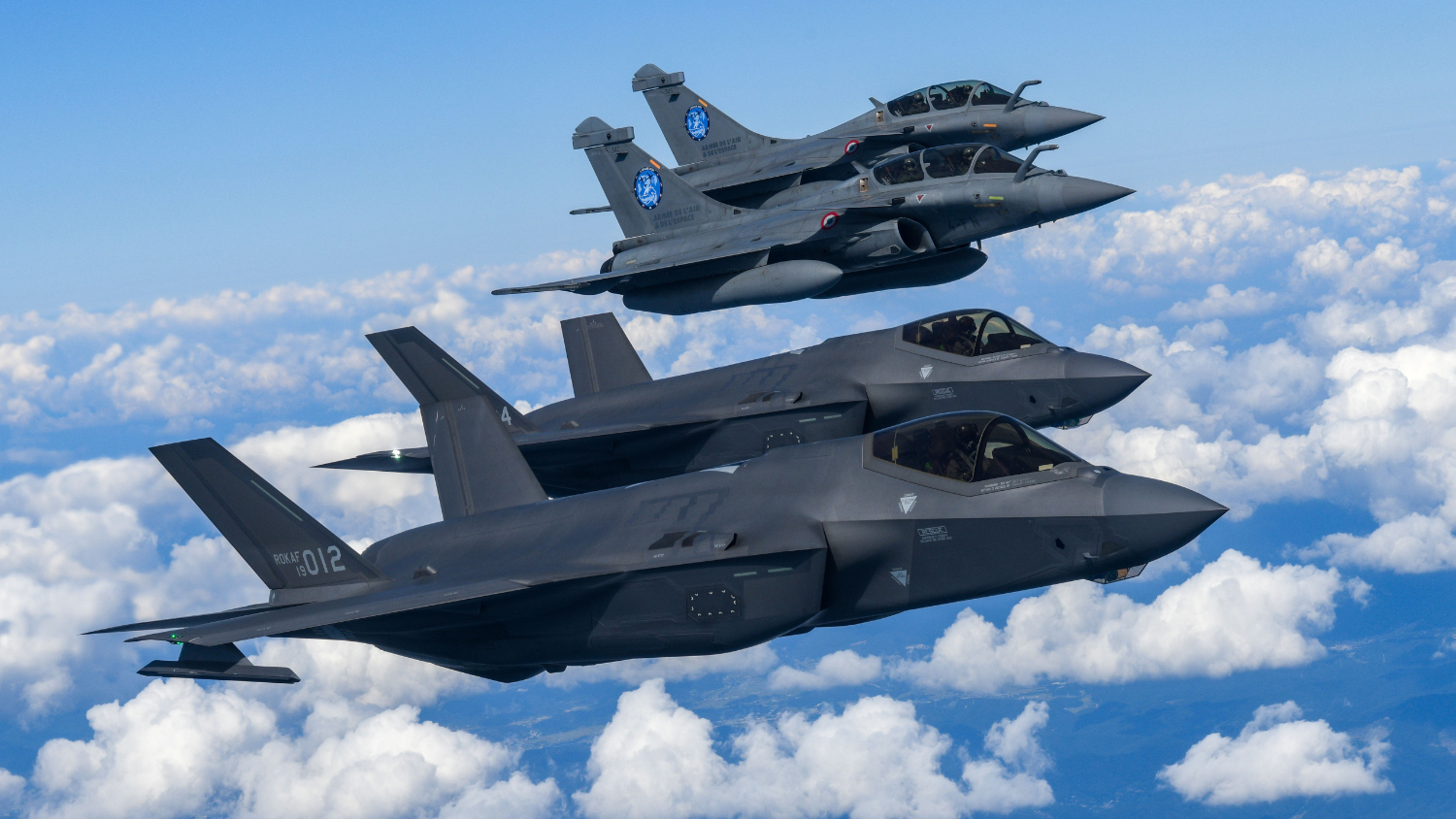
The South Korean stage included tactical training between French Rafales and ROKAF F-35s, marking the first time both types had conducted such training together. The crews also practised air-to-air refuelling, with aircraft from both countries successively refuelling from the partner nation’s A330 MRTT.
The deployment also provided an opportunity for broader exchanges between the two air forces. Expert meetings covered subjects including the A330 MRTT, the MBDA Meteor air-to-air missile and the Airbus A400M, allowing both sides to share operational knowledge and experience. Counter-drone operations were another important subject of discussion, with the ROKAF sharing its knowledge in this field with the French personnel.
In return, the French side presented its experience in securing the 2024 Paris Olympic and Paralympic Games, as well as lessons learned from dealing with recent events in the Near and Middle East.
The latest stages of PÉGASE 26 have therefore combined tactical training with a broader exchange of operational experience, enabling French crews to work with aircraft and air forces they rarely encounter in Europe. The deployment also underlined the importance of interoperability and close cooperation with partners across the Indo-Pacific region.
More information about the PÉGASE 26 deployment can be found in our previous articles covering the mission: PEGASE 26 – France heads for the Arctic and Indo-Pacific and PEGASE 26 opens a new route to the Indo-Pacific through the Arctic.
Information from the press releases of the French Ministry of Defence – published on the MoD page in October 2026 – were used, in accordance to the etalab-2.0 licence. All photos © the French Ministry of Defence.