Just days after we published a summary of the military aircraft that shaped aviation history and were retired in 2025, this January has already brought the first farewell of 2026.
On 18 January, Flyvevåbnet (the Royal Danish Air Force – RDAF) officially said goodbye to the F-16 Fighting Falcon jets, during a solemn ceremony held at Skrydstrup Air Force Base.
The story of the Danish Vipers began in the early 1970s, when Denmark, Belgium, the Netherlands and Norway started looking for a modern combat aircraft to replace their diverse fighter fleets. In Denmark, these included the F-104G, the F-100D/F and the J 35 Draken. Three aircraft were considered: the Dassault Mirage F-1, the Saab J-37 Viggen and the General Dynamics F-16 Fighting Falcon. Ultimately, the F-16 was selected by all four nations.
In 1975, the four aforementioned countries jointly ordered 348 examples of the F-16 fighter jets and became the first international customers of the type. Through the European Participating Air Forces (EPAF) programme, they also participated in the multinational F-16 development effort, which included technology transfer and European production. As a result, the aircraft were being built by SABCA in Belgium and Fokker in the Netherlands. Belgium became the main European F-16 manufacturer, producing aircraft for its own air force and for Denmark.
Denmark initially ordered fifty-eight aircraft (forty-eight F-16A and ten F-16B). The first Danish F-16, a two-seat F-16B (ET-204), was delivered in 1980. Further orders followed: twelve new aircraft in 1984, delivered between 1988 and 1989, and seven ex-USAF aircraft acquired between 1994 and 1997. In total, Denmark operated seventy-six F-16s, including both single- and two-seat variants, in Block 10 and Block 15 configurations.
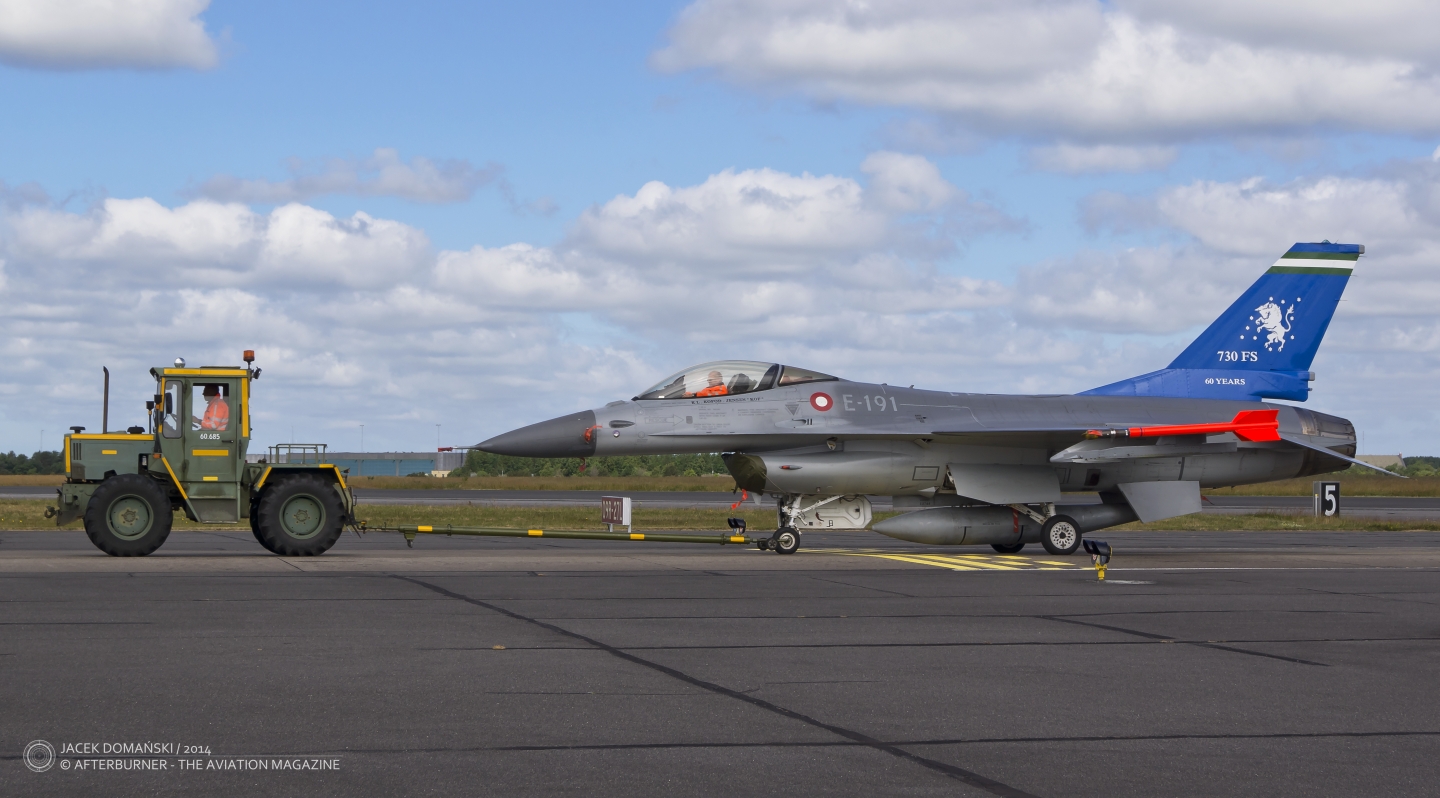
Over time, the Danish F-16 fleet underwent several upgrades to improve capability and extend service life. Although Denmark initially retained the original Pratt & Whitney F100-PW-200 engines, in 2013 the country purchased used PW-220E engines to ensure continued operations until the expected retirement of the F-16 in the late 2020s. The most significant modernisation was the Mid-Life Upgrade (MLU) programme, launched in 1989, which modernised the majority of aircraft to the MLU 6.5 standard, with a smaller number receiving a more limited MLU 4.3 upgrade.
In parallel with the MLU programme, Denmark began searching for a replacement for the F-16. In 2002, the country joined the Joint Strike Fighter programme, which led to the development of the F-35 Lightning II. Despite some delays and challenges, Denmark ultimately became an operator of the fifth-generation fighter and, in September 2023, welcomed its first F-35s at Skrydstrup Air Force Base (Denmark welcomed its first F-35s at Skrydstrup air base).
Initially, it was planned that the RDAF would keep the F-16 operational until the end of 2027, by which time the F-35 fleet was expected to become fully operational. However, global events and the subsequent possibility of transferring the Vipers to other countries have accelerated this process.
The official F-16 farewell ceremony took place on 18 January 2026 at Skrydstrup Air Base. The location and date were chosen deliberately, to symbolically close more than four decades of Viper service with the RDAF.
Exactly forty-six years earlier, on 18 January 1980, the aforementioned F-16B ET-204 landed at Skrydstrup. Fighter Squadron 727, based there, was the first RDAF unit to receive the F-16 Fighting Falcon. Four decades later, it became the last unit to operate the Viper, as well as the first to receive the 5th generation F-35 jets.
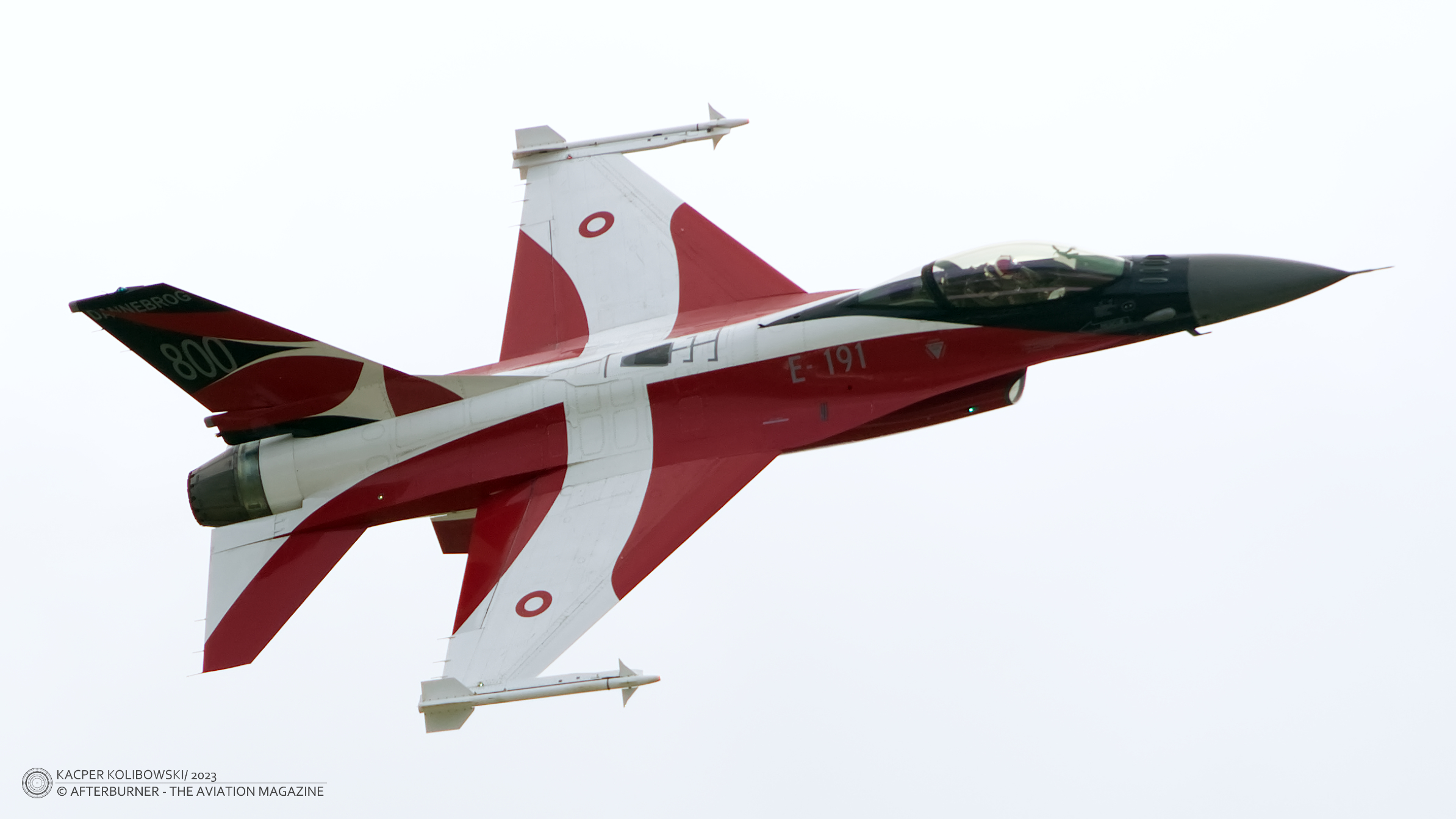
The farewell event was attended by General Christian Hvidt, the country’s former Forsvarschef (Chief of Defence) and the first pilot to land an F-16 in Denmark.
“We do not talk about the age of the F-16, because it has been maintained by arguably some of the world’s best aircraft technicians and, moreover, is flown by some of the world’s best pilots,” – said Hvidt. “A big congratulations to 727. Exciting and immense challenges lie ahead,” – he concluded.
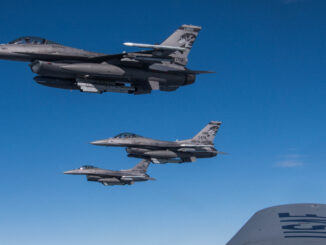
Around midday, a formation of three Danish Vipers took off from Skrydstrup for a farewell flight. The F-16 flying operations with the RDAF were officially concluded two hours later, with the last landing of the type at Skrydstrup.
During more than four decades of their active service, the Danish F-16s took part in numerous military operations around the world. Their combat history includes missions over Afghanistan, the Balkans, Iraq, Libya and Syria.
However, the retirement of the F-16 from Danish service does not mean the end of its combat career. Thanks to the relatively good condition of the airframes, part of the fleet was sold to Argentina, while the remaining aircraft were donated to Ukraine. As a result, the former Danish Vipers have been given the opportunity to write a new chapter in their combat history.
During the farewell ceremony at Skrydstrup, the baton was symbolically passed to the F-35 Lightning II. Denmark has acquired a total of forty-three 5th generation fighter aircraft. According to the country’s Ministry of Defence, half of the fleet is expected to become operational by the end of next year.
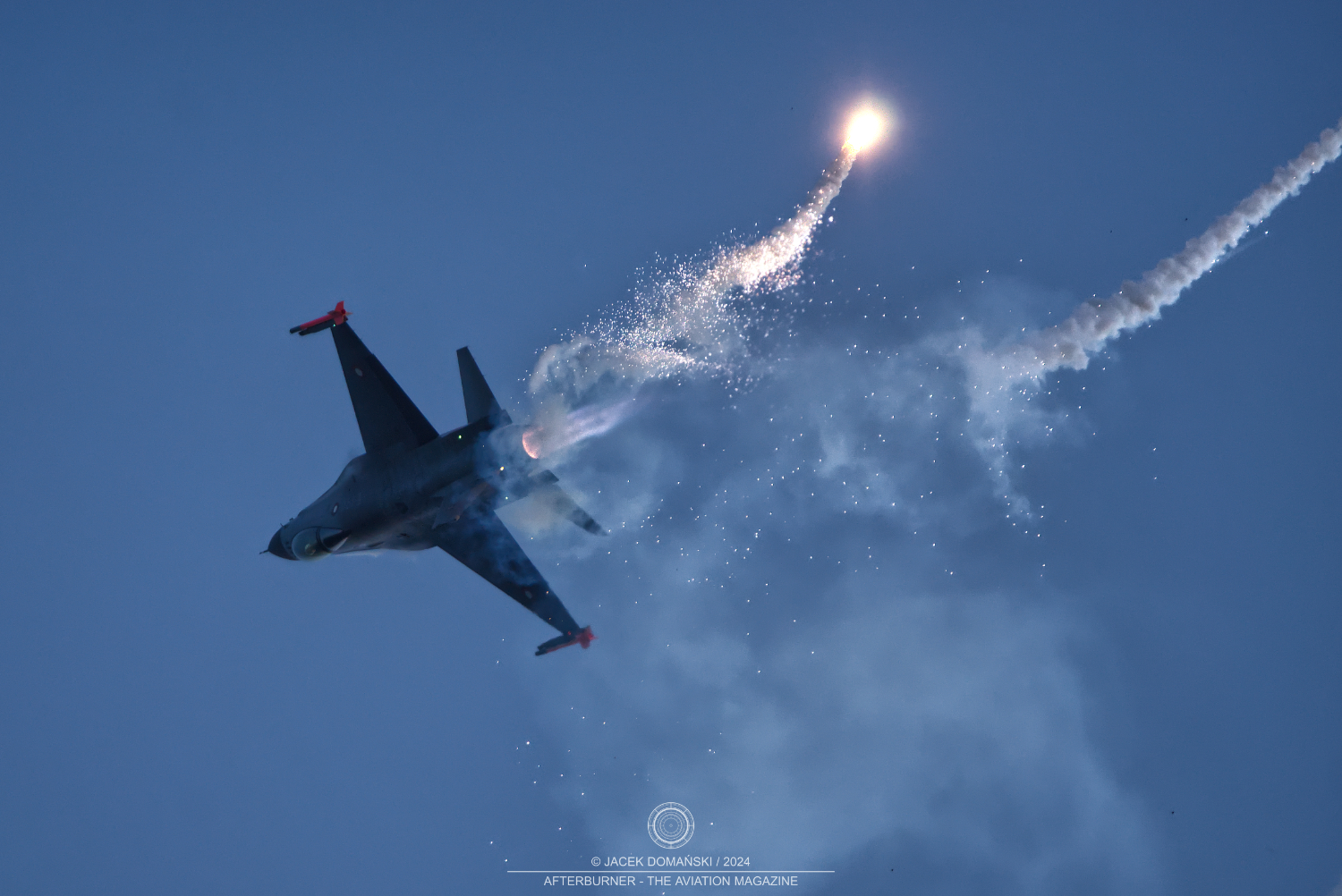
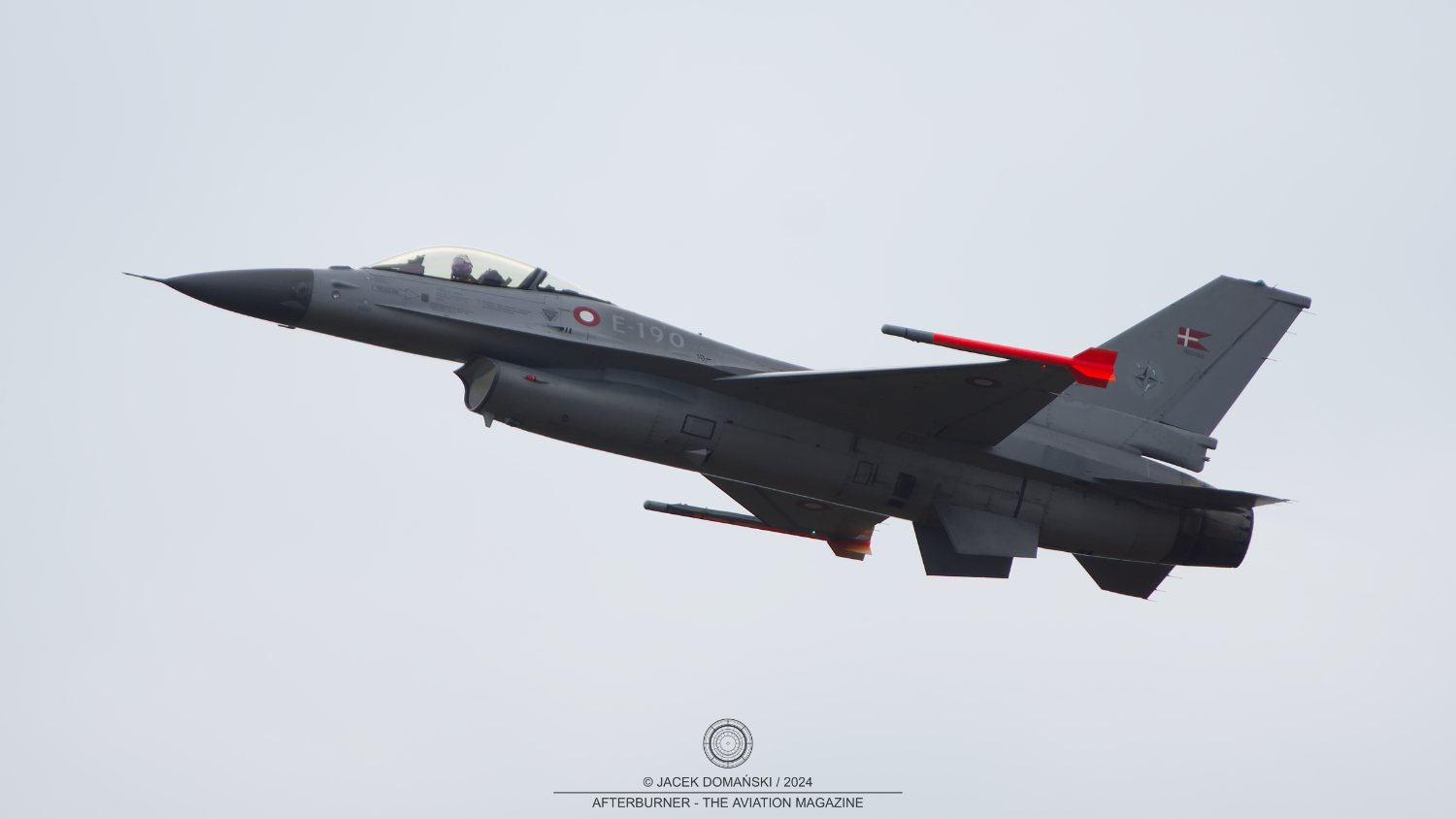
Cover photo: RDAF F-16 Solo Display, Sanicole Airshow 2024. Information and quotation from Forsvaret / the Royal Danish Armed Forces press releases were used.