 Nikolay Yegorovich Zhukovsky (Николай Егорович Жуковский, sometimes transliterated as Joukovsky) was born on 17 January 1847 in the village of Orekhovo, near Vladimir, Russia.
The future scientist, mathematician and engineer, was born into a family well-known of its long history of military service. His grandfather fought as an officer in the War of 1812, and his father Yegor Zhukovsky was a military engineer with the rank of Staff Captain.
Zhukovsky received a solid education and initially aspired to become a railway engineer. However, due to financial constraints, he enrolled at the Faculty of Physics and Mathematics at Moscow University instead of studying in St Petersburg. In 1870, he began teaching physics at a Moscow gymnasium and soon moved to the Imperial Moscow Technical School, to lecture in mathematics and mechanics. In 1874, Zhukovsky was appointed associate professor and later became a supernumerary professor of mechanics.
Over the following years, Zhukovsky developed a distinguished academic career, lecturing analytical mechanics, practical mechanics, and hydrodynamics at several institutions in Moscow. In 1894, he became a corresponding member of the Academy of Sciences and, in 1905, he was elected president of the Moscow Mathematical Society.
Widely regarded as the “father of Russian aviation”, Zhukovsky was the first scientist to provide a mathematical explanation of aerodynamic lift. His work includes the Joukovsky transform, which defines the ideal shape of an aerodynamic profile, as well as the Kutta–Joukovsky theorem, one of the foundations of aerodynamics.
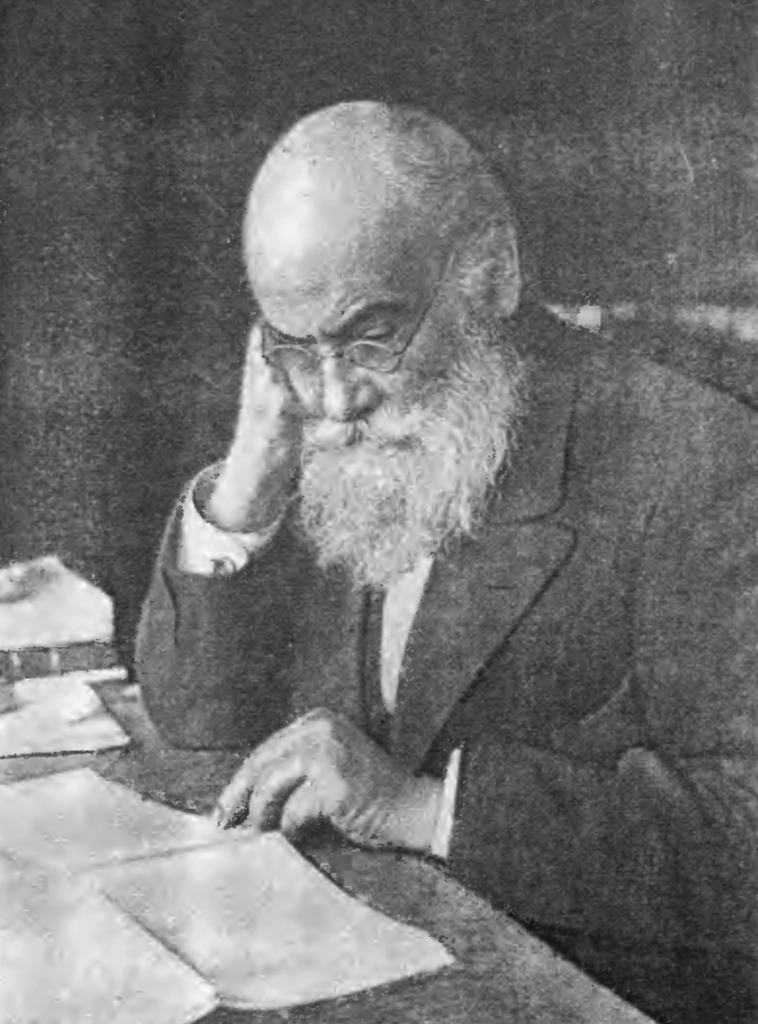
In 1902, he supervised the construction of the first Russian wind tunnel. Two years later, he became the head of Europe’s first aerodynamics research institution, established near Moscow in Kuchino. In 1908, he founded the Aeronautical Club at the Imperial Moscow Technical School, which later evolved into a formal aerodynamics laboratory with a dedicated test bureau. There, Zhukovsky developed calculation methods for aerodynamic and structural characteristics of aircraft.
He also contributed to the creation of the Short Theoretical Aviation Courses in 1913, which evolved into major aviation education and research institutions, including the Central Aerohydrodynamic Institute and the Air Force Engineering Academy. In 1920, marking the 50th anniversary of his scientific work, the Zhukovsky Prize was established by the Soviet government with the approval of V. I. Lenin.
Already in poor health and deeply affected by the loss of his daughter to tuberculosis, Nikolay Yegorovich Zhukovsky died on 17 March 1921 at the Usovo sanatorium, aged 74. His scientific legacy and his role in mentoring future aviation pioneers had a profound impact on the development of aerodynamics and aviation worldwide.
Full story here.
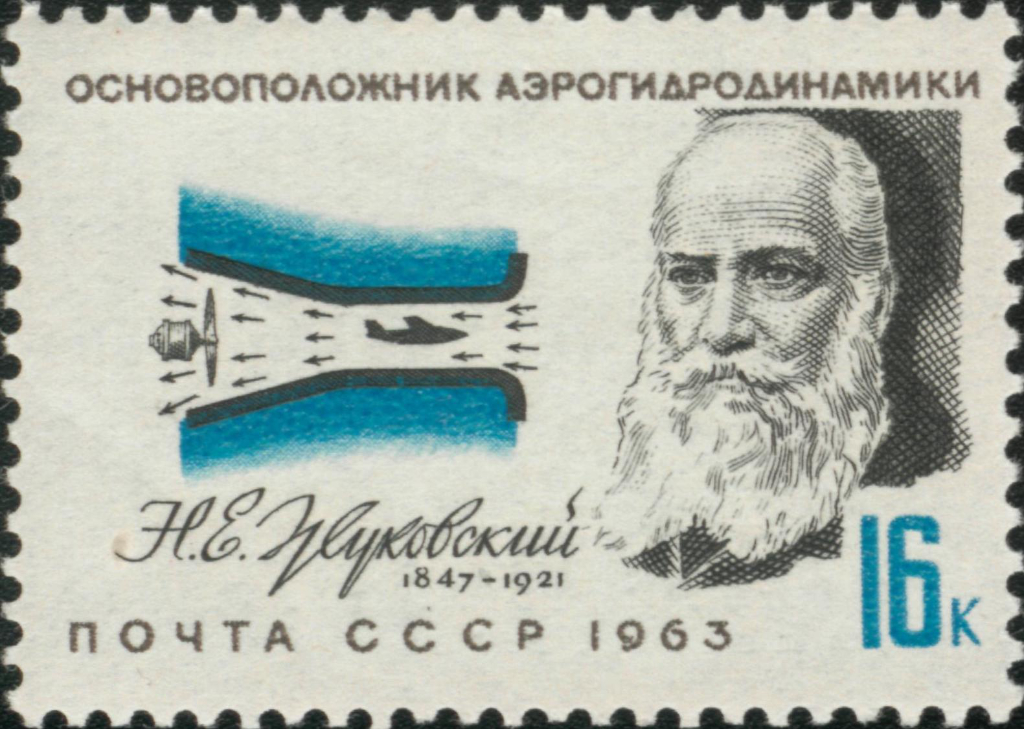
Cover photo: N.Y. Zhukovsky on a Soviet post stamp from 1963 (Wikipedia, Public Domain)