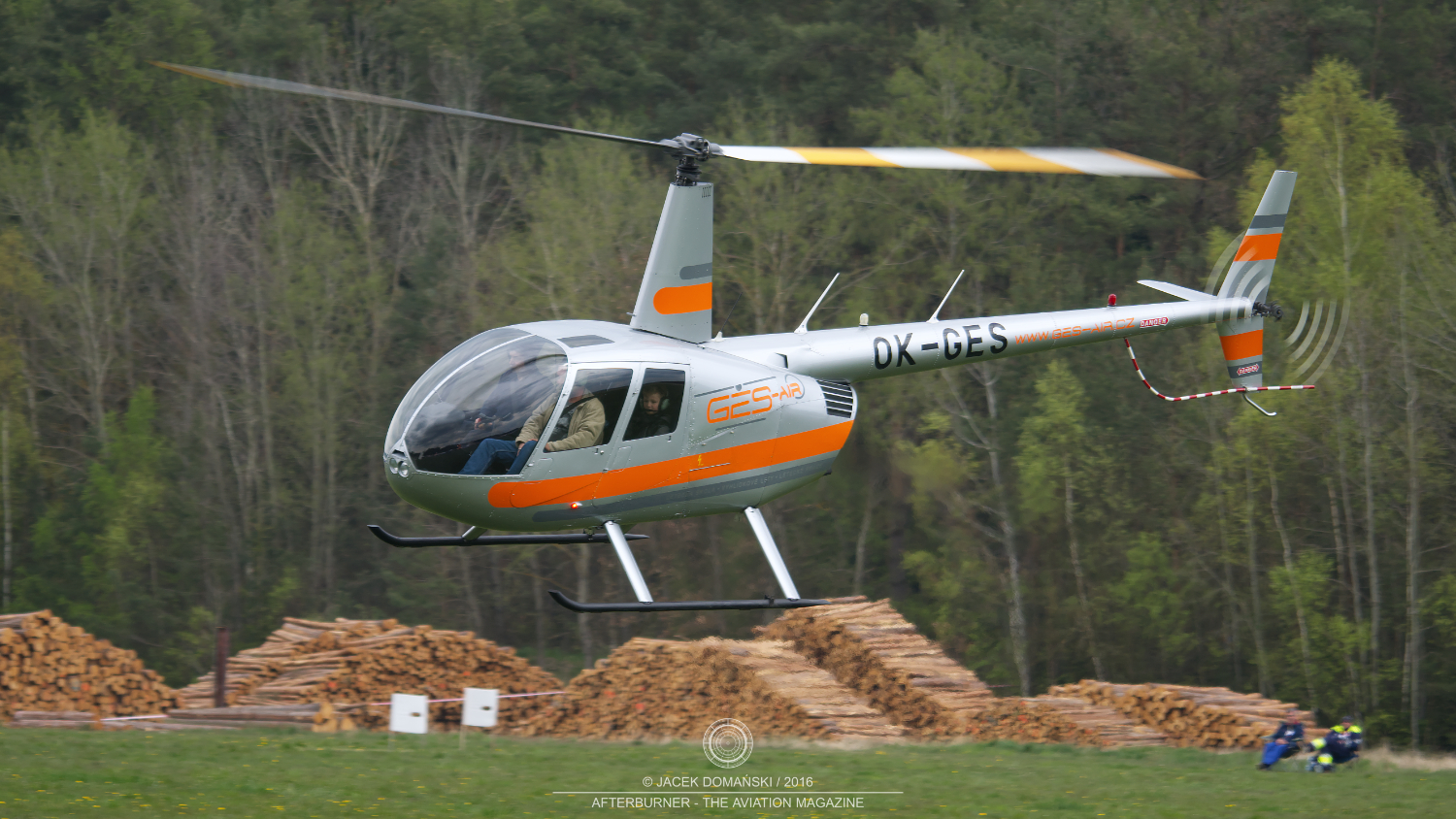
In 1979, the California-based Robinson Helicopter Company began production of its first helicopter, the R22, which entered the market later that year. The small, two-seat rotorcraft was powered by a single engine and featured two-bladed main and tail rotors. Designed to be simple and relatively inexpensive to purchase and maintain, the R22 quickly gained popularity, making helicopter flying accessible to a broader group of private users.
In the 1980s, the company’s founder and chief designer, Franklin D. Robinson, together with his engineering team, began developing a larger successor. Unlike its predecessor, the new helicopter was designed as a four-seater, capable of carrying up to three passengers. It retained the general configuration of the R22, including a single engine, semi-rigid two-bladed main rotor, and skid landing gear, but introduced improvements such as a reversed tail rotor rotation for better yaw control.
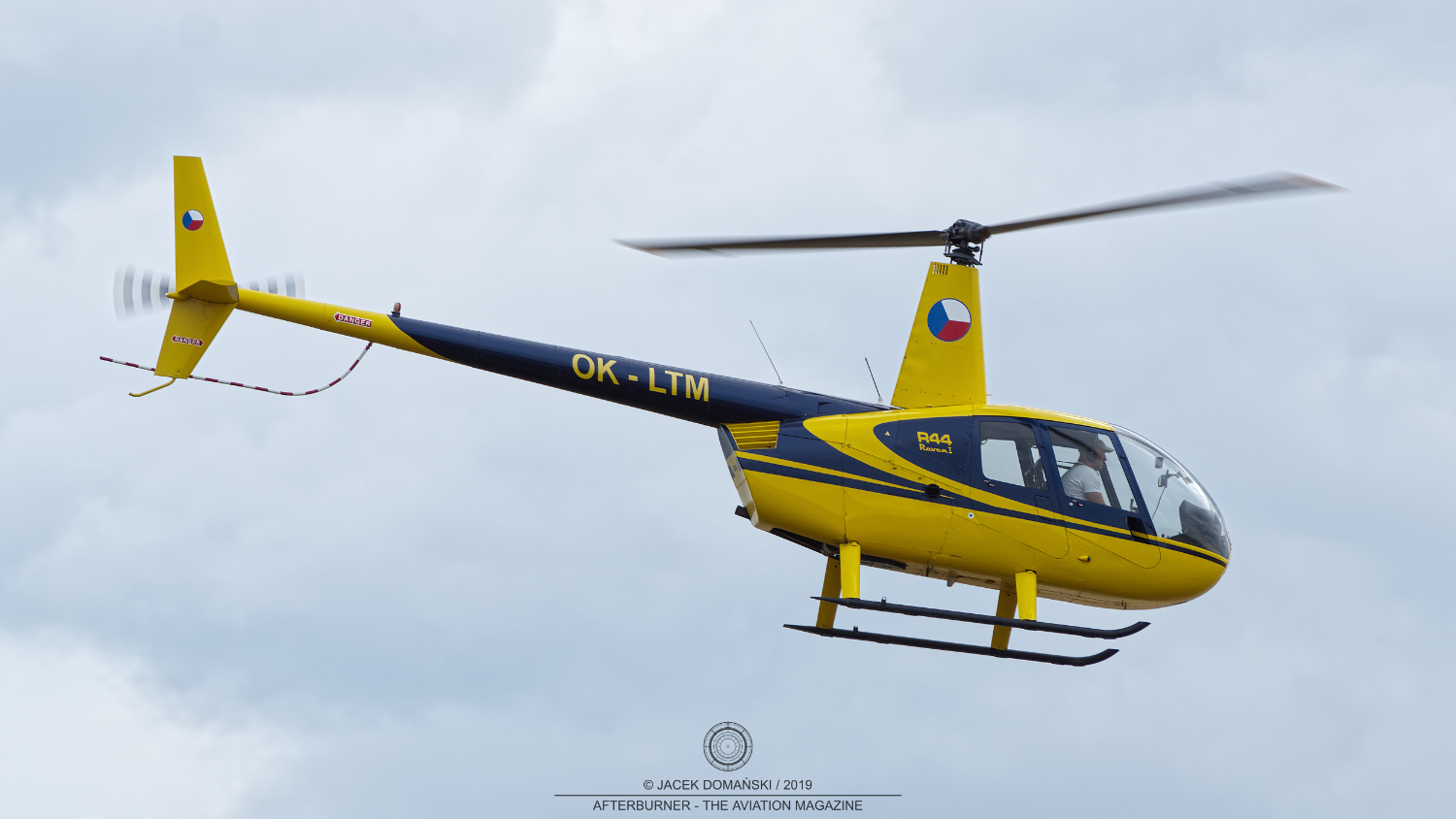
The new rotorcraft, designated the R44 Astro, performed its maiden flight on 31 March 1990 and received FAA type certification in December 1992. Deliveries began in early 1993. The helicopter gained wider recognition in 1997, when Jennifer Murray became the first woman to complete a round-the-world helicopter flight, covering nearly 58,000 kilometres in 97 days flying an R44.
Further development led to several variants. The R44 Newscopter (1998) was adapted for electronic news gathering, while the R44 Raven (2000) introduced hydraulically assisted controls and adjustable pedals. In 2002, the improved R44 Raven II entered service, featuring a more powerful fuel-injected engine and enhanced high-altitude performance.
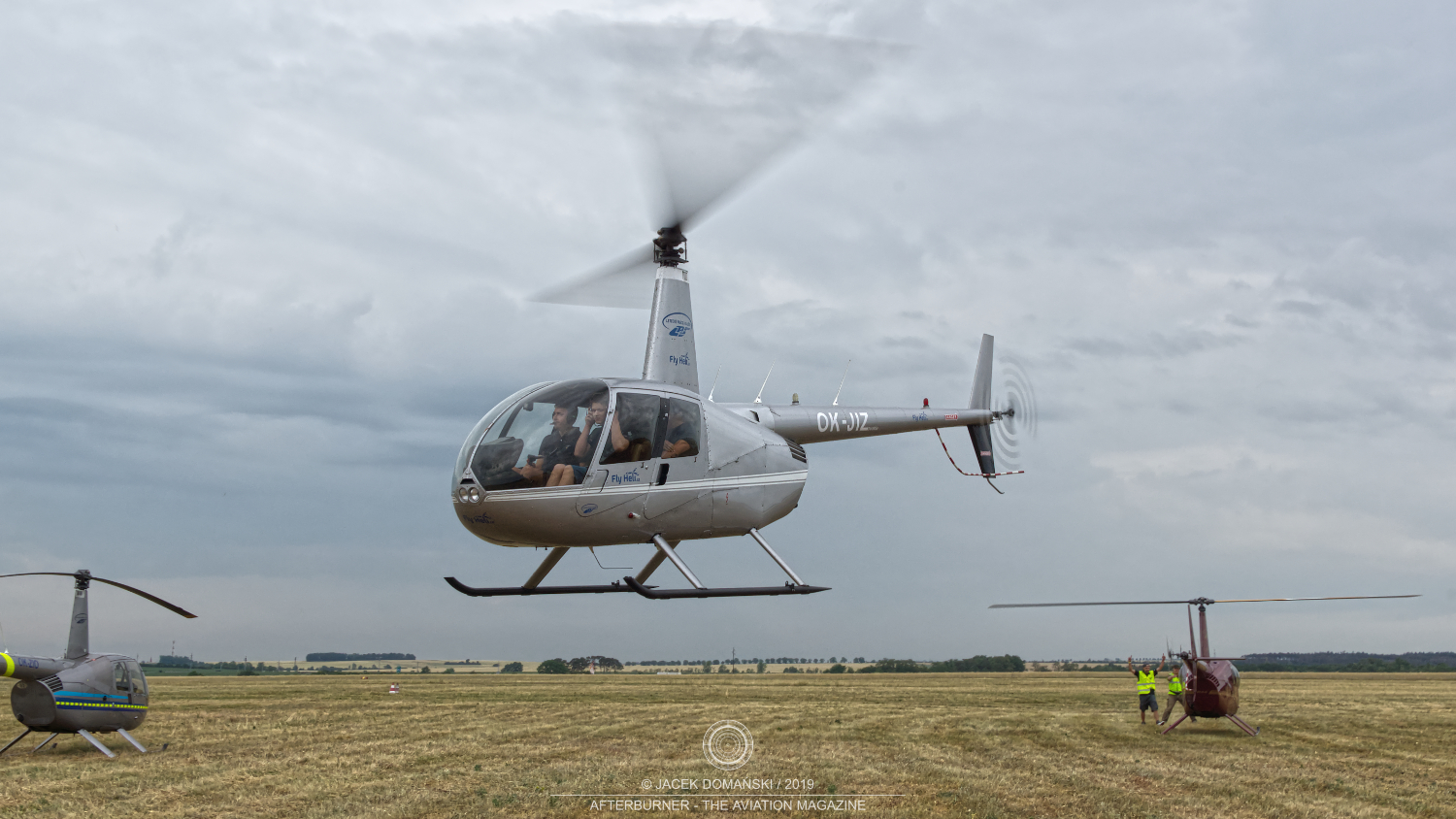
A smaller derivative, the R44 Cadet, was introduced in 2015 as a two-seat training version with a cargo compartment. Meanwhile, the larger Robinson R66, introduced in 2007, expanded the design into a five-seat, turbine-powered helicopter, although it has not matched the popularity of the R44.
Operational experience also led to safety improvements. Early aluminium fuel tanks proved vulnerable to damage in accidents, sometimes resulting in post-crash fires. Consequently, from 2009 onwards, bladder-type fuel tanks were introduced, significantly improving crashworthiness.
Thanks to their simplicity, versatility, and relatively low operating costs, helicopters of the R44 family have achieved widespread global use. They are operated by private owners, training organisations, companies, and public services, including law enforcement and government agencies. Since 1999, the R44 has consistently ranked among the best-selling general aviation helicopters worldwide, with more than 6,000 examples produced to date.
More information about the R44 can be found in one of our articles from the Photo of the Week series, Robinson R44 Raven II. We also recommend learning about Frank Robinson’s story, the vision-driven pioneer and aerospace engineer who defined and shaped the general aviation helicopter industry – Franklin D. Robinson, godfather of popular helicopters, passed away.