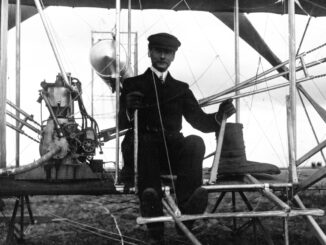
 On 13 November 1907, an experimental rotorcraft developed by Paul Cornu took to the air for the first time.
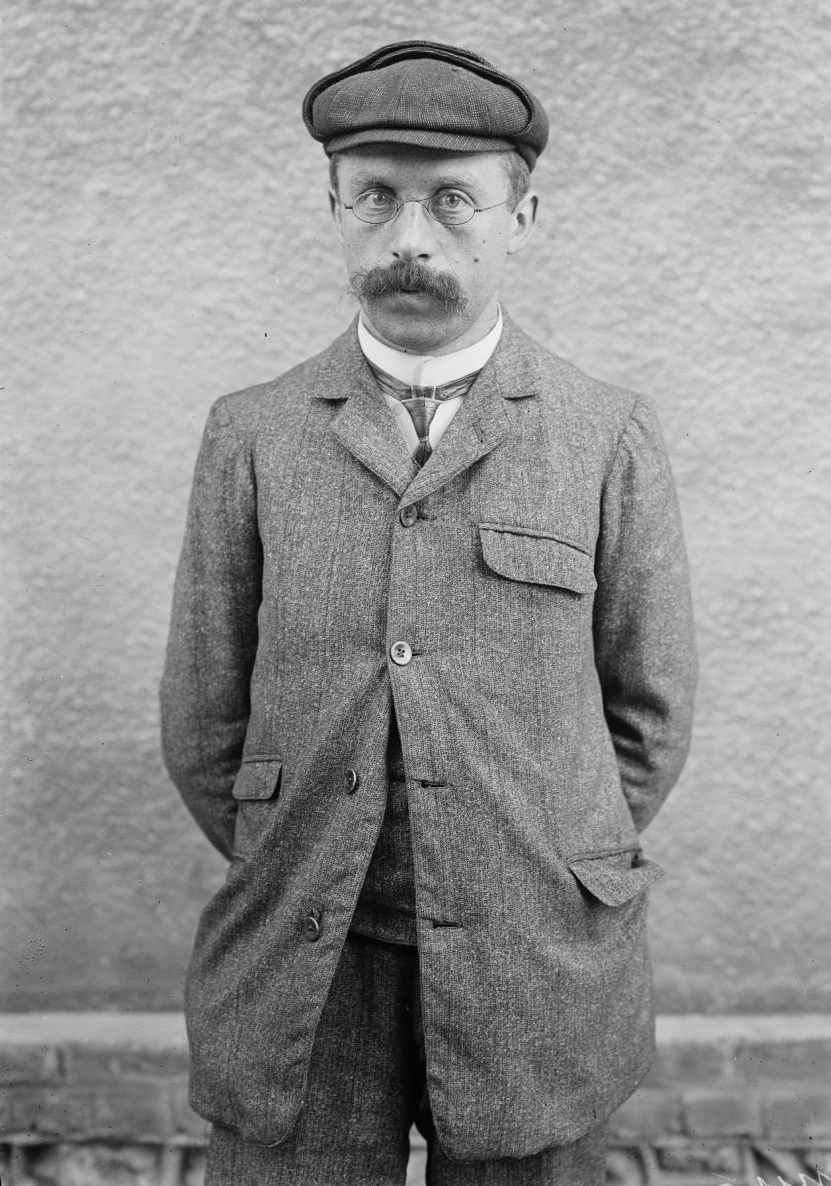
Paul Cornu was born on 15 June 1881 in Glos-la-Ferrière, in the French region of Normandy. His father, Jules Cornu, owned a transport company, and Paul was the eldest of fifteen children in the family.
Jules Cornu was known for his inventions and had once designed a dirigible. From an early age, Paul helped his father in the workshop, where they repaired bicycles and sewing machines. At the age of fourteen, he completed his first invention, a temperature regulator.
Father and son Cornu subsequently developed a motorised bicycle, a steam tricycle, a motorcycle and, finally, a light car powered by two engines. However, none of their inventions progressed beyond the experimental stage.
In 1905, Paul began to take an interest in aviation. He focused particularly on rotorcraft development and built several unmanned, scaled-down aircraft.
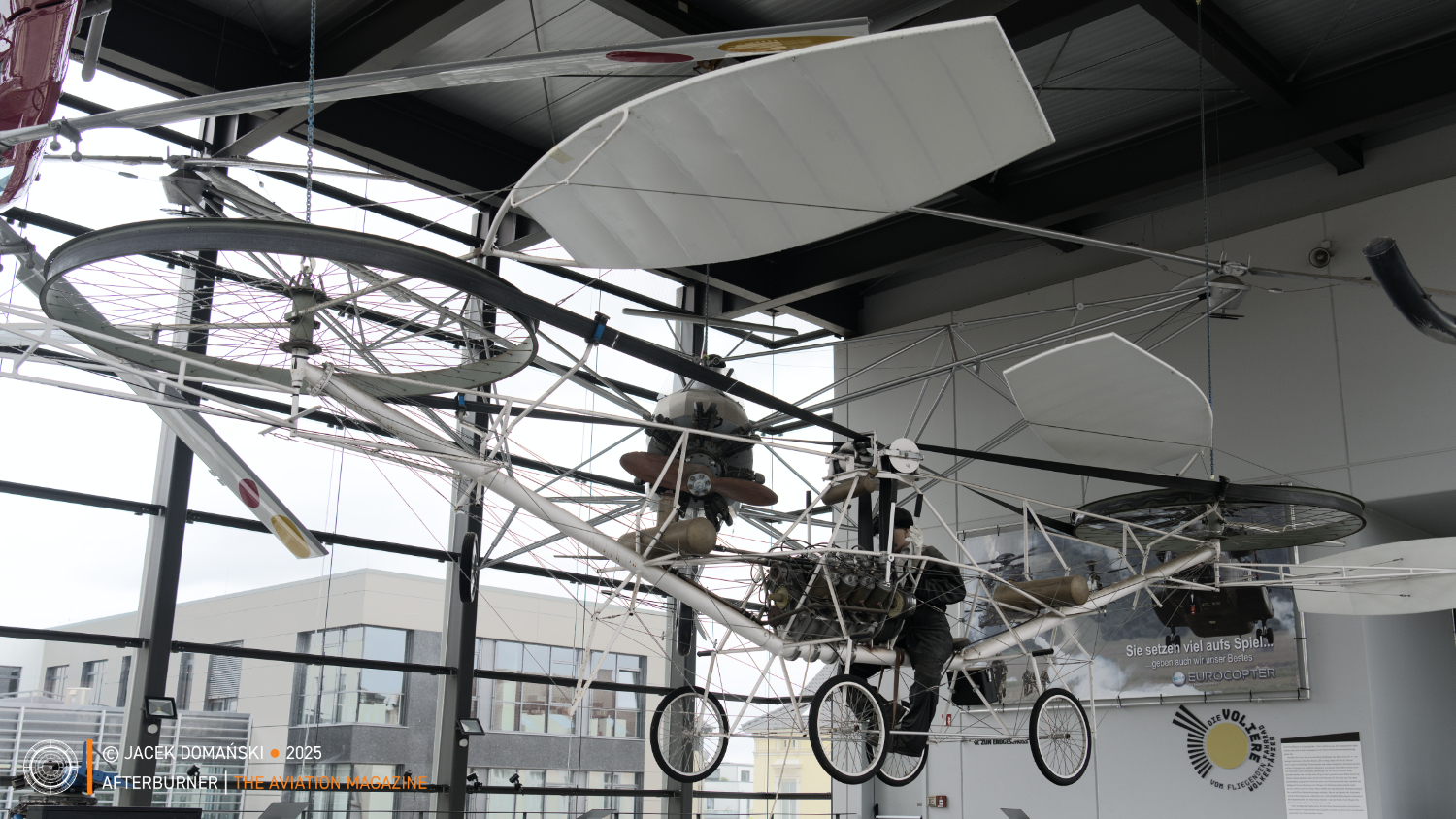
Work on rotorcraft eventually led to his creation of the first helicopter to achieve free flight. It was an open-frame structure built around a 24 hp Antoinette engine and equipped with two counter-rotating rotors powered by drive belts.
On 13 November 1907, the Cornu helicopter made its first flight, taking off from a field in Coquainvilliers, Normandy. The rotorcraft performed several successful hops, reaching an altitude of up to two metres and remaining airborne for approximately one minute. They were widely regarded as the world’s first successful free flight of a manned helicopter. The Cornu helicopter was also the second rotorcraft to lift off the ground, following the Breguet-Richet Gyroplane, which first flew on 29 September 1907. However, the Gyroplane No. I was neither controllable nor steerable and performed only a tethered flight, being secured by four men.
The first flight of the Cornu helicopter, although short, was enough for the young inventor to realise that the rotorcraft’s control system was ineffective. He soon abandoned the project and focused on manufacturing bicycles instead. Nevertheless, Paul Cornu continued with some of his other aviation experiments, particularly those related to propellers. After the Great War, he devoted himself to his new passion: radio.
Contemporary analyses have indicated that the Cornu helicopter was not capable of sustained flight.
Two full-scale replicas of the Cornu helicopter were built. The first was constructed at the Graduate School of Aeronautical and Automotive Engineering (École supérieure des techniques aéronautiques et de construction automobile – ESTACA) and has been exhibited at Musée de l’Air et de l’Espace in Paris since 2007.
The second replica of the pioneering free-flying rotorcraft was built by the Bückeburg Helicopter Museum (Hubschraubermuseum Bückeburg) and is exhibited there until today.
Cover photo: full-scale replica of the Cornu helicopter in Hubschraubermuseum Bückeburg, 2025