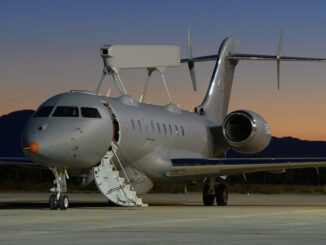
In early June 2026, we reported on the maiden flight of the world’s first unmanned Airborne Early Warning (AEW) aircraft, which took place on 19 May 2026. Developed jointly by Sweden’s Saab and US-based General Atomics Aeronautical Systems, Inc. (GA-ASI), the system combines Saab’s LoyalEye radar with GA-ASI’s MQ-9B unmanned aerial vehicle (UAV). On 28 October 2026, the two companies announced the successful completion of a further series of flight tests, confirming the system’s ability to detect, track and classify multiple airborne targets.
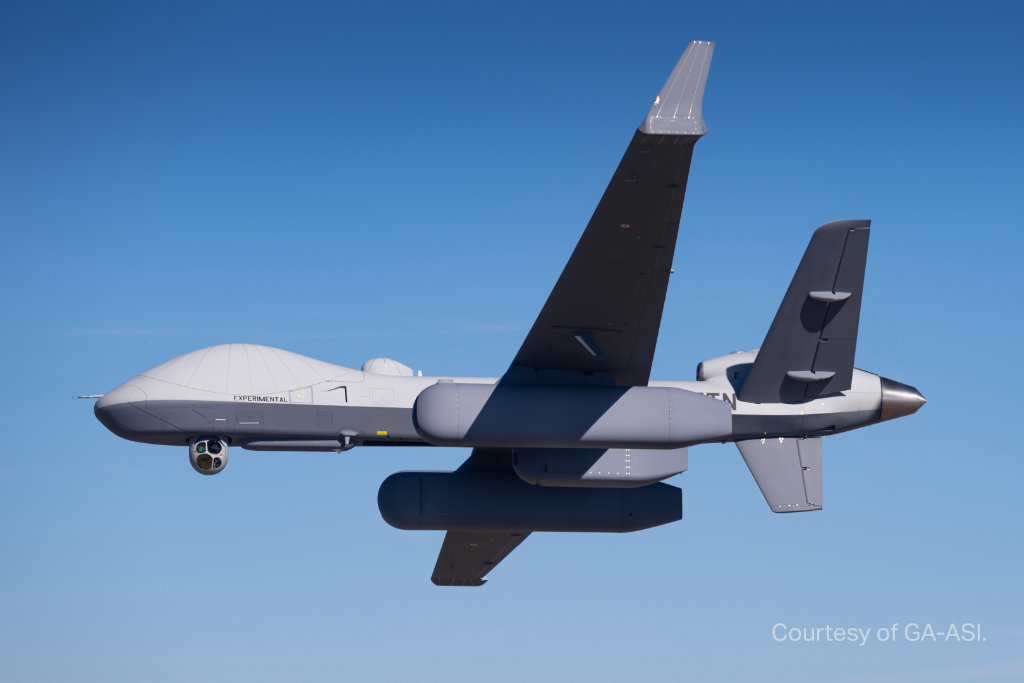
The latest flight tests, conducted as part of an evaluation programme launched in May 2026, took place over several months at GA-ASI’s Desert Horizon Flight Operations Facility in Southern California. During the trials, the MQ-9B, equipped with the LoyalEye radar mounted in external payload pods, demonstrated its ability to simultaneously track multiple airborne and maritime targets at long ranges. These included several instrumented fighter jets acting as opposing forces, as well as commercial aircraft. Stakeholders also observed the system’s performance in real time during a flight conducted under conditions representative of an operational scenario.
“This flight test marks an important milestone in the development of unmanned airborne early warning capabilities. LoyalEye is designed to complement existing AEW&C solutions by providing additional flexibility and persistence, and today’s flight validates the capability in a representative operational scenario,” said Carl-Johan Bergholm, Head of Saab’s Business Area Surveillance.
GA-ASI also confirmed that it is discussing the unmanned AEW capability with several potential customers.
“This has been one of the most highly anticipated flight tests we have performed,” said GA-ASI President David R. Alexander. “The level of customer interest in AEW capability on MQ-9B throughout the world is extremely high. It just makes sense.”
According to Saab and GA-ASI, the unmanned AEW system is designed to operate either independently or alongside existing crewed AEW&C aircraft, extending surveillance coverage while allowing crewed platforms to be deployed where they are most needed. The MQ-9B’s long endurance would enable persistent monitoring of large areas without exposing aircrews to potential threats. Furthermore, the system is intended to support distributed Battle Management Command and Control (BMC2), allowing these functions to be performed from ground-based facilities, naval vessels or existing crewed AEW aircraft, where appropriate infrastructure exists.
Cover photo: GA-ASI’s MQ-9B with Saab’s LoyalEye AEW Pods ©Saab
The Saab and GA-ASI companies press materials were used.