 The idea of crossing the Atlantic by air dates back to the era of ballooning. In the late 1850s, John Wise attempted to build a balloon capable of such a journey, but his project ended in failure. Similar plans by Thaddeus Lowe in 1860 were abandoned due to the outbreak of the American Civil War. In 1910, Walter Wellman attempted the crossing with the airship America, but engine failure forced the crew to abandon the flight, and they were rescued at sea.
The situation changed with the development of powered aircraft. In April 1913, the Daily Mail offered a prize of £10,000 for the first non-stop transatlantic flight to be completed within 72 hours. Although the First World War delayed attempts, it accelerated aviation technology and made such a flight increasingly realistic.
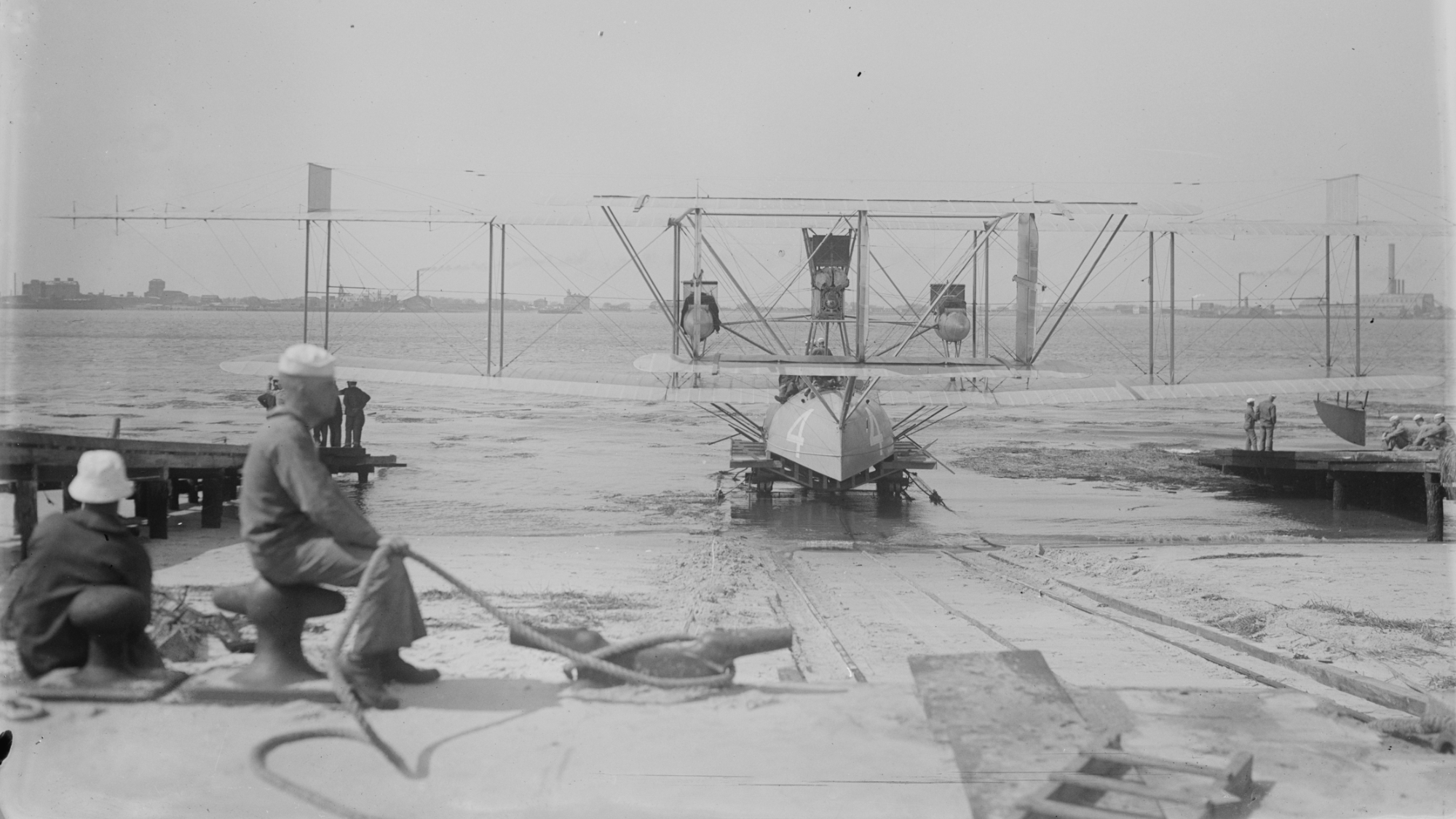
In May 1919, the United States Navy carried out a pioneering transatlantic journey using Curtiss NC flying boats. Three aircraft began the flight, but only the NC-4 successfully reached Europe, completing the route via Newfoundland and the Azores to Lisbon. Although the journey required multiple stops and took several days, the total flying time was just over 26 hours. This marked the first successful transatlantic flight in history.
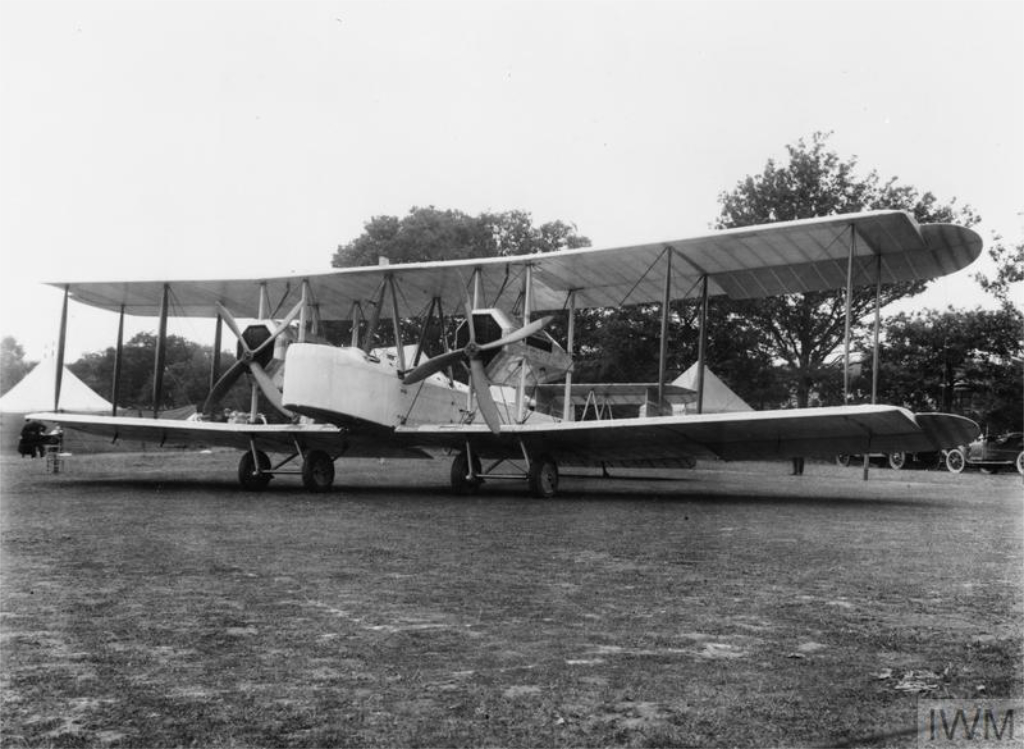
The first non-stop crossing followed shortly afterwards. On 14 June 1919, John Alcock and Arthur Brown departed from Newfoundland in a Vickers Vimy bomber. Despite severe weather conditions, icing, and limited navigation equipment, they landed in Ireland on the following day, after 15 hours and 57 minutes in the air. Their flight won the Daily Mail prize and established them as pioneers of long-distance aviation.
Further milestones were achieved in the same year. In July 1919, the British airship R34 completed the first east-to-west crossing of the Atlantic and later returned to Europe, becoming the first aircraft to cross the ocean in both directions.
In the following years, aviators continued to push the boundaries of long-distance flight. In 1922, Carlos Viegas Gago Coutinho and Artur de Sacadura Cabral completed the first aerial crossing of the South Atlantic, although they needed multiple aircraft for the journey due to technical difficulties. In 1926, Spanish aviators achieved a more efficient crossing, and in 1927 Dieudonné Costes and Joseph Le Brix completed the first non-stop flight across the South Atlantic as part of a round-the-world journey.
Against this background, the Orteig Prize – offering $25,000 for a non-stop flight between New York and Paris – attracted numerous competitors. Several attempts ended in accidents, highlighting the risks involved.
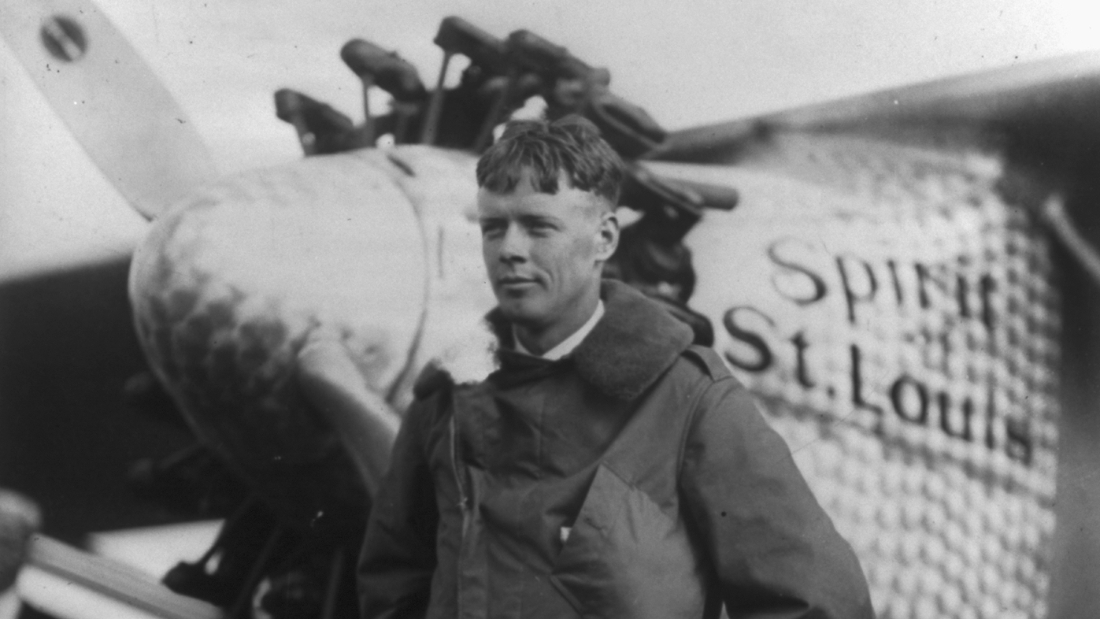
On 20 May 1927, Charles Lindbergh took off from Long Island in the Spirit of St. Louis. After 33 hours and 30 minutes of continuous flight, he landed in Paris, having covered approximately 5,800 kilometres. His success made him an international hero and played a crucial role in popularising long-distance air travel, even though Lindbergh was not the first person to cross the Atlantic.
Subsequent years brought further achievements. In 1928, the Junkers W 33 Bremen completed the first non-stop east-to-west aeroplane crossing. In 1932, Jim Mollison performed the first solo westbound flight, while in 1933 Stanisław Skarżyński crossed the South Atlantic in the small RWD-5bis aeroplane. setting a record in his aircraft category. In 1936, Beryl Markham became the first woman to fly solo across the Atlantic.
The development of transatlantic aviation continued with long-distance and polar flights, such as the 1937 journey of Valery Chkalov and his crew over the North Pole to the United States. By the mid-20th century, transatlantic crossings had become faster and more routine, with record-breaking flights such as Charles Blair Jr.’s 1951 crossing in a P-51 Mustang.
Interestingly, while powered aircraft had conquered the Atlantic in 1919, it was not until 1978 that a balloon successfully completed the journey, when Double Eagle II flew from the United States to Europe after spending more than 137 hours in the air.
The history of transatlantic flights is therefore not the story of a single individual, but of many pioneers whose achievements gradually made long-distance air travel possible. Although Lindbergh’s flight remains the most famous, yet it was only one milestone in the broader and much complex development of aviation.
Full story here.
Cover photo: Curtiss NC-4, the first aircraft that crossed the Atlantic Ocean. George Grantham Bain Collection, Library of Congress, LC-B2- 4902-17 (cropped).