 On 24 April 1946, Yakovlev Yak-15 and Mikoyan-Gurevich MiG-9, the two first-generation Soviet jet fighters, made their first flights.
In the late 1930s, the development of operational jet engines entered a breakthrough phase. In Germany, work carried out by Hans von Ohain on the Heinkel HeS 1–3 series of powerplants led to the creation of the country’s first jet-powered aircraft, the Heinkel He 178. Meanwhile, in the United Kingdom, Frank Whittle designed the Power Jets W.1, which made its first run in December 1940.
In a short time, jet-powered aeroplanes progressed from the prototype stage to operational combat aircraft. A few of them, such as the Gloster Meteor, the Messerschmitt Me 262, the Arado Ar 234 and the Heinkel He 162, saw – although limited – wartime service.
The beginning of the jet age was also noted by the Soviet authorities, including Joseph Stalin himself. In response to German developments, the country’s leader wanted the first domestically developed and operational jet engine to be ready by the end of 1940.
Work on the new powerplant was assigned to Arkhip Mykhailovich Lyulka (Архип Михайлович Люлька) and his team. Between 1939 and 1941, Lyulka designed the world’s first turbofan engine. However, due to the Soviet Union’s entry into the Second World War, the talented engineer was then ordered to work on developing diesel engines instead.
In 1944, Lyulka resumed his works on the jet engines. His first project, an axial-flow powerplant known as the S-18, was ready in March 1945. One year later, Lyulka created the first Soviet turbojet engine, designated the TR-1.
On 9 August 1946, the TR-1 successfully performed its first test run. However, later evaluations – which involved testing the powerplant in the air, while mounted on a B-25 Mitchell bomber – proved that the design was not ready for full-scale operations. The TR-1 and its direct derivatives had lower reliability than required and were characterised by very high fuel consumption.
At about the same time Lyulka began his jet engine developments, work on a new type of propulsion was launched at Soviet aviation design bureaux. However, in contrast to Lyulka, the aviation industry did not choose the ambitious path of creating an engine from scratch, relying instead on captured German technology and know-how.
In February 1945, the Mikoyan-Gurevich design bureau began developing a single-seat fighter aircraft equipped with two reverse-engineered BMW 003 engines, used primarily in the German He 162 jet.
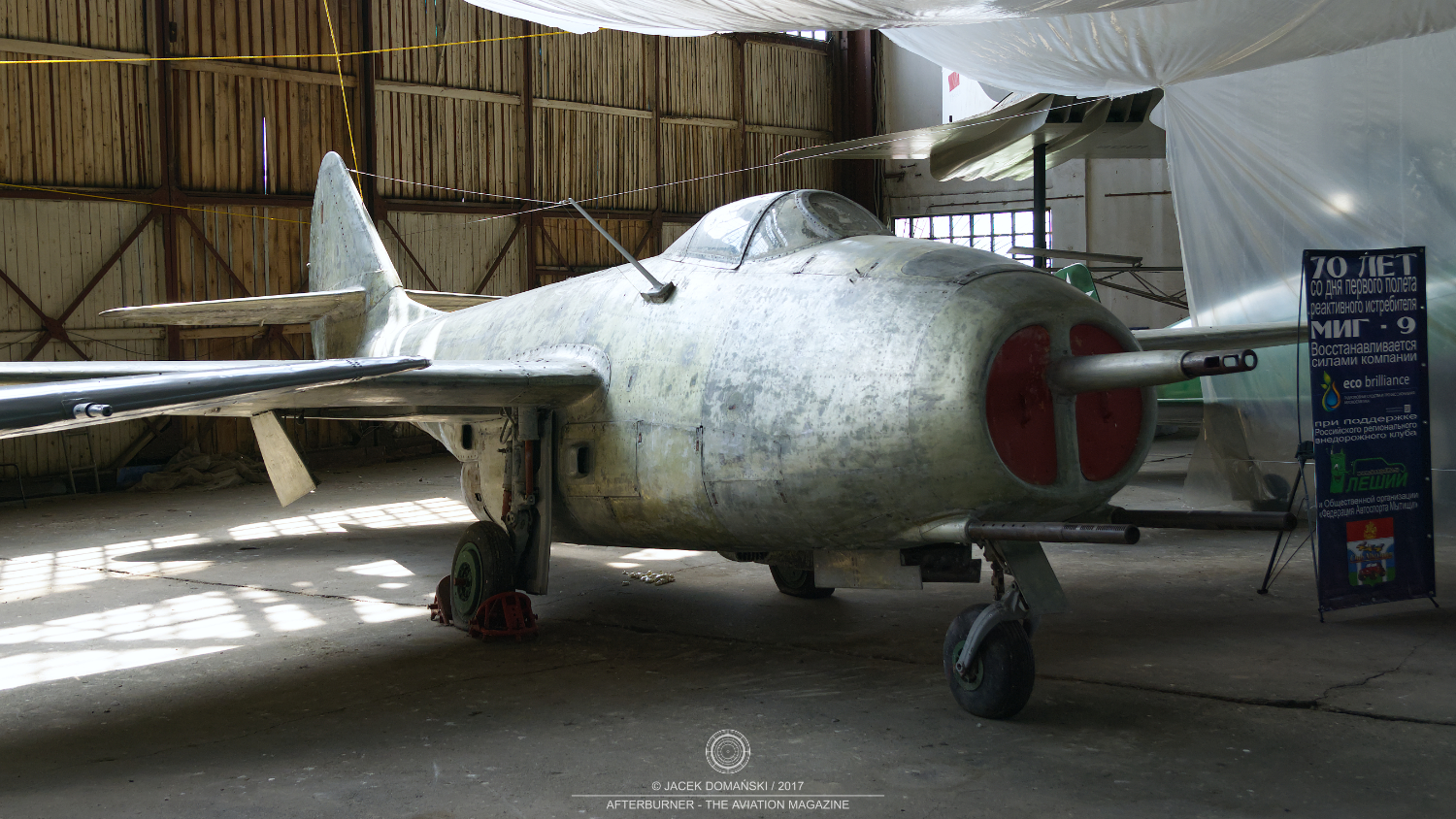
The aircraft, designated by the company as the I-300 (or Izdeliye-F), was built in a pod-and-boom configuration. Unlike to the Me 262 or the Meteor – the two early operational twin-engine jet fighters – the Soviet designers decided to keep the wing aerodynamically clean by placing the two powerplants below the cockpit. As a consequence, heat shield panels were used on the lower rear fuselage to protect it from exhaust gases, and two characteristic air intakes were installed in the nose. Therefore, the use of a new tricycle landing gear configuration was necessary. In March 1946, the prototype of the I-300 was ready for its first flight.
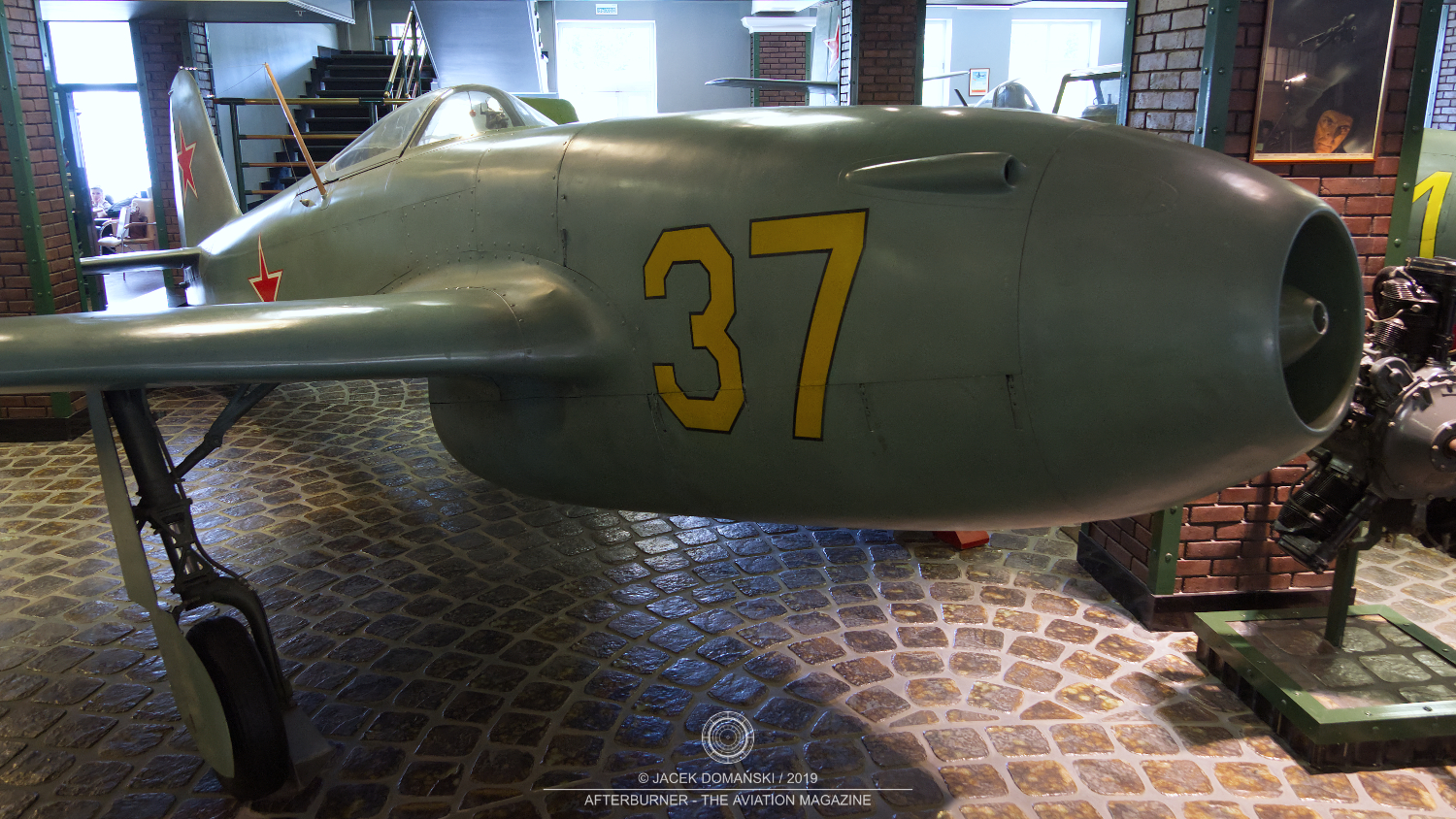
In April 1945, work on the second early Soviet jet fighter began at the Yakovlev design bureau. This time, a copy of the Jumo 004 engine, previously used in the Me 262 and the Ar 234, was chosen as the powerplant.
The aircraft developed by Yakovlev differed significantly from the I-300 design. It was based on the Yak-3, a popular piston-powered fighter from the war years, but equipped with a jet engine. The new powerplant was mounted at the front part of the fuselage, underneath the cockpit. In order to save time, minimal changes were made to the Yak-3 layout. These included heat shield panels to protect the bottom of the fuselage and a modified vertical stabiliser. At the end of February 1946, the prototype of the Yak-Jumo – as the aircraft was sometimes nicknamed – completed its wind tunnel tests and was ready to fly.
Both of the early Soviet jet fighters successfully performed their maiden flights on 24 April 1946. Rumour has it that representatives of Mikoyan-Gurevich and Yakovlev design bureaux tossed a coin to determine which aircraft would be the first Soviet jet to fly. This story was popularised by the aviation historian Bill Gunston in his books on the development of Soviet jets, published in the 1990s.
Regardless of whether this story is true, it was the I-300 that became the country’s first jet aircraft to fly. The aeroplane took off at 11:12 and performed a short, six-minute flight. The Yakovlev jet followed at 13:56 with a five-minute flight. Further evaluation flights were conducted on 7 and 11 May.
On 11 July 1946, the first prototype of the I-300 was destroyed in a fatal crash that occurred during comparative flights involving the two early Soviet jets and the He 162.
In August of the same year, both jets were approved for serial production, receiving their official designations of MiG-9 (NATO reporting name: Fargo) and Yak-15 (NATO reporting name: Feather). The reverse-engineered German engines were also given new names: RD-20/21 and RD-10, respectively.
The manufacturers were ordered to build a small series of the aircraft as soon as possible, as the authorities intended to present the new jets during the November parade in Moscow and demonstrate the strength of the Soviet Air Force. However, the aviation display was cancelled due to low cloud cover and fog.
Both the MiG-9 and Yak-15 entered operational service at the turn of 1946 and 1947.
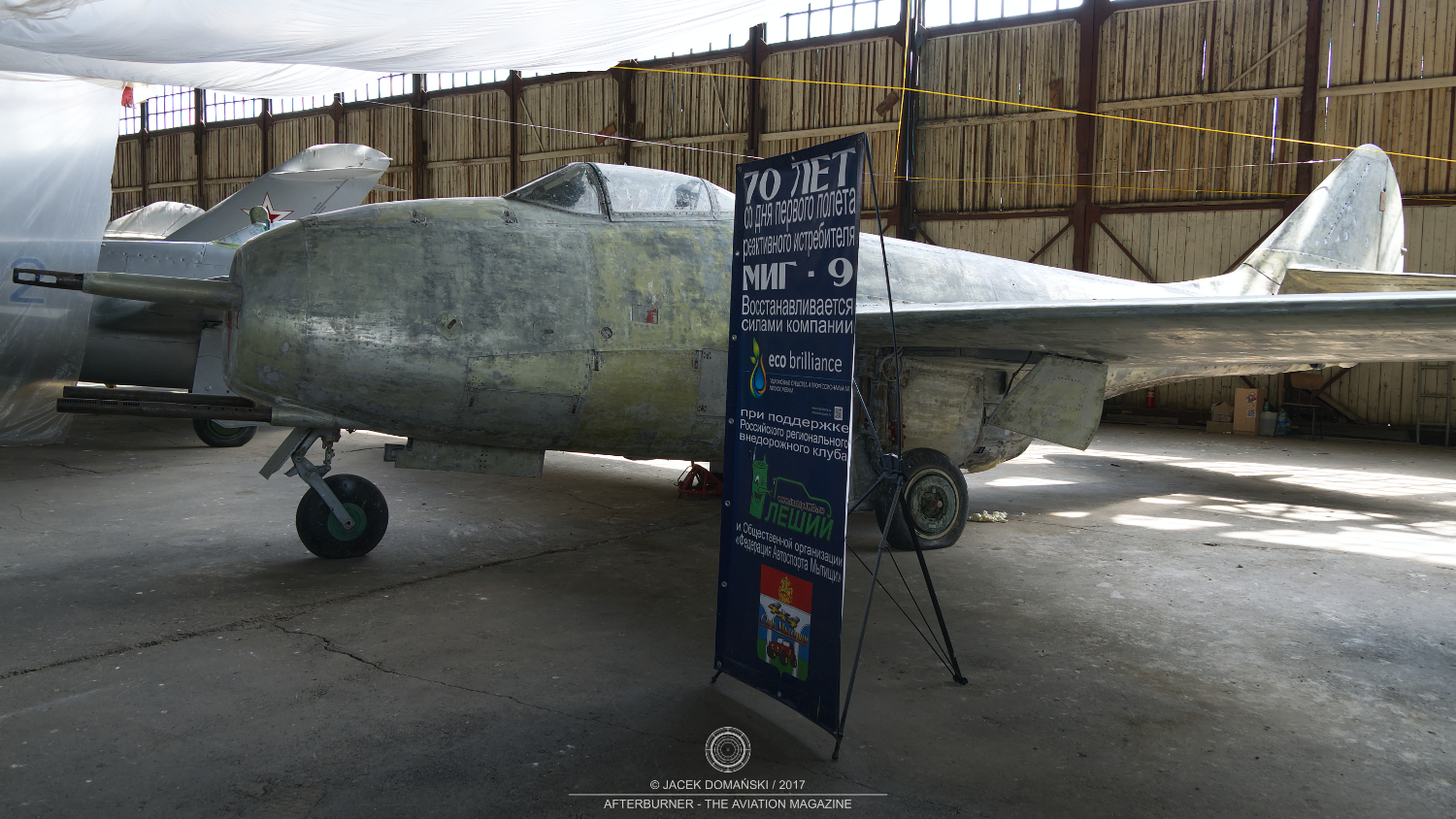
The MiG-9 was little more than an experimental design. From the outset of its operational service, the aeroplane was considered a temporary solution due to its numerous drawbacks. A total of 610 examples were built and assigned to several fighter units across the country. However, in 1948, following the introduction of the MiG-15 into operational service, production of the MiG-9 ceased.
At the end of 1950, between 358 and 372 MiG-9s (depending on the source) were transferred to China and used in the country’s air defence system. The last examples of the fighter were retired from service in 1959.
The Yak-15 was built in 280 examples. The aircraft was primarily used by Soviet fighter regiments as a conversion trainer. Thanks to its origin in the popular Yak-3, the aeroplane allowed fighter pilots to become familiar with jet-powered flight. However, it was never considered a combat aircraft. Production of the Yak-15 ceased at the end of 1947.
An interesting fact is that both jets served as the basis for several experimental aircraft and prototypes. These included a MiG-9 variant powered by the aforementioned TR-1 engine, versions equipped with an afterburner, and two-seat variants of both aircraft.
Only a few examples of these early Soviet jets have survived to the present day. One MiG-9 is preserved at the Central Air Force Museum in Monino, Russia, while two others are exhibited in China. The sole surviving Yak-15 is part of the collection at Vadim Zadorozhny’s Museum of Vehicles (Aircraft and a whole lot more – Vadim Zadorozhny´s Museum of Vehicles).