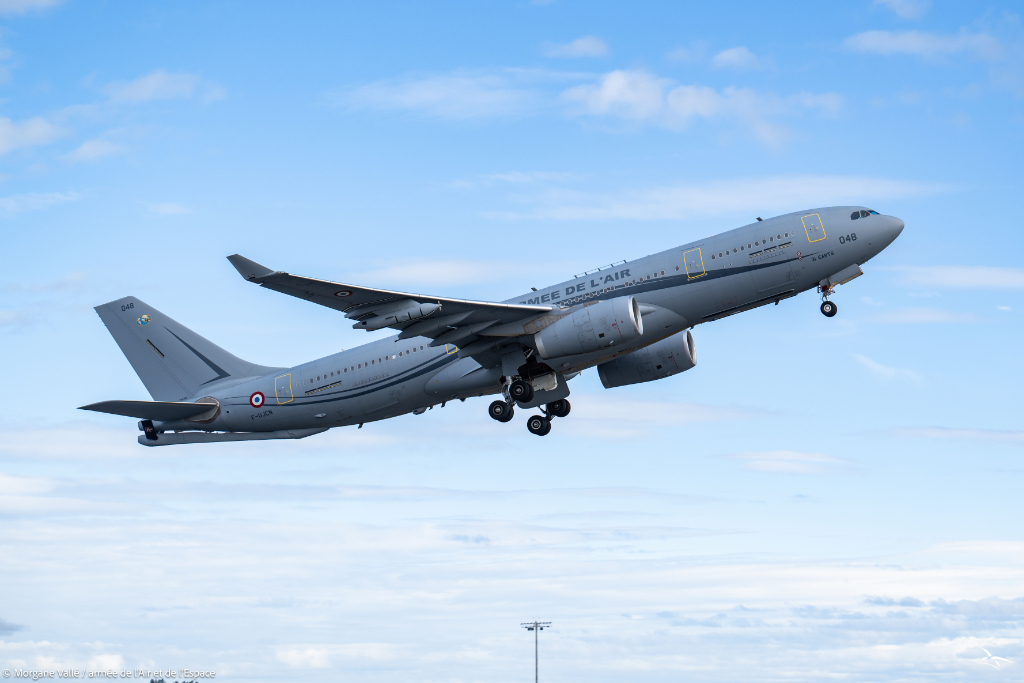
 During a unique multinational exercise over central France, an Airbus A330 MRTT Phénix of Armée de l’air et de l’espace (the French Air and Space Force) refuelled United States Air Force and Royal Air Force RC-135 aircraft, marking the first air-to-air refuelling integration between the United States, the United Kingdom and France within the RC-135 enterprise.
The exercise, known as Ravitaillement en Vol (“in-flight refueling” or “aerial refueling”), brought together a USAF TC-135 training aircraft, an RAF RC-135 Rivet Joint and a French A330 MRTT Phénix. Although air-to-air refuelling between a tanker and a receiver aircraft is a routine element of military aviation, the June 2026 exercise was far from routine. For the first time, the three nations joined forces and combined their aircraft, crews and support personnel in a common RC-135 refuelling mission, demonstrating a level of multinational integration that goes well beyond simply operating aircraft alongside one another.
The exercise involved personnel from the 55th Wing, the 55th Operations Group of the United States Air Force and the 170th Group of the Nebraska Air National Guard, alongside members of the No. 51 and 56 Squadrons RAF based at RAF Waddington, and the 31st Air Refuelling and Strategic Transport Wing of the French Air and Space Force.
The actual flying was preceded by several days of combined planning, simulator training, mission briefings and coordination. Operating in French national airspace added another layer of complexity, requiring the participating nations to coordinate the necessary diplomatic clearances and align their procedures before the aircraft could take to the air.
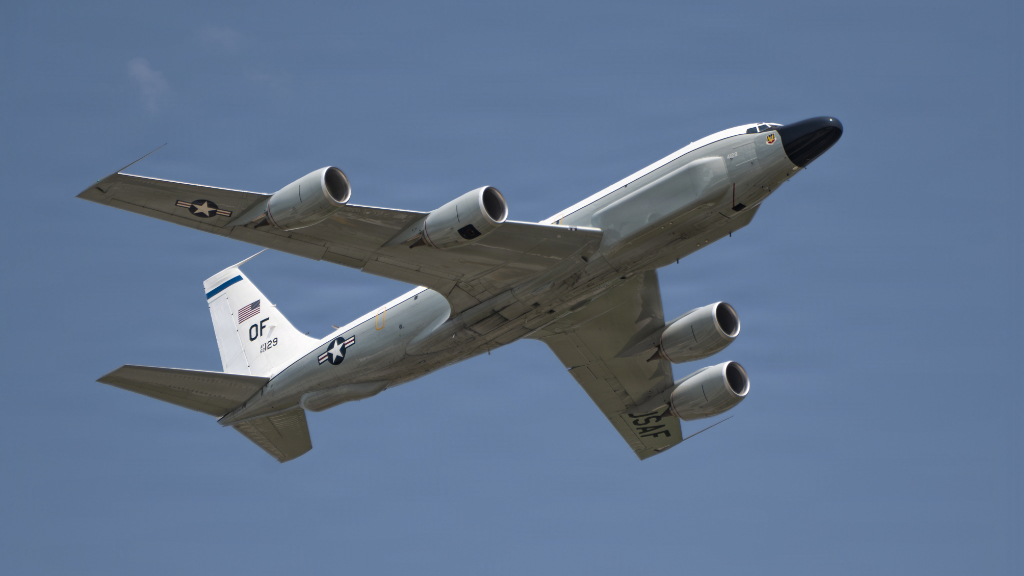
This was an important part of the exercise itself. Interoperability is not simply a matter of whether two aircraft can physically connect in flight. It also requires common procedures, compatible communications, clearly defined command relationships, coordinated airspace arrangements and agreed emergency actions. The three nations had to bring all these elements together before they could turn the concept into an operational sortie.
During the key mission, the French A330 MRTT successfully conducted air-to-air refuelling of both the US and British RC-135 aircraft in designated refuelling areas over central France. This operation demonstrated the ability of the three nations to operate their respective assets as a mutually supporting force, establishing a new capability for the multinational RC-135 community.
The exercise also built on earlier work conducted in October 2023 at Edwards Air Force Base in California, when a Royal Australian Air Force KC-30A took part in a test involving a USAF RC-135. The close similarities between the Australian KC-30A and the French A330 MRTT Phénix enabled the planners of Ravitaillement en Vol to draw on the data and lessons gathered during the earlier event.
This continuity is particularly interesting. Experience gained during an earlier test involving two nations and two aircraft types could be transferred to a new multinational environment, providing the foundation for a significantly more complex integration. In this way, flight-test experience was transformed into a practical capability involving three NATO nations.
Therefore, the significance of the exercise lies not only in the successful refuelling contacts themselves, but also in everything that had to happen before the aircraft ever entered the refuelling area. Planning, training, diplomatic coordination and the harmonisation of procedures all had to come together. Once airborne, the crews had to translate that preparation into a shared mission, despite operating different aircraft belonging to three separate national air forces.
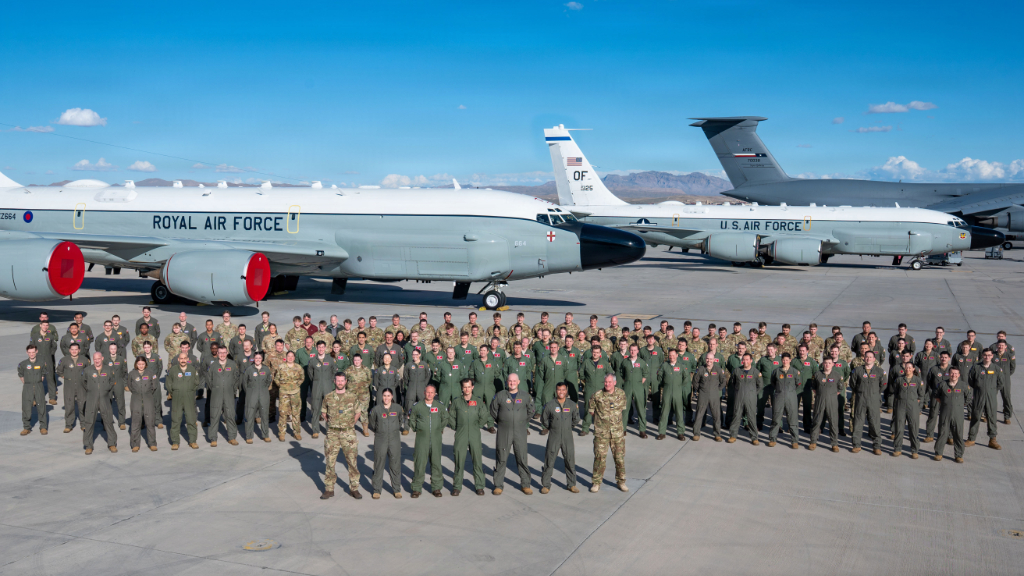
The successful outcome of Ravitaillement en Vol paves the way for similar multinational training and operational activities in the future. The RC-135 fleets operated by the United States and United Kingdom can now draw on lessons learned during the integration with the French A330 MRTT, while the participating nations can further refine their common tactics, techniques and procedures.
The exercise also demonstrated how the growing fleet of A330 MRTT aircraft operated by several allied nations can become part of a wider, interconnected support network for specialised aircraft such as the RC-135. With more than 30 allied A330 MRTTs in operation around the world, there is considerable potential for further integration.
However, for military aviation, perhaps the most remarkable aspect of Ravitaillement en Vol is much simpler: three aircraft from three different nations, operated by three different air forces, came together to perform a single, coordinated mission. What might appear to be a relatively straightforward refuelling sortie was in fact the result of a complex multinational effort involving aircraft, crews, planners, procedures and diplomatic coordination.
The successful mission over central France marked a significant milestone in the interoperability of the RC-135. In practical terms, it demonstrated how allied air forces can gradually remove the boundaries between their national capabilities and turn them into a single, mutually supporting force.
Cover photo: A French Air Force A330 Multi Role Transport Tanker (photo by the the French Air and Space Force, used in accordance to the etalab-2.0 licence). Photos 1 and 2 © U.S. Department of Defence (DoD). DoD information materials were used, in compliance with Public Domain licence. The appearance of U.S. Department of Defense (DoD) visual information does not imply or constitute DoD endorsement.