 As previously reported, Armée de l’Air et de l’Espace (the French Air and Space Force – FASF) began its seventh long-range air power projection mission, PEGASE 26, on 8 September 2026. The first stage of the deployment has now taken the French force through the Arctic, opening a new route towards the Indo-Pacific via Greenland, Canada and Alaska.
On 7 September, the first A400M Atlas departed from Orléans Air Base for Kangerlussuaq in Greenland. The following day, four Rafale fighters, five A330 MRTT Phénix tankers and a second A400M took off from Istres Air Base. After rendezvousing with the first A400M, the formation continued towards Alaska, with the Rafale requiring six air-to-air refuelling operations to reach Eielson Air Force Base after an approximately 11-hour flight. Meanwhile, the second A400M flew via Kangerlussuaq and Goose Bay in Canada before continuing to Alaska.
This is the first time in the history of PEGASE that the combination of Rafale, A330 MRTT and A400M has been used to establish an alternative route towards the Indo-Pacific through the High North. Until now, French long-range deployments to the region have primarily followed a southern route through the Middle East. The Arctic route is geographically shorter towards the northern Pacific, while providing France with greater freedom of action and additional options for future deployments.
Operating in the High North, however, presents considerable challenges. Long distances, limited diversion options and unpredictable weather require careful planning, while icing and strong crosswinds can affect both flight operations and the availability of forward airfields. At Pituffik Space Base, for example, a forecast of crosswind speeds of up to 35 knots meant that the originally planned approach was not possible.
The A400M also provides an important additional capability during the deployment. In the Arctic environment, the aircraft can support search and rescue operations, including the delivery of SAR/SAMAR equipment, survival kits, food and medical supplies to crews forced to eject in remote areas.
“We can drop SAR/SAMAR chains comprising rescue boats, survival kits, food and medical equipment, at only around ten metres from the ejected pilot,” explained Lieutenant Colonel Fabien, the A400M detachment commander and captain of the aircraft that landed at Pituffik, the northernmost US military base.
Therefore, the Arctic stage of PEGASE 26 is serving not only as a demonstration of long-range projection capability, but also as a practical test of the infrastructure and procedures required to sustain such operations. Fuel availability, suitable diversion airfields, refuelling opportunities and the ability to de-ice aircraft are all essential factors when operating across the High North.
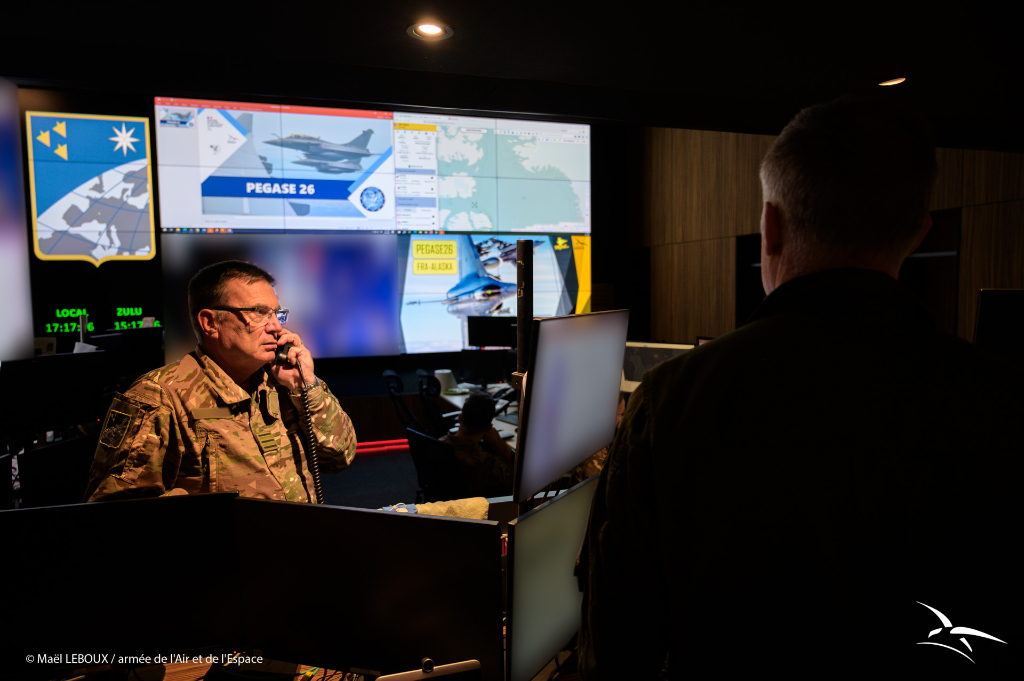
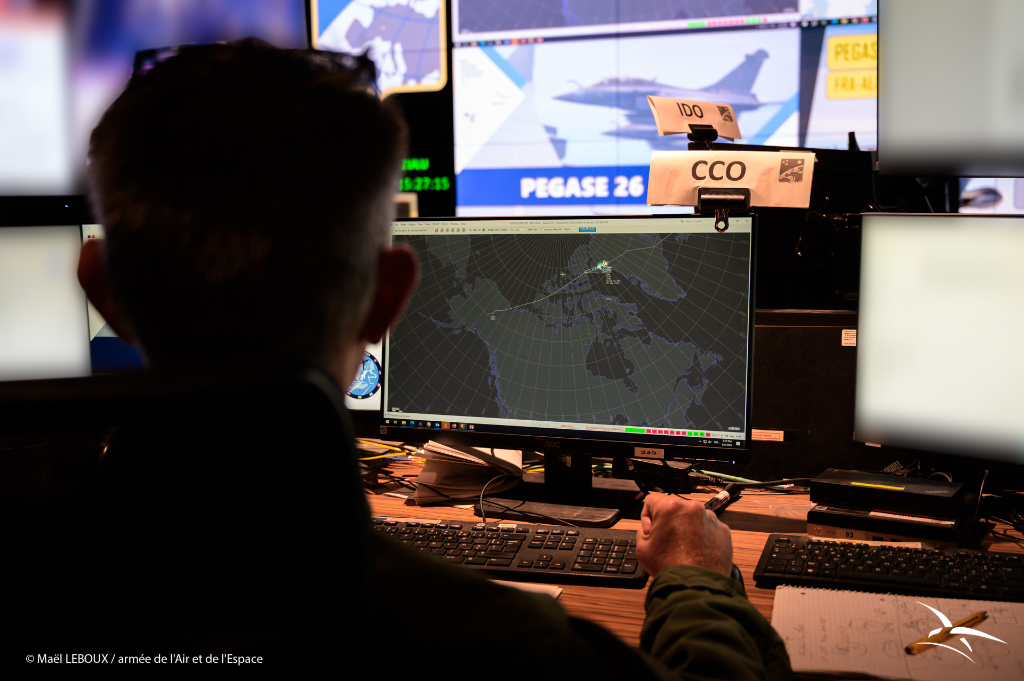
While the aircraft are thousands of kilometres from France, the mission is being monitored and conducted remotely from Centre air de planification et de conduite des opérations (the Air Operations Planning and Command Centre – CAPCODA) at Lyon-Mont Verdun Air Base. Around 20 personnel at the centre are directly involved in following and conducting PEGASE 26, alongside their other responsibilities.
CAPCODA provides the FASF with a global operational picture and is responsible for planning and conducting air operations. More than 250 personnel work at the centre, including those responsible for the permanent protection of French airspace. During PEGASE 26, its teams are simultaneously monitoring the French deployment to the west, other operations such as a mission in the Black Sea, and the ongoing protection of national airspace.
“The role of CAPCODA is to plan and then execute air missions, including air raidsexplains Colonel Thierry, the CAPCODA commander. “Concretely, during the execution phase, we make sure that the mission is carried out as planned and adapt it according to the circumstances encountered. We are used to conducting several missions simultaneously, as is the case today with PEGASE heading west and a mission in the Black Sea to the east, while also ensuring the permanent protection of French airspace.”
With the first, Arctic stage of the mission completed, PEGASE 26 will continue towards the Indo-Pacific, where the French force is scheduled to operate with several regional partners before proceeding to the Middle East. Ultimately, the mission aims to demonstrate that the FASF can project and sustain an operational air power presence across several distant theatres without the need for a large permanent forward deployment.
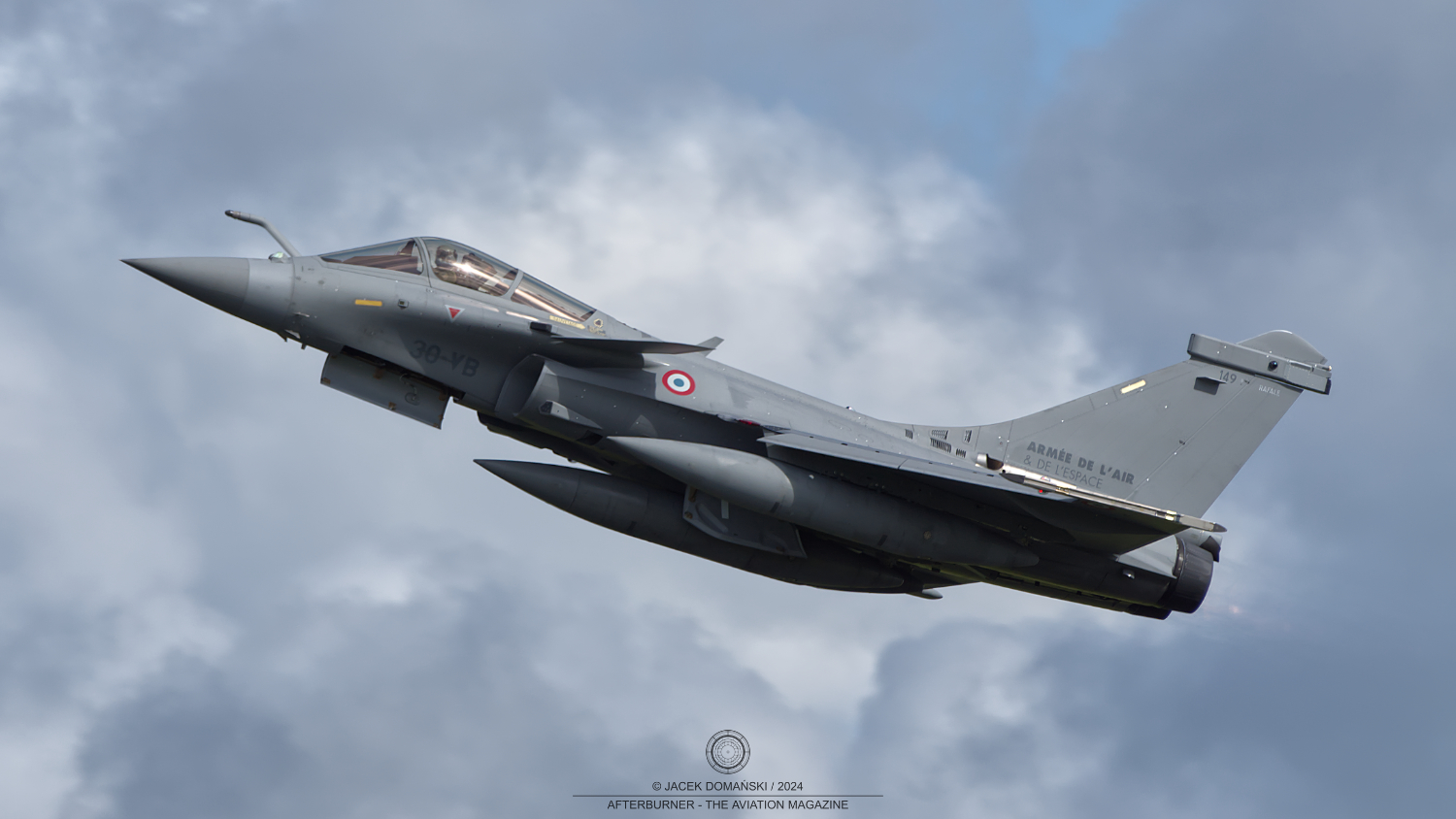
Cover photo: Dassault Rafale, illustrative photo.
Information from the press releases of the French Ministry of Defence – published on the MoD page in September 2026 – were used, in accordance to the etalab-2.0 licence.. CAPCODA photos © the French Ministry of Defence.
AI tools used to translate and edit from French.