 Between 8 September and 15 October 2026, Armée de l’Air et de l’Espace (the French Air and Space Force – FASF) will conduct PEGASE 26, its seventh long-range air power projection mission. This deployment will cover more than 40,000 km, taking French Rafale fighters, A330 MRTT Phénix tankers and A400M Atlas airlifters from the Arctic to the Indo-Pacific and, finally, to the Middle East.
Around 300 French military personnel and a compact force comprising four Rafale fighters, three A330 MRTT Phénix multirole tanker and transport aircraft and two A400M Atlas airlifters will be involved in PEGASE 26. Supported remotely by Centre air de planification et de conduite des opérations (the Air Operations Planning and Command Centre – CAPCODA) at Lyon-Mont-Verdun Air Base, the deployment will begin in Greenland before continuing via Canada, Alaska, Japan, South Korea, Indonesia, India, Qatar and Réunion, with its final stage taking place in Egypt.
The first part of the mission will focus on the Arctic. Operations in Greenland will allow the French crews to test their ability to operate in extreme cold-weather conditions, while also validating a new route towards Japan and the Indo-Pacific via the High North. For the FASF, this represents more than simply a different flight path – France is seeking to demonstrate its ability to project air power rapidly across an increasingly important strategic region.
The Indo-Pacific operations will form the main part of PEGASE 26, with the French force spending 26 days in the region. The deployment will strengthen cooperation with several key partners, including Japan, South Korea, Indonesia and India. The French contingent will also participate in the multinational Tarang Shakti exercise organised by the Indian Air Force, providing another opportunity to develop interoperability with partner air forces.
The deployment will then continue towards the Middle East, where activities are planned in Qatar and Egypt. The final stage will include participation in the bilateral AMUN exercise in Egypt, where French and Egyptian crews will conduct joint air operations. The presence of French aircraft in the region is also intended to underline France’s continuing commitment to regional security and its strategic partnerships.
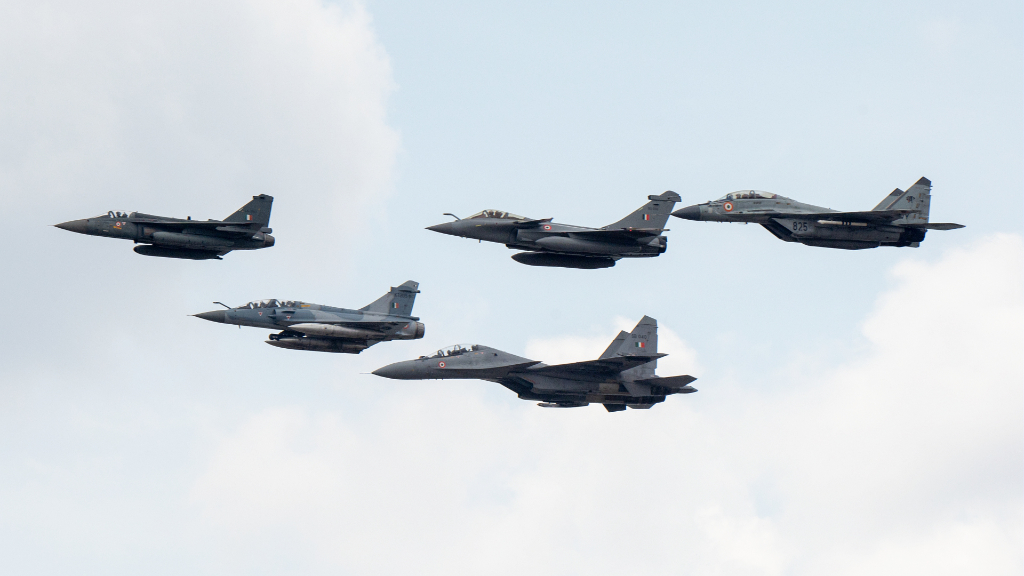
Although PEGASE missions have become a regular feature of French long-range deployments, the 2026 edition introduces a significantly different geographical dimension. The route from the Arctic to the Indo-Pacific and then to the Middle East is designed to demonstrate the ability of the FASF to operate across several distant theatres without relying on a permanent large-scale forward deployment.
PEGASE 26 follows the ambitious PEGASE 2023 mission, during which 320 French military personnel and a force of ten Rafale, five A330 MRTT Phénix and four A400M Atlas aircraft were deployed to the Indo-Pacific. The aircraft covered thousands of kilometres and participated in exercises such as Mobility Guardian 2023 and Northern Edge 23-2. They also conducted training with regional air forces and operated from French overseas territories.
The following year, PEGASE 24 expanded the concept even further. The 2024 deployment covered around 90,000 km in 50 days and involved ten Rafale fighters, five A330 MRTTs and three A400Ms, while French aircraft participated in major multinational exercises including Arctic Defender in Alaska, Pitch Black in Australia and Tarang Shakti in India. The mission was conducted alongside German, Spanish and British forces, underlining the growing emphasis on European interoperability.
With PEGASE 26, the FASF will once again deploy the three key elements of its long-range air power capability – the Rafale, A330 MRTT Phénix and A400M Atlas. Together, they provide the French Air and Space Force with the ability to deploy a combat-capable force over long distances, supported by its own air-to-air refuelling and strategic and tactical airlift capabilities.
The 2026 mission is therefore intended to demonstrate not only France’s ability to reach distant parts of the world, but also its ability to maintain an operational presence there. From the Arctic and the Indo-Pacific to the Middle East, PEGASE 26 will test this capability across a route exceeding 40,000 km.
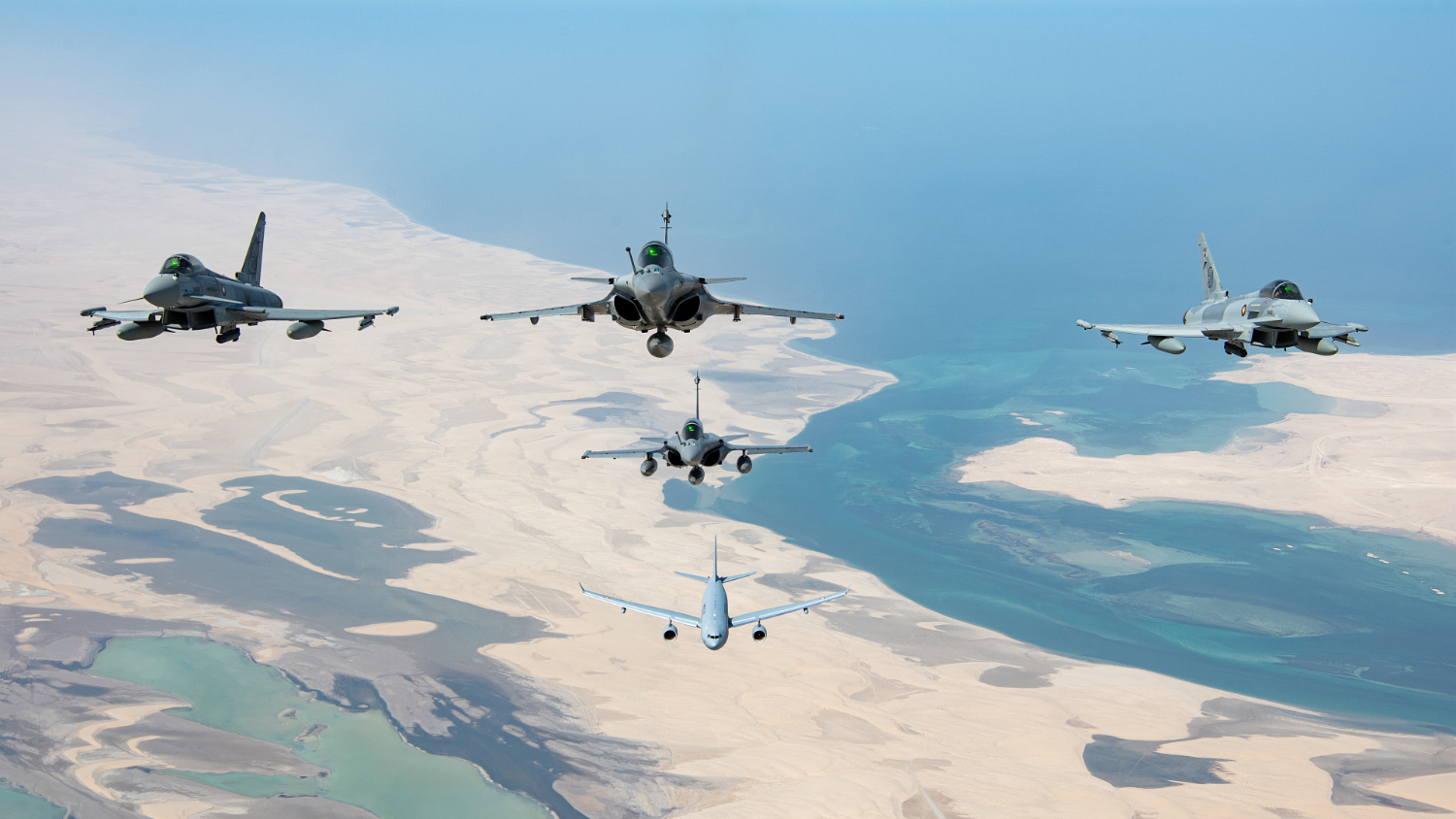
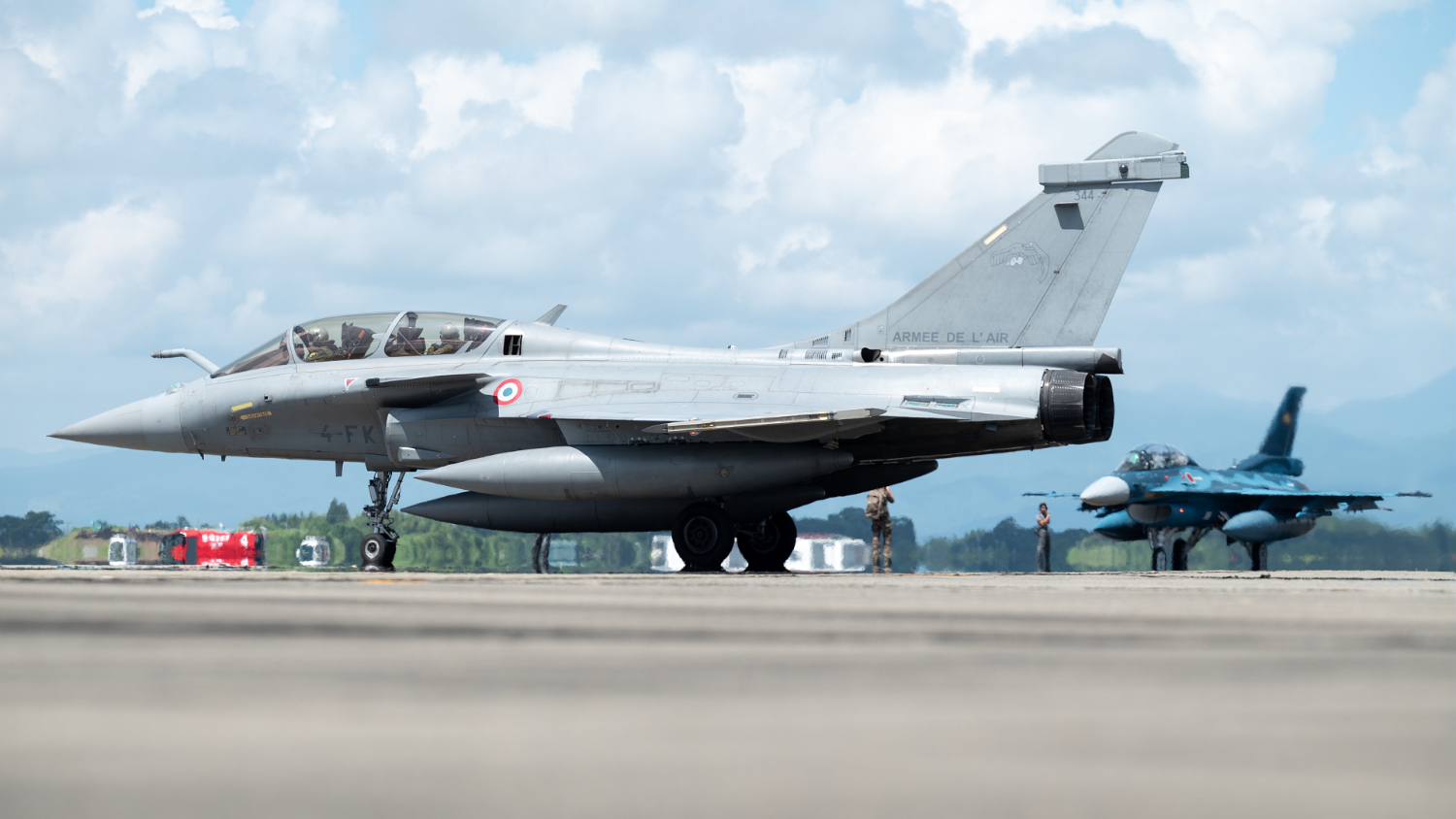
Cover photo: Exchange between French and Japanese pilots and Weapons Systems Officers (NOSA) in Rafale and Japanese F-2 aircraft during the PEGASE mission at Nyutabaru Air Base, Japan, 27 July 2023.
Information from the press releases of the French Ministry of Defence – published on the MoD page in August 2026 – were used, in accordance to the etalab-2.0 licence. All photos © the French Ministry of Defence.
AI tools used to translate and edit from French.