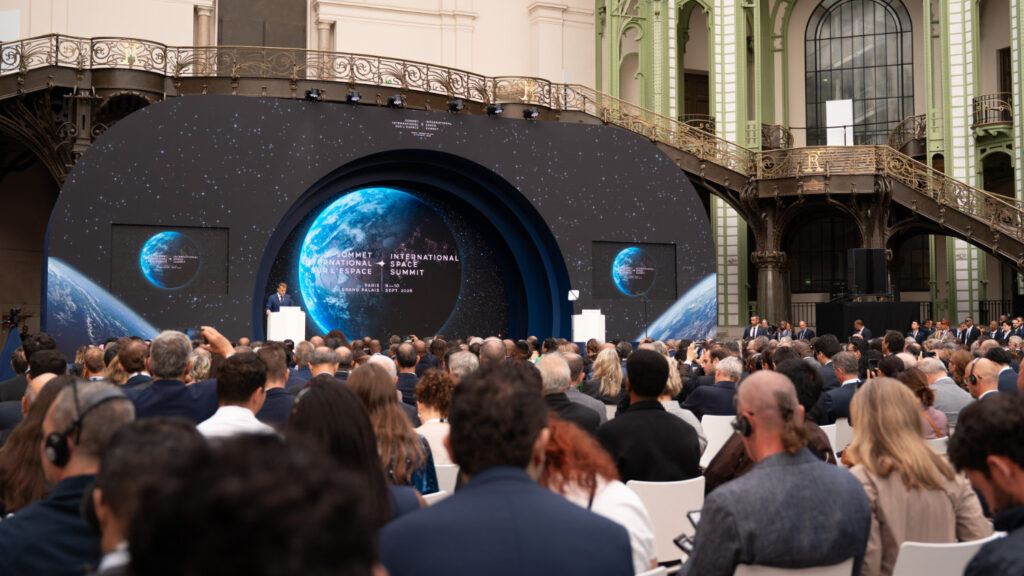
 On 9 and 10 September 2026, the International Space Summit took place in Paris, bringing together world leaders, government ministers, representatives of the space industry and astronauts to discuss the future of global space activities. Hosted by France and co-chaired with Germany, the event was held at a time of growing international competition and the emergence of new space powers, while also providing a forum for discussing Europe’s future role in space exploration and the capabilities it will need to maintain its technological independence and competitiveness in the decades ahead.
Held at the Grand Palais, the summit brought together heads of state and government, ministers, astronauts and representatives of national and international space agencies, as well as major players in the space sector and start-ups from the New Space industry. The event was held at the invitation of French President Emmanuel Macron, alongside his Special Envoys, ESA astronaut Thomas Pesquet and European entrepreneur Hélène Huby. Around 90 countries and international organisations were represented, approximately 60 of them by heads of state, heads of government or ministers. Almost 1,100 space sector companies were also attended the summit, demonstrating the exceptional mobilisation of the global space ecosystem.
The summit addressed a broad range of issues related to the development and innovation of the space sector. It focused on three main areas — meeting the challenges of the global space economy through international cooperation; advancing science, technology and space exploration on an international scale; and ensuring space security through dialogue, defence and partnerships. Other topics covered during the summit included the increasing use of low Earth orbit, the sustainability and security of space operations, and the exploration of the Moon and Mars. The discussions also addressed the competitiveness and technological development of the space sector.
Among the numerous issues addressed during the summit, particular attention was also given to the future of European space exploration and the role Europe intends to play in the coming decades. With human activity in low Earth orbit entering a new phase, and preparations for sustained operations on the Moon already under way, the discussions raised the question of how Europe could strengthen its autonomy in space transportation and exploration while continuing to pursue international cooperation.
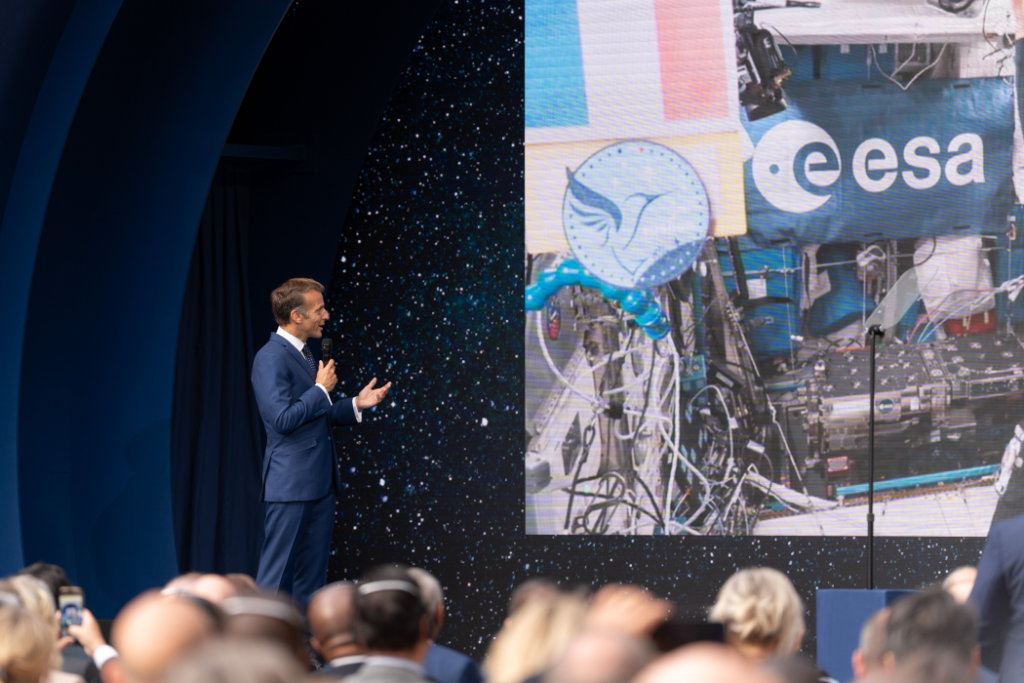
One of the most significant proposals regarding Europe’s future role in space came from the French President Emmanuel Macron. In his speech, the French head of state presented a broader vision for strengthening Europe’s position in space, with the development of its own human spaceflight capabilities forming an important part of this ambition.
Macron’s vision for Europe’s future in space extended considerably further. He argued that Europe needs to strengthen its technological independence and competitiveness in several critical areas, such as affordable access to space, launch capabilities, Earth observation, positioning systems, and secure communications. He also called for greater coordination of institutional launch demand across Europe, stronger support for the continent’s industrial base, and increased investment in emerging space technologies. However, he emphasised that achieving greater European autonomy should not come at the expense of international cooperation, which he described as essential to the future of space exploration.
Turning specifically to the topic of human spaceflight, Macron referenced the recently signed partnership with the US company Vast, through which European astronauts are expected to participate in a future space mission. He described this as the kind of international partnership that Europe intends to continue pursuing but also argued that the continent should develop its own ambitions. The French president stated that Europe should fly with its own crews and “assert its ambition in human spaceflight”.
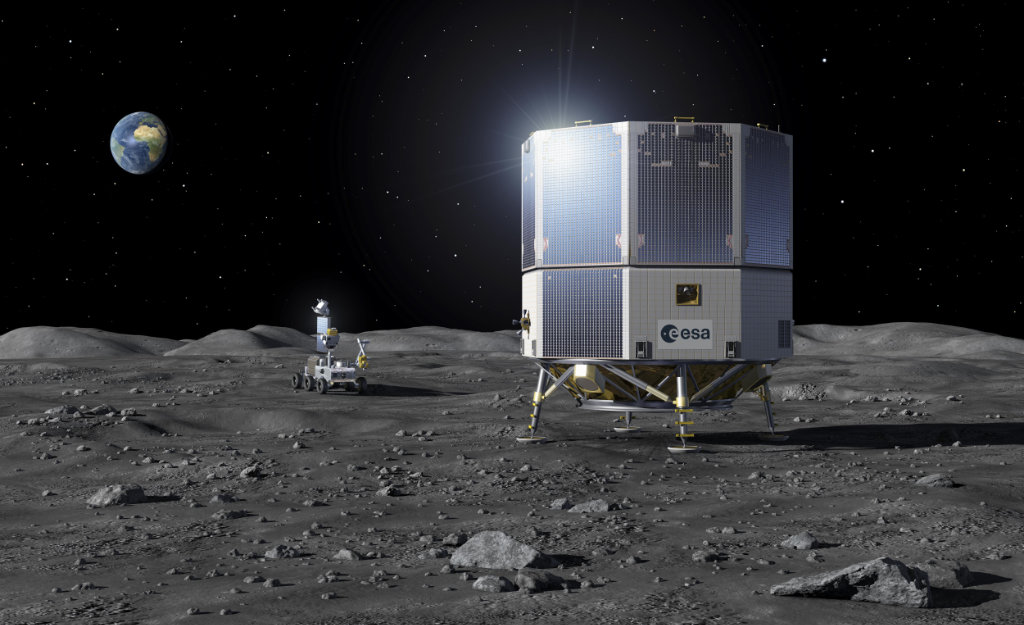
Macron then outlined three milestones intended to illustrate this ambition. Within two years, he wants to see Nyx, the first European cargo capsule, dock with the International Space Station (ISS). Within five years, he wants to see the first European lunar lander, Argonaut, reach the Moon’s surface. Finally, he wants to see the first European crewed spacecraft lift off from the Guiana Space Centre in Kourou within ten years, carrying European astronauts as well as crew members from other nations.
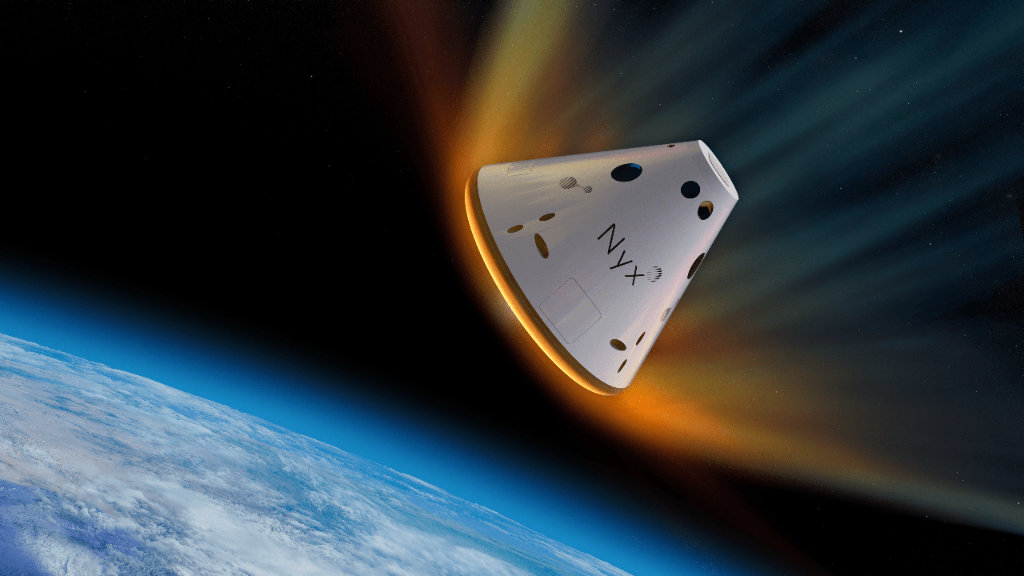
The first two objectives mentioned by Macron are already linked to ongoing European projects. Nyx is being developed by The Exploration Company as part of the ALADDIN programme run by the European Space Agency, which aims to establish an autonomous European capability to transport cargo to and from low Earth orbit. Although the spacecraft is initially being developed for cargo missions, its architecture is intended to provide growth potential for future crew transportation. The Exploration Company has already begun to work on a future crewed version. Meanwhile, the Argonaut programme is ESA’s lunar lander initiative, designed to provide Europe with autonomous access to the lunar surface and support both robotic and human exploration. Its first mission is currently planned for 2030. Although ESA has not formally approved a European crewed spacecraft programme corresponding to Macron’s ten-year ambition, the potential evolution of Nyx towards crew transportation provides an existing technological path that could contribute to such a capability.
The vision presented by the French president was accompanied by a broader political commitment from ESA Member States. During the summit, ministers representing all 23 ESA Member States, supported by Canada, adopted a joint declaration calling for Europe to strengthen its autonomy in space exploration while continuing to deepen international cooperation. The declaration identified low Earth orbit and the Moon as proving grounds for the next era of space exploration, eventually paving the way for increasingly complex missions to Mars. In low Earth orbit, developing a competitive European capability to transport astronauts was identified as a potential further step towards securing Europe’s access to the emerging post-ISS orbital ecosystem. Regarding lunar exploration, the ministers emphasised the importance of achieving a balance between international partnerships and targeted European autonomy. This includes developing Europe’s own robotic capabilities and infrastructure, with a robotic landing on the Moon’s surface identified as a significant milestone.
However, the declaration does not commit ESA Member States to developing a specific European crewed spacecraft, nor does it identify which system could eventually provide such a capability. Instead, the ministers called on ESA to prepare, without delay, options for translating these broader exploration ambitions into concrete and sustained action. These options are expected to address Europe’s future presence in low Earth orbit and its role in lunar exploration, balancing greater European autonomy with commercial solutions and international partnerships. They are to be presented for decision by ministers at ESA’s Intermediate Ministerial Meeting in December 2026.
While the International Space Summit did not mark the beginning of a new European crewed spaceflight programme, it did bring Europe’s future role in human and robotic space exploration into sharper focus. The ambitions presented in Paris suggest a Europe seeking greater autonomy in low Earth orbit and a more prominent role in lunar exploration, while continuing to rely on international cooperation. What will ultimately emerge from these ambitions remains to be seen, but the final months of 2026 should provide some of the answers.
Cover photo: International Space Summit 2026 – Day 2 – Morning Events at the Grand Palais in Paris, France on 10 September 2026. Photo: ©ESA – D. Dos Santos
European Space Agency and Élysée Palace press materials were used.