 On 18 September 1913, the Avro 504 biplane bomber made its first flight.
Alliott Verdon Roe, a British aircraft manufacturer and pioneering pilot, started his aviation career in the early 1900s with experiments on model aeroplanes. In 1907, one of Roe’s models won a Daily Mail competition, and the seventy-five-pound prize he received allowed him to build a full-size aircraft based on the winning design, which he named the Roe I Biplane.
In 1909, the British aviation pioneer built a triplane he named the Avroplane. Its maiden flight took place in July of that year, and Roe officially became the first Englishman to fly an all-British-made aeroplane. On 1 January 1910, A.V. Roe Aircraft Co. was founded at Brownsfield Mill in Manchester, later renamed simply as Avro Aircraft.
The following year, Roe began developing two further biplane designs – a single-seat Avro Duigan for the Australian aviation pioneer J.R. Duigan, and a two-seat Avro Type E. The latter was a derivative of the Duigan biplane, but larger and equipped with a 60 hp E.N.V. engine. On 12 March 1912, the Type E performed its maiden flight, flown by Lt. Wilfred Parke.
The aircraft was assessed as being perfectly designed and having exceptional flight characteristics, apart from its top speed and rate of climb. In order to improve its performance, Roe replaced the engine with a much lighter Gnome rotary engine, generating 50 hp. The redesigned aircraft made its first flight on 8 May 1912.
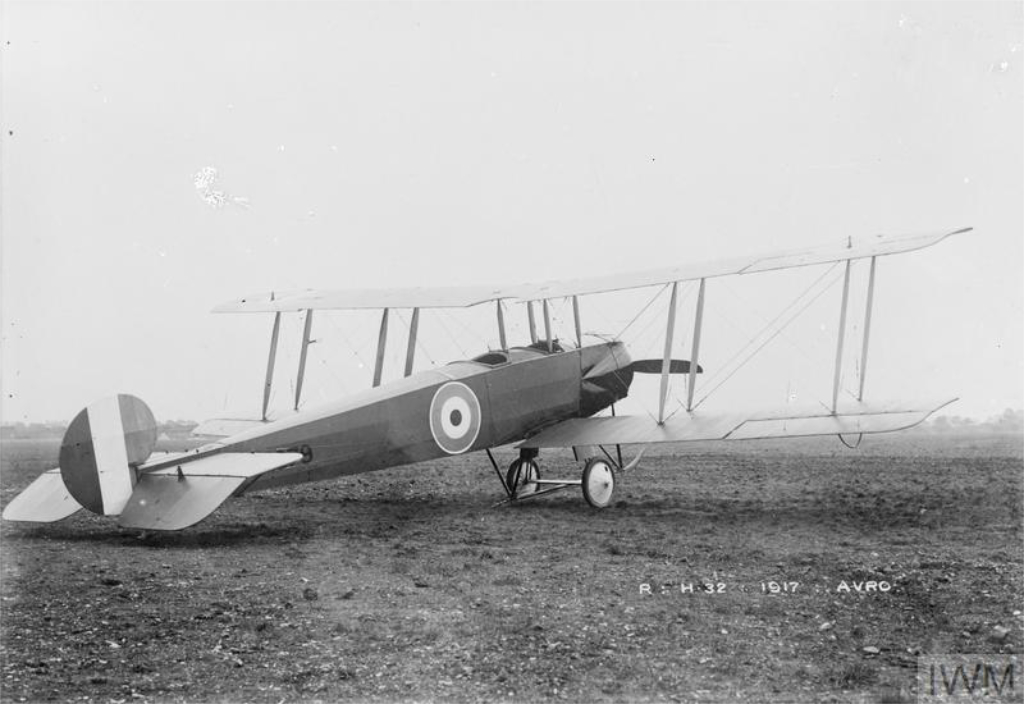
The British military authorities were so impressed with the aeroplane that an order for two more examples, officially designated Avro 500, was placed immediately. The initial purchase was shortly followed by another one, this time for four Type E aircraft and five of its single-seat variant, named the Avro 502.
The Avro 500, together with the B.E. 1, developed in parallel, were among the early biplane designs that came to dominate the aviation industry for more than a decade. A total of eighteen Type E aircraft were manufactured.
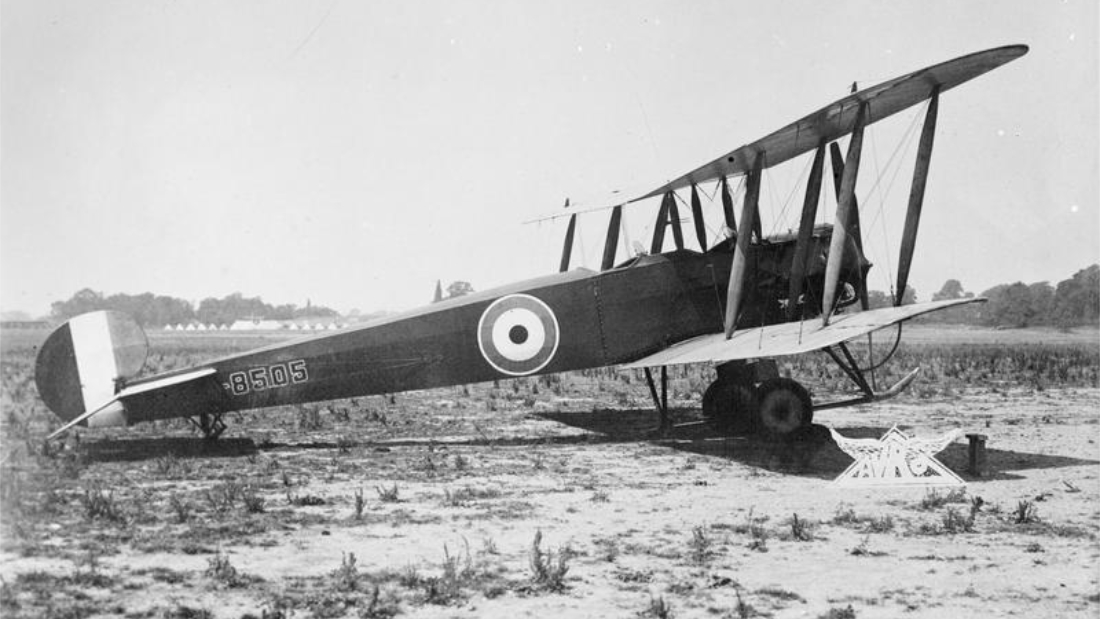
In September 1913, the Avro company introduced another design based on the Avro 500. The aircraft, designated the Avro 504, was powered by a seven-cylinder Gnome Lambda rotary engine generating 80 hp. It soon achieved great success as a military aircraft, entering service with almost forty air forces around the world, and became one of the most iconic aeroplanes of the Great War.
The Avro 504 was manufactured under licence by more than twenty aviation companies, not only in the United Kingdom but also in Argentina, Japan and Mexico.
Production of the Avro 504 officially ceased only in 1932, with more than 11,000 examples of the aircraft manufactured worldwide. This made the Avro 504 the most produced aeroplane of any kind to have served in the First World War.
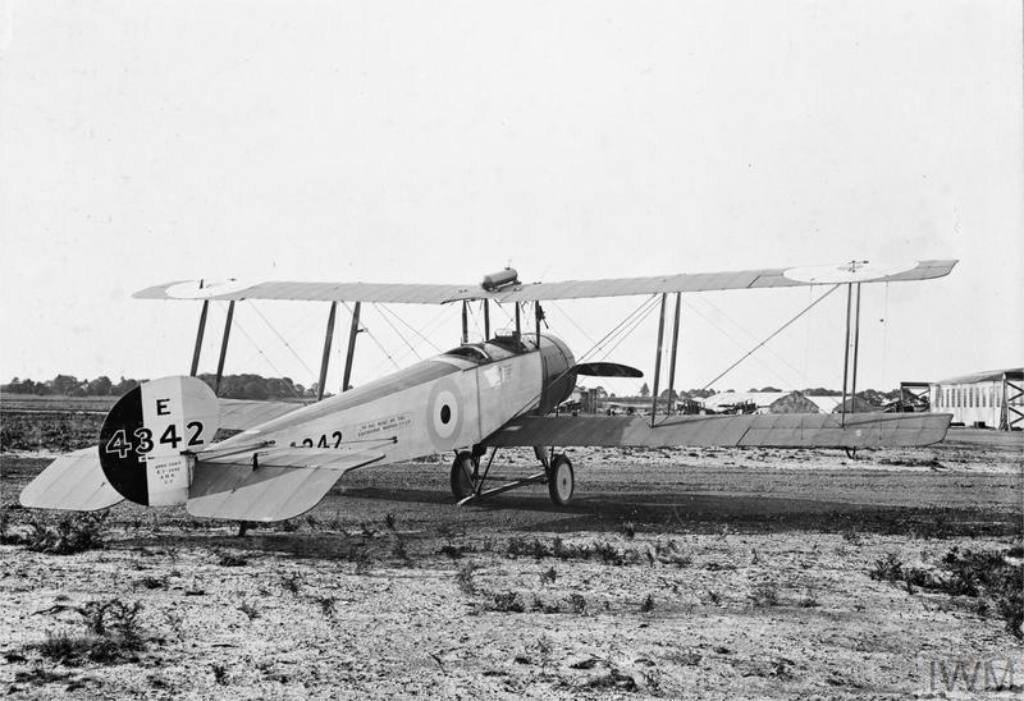
Cover photo: Avro 504J, two-seat training aircraft (© IWM / Q 55964, cropped). All Imperial War Museums´ photos used under IWM Non-Commercial licence.