 On 15 May 1918, the first scheduled and regular airmail service in the United States officially commenced, connecting New York City, Philadelphia and Washington, D.C.
The first regular domestic airmail service was operated by the US Army. In previous years, when the Post Office Department began sending mail via railway or steamboat networks, this was always done by contracting private transportation companies. However, in the case of airmail, there were no commercial airlines available to provide such a service.
Therefore, the task of establishing the airmail route was assigned to the Army, with Major Reuben H. Fleet being responsible for organising the first regular connection. It was decided that the route should link New York City and Washington, D.C. However, at that time it was impossible to fly the 218-mile (approximately 350 km) distance between those two cities without a refuelling stop. Therefore, a landing in Philadelphia was necessary.
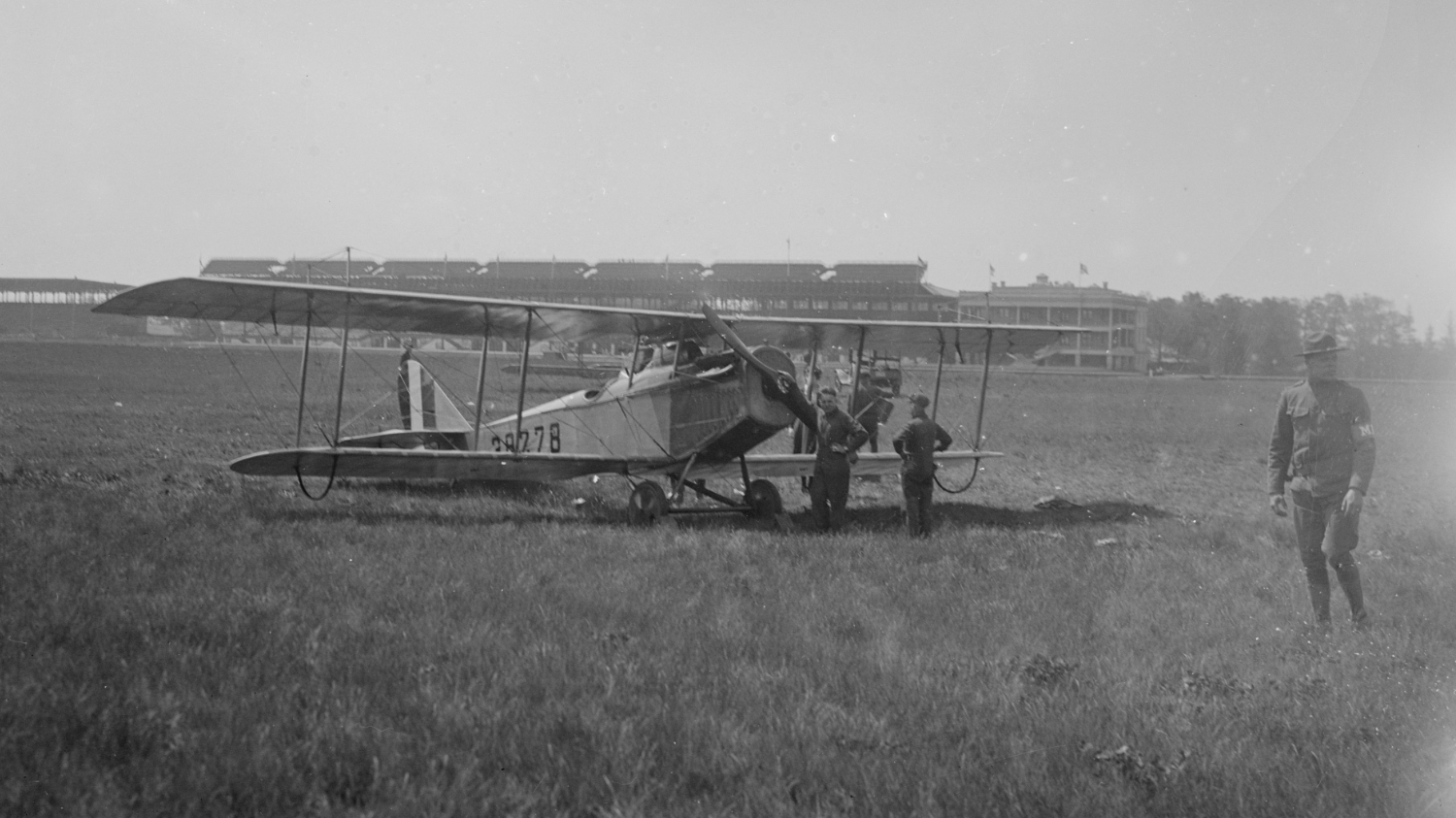
The service commenced on 15 May 1918, with simultaneous take-offs from Polo Grounds in Washington and Belmont Park in New York City. The initial flights were operated by Army Air Service lieutenants Howard Culver, Torrey Webb, Walter Miller, Stephen Bonsal, James Edgerton and George Boyle. The aircraft selected for the service was the Curtiss JN-4H “Jenny” biplane.
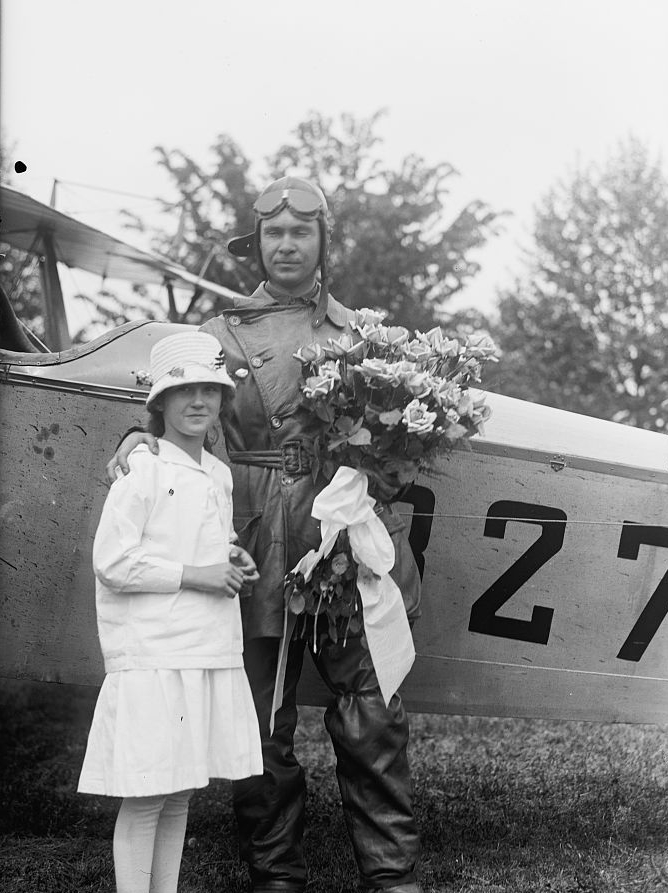
Interestingly, Edgerton and Boyle were inexperienced pilots who had only recently graduated from flight school. They were selected for the inaugural flights not by Fleet, but by the postal authorities, most probably due to family connections.
And it was Lt. Boyle who became the infamous protagonist of the first regular US airmail service. He was scheduled to take off from Washington, D.C., under the watchful eyes of several officials, including Assistant Secretary of the Navy Franklin D. Roosevelt and President Woodrow Wilson himself.
However, the first attempt to take off failed, as Boyle climbed into the cockpit but was unable to start the engine. It was soon discovered that the aircraft had not been fuelled. When the young pilot finally managed to get the Jenny airborne, it marked only the beginning of further failures. Boyle never made it to Philadelphia. He became lost en route, ran out of fuel and eventually crash-landed somewhere in Maryland. According to some sources, he headed in the wrong direction immediately after take-off, following railway tracks leading south. The fact remains that his “Jenny” managed to fly only 25 miles (40 km) from Washington. The airmail he was carrying on board was loaded onto a truck and returned to the starting point.
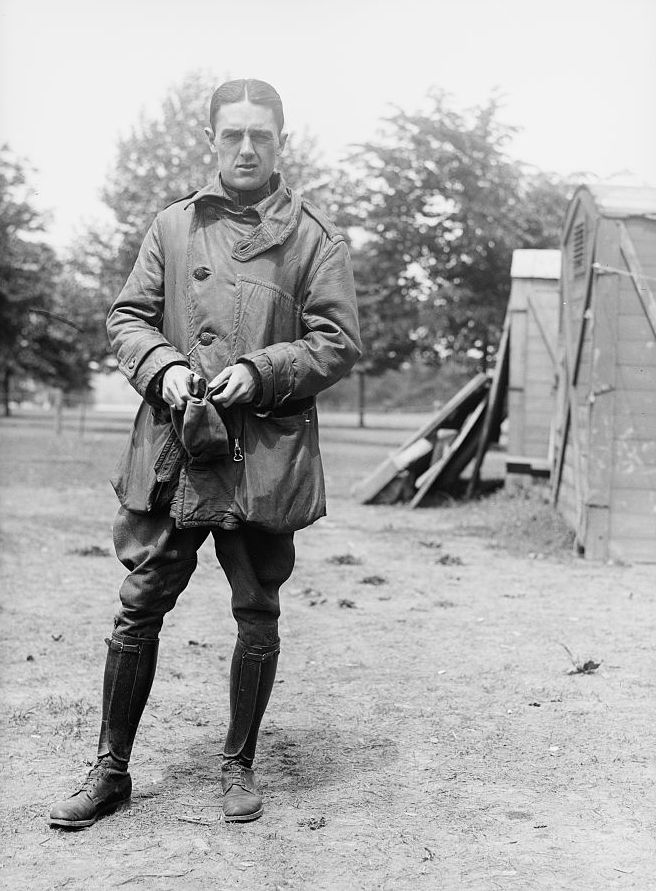
Fortunately, the aircraft crewed by Webb and Edgerton completed the inaugural flight without any problems. They successfully delivered 144 pounds of mail from New York City to Washington, officially commencing the service. Boyle’s airmail was delivered to New York City the following day aboard a JN-4H piloted by Edgerton.
On 4 June of the same year, the regular airmail route was extended to Boston.
The US Army operated the domestic airmail service for approximately four months. On 12 August 1918, responsibility for the service was transferred to the US Post Office Department, which contracted civilian pilots for the task. They were equipped with six JR-1B biplanes, purpose-built for the service by the Standard Aero Corporation.
By 1927, the national airmail system had been fully transferred to private contractors.
Interestingly, the first airmail delivery in the United States dates back to 9 January 1793. On that day, Jean-Pierre Blanchard, a French aviation pioneer and well-known balloonist, performed the first aerial flight in North America. Taking off from Philadelphia, he landed in Deptford Township, New Jersey, carrying on board a letter from George Washington intended for the owner of the property on which Blanchard happened to land.
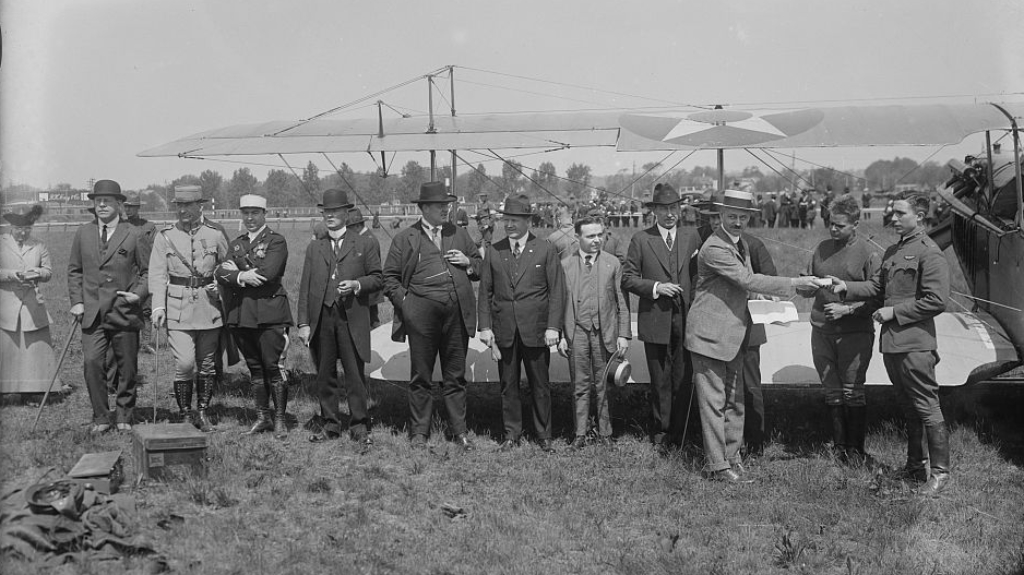
Cover photo: Curtiss Jenny JN-4H airplane flown by pilot Torrey Webb between New York City and Bustleton airfield near Philadelphia on May 15, 1918 / original caption (Library of Congress, LC-DIG-ggbain-26825, cropped)