 On 22 May 1946, prototype of the DHC-1 Chipmunk training aircraft successfully performed its maiden flight.
The DHC-1 Chipmunk was the first post-war aircraft designed by de Havilland Aircraft of Canada Ltd. Developed shortly after the Second World War, it was created to replace increasingly obsolete training aircraft with a modern design incorporating the latest aviation experience gained during the conflict.
The Canadian subsidiary of the British de Havilland Aircraft Company was tasked with developing a successor to the de Havilland DH.82 Tiger Moth — a biplane that had served as the primary trainer for many air forces, including the Royal Canadian Air Force. Work on the new aircraft began in 1945 under the leadership of Wsiewołod Jakimiuk, a Polish aeronautical engineer and former aircraft designer of the PZL company, who later became chief designer at de Havilland Canada.
Unlike its biplane predecessor, the Chipmunk was a low-wing cantilever monoplane of largely all-metal construction, although its control surfaces and parts of the wings remained fabric-covered. The aircraft featured a fixed tailwheel undercarriage and an enclosed tandem cockpit with a sliding plexiglass canopy.
The prototype, powered by a 145 hp Gipsy Major 1C piston engine, made its maiden flight on 22 May 1946 at Downsview airfield in Toronto, flown by de Havilland test pilot Pat Fillingham. Serial production began in 1947 under the designation DHC-1 Chipmunk, and the aircraft entered service with the Royal Canadian Air Force the following year as a basic trainer.
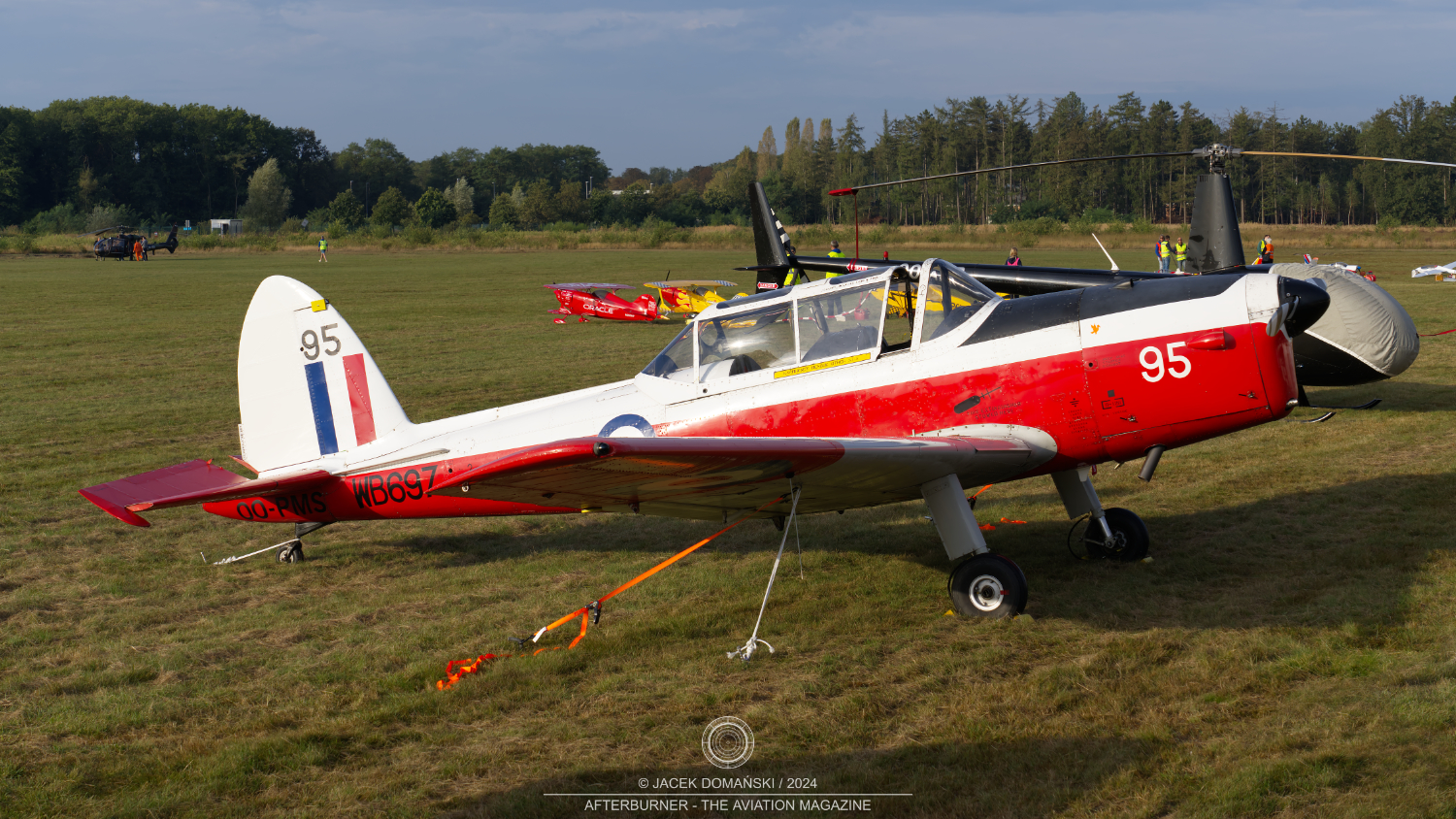
The Chipmunk soon attracted the interest of the Royal Air Force as a replacement for the Tiger Moth. Following evaluation trials, the aircraft entered RAF service in 1950 as the de Havilland Chipmunk T.10 and was subsequently produced under licence in the United Kingdom. Portugal also acquired the type in the early 1950s and later manufactured it locally at the OGMA aviation plant.
In total, the Chipmunk served with the military aviation branches of 23 countries and remained in frontline training roles for several decades. Besides pilot training, the aircraft was occasionally used for other duties, including internal security missions in Cyprus and covert reconnaissance flights over East Germany conducted by RAF Gatow aircraft within the BRIXMIS programme.
The DHC-1 also became known for a remarkable RAF expedition carried out between 1996 and 1997, during which two Chipmunks circumnavigated the northern hemisphere. Modified with additional fuel tanks and upgraded navigation equipment, the aircraft completed the 26,166-kilometre journey in 64 days, visiting 62 airfields along the route.
From the 1950s onwards, the Chipmunk also gained considerable popularity in civil aviation. Many surplus aircraft were acquired by private operators and aeroclubs, where they served in pilot training, aerobatics and other civilian roles.
A total of 1,284 Chipmunks were built in sixteen variants. While many examples are now preserved in museums, a certain number of the DHC-1 aircraft remain airworthy to this day.
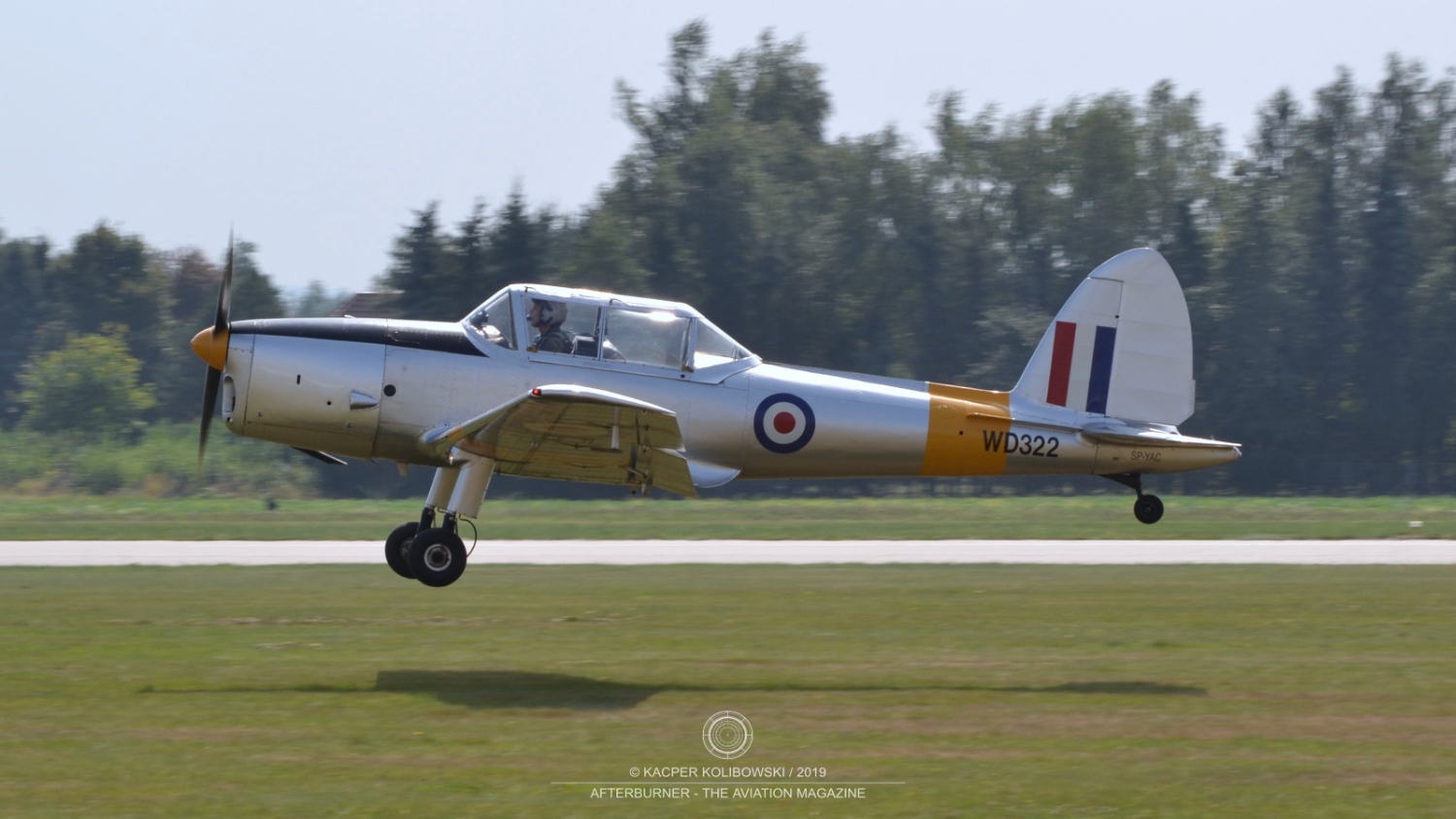
Cover photo: OGMA-built de Havilland Canada DHC-1 Chipmunk “WD 322”