 On 12 June 1930, the Handley Page Heyford biplane bomber successfully completed its maiden flight.
In 1927, the British Air Ministry issued Specification B.19/27 for a new night heavy bomber intended to replace the Vickers Virginia. The new aircraft was required to be twin-engined and capable of performing long-range night bombing missions without causing excessive pilot fatigue. It was expected to carry up to 700 kg of bombs, have a range of approximately 1,500 km, and be equipped with up-to-date defensive armament.
The Air Ministry specification attracted responses from numerous aircraft manufacturers, including Fairey with the K1695, later known as the Fairey Hendon; Vickers, which submitted four designs: the Type 150, also known as the Vanox, the Type 163, the Type 195, and the Type 225; Bristol with the Type 108; Avro, which proposed the 557 Ava; and finally Handley Page with a prototype designated the HP.38.
Unsurprisingly, the competition was won by Fairey, whose design was the most advanced among the aircraft submitted. The Fairey Night Bomber, as the aeroplane was initially designated, was an all-metal, low-wing monoplane powered by two Bristol Jupiter VIII radial engines, each producing 460 hp.
However, in March 1931, the Hendon prototype crashed and was severely damaged. The accident delayed the development programme, as the aircraft had to be rebuilt. Consequently, the Royal Air Force had little choice but to accept the runner-up design by Handley Page.
The HP.38 was a biplane of mixed construction powered by two Rolls-Royce F.XIV engines. The aeroplane had originally been designed as an all-wooden aircraft but, following the Air Ministry requirements, Handley Page had to introduce several innovations, including a steel-tube airframe and aluminium fuel tanks.
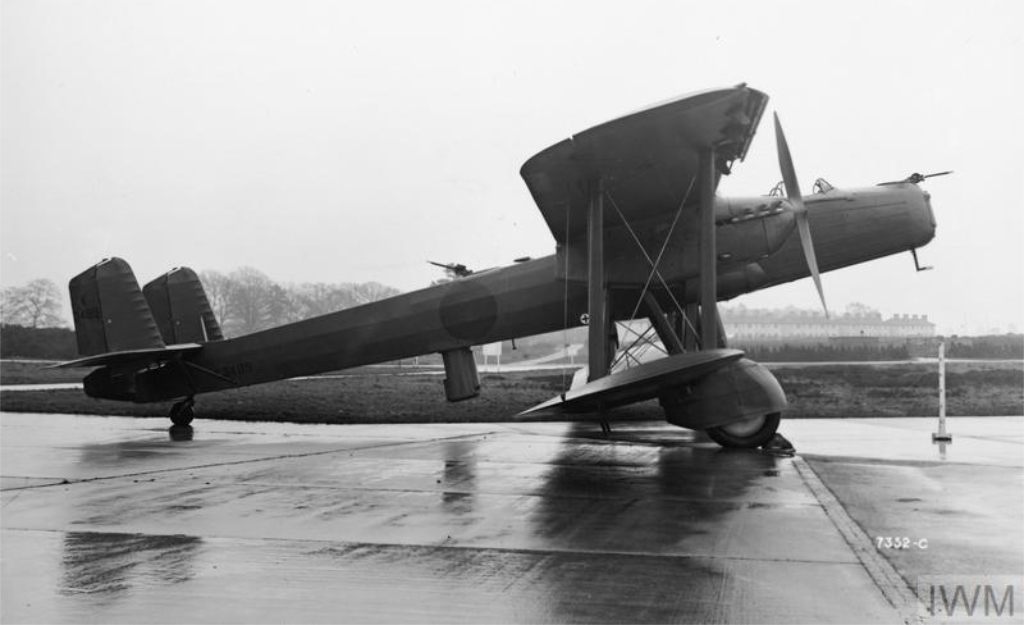
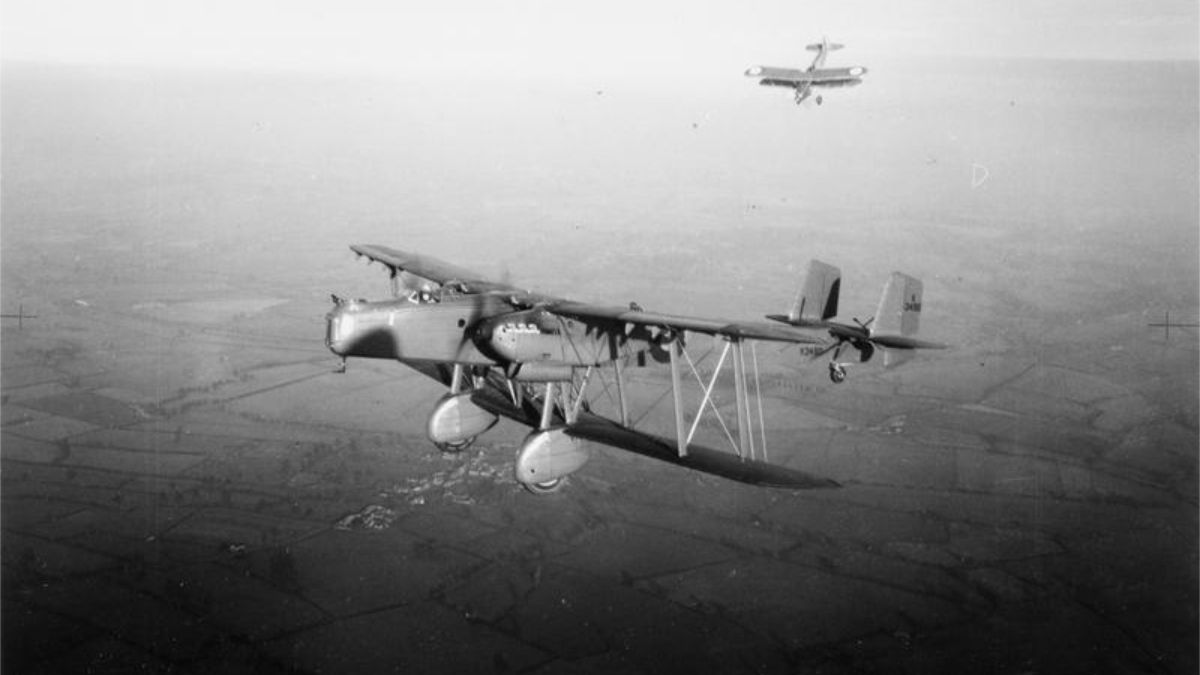
Although the HP.38 was developed in the late 1920s, its appearance recalled aircraft from the early years of the Great War. Its upper wing was attached directly to the fuselage and accommodated two engine nacelles, while the lower wing was mounted beneath the fuselage. In general, the design resembled that of the German Gotha G.I heavy bomber from 1915. However, according to Handley Page, this wing arrangement provided excellent fields of observation and wide arcs of fire for the defensive armament, consisting of Lewis machine guns mounted in the nose and dorsal positions. An additional Lewis gun was installed in a retractable ventral position.
On 12 June 1930, the prototype performed its maiden flight. It was subsequently handed over to the RAF for evaluation. Following a series of test flights, several requests for modifications and improvements were made.
In 1932, following the aforementioned problems with the Hendon, the Handley Page design was approved for serial production. The initial order covered only five aircraft, now officially designated the HP.50 Heyford. In March 1933, Handley Page was awarded the first major production contract, covering fifteen aircraft which would later become known as the Heyford Mk I.
The final production version differed considerably from the original concept. The Heyford remained a biplane of mixed construction but now featured an aluminium monocoque forward fuselage and a fabric-covered metal framework in the rear section. Powered by two 575 hp Rolls-Royce Kestrel III engines, the aircraft was operated by a crew of four: a pilot, bombardier/navigator, radio operator, and gunner. The pilot’s cockpit, as well as the nose and dorsal gun positions, remained open.
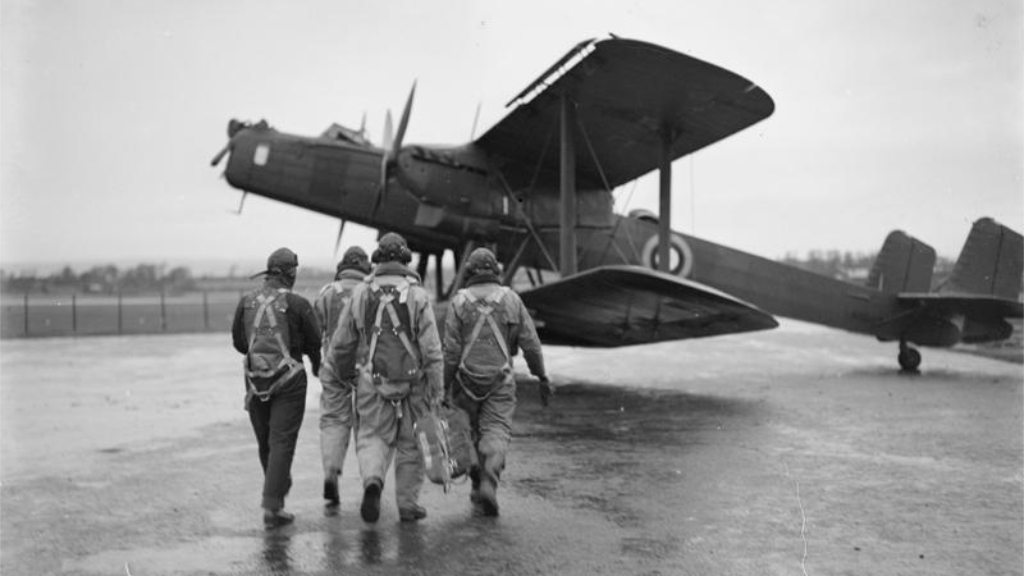
In November 1933, the Heyford entered operational service with the RAF, becoming the last heavy bomber biplane to serve with the British air force. By the end of 1936, nine operational squadrons were equipped with the type, and the RAF became the sole operator of the Heyford.
However, as early as 1937, the Heyford’s withdrawal from service had already begun. The biplane was quickly replaced by more advanced monoplane bombers such as the Armstrong Whitworth Whitley and the Vickers Wellesley. Nevertheless, some examples of the HP.50 continued to serve in secondary roles, including as glider tugs, until 1941. Reportedly, several aircraft were also used as testbeds in the development of airborne radar and aerial refuelling techniques.
A total of 125 HP.50 aircraft were built, including the prototype. They were produced in four main versions, designated Heyford Mk I, Mk IA, Mk II, and Mk III. Each successive version was equipped with increasingly powerful Kestrel engines, culminating in the 695 hp Kestrel VI.
The redesigned Fairey bomber, now designated the Hendon Mk II and powered by two Rolls-Royce Kestrel VI engines, entered RAF service in November 1936. However, the design was already obsolete by that time, having been outclassed by more modern aircraft. As a result, only fourteen examples were built before production ceased. By January 1939, all Hendons had been withdrawn from operational service and transferred to flying schools for use as ground instructional airframes.
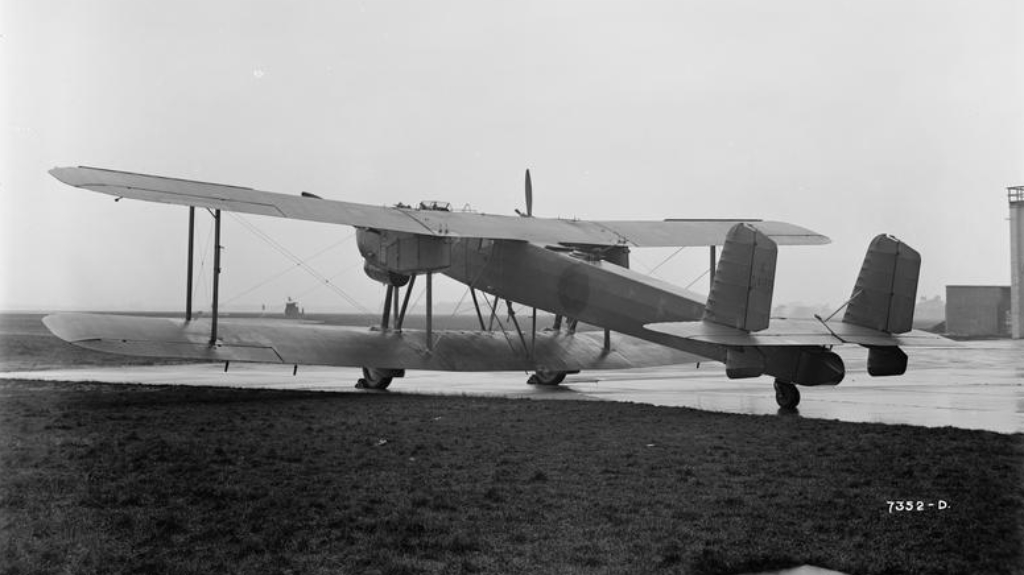
Cover photo: Handley Page Heyford of 99 Squadron, Royal Air Force, is ‘attacked’ by a fighter during aerial gunnery training / original caption (photo: © IWM / H(AM) 197, cropped). All Imperial War Museums´ photos used under IWM Non-Commercial licence.