 On 26 June 1936, the Focke-Wulf Fw 61 twin-rotor helicopter performed its maiden flight.
Heinrich Focke, born in Bremen in 1890, was a German aviation pioneer and rotorcraft designer, often referred to as the “father of the helicopter”.
In 1923, Focke, together with Georg Wulf and Werner Naumann, founded an aviation company known as Focke-Wulf-Flugzeugbau AG. However, four years later, Wulf was killed while test-flying the F 19 monoplane.
Focke continued his work in aeronautics, designing a broad range of successful aircraft. However, he was also driven by the idea of creating the world’s first practical helicopter. Initially, the German inventor followed the work of Juan de la Cierva and built several of his autogyros under licence. Focke then developed his own design, the Fw 186 autogyro.
Having come to the conclusion that autogyros had many limitations, he focused on helicopter development. In 1932, together with Gerd Achgelis, a well-known aerobatic and stunt pilot, Focke began developing a twin-rotor aircraft. Within two years, they had created a free-flying model powered by a small two-stroke engine.
In 1935, Reichsluftfahrtministerium (Ministry of Aviation) approved the design and ordered Focke to build a helicopter prototype, officially designated the Fw 61. The first prototype of the rotorcraft, the V1, registered D-EBVU, was completed at the end of that year.
The first tethered flights of the helicopter began in 1936 and, on 26 June of that year, the prototype successfully completed its first free flight. During the initial tests and the maiden flight, the Fw 61 was flown by Ewald Rohlfs, the well-known German test pilot. Interestingly, the first free flight of the Focke-Achgelis rotorcraft lasted only 28 seconds.
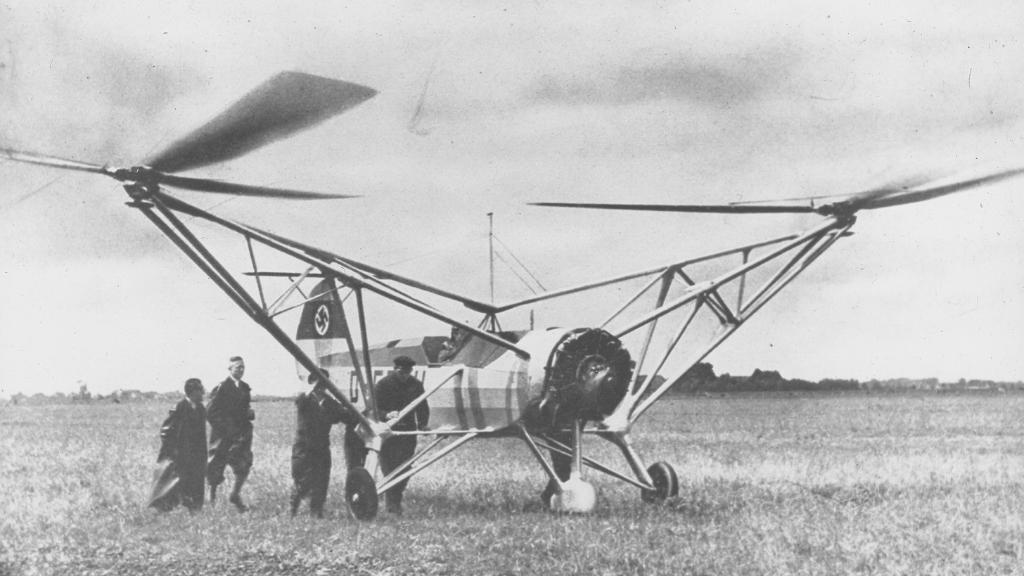
Later in 1936, Heinrich Focke fell out of favour and was forced out of his own company. The reasons were twofold: he was considered politically unreliable by the Nazi regime, and the company’s resources were regarded as more valuable for the production of fighter aircraft for the Luftwaffe than for the development of unconventional rotorcraft.
Nevertheless, the situation changed very quickly. It was Ewald Rohlfs who made the Fw 61 famous by demonstrating the advantages of its design. In 1937, he managed to stay airborne for more than an hour, covering a distance of 16.4 kilometres. Later that year, using the two existing prototypes of the Focke helicopter, he set several world records for Germany, such as flight duration of 1 hour and 20 minutes, an altitude of 2,440 metres, a speed of 122.5 kph over a closed circuit, and a distance of 80.6 km flown over such a course.
On 10 May 1937, flying at an altitude of approximately 400 metres, Rohlfs shut down the helicopter’s engine and became the first pilot to perform a safe autorotation landing.
Focke subsequently regained favour and was allowed to continue his rotorcraft development work. In the same year, he and Achgelis founded Focke, Achgelis & Co GmbH. The new company continued work on the Fw 61 (also known as the Fa 61) and developed several other notable rotorcraft, including the Fa 223 and the Fa 330, a gyroplane used by submarines for reconnaissance purposes.
Over the following years, the Fw 61 was used as a technology demonstrator and to set even more world records. In February 1938, the helicopter gained worldwide attention when it performed an indoor flight inside Deutschlandhalle in Berlin, with Hanna Reitsch at the controls. Later that year, the Fw 61 set an altitude record of 3,427 metres and a straight-line distance record of 230 kilometres.
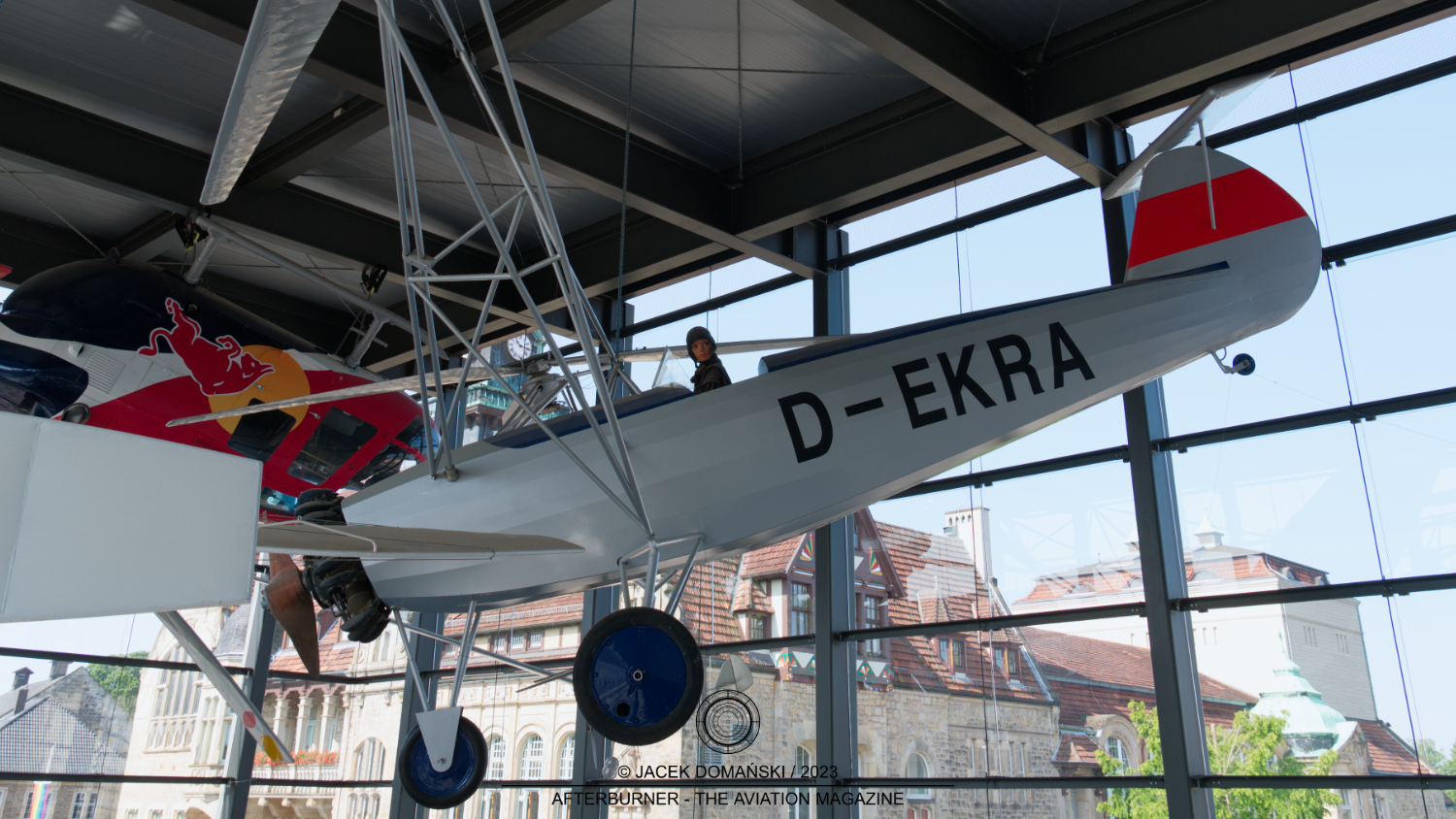
The Fw 61 did not survive the Second World War. Today, a full-scale replica of the helicopter is on display at Hubschraubermuseum Bückeburg. However, the free-flying prototype model of the rotorcraft mentioned earlier has survived and is now exhibited at Deutsches Museum in Munich.
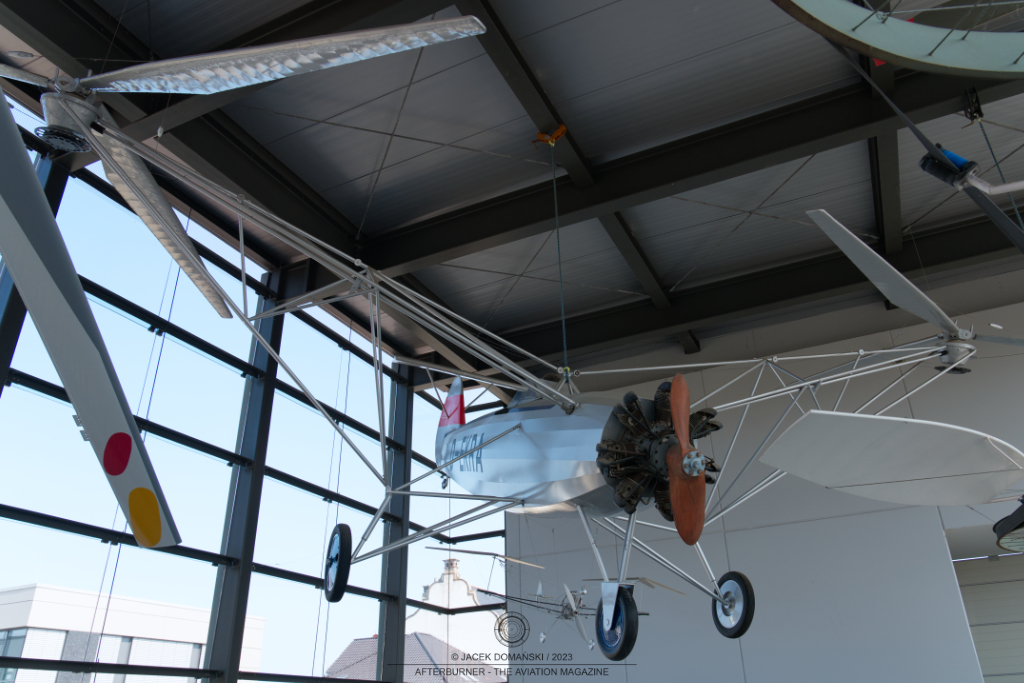
Cover photo: A replica of the Fw 61 in Hubschraubermuseum Bückeburg.