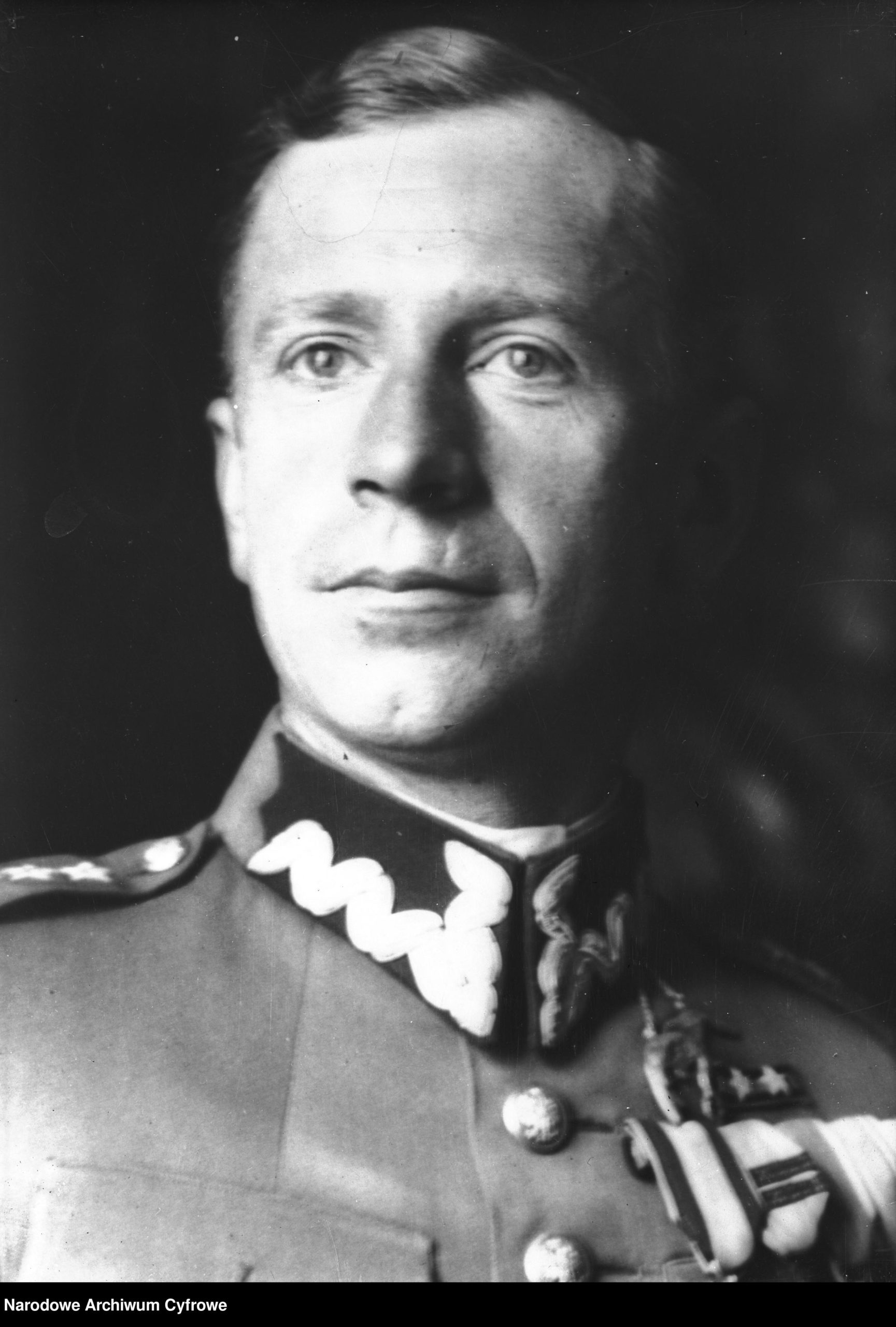
 Stanisław Skarżyński was one of the most remarkable aviation pioneers of the interwar period, best known for his record-breaking solo flight across the Atlantic in 1933. Although he had already gained recognition through long-distance flights – most notably a demanding journey around Africa in 1931 – it was his transatlantic attempt that secured his place in aviation history.
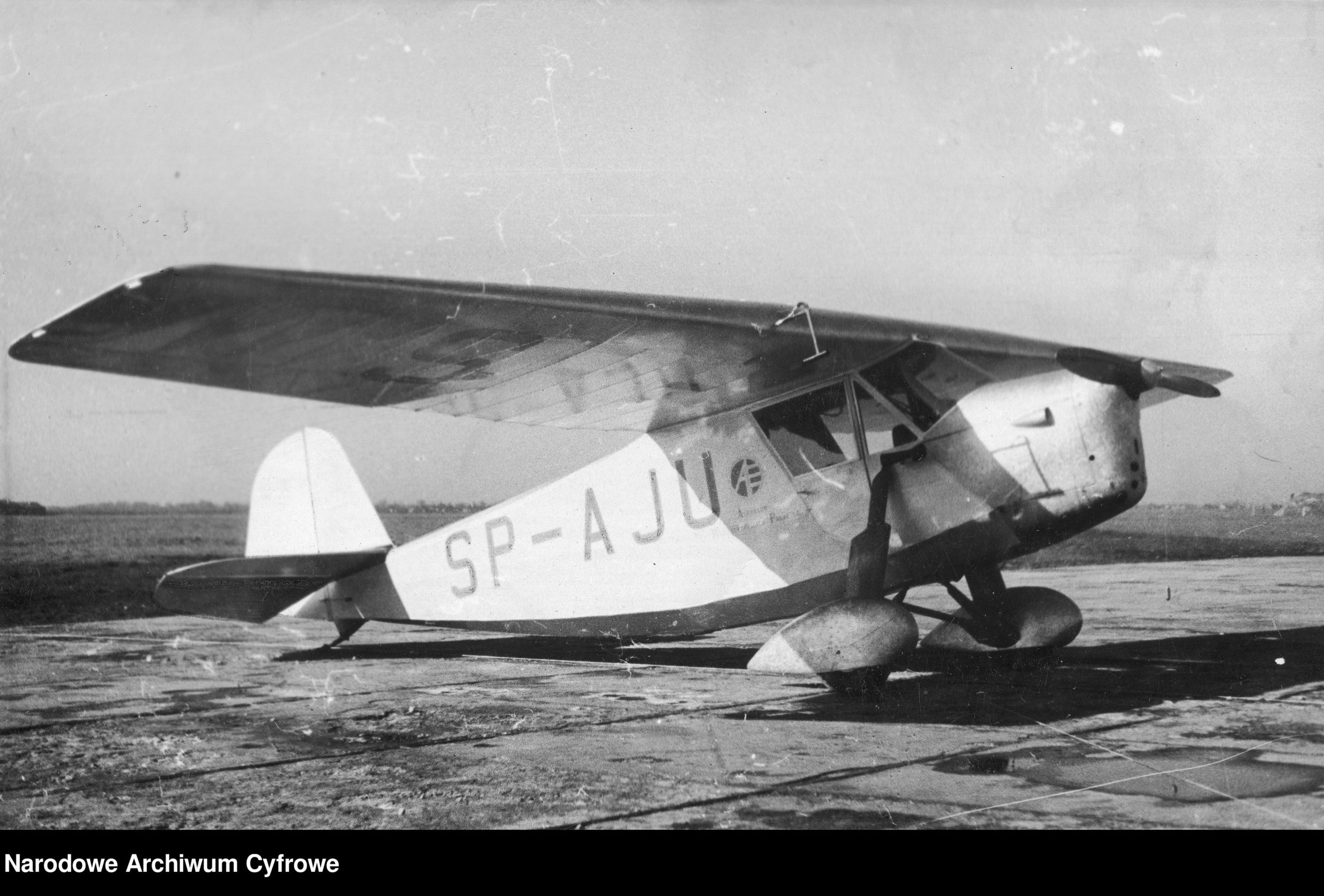
Skarżyński’s ambition went beyond simply crossing the Atlantic. His goal was to complete a long-distance flight from Warsaw to Rio de Janeiro, covering approximately 18,000 kilometres. To achieve this, he selected the small Polish sports aircraft RWD-5, which was extensively modified for the journey. The rear cockpit was replaced with a large fuel tank, and additional tanks were installed in the wings, significantly increasing the aircraft’s range. At the same time, much of the standard equipment – including the passenger seat, radio, and even instrument panel lighting – was removed to reduce weight. The resulting aircraft, designated RWD-5bis (SP-AJU), became an exceptionally lightweight long-range machine.
Unlike many record attempts of the era, Skarżyński kept his plans largely secret. He wished to avoid public pressure and potential disappointment, and therefore only a small group of people knew the true purpose of the flight. Officially, he concealed his final destination along the route.
On 28 April 1933, Skarżyński departed from Warsaw, beginning his journey towards South America. After flying through Lyon, Perpignan, Casablanca, and Port Étienne, he reached Saint-Louis in Senegal. This marked the starting point for the most difficult stage of the expedition – the transatlantic crossing.
On 7 May 1933 at 11:00 p.m. (GMT), Skarżyński took off from Saint-Louis, beginning his solo flight across the Atlantic Ocean. He carried only basic supplies and essential equipment, including a headlamp, which was crucial due to the lack of instrument panel lighting. The flight was deliberately started at night to help him manage fatigue during the long hours ahead.
Initially flying at a very low altitude of 50 to 100 metres due to fog, he later climbed to between 1,700 and 2,500 metres. Throughout most of the journey, there were no visual reference points, forcing him to rely entirely on dead reckoning and his navigation skills. Maintaining the correct course under such conditions was exceptionally challenging.
After approximately twelve hours over open water, Skarżyński sighted small islands, though they were difficult to identify. Only at around 4:00 p.m. (GMT) did the South American mainland appear on the horizon, and at 4:15 p.m. he officially reached the coast between Cape São Roque and Natal. Remarkably, after more than 3,000 kilometres of flight over the ocean – largely at night and without visual navigation aids – he had deviated from his intended course by only about 15 kilometres.
Although he initially planned to land at Natal, sufficient fuel reserves allowed him to continue the flight. At 7:30 p.m. (GMT), after a total flight time of 20 hours and 30 minutes (including 17 hours and 15 minutes over the Atlantic), Skarżyński landed at Maceió in Brazil. With this achievement, he became the first Polish pilot to cross the Atlantic Ocean.
His accomplishment was significant not only nationally but also technically. The RWD-5bis was the smallest and lightest aircraft ever to cross the Atlantic at that time. In addition, Skarżyński set an international record for non-stop distance in FAI Category II (touring aircraft up to 450 kg empty weight). The transatlantic leg alone measured approximately 3,640 kilometres.
Interestingly, his arrival in Maceió initially went almost unnoticed. Local authorities had expected a large transatlantic aircraft, and it was only after verifying the aircraft’s registration that his achievement was recognised. The flight was officially confirmed the following day through documentation and inspection of flight records.
Skarżyński’s transatlantic crossing was the most demanding and decisive stage of his broader journey to South America. It demonstrated not only his exceptional skill and endurance but also the capabilities of lightweight aircraft in long-distance flight. His success placed him among the leading aviation pioneers of the era and secured his reputation as one of the most accomplished pilots of his generation.
Full story here.
Cover photo: RWD-5bis (SP-AJU) on the airfield (National Digital Archive collection, 1-S-1240-3)