 The Airbus A400M Atlas has taken on a brand new operational role. In response to one of its most severe wildfire seasons in recent years, France has deployed the Armée de l’Air et de l’Espace‘s (French Air and Space Force) tactical transport aircraft to support aerial firefighting operations for the first time, marking a significant milestone in the development of the country’s wildfire response capabilities.
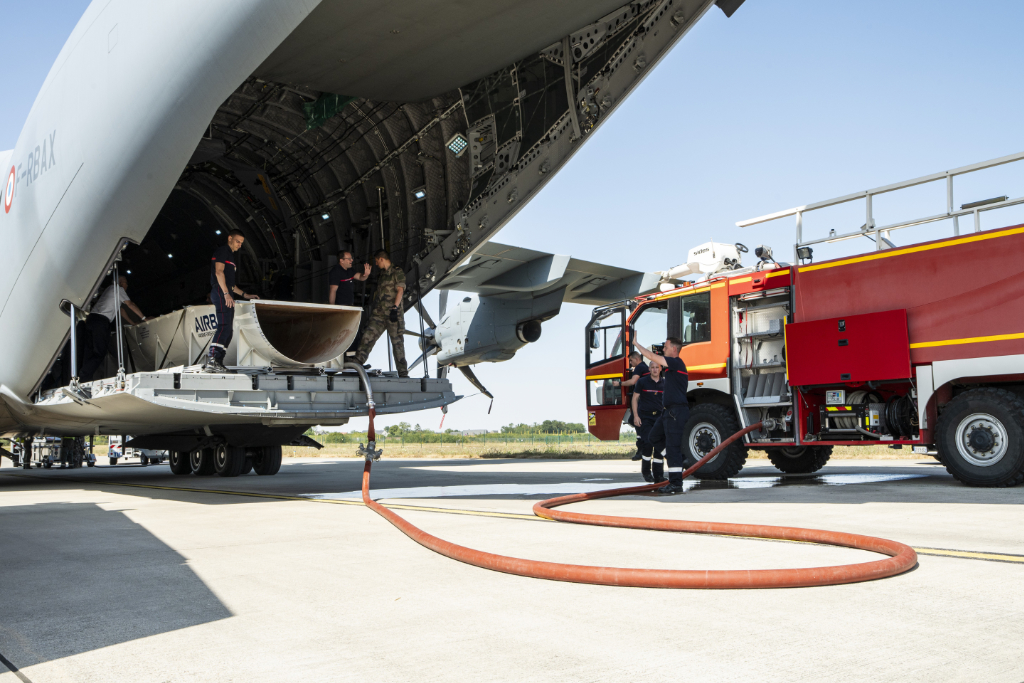
The deployment follows a joint initiative launched in 2024 by the French Air and Space Force, Airbus Defence and Space, Centre d’Expertise Aérienne Militaire (the Military Air Experiment Centre – CEAM), and Direction générale de la Sécurité civile et de la gestion des crises (the Directorate General for Civil Security and Crisis Management – DGSCGC). The project aims to evaluate a removable fire-retardant delivery system that would enable the A400M to perform aerial firefighting missions without requiring any structural modifications to the aircraft. This will allow the airlifter to return immediately to its primary role as a tactical military transport once the equipment is removed.
The introduction of the Atlas into aerial firefighting operations comes at a time when France is experiencing another exceptionally severe wildfire season. Prolonged drought, repeated heatwaves and strong winds have created ideal conditions for rapidly spreading fires, particularly across the southern and south-western regions of the country.
Since the beginning of 2026, more than 50,000 hectares of land have already been devastated by wildfires, with dozens of major incidents recorded nationwide. Some of the most destructive fires have affected the Gironde department, where advancing flames approached the outskirts of Bordeaux, prompting the local authorities to prepare contingency plans should evacuations become necessary.
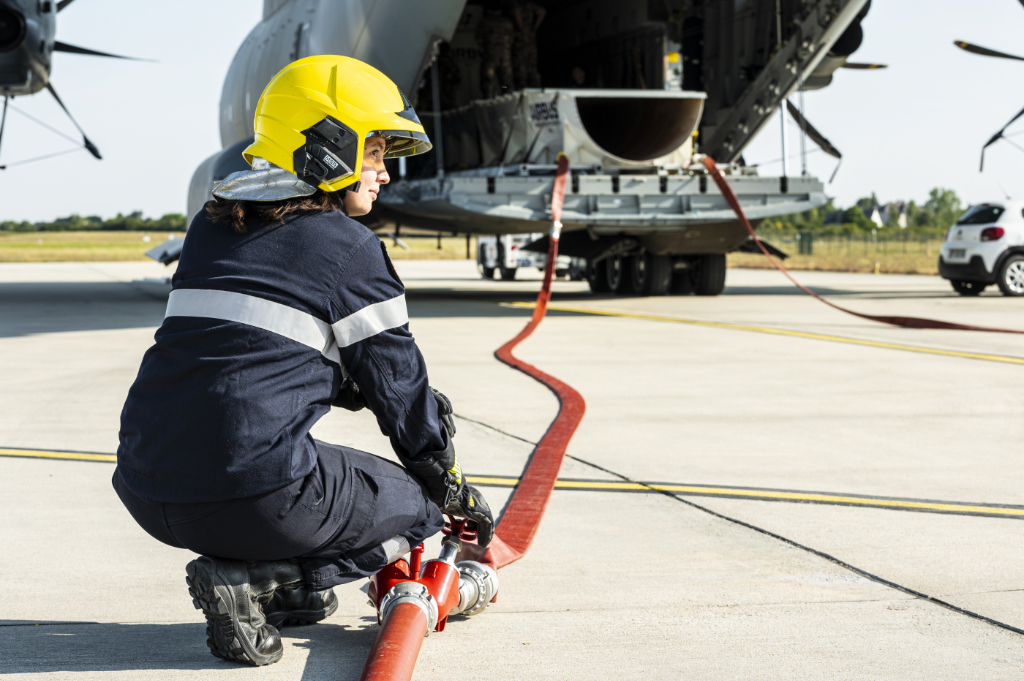
Using the removable firefighting system, the A400M can release up to twenty tonnes of fire retardant in a single pass – an equivalent to approximately two drops performed by the Dash 8 Q400-MR aircraft operated by Sécurité civile (the French Civil Protection Service). Rather than attacking the flames directly, the Atlas is intended to establish protective retardant barriers ahead of the advancing fire front, slowing its spread and allowing dedicated firefighting aircraft to focus on extinguishing the most dangerous sections of the blaze.
Although it was never intended to replace specialised water bombers such as the Canadair CL-415, Dash 8 Q400-MR or Air Tractor AT-802F, the Atlas provides France with an additional aerial firefighting capability that can be deployed whenever existing resources are overwhelmed by multiple large-scale fires.
France operates one of Europe’s most comprehensive aerial wildfire response systems. The backbone of the national firefighting fleet is managed by Sécurité civile and consists primarily of Canadair CL-415 amphibious aircraft, Dash 8 Q400-MR multi-role aeroplanes and Air Tractor AT-802F single-engine water bombers. Depending on operational requirements, these aircraft are supported by reconnaissance and command helicopters, while additional military assets can be deployed at the request of the civil authorities.
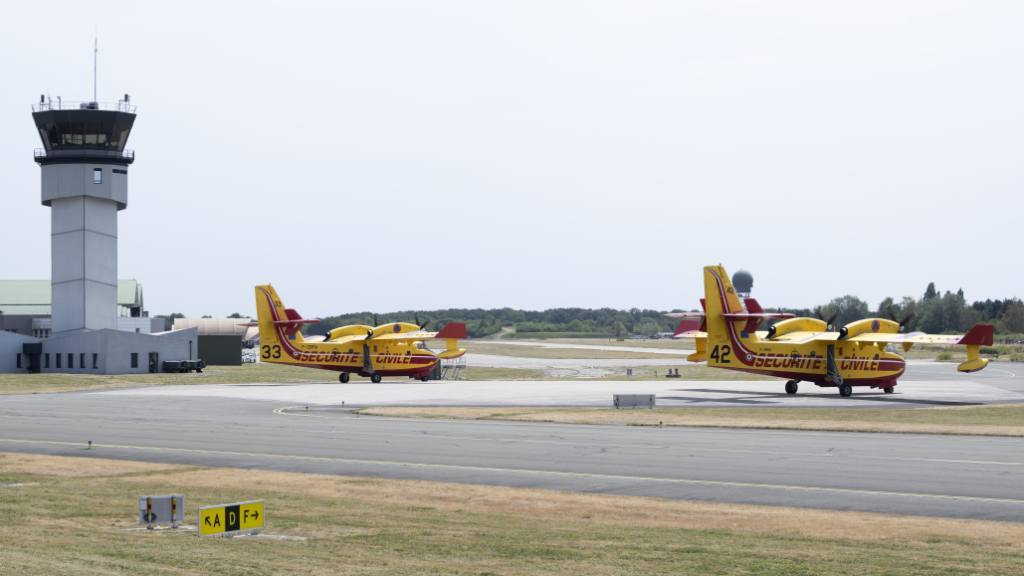
Armée de l’Air et de l’Espace has supported national wildfire response operations since 1984. Although its involvement extends well beyond direct aerial firefighting, the service provides essential infrastructure, logistics and operational support that significantly enhances the effectiveness of the national response system.
During the current wildfire season, several French air bases have been used as forward operating locations for firefighting aircraft. The bases at Villacoublay and Orléans have provided rapid refuelling facilities for Canadair and Beechcraft aircraft, enabling them to resume operational missions with minimal delay. Further south, Salon-de-Provence hosts a water-bombing helicopter from Service départemental d’incendie et de secours (the Bouches-du-Rhône Departmental Fire and Rescue Service – SDIS), strategically positioned to respond rapidly to fires in one of France’s most vulnerable regions.
Another important element of the French wildfire response network is the pélicandrome – a specialised facility designed to replenish firefighting aircraft with water and fire retardant. The term was created by combining the French words pélican and aérodrome, deriving from the radio callsign used by the Canadair CL-415 fleet operated by Sécurité civile. France currently operates twenty-two pélicandromes, allowing firefighting aircraft to be rapidly refuelled and reloaded without returning to their permanent bases, thereby significantly increasing their operational efficiency.
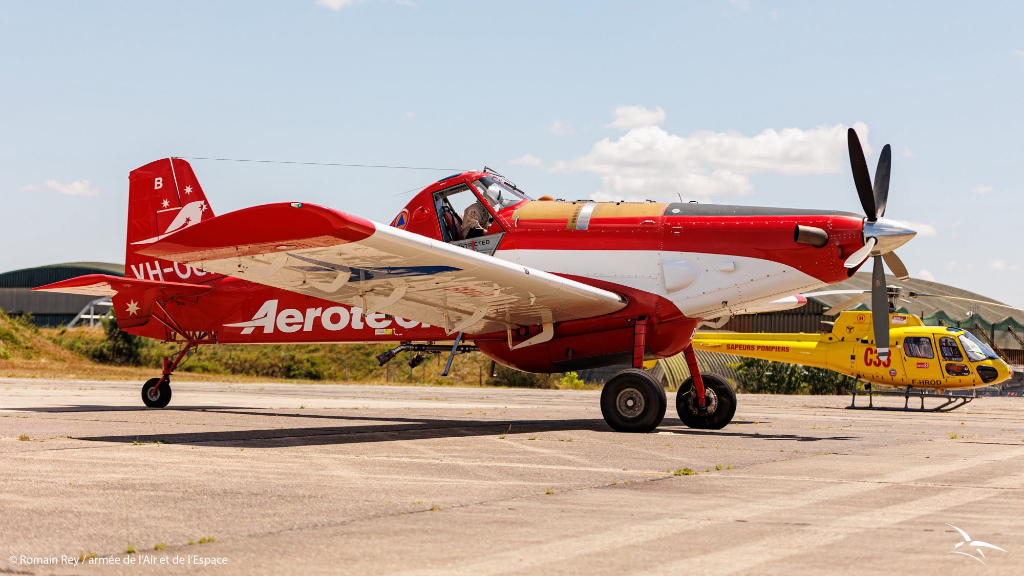
Among the most important of these facilities is the pélicandrome located at Bordeaux-Mérignac Air Base (Base aérienne 106). Situated close to some of the country’s most fire-prone forests, it serves as one of the principal aerial firefighting hubs in south-western France. During this year’s wildfire campaign, the installation has supported continuous operations by Dash 8 and Air Tractor firefighting aircraft, as well as Écureuil and Puma helicopters, recording more than 240 aircraft movements only weeks after becoming operational for the summer season.
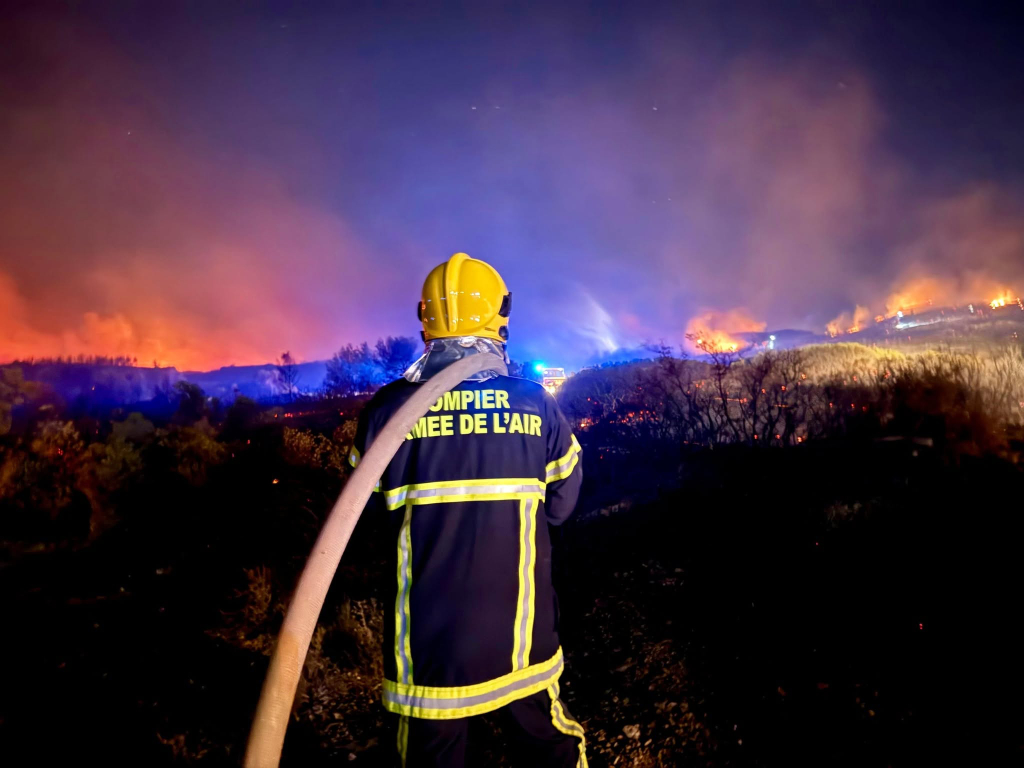
The French Air and Space Force also contributes in many other ways. For example, the Air Force firefighters regularly support local emergency services during major wildfires, while military installations provide accommodation and logistical support for Civil Protection units deployed to high-risk areas. Aircrew conducting routine training or transit flights assist in detecting new fires by reporting smoke sightings. Meanwhile, military air traffic controllers maintain continuous surveillance of the surrounding areas, enabling emergency services to respond more quickly to newly emerging incidents.
The introduction of the Airbus A400M into this already extensive system represents another step in strengthening France’s ability to respond to increasingly challenging wildfire seasons. While dedicated water bombers will remain the country’s primary aerial firefighting assets, the Atlas offers a valuable additional capability, combining the flexibility and payload capacity of a modern military transport aircraft with the ability to deliver large quantities of fire retardant wherever additional aerial support is needed.
Cover photo: A tank filled with fire retardant installed in the cargo hold of the A400M Atlas.
Information from the press releases of the French Ministry of Defence – published on the MoD page in July 2026 – were used, in accordance to the etalab-2.0 licence. All photos © the French Ministry of Defence.
AI tools used to translate and edit from French.