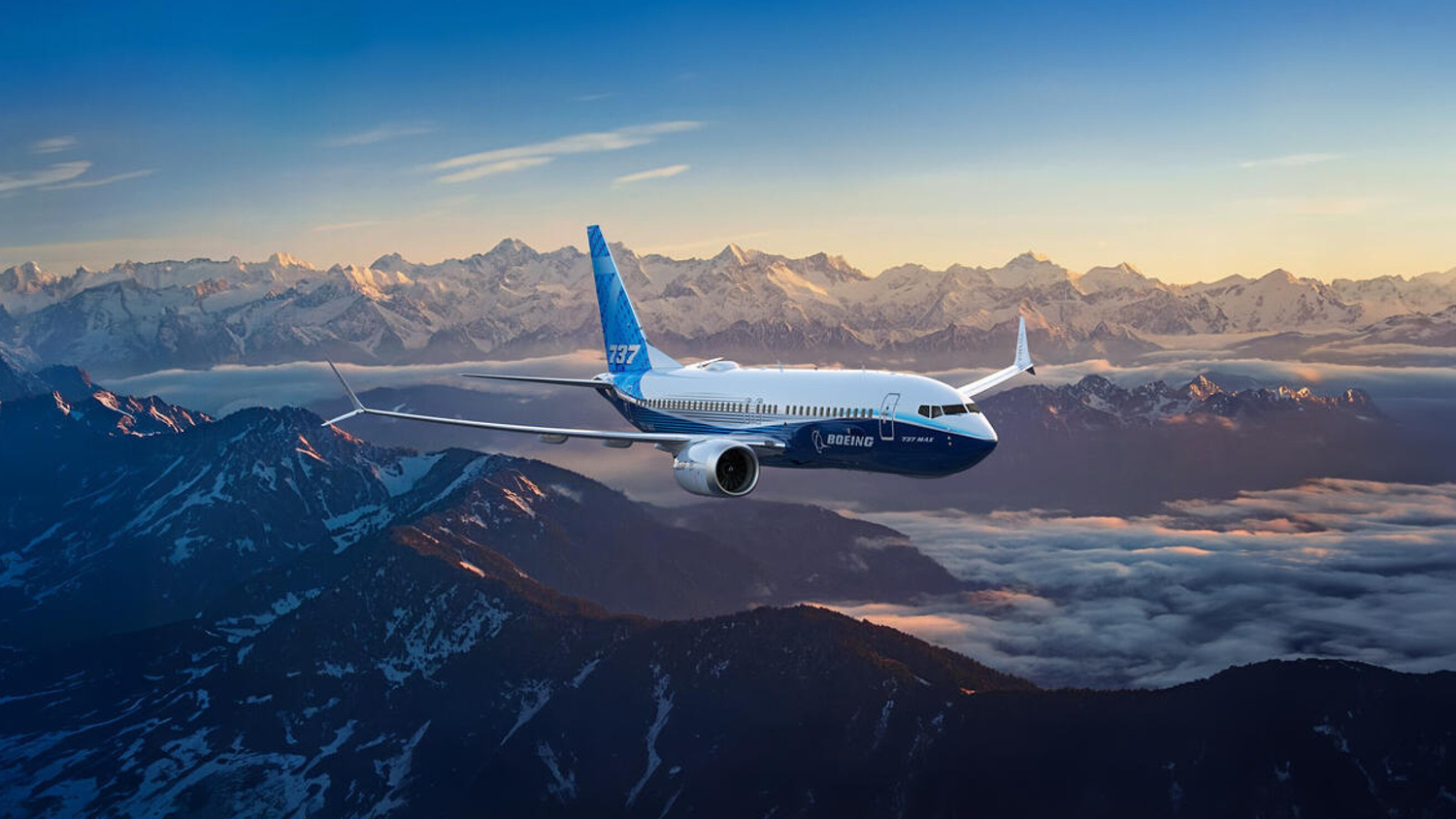
 The US Federal Aviation Administration (FAA) recently announced that an amended type certificate (ATC) had been granted for the new Boeing 737-7 airliner, thereby clearing the aircraft for commercial service.
Following its first certification flight, which took place in March 2018, the smallest and longest-range member of the 737 MAX family waited more than eight years for approval. Although the certification process had initially been expected to be completed by 2022, it was delayed by issues related to the Boeing 737 MAX 8 and 9 that led to a series of fatal accidents. In response to these events, the evaluation of the 737-7 was conducted under a much more rigorous certification regime.
According to Boeing, the certification programme included more than 1,000 hours of flight and ground testing, extensive system safety analyses and human factors reviews. It also involved updating the engine anti-ice system to address a potential issue that was identified during flight testing. Ultimately, the company demonstrated through comprehensive testing and analysis that the aeroplane meets all commercial aviation regulatory requirements.
“Our Boeing team held regular and detailed discussions with the FAA to ensure Boeing understood the requirements and provided transparency regarding our progress,” said Mike Sinnett, Senior Vice President of Product Strategy, Product Development and Development Programs. “Through this certification programme, Boeing has gained a clearer understanding of the latest regulatory requirements, which is expected to accelerate future aeroplane development with a renewed emphasis on human factors, safety and quality.“
The Boeing 737-7 can carry between 135 and 160 passengers in a two-class configuration. Like the other members of the 737 MAX family, the aircraft reduces fuel consumption and CO₂ emissions by 20%, while lowering its noise footprint by 50% compared to the aeroplanes it typically replaces. In addition, the MAX 7 offers a range of up to 3,800 nautical miles (7,040 km), which is approximately 10% greater than that of its siblings. The aeroplane was designed to deliver exceptional performance for operators flying from airports located at high altitudes and in hot climates.
“This important certification validates the rigour of our aeroplane’s design and recognises the determination and resilience of our 737 MAX development team,” said Stephanie Pope, President and CEO of Boeing Commercial Airplanes.
“Our team of dedicated engineers and test experts worked through technical challenges, an extended pandemic, and the transition to new certification processes,” Pope added. “Throughout it all, our team remained focused on meeting all certification requirements and delivering a safe, more capable aeroplane to our customers.“
As announced by the company, the 737 MAX family order book stands at more than 7,200 airliners, of which more than 2,300 had been delivered by the end of June 2026. Besides the newly certified 737-7, the family currently comprises three variants: the 737-8, seating 160–180 passengers with a range of up to 3,500 nautical miles (6,480 km); the 737-9, accommodating 175–195 passengers with a range of up to 3,300 nautical miles (6,110 km); and the largest member of the family, the 737-10, seating 185–210 passengers with a range of up to 3,100 nautical miles (5,740 km). The latter is expected to receive certification until the end of 2026.
According to Boeing, Southwest Airlines will be the launch customer for the newly certified 737-7. Preparations for the delivery of the first aeroplane are in full swing. A dedicated team is now readying the first aircraft, including implementing updates to bring them to their final production configuration.
Cover photo: B737 MAX 7. All photos and quotations © Boeing. Information from the Boeing company and FAA press releases were used.