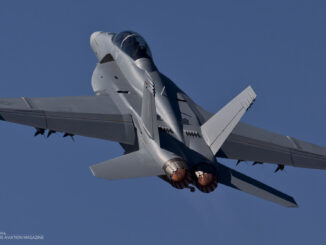
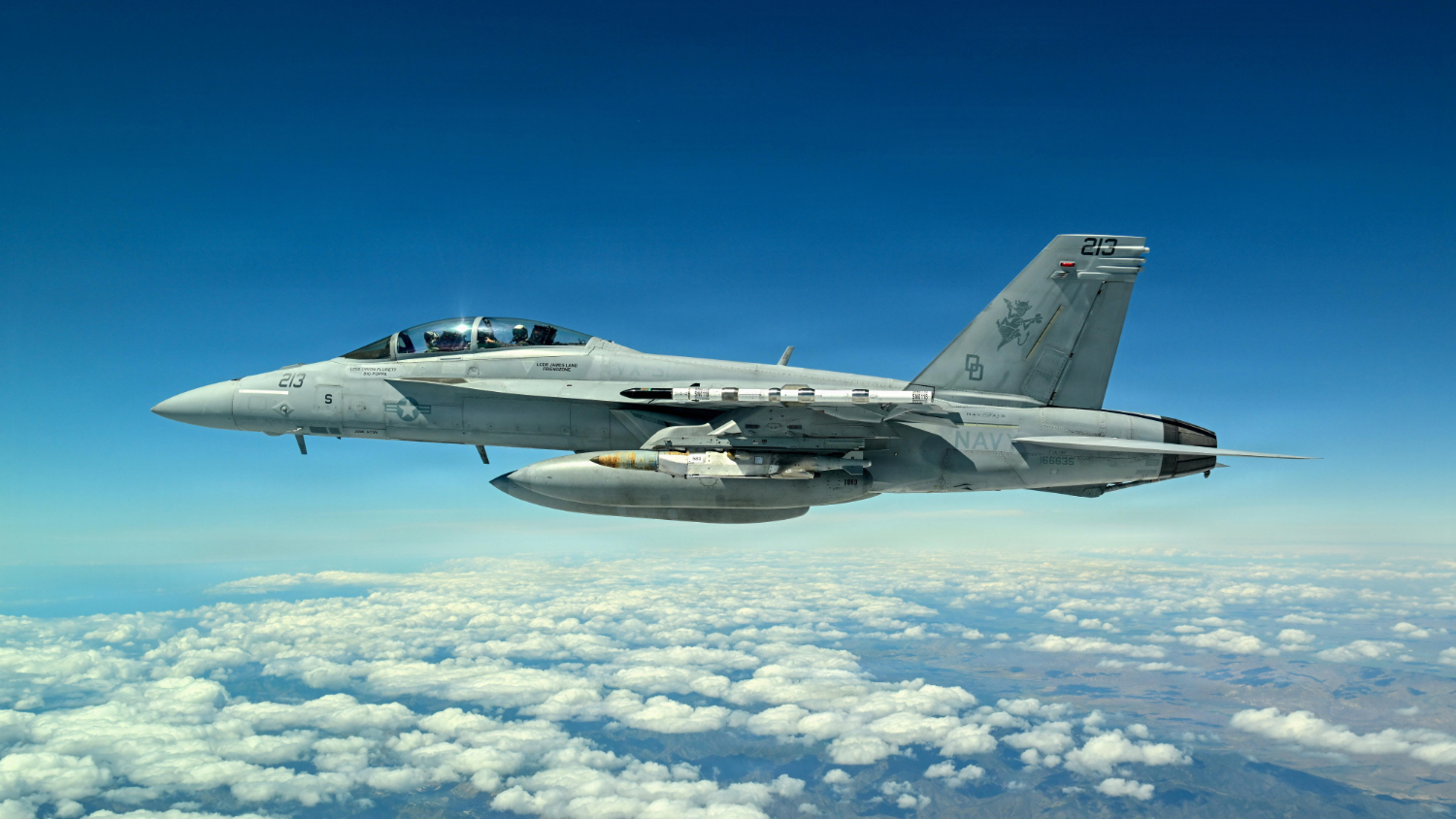
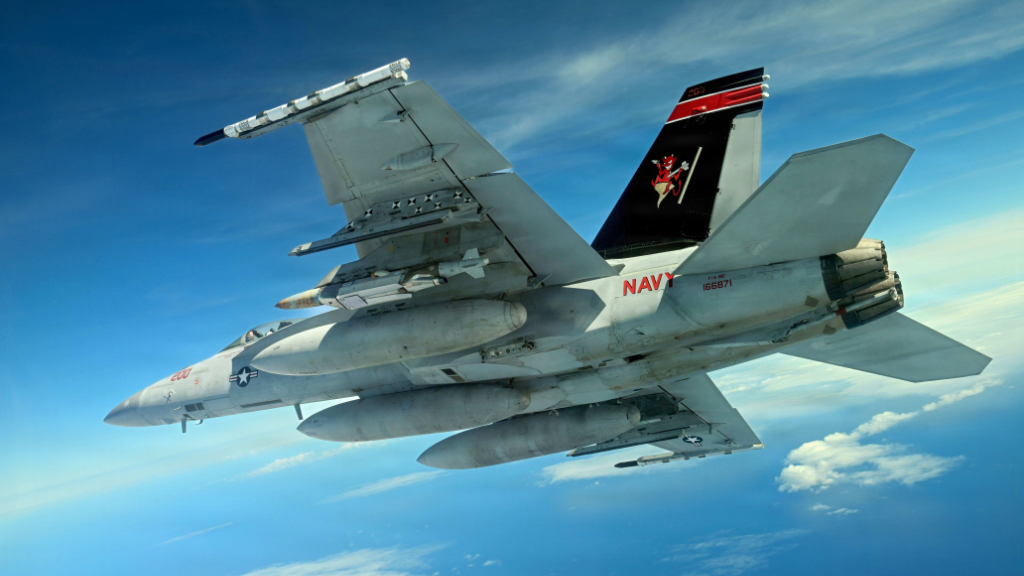
 On 5 August 2026, Boeing announced that the company was granted a $75 million Undefinitised Contract Action (UCA) by the U.S. Air Force to acquire the BSU-111/B Payload Delivery Unit (PDU) for the new GBU-75 Joint Direct Attack Munition Long Range (JDAM LR). The contract clears the weapon for initial production for the US Navy.
The JDAM LR is a new long-range derivative of the combat-proven JDAM family, designed to deliver a 500-pound-class (226 kg) payload at distances exceeding 300 nautical miles (approximately 556 km). Combining the existing JDAM guidance tail kit and aircraft interface with a wing kit and a compact turbojet engine, the weapon provides a long-range precision-strike capability against land and naval targets, as well as for maritime aerial-mining missions.
According to Boeing, the new weapon makes extensive use of the existing JDAM infrastructure, allowing it to be produced in large numbers and rapidly integrated with any aircraft capable of carrying conventional JDAM weapons. The company has invested nearly $100 million of its own funds in the JDAM LR programme.
“This first production contract is a major milestone for the JDAM LR program, demonstrating our ability to deliver long-range precision-strike capability at a significantly lower cost,” said Bob Ciesla, vice president of Boeing Precision Engagement Systems. “Scaling production of the GBU-75 will provide the fleet with an affordable, sustainable solution designed to eliminate long-range land and sea-based threats to US and international forces and enable them to safely and effectively operate in a contested battlespace.”
The JDAM LR recently completed its first flight test off the coast of California. During the test, the weapon successfully sustained powered flight along a predefined test profile, using military-code GPS navigation to maintain consistent guidance towards its target.
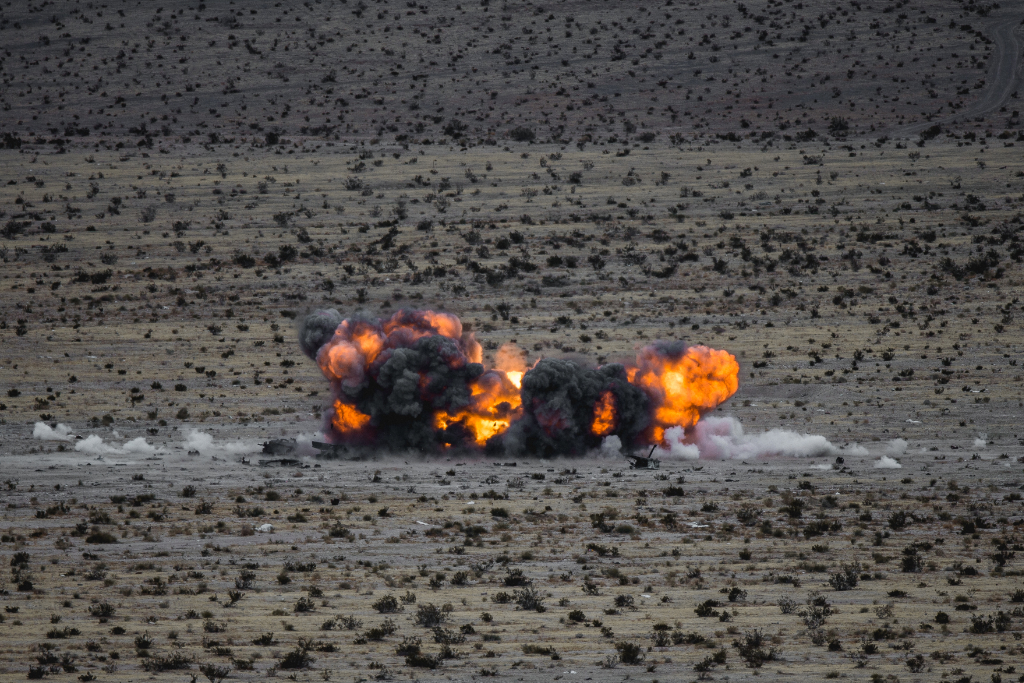
“JDAM LR gives operators an affordable, mass-producible option for striking targets from beyond the effective range of enemy defences,” said Ciesla.
The JDAM is a low-cost guidance kit that converts existing free-fall bombs into precision-guided smart weapons. They can be used against single or multiple targets during a single pass. Guidance is provided by a tail control system and a GPS-aided inertial navigation system (INS). Once released from the aircraft, the JDAM autonomously navigates to the designated target coordinates. These coordinates can be loaded into the aircraft before take-off, manually entered or modified by the aircrew before weapon release, or automatically provided through target designation by the aircraft’s onboard sensors.
The JDAM system was developed by McDonnell Douglas, which was awarded the contract for the programme in October 1995. The company was later acquired by Boeing, which subsequently took over the JDAM programme.
Production of the JDAM system began in 1998. According to Boeing, more than 500,000 kits had been produced by the beginning of 2024.
The Extended Range kits, equipped with a jet engine, were first proposed by Boeing in 2010. However, at that time, the U.S. military authorities showed no interest in the upgraded system. It took approximately ten years for development of the powered JDAM kits to begin, followed by their serial production.
The introduction of the JDAM ER into production marked the first major step towards increasing the range of JDAM precision-guided weapons, the capability that will now be further extended with the introduction of the JDAM LR.
Cover photo: A Navy F/A-18 carries the new Joint Direct Attack Munition (JDAM) Long Range (LR) variant during a test event in early April 2026, off the coast of California (US Navy photo).
All quotations © Boeing. Information from the Boeing company press releases were used.
All photos © U.S. Department of Defence (DoD). DoD information materials were used, in compliance with Public Domain licence. The appearance of U.S. Department of Defense (DoD) visual information does not imply or constitute DoD endorsement.