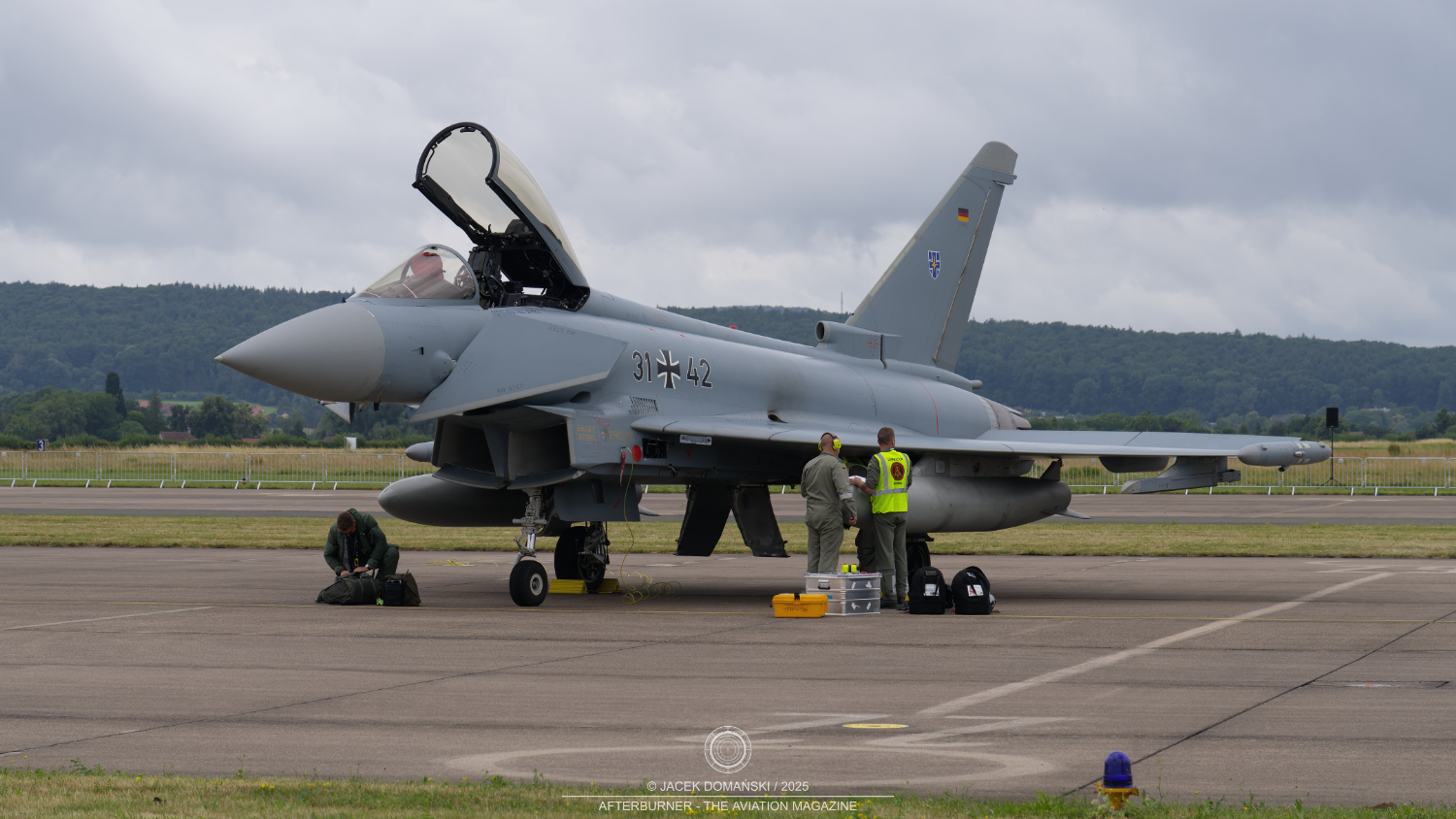
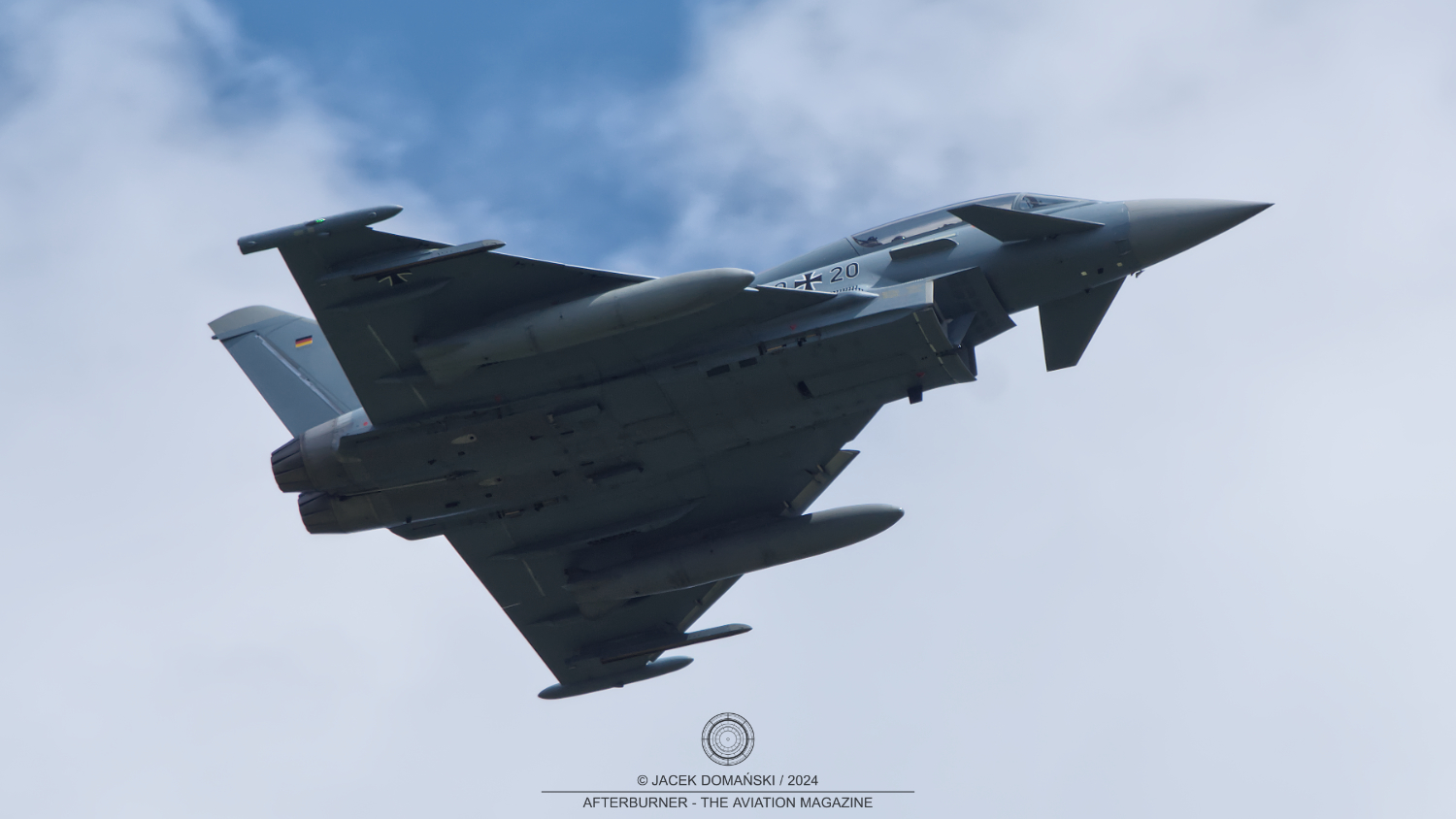
 On 29 January 2026, Eurofighter Jagdflugzeug GmbH, the company that coordinates the Eurofighter programme, officially announced that the fleet of European-made fighters had reached the historic milestone of one million cumulative flying hours.
The information was based on data provided by the International Weapon System Support Centre (IWSSC), a specialised hub based in Munich that delivers technical in-service support, maintenance and engineering for the Eurofighter fleet. The IWSSC also enables rapid information exchange and problem-solving between the air forces operating the aircraft.
In addition, the IWSSC pointed out that this milestone for the aircraft simultaneously marked another significant achievement: two million cumulative flying hours for the EJ200 jet engine.
The history of the European-developed 4th -generation air-superiority fighter officially began in 1985, with a multilateral agreement between West Germany, the United Kingdom, and Italy. Spain joined the initiative shortly afterwards.
Nevertheless, the road to this point was long and complex. The Eurofighter programme was preceded by several multinational projects aimed at developing a new air-superiority fighter. The first of these was the European Collaborative Fighter (also known as the European Combat Fighter – ECF) programme, established in 1979 by West Germany, the United Kingdom, and France. The initiative was then based on earlier national fighter developments. It was also during this programme that the term “Eurofighter” was officially used for the first time.
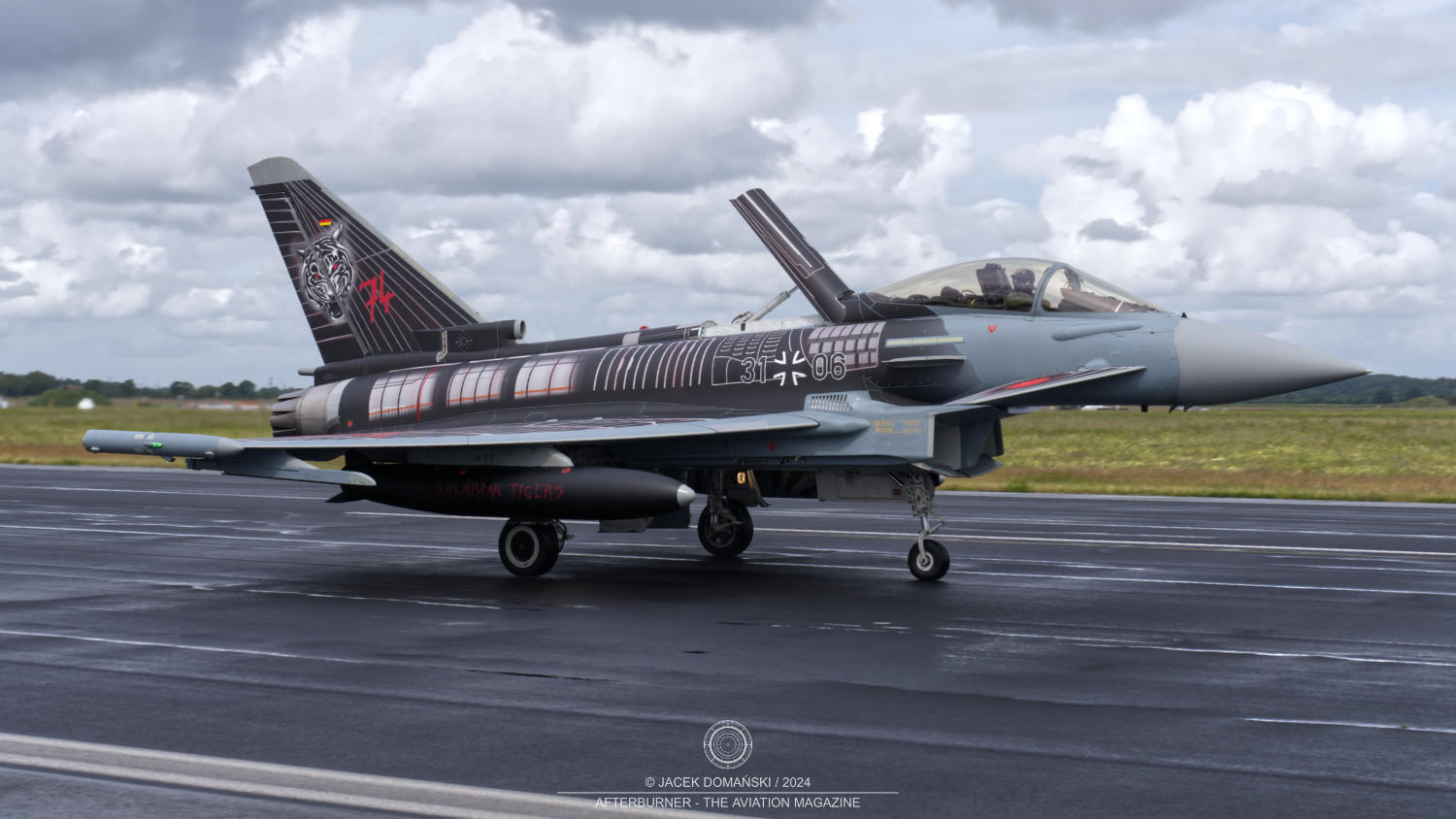
This was followed by the Agile Combat Aircraft and the Future European Fighter Aircraft initiatives, which involved the aforementioned countries along with Italy and Spain. However, all of these programmes eventually collapsed.
Finally, the four countries mentioned above decided to proceed with a joint fighter programme. Meanwhile, France definitively withdrew and launched its own national project, which later resulted in the Dassault Rafale.
In 1986, Eurofighter Jagdflugzeug GmbH was established to manage the programme. Initially, the aircraft was designated the Eurofighter EFA, but in 1992 it was redesignated as the EF-2000.
On 27 March 1994, the Eurofighter performed its maiden flight, piloted by chief test pilot Peter Weger. The first production contract, covering 232 aircraft for the United Kingdom, 180 for Germany, 121 for Italy and 87 for Spain, was concluded in 1998.
In September 1998, an official ceremony was held at Farnborough in the United Kingdom, during which the fighter was formally named Typhoon. While this name followed the tradition of strong, wind-related names established by the Panavia Tornado, it raised concerns in Germany due to its association with the Hawker Typhoon fighter-bomber of the Second World War. Ultimately, Germany rejected the name and kept only the Eurofighter EF-2000 designation.
However, rumour has it that an even more controversial name was considered during the early stages of the development programme – Spitfire II. This proposal was immediately rejected by Germany for obvious reasons.
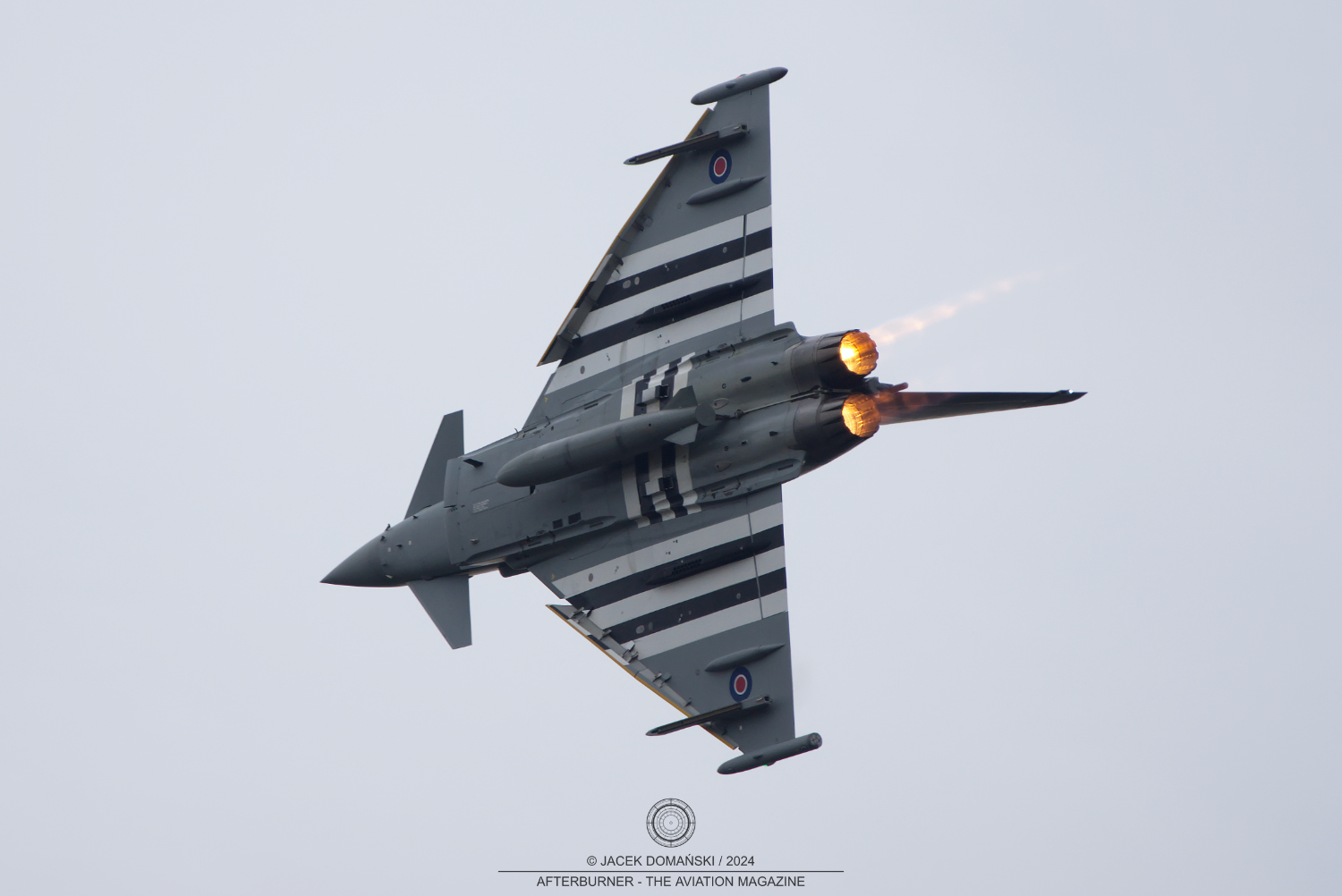
The Eurofighter was officially introduced into operational service on 4 August 2003, when the first batch of aircraft was accepted by the Luftwaffe (the German Air Force). Other countries to acquire fighters from the first production series, known as Tranche 1, included Austria, Italy, Spain, and the United Kingdom.
In the following years, the Eurofighter Typhoon was also purchased by Kuwait, Oman, Qatar, and Saudi Arabia. According to the latest reports, Turkey is expected to become the tenth operator of the aircraft. The country is set to receive twelve second-hand jets from the twenty-four currently in service with the Qatar Emiri Air Force.
Until today, more than six hundred Eurofighter jets have already been built, across three production tranches, and delivered to customers. However, orders continue with Germany, Italy and Spain having already ordered aircraft from Tranches 4 and 5, while Turkey is still negotiating the acquisition of twenty new aircraft.
In 2011, the Eurofighter entered combat for the first time when British and Italian Typhoons participated in the United Nations-mandated Operation Odyssey Dawn in Libya. The EF-2000 has since been used by the Royal Saudi Air Force in combat operations against Houthi rebels and by the RAF in Syria and Iraq as part of Operation Shader/Inherent Resolve against ISIS.
More information about the Eurofighter Typhoon can be also found in our previous articles: Eurofighter EF-2000 Typhoon, Eurofighter EF-2000 Typhoon S and Record flight of the German Eurofighters.