 From the beginning of the World War II in the Pacific, the Japanese forces tried to scare the American public and create a feeling of being under constant threat. In February 1942, the I-17 submarine fired sixteen shells at the Ellwood Oil Field near Santa Barbara, California. Although the attack caused only minor damage, it triggered the so-called “invasion panic”. In June, Japanese carrier-based aircraft raided Dutch Harbor in the Aleutian Islands, followed by the invasion of Kiska and Attu. Later that month, the I-25 submarine fired seventeen shells at Fort Stevens, Oregon. Again, the damage was negligible, but the attacks fuelled fears of a Japanese invasion of the West Coast.
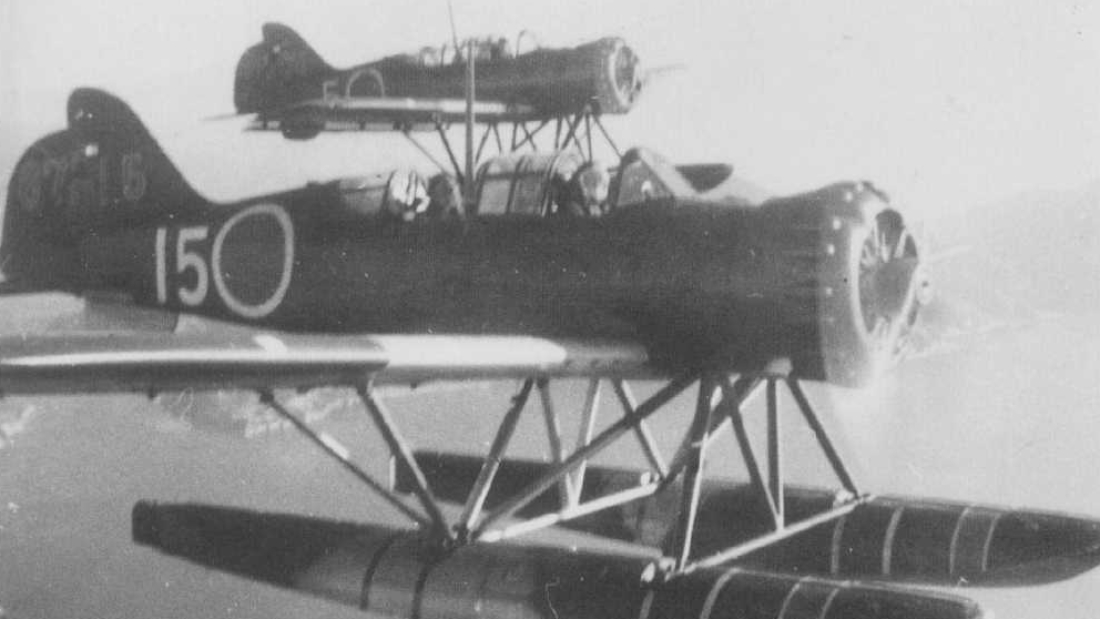
However, the Japanese military was aware that submarine attacks could cause little damage. Furthermore, Japan lacked a strategic bomber capable of reaching the US mainland. Instead, the Navy decided to use the Yokosuka E14Y floatplane, which could be carried inside a special watertight hangar aboard a B-1 type submarine and launched close to the target.
Warrant Officer Nobuo Fujita had proposed this concept as early as 1941. After several successful reconnaissance missions from the I-25, including flights over Australia, Fiji and New Zealand, he was assigned to carry out an attack against the United States mainland.
A single E14Y carrying a limited bomb load could not seriously damage a military installation. The Japanese therefore decided to use incendiary bombs against forest areas, hoping to start an uncontrolled wildfire and cause panic among the American public.
On the morning of 9 September 1942, Fujita and his second crewman, Shoji Okuda, took off in their E14Y from a position off Cape Blanco. The “Glen” was carrying two 76-kg incendiary bombs, which were dropped over the forest on Wheeler Ridge, near Brookings, Oregon.
Unfortunately for the Japanese, the aircraft was spotted by US fire-watch wardens. Although they did not see the bombing itself, they did notice and report the resulting smoke. The wardens managed to contain the fire until firefighters arrived, so the raid caused only minimal damage.
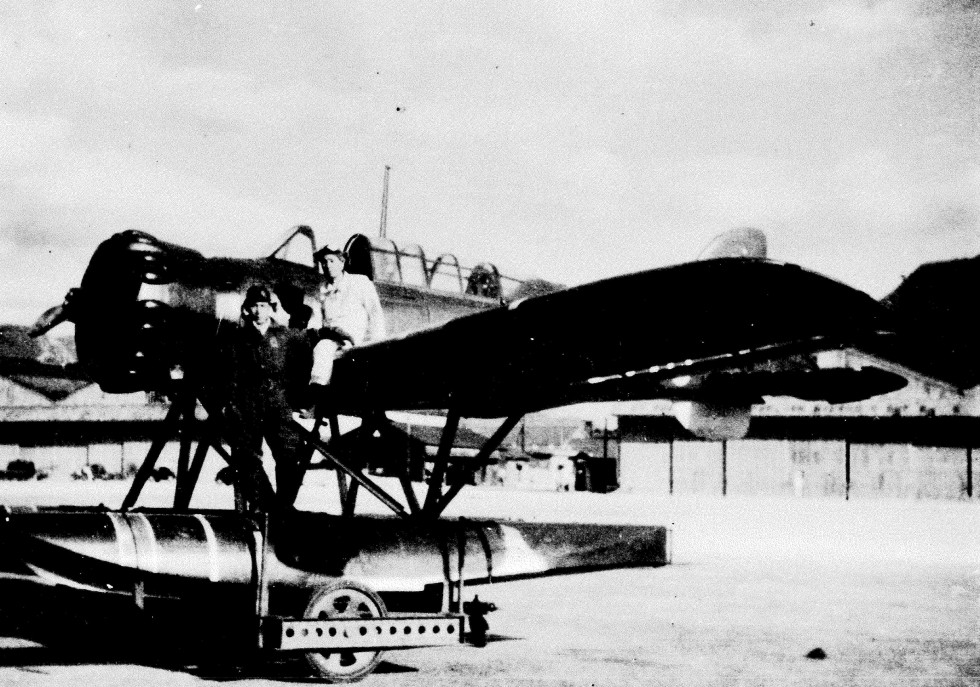
Nevertheless, the attack immediately alarmed the US armed forces. Aircraft were sent to locate and destroy the I-25, which was attacked shortly after the “Glen” had been stored in its hangar. Three more aircraft and a Coast Guard ship subsequently joined the search, but the submarine escaped with almost no damage.
Fujita and Okuda had to wait three weeks before attempting another raid. This time, expecting the Americans to be on alert, they decided to attack at night. With a blackout imposed along the coastline, lighthouses were the only significant navigation aids. Using their light, Fujita crossed the coast and flew inland before blind-dropping the bombs over an area he believed to be a forest. He later reported seeing the explosions, but no resulting fires were confirmed.
A third attack was planned but cancelled due to severe weather. The I-25 subsequently returned to the Pacific.
In 1944, Japan attempted to start fires and cause panic on the US mainland again, this time using high-altitude hydrogen balloons. Approximately 9,000 balloons were launched towards North America, but only a few hundred reached the continent. They caused no significant damage, although six people were killed.
Nobuo Fujita survived the war and later visited Brookings several times, donating a 400-year-old family katana to the city as a gesture of reconciliation.
Fujita died in September 1997, aged 85. His ashes were eventually buried at the site of the first bombing near Brookings, Oregon.
Cover photo: Two Yokosuka E14Y “Glen” aircraft in flight (photo: Wikipedia, public domain)