 Georg Wulf, the German aviation pioneer and aircraft designer, was born in 1895 in Bremen.
At the age of fifteen, he witnessed the first aviation trials attempted by Henrich and Wilhelm Focke. Although their canard-wing aeroplane, powered by a small engine, failed to fly, the design aroused great interest in young Wulf. He decided to leave school just before graduation and devote himself to flying and aircraft construction.
Wulf offered his services to the Focke brothers and was accepted. Shortly afterwards, they began working together on new aircraft designs, and in 1912 their first airworthy monoplane was built, with its maiden flight performed by Wulf himself.
At the outbreak of the Great War, Wulf volunteered for military aviation service but was rejected. After repeated attempts, he finally became a pilot in Bomberstaffel 23 (the 23rd Bomb Squadron) of Bogohl 7 (Bombengeschwader der Obersten Heeresleitung Nr. 7 – the 7th Bomber Wing under direct control of the German Army’s High Command).
After the war, despite the Treaty of Versailles banning Germany from developing and manufacturing aircraft, Wulf and the Focke brothers secretly returned to aircraft development, working in one of the Bremen basements.
In 1923, when the ban on aircraft development was lifted, Georg Wulf, Heinrich Focke and Werner Neumann established Bremer Flugzeugbau AG, later renamed Focke-Wulf Flugzeugbau AG. Wulf was the only founder without a degree, but his practical skills, talent and understanding of aircraft compensated his lack of formal education. Within the company, he served as managing director, technical director of operations and test pilot.
The company’s first aircraft was the A 16 light transport, introduced in 1924, followed by the A 17 Möwe (Gull), which made its maiden flight in 1927.
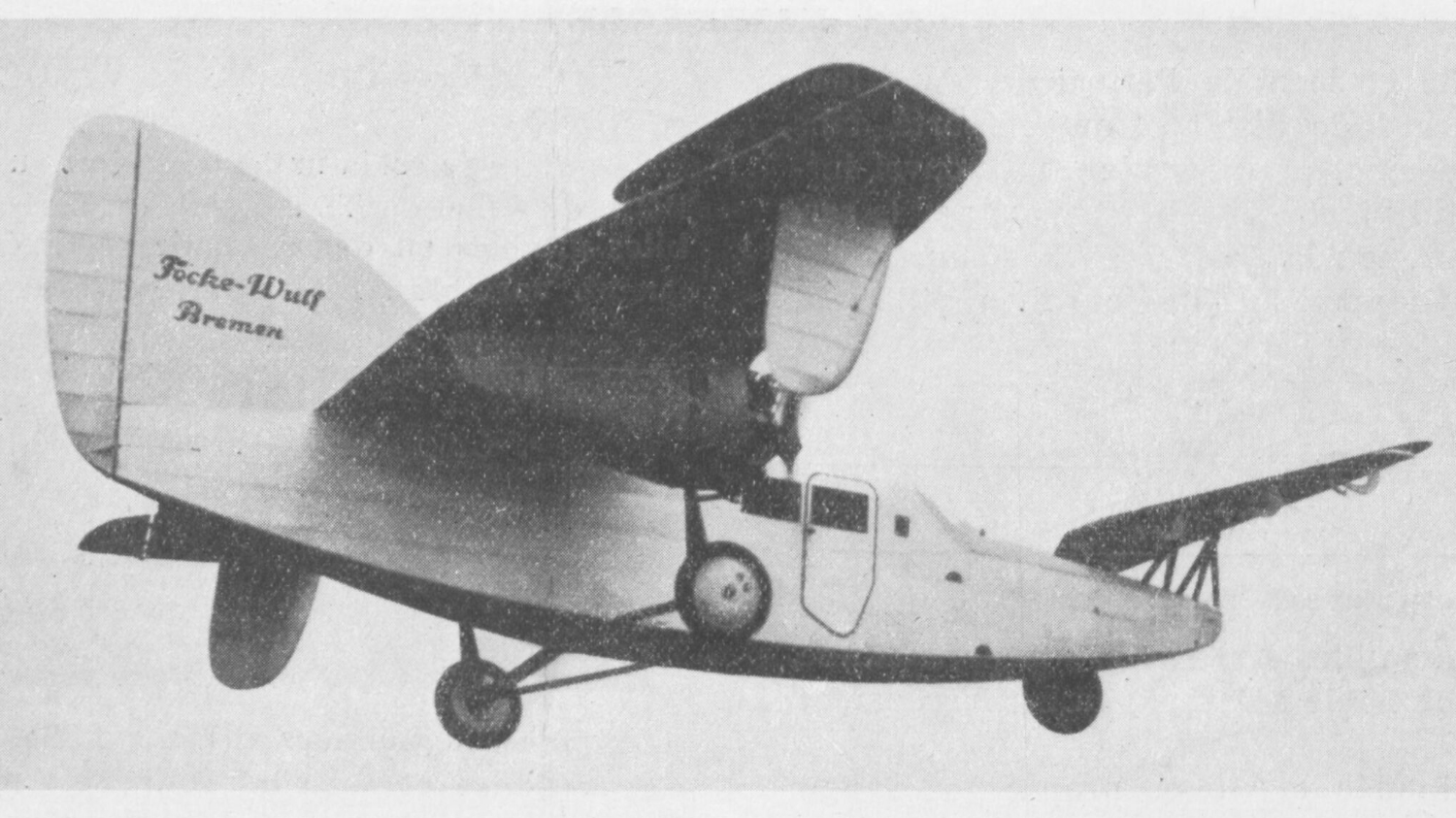
On 2 September 1927, Focke-Wulf successfully flew another aircraft – the F 19 Ente (Duck), a high-wing canard monoplane powered by two engines mounted in nacelles under the wings. The aircraft featured an enclosed cabin for up to three passengers, while the pilot was seated in an open cockpit.
Flying tests continued over the following days, with Georg Wulf serving as the test pilot. On 29 September, during a demonstration of the F 19’s ability to fly with only one engine operating, one of the control rods snapped causing Wulf to lose control of the aircraft. The F 19 hit the ground, killing the pilot.
Cover photo: Focke-Wulf F 19 Ente (source: gallica.bnf.fr / BnF – L’Aérophile 15 Feb 1931, Public Domain)