After two successful editions, Challenge International de Tourisme (the International Tourist Aeroplane Competition) had developed into the most prestigious aviation contest in Europe. Although the original idea was to compete with serially manufactured tourist aeroplanes, the desire to win became so strong that, from the third edition onwards, most participating countries developed completely new aircraft specifically for the Challenge series.
The third edition was held in Berlin between 12 and 28 August 1932. Almost seventy aircraft and their crews signed up, but finally only forty-three eventually appeared in the German capital. The growing requirements for aircraft performance and crew skills meant that several new developments were delayed or that their crews were unable to complete the necessary training. One of the most notable examples was the Messerschmitt BFW M.29, considered one of the favourites, but withdrawn after two examples crashed shortly before the competition.
Six national teams participated in the 1932 edition of the contest: Germany, France, Italy, Poland, Czechoslovakia and Switzerland. Germany fielded the largest team, with sixteen crews, while Switzerland had only two. Among the competitors were several specially developed designs, including the German Heinkel He 64, Italian Breda Ba.33, Czechoslovak Praga BH-111 and Polish RWD-6 and PZL.19. These aircraft were clearly more advanced than the modified serial production types that were also taking part.
The competition began with technical trials evaluating the overall design and practical qualities of the aircraft. Points were awarded for such features as cabin comfort, cockpit visibility, instrument panel quality, side-by-side seating and folding wings. The specially developed aircraft dominated this part of the contest. A new minimum-speed trial was also introduced to assess the safety of the competing designs. The two RWD-6s performed exceptionally well, with Franciszek Żwirko achieving an impressive speed of 57.6 km/h. Seven crews managed to fly below the expected minimum of 63 km/h and were awarded the maximum score.
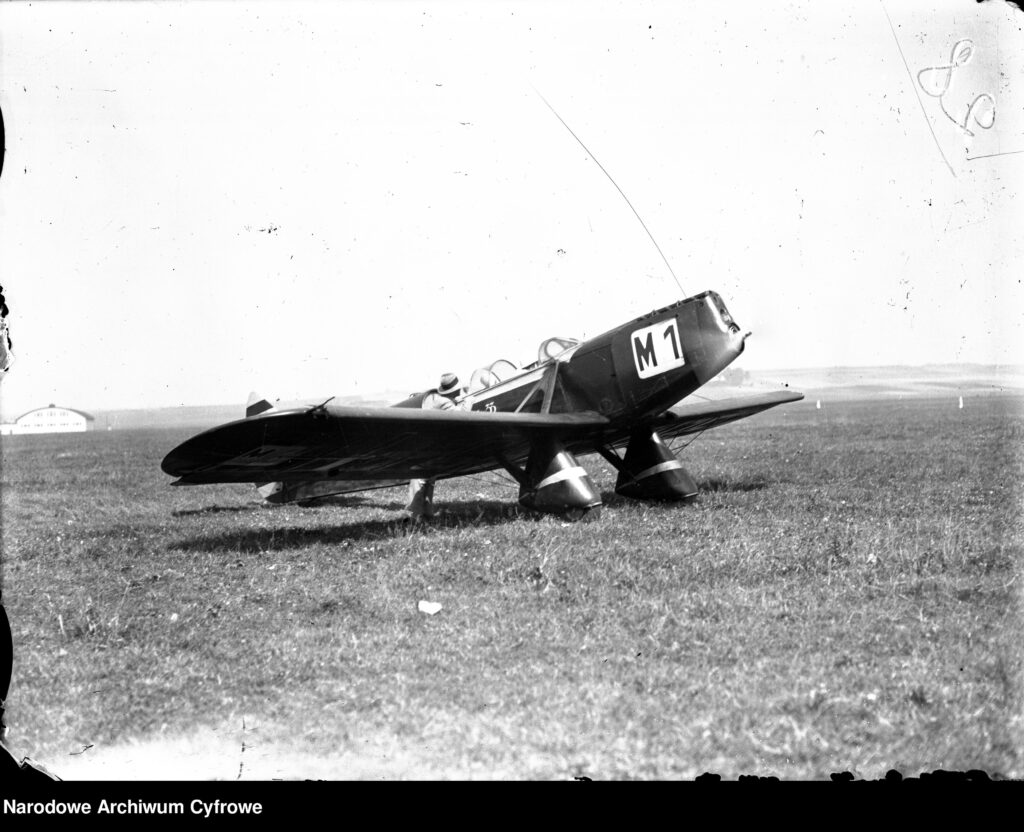
After the technical trials, Ambrogio Colombo flying a Breda Ba.33 led the classification with 247 points, only two points ahead of Żwirko in his RWD-6. The most demanding part of the competition then began: a 7,300-kilometre aviation rally through twelve European countries.
The rally quickly turned into a race between the fast German He 64s and Italian Ba.33s, particularly on the way to Rome. Hans Seidemann was the first to reach the Italian capital on 22 August, but only thirty-three crews made it there. The following day, two Ba.33s crashed while departing Rome, killing one person. The accidents were attributed to weak wing construction and increased material fatigue resulting from flying at maximum speed. Consequently, all remaining Italian crews withdrew from the competition.
The withdrawal of the Italian crews left the Germans in a dominant position. German crews occupied the first ten places in the rally classification, apart from Robert Fretz of Switzerland, who shared eighth place while also flying a German-built Klemm Kl 32. Żwirko and Josef Kalla of Czechoslovakia, flying the RWD-6 and BH-111 respectively, were the highest-placed competitors in non-German aircraft, finishing the rally jointly in eleventh place.
Despite this, the Italian withdrawal made Żwirko the overall leader with 456 points, followed by Reinhold Poss, Wolf Hirth and Fritz Morzik. The final maximum-speed trial, flown over a 300-kilometre triangular course, was therefore expected to determine the winner. As expected, Morzik and the other German crews flying He 64s dominated the speed results, with Morzik reaching 241.3 km/h. Żwirko managed to achive the speed of 214.1 km/h, finishing thirteenth in the speed trial.
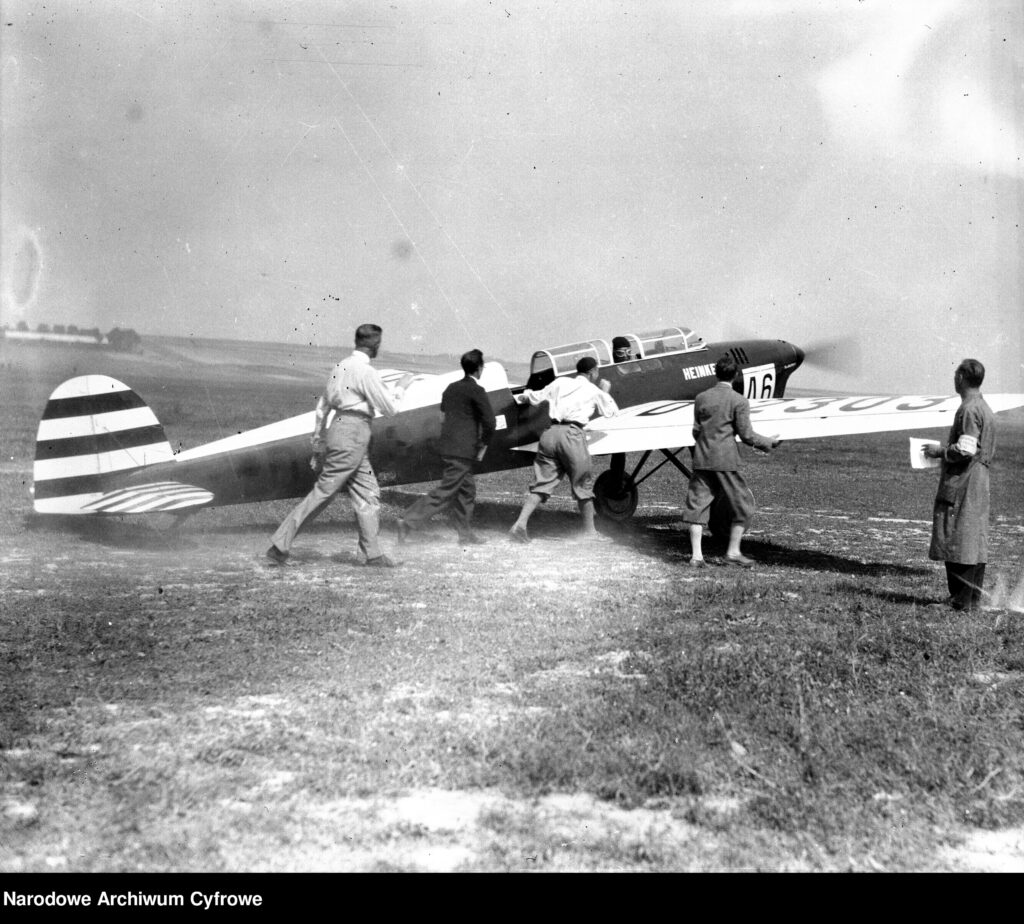
However, the final result was not based simply on maximum speed. A handicap system was used, with competitors taking off at intervals according to their overall classification. The first pilot to cross the finish line would win the trial. Żwirko was the first to take off, followed five minutes later by Poss and another seven minutes later by Morzik. Although Morzik overtook the Polish pilot during the race, Żwirko managed to maintain his leading position by landing first. Morzik crossed the finish line one minute and twenty-three seconds later.
The final classification gave Franciszek Żwirko the victory with 461 points, while Fritz Morzik and Reinhold Poss shared second place with 458 points each. Although the competition was strongly dominated by the Germans, Żwirko’s victory meant that the next edition of Challenge International de Tourisme would be held in Poland, with Warsaw selected as the host city.
Sadly, Żwirko and his mechanic Stanisław Wigura, one of the RWD-6 designers, died in an aviation accident only two weeks after the Challenge. Reinhold Poss was killed in another accident the following year, while Winifred Spooner died of pneumonia in January 1933.
Cover photo: Franciszek Żwirko (middle) in front of his RWD-6, Challenge 1932 rally over Europe, stage point in Cracow, Poland (Narodowe Archiwum Cyfrowe, 3/1/0/5/1240/75, Public Domain)