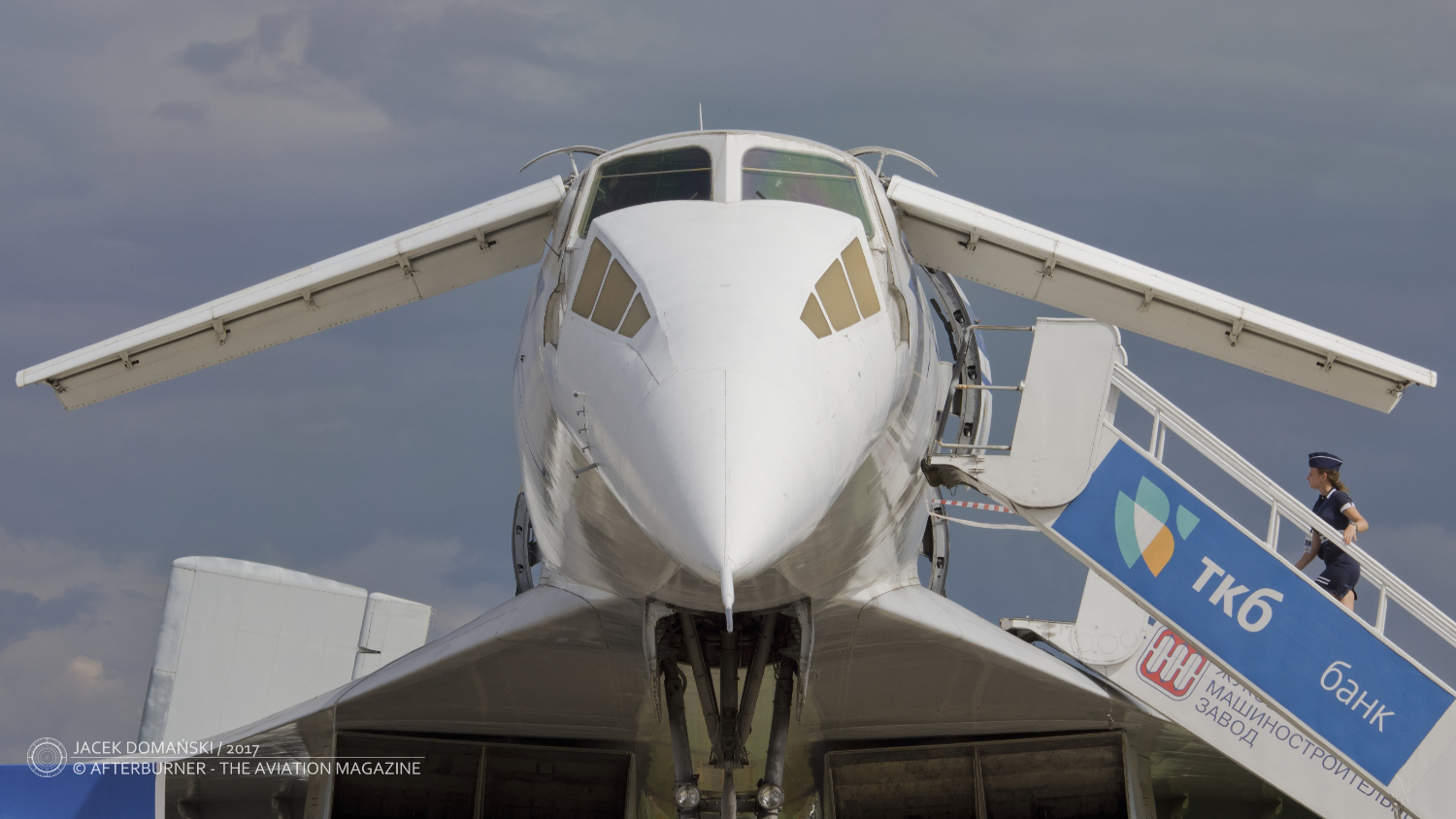
 On 26 December 1975, the Tupolev Tu-144, the first supersonic passenger aircraft (also known as the “supersonic transport” – SST), performed its first operational flight, carrying mail cargo from Moscow to Alma-Ata (now Almaty, Kazakhstan).
The Tu-144 prototype made its first flight on 31 December 1968, at the Zhukovsky airfield. The Soviet airliner became the first commercial supersonic aircraft in the world, followed by the British-French Concorde, which took off from Toulouse two months later.
Although both aircraft are quite similar in appearance, there are several significant differences between them, particularly in terms of construction, powerplant and flight characteristics. However, it is rumoured that the creation of the Tu-144 was the result of industrial espionage. As a result, the Soviet aircraft was sometimes humorously nicknamed “Concordski” or “Konkordskyi.”
Regrettably, the initial test and demonstration flights resulted in two accidents that reverberated throughout the aviation world. The first occurred in 1973, during a Tu-144 demonstration flight at the Paris Air Show, when the entire crew of six was killed, along with an additional eight people on the ground. The second incident occurred in 1978, when a Tu-144 being tested before delivery to the “Aeroflot” airline caught fire at an altitude of 3,000 metres and subsequently crashed near Yegoryevsk, killing two of the eight people on board.
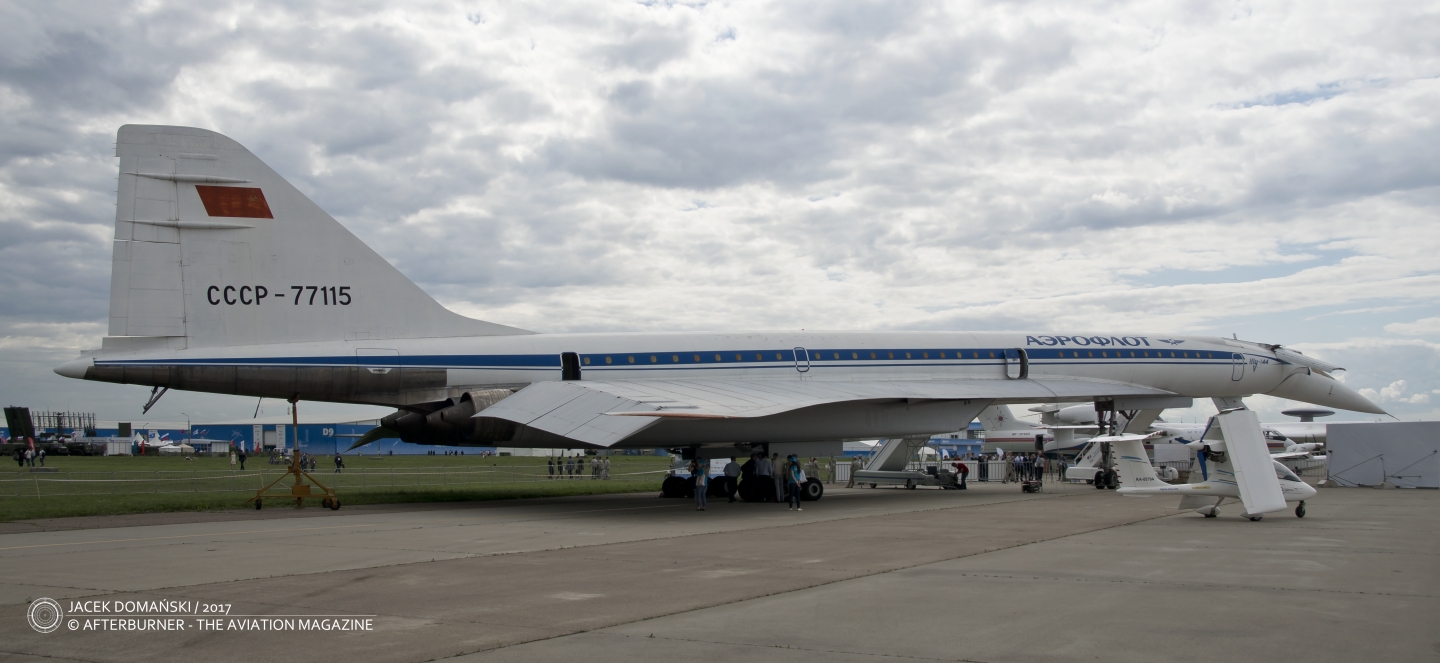
As mentioned earlier, the world’s first SST began its operational service on 26 December 1975, carrying mail cargo to Alma-Ata. However, the first passenger flight did not take place until 1 November 1977, when it was completed on the same route from Moscow to the then capital of the Kazakh SSR.
However, it soon became apparent that the economic efficiency of the Soviet SST was very low, especially after the rise in oil prices. In addition, during the initial flights, the Tu-144 fleet suffered from several failures that resulted in unreliable service on scheduled flights.
The operational service of the Tu-144 was terminated on 1 June 1978, just seven months after the first passenger flight. One of the direct reasons for this decision was the aforementioned accident in Yegoryevsk.
By that time, the Tu-144 fleet had completed only 102 commercial flights, of which just fifty-five were flown with passengers on board, carrying a total of 3,284 passengers.
In 1983, the entire Tu-144 programme was officially closed. However, the remaining aircraft continued to be used as airborne laboratories and training aircraft for the Soviet space programme, with the final flight of the Tu-144 taking place on 26 June 1999. The surviving aircraft were subsequently handed over to aviation museums or displayed as gate guards.