 With the arrival of spring, Armée de l’air et de l’espace (the French Air and Space Force) conducted one of its major live-fly exercises of the year, codenamed Poker, which simulated a nuclear air raid. The training was carried out in French airspace by Forces aériennes stratégiques – FAS (the Strategic Air Forces).
Nuclear raid exercises are organised by the French Air and Space Force on a regular basis, several times each year. Together with approximately seventy other practice activities, they form part of the annual training programme of the Strategic Air Forces.
Although most of these exercises are carried out with great discretion, the Poker series is usually not classified. Its purpose is twofold: firstly, to ensure the operational readiness of the FAS, and secondly, to demonstrate France’s nuclear deterrence capabilities. Therefore, these exercises are conducted openly, within designated airspace zones.
In addition to Armée de l’air et de l’espace, other components of the French Armed Forces may participate in the exercise, particularly Force Aéronavale Nucléaire (the Naval Nuclear Aviation Force), thereby highlighting the joint nature of country’s nuclear deterrence posture.
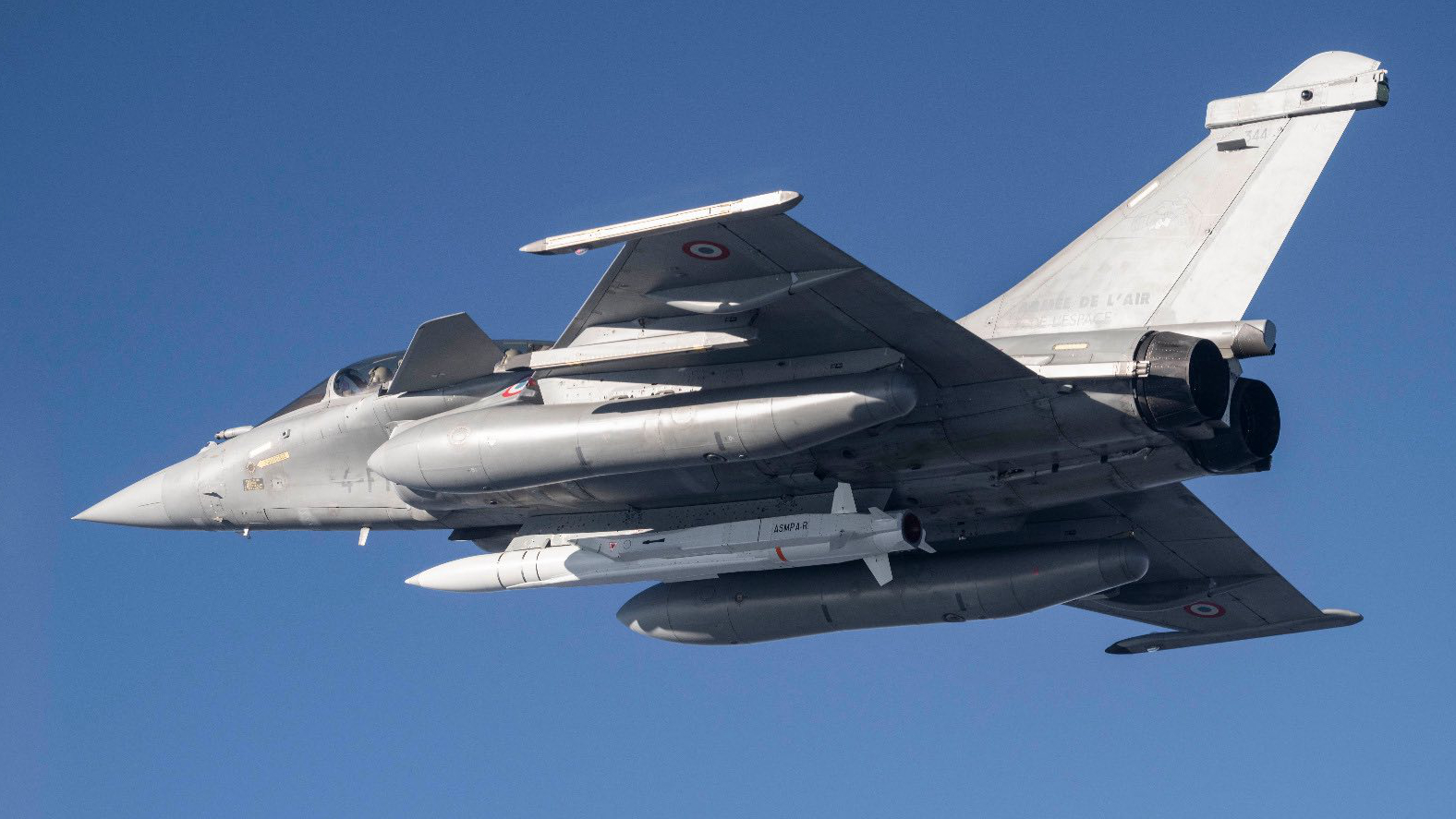
The first nuclear raid exercise of the year was conducted on 16 and 17 March, with nearly forty aircraft taking part in the simulation. The force included Rafale B fighter jets assigned to 4e Escadre de Chasse (the 4th Fighter Wing) – one of the leading French aviation units, headquartered at Base aérienne 113 (the 113th Air Base) in Saint-Dizier–Robinson, north-eastern France; Airbus A330 MRTT Phénix tankers from 31e Escadre Aérienne de Ravitaillement et de Transport Stratégiques (the 31st Strategic Airlift and Air Refuelling Wing), and E-3F AWACS aircraft to provide airborne command and control. In addition, several other French fighter jets, such as Mirage 2000-5s, participated in the exercise, forming the so-called “conventional shoulder” and being tasked with escorting the nuclear strike force.
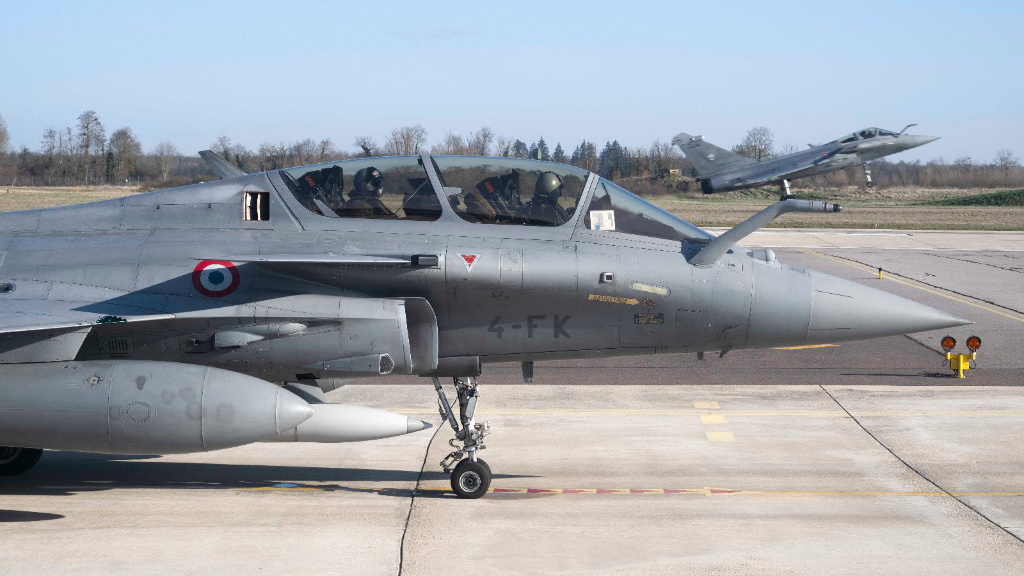
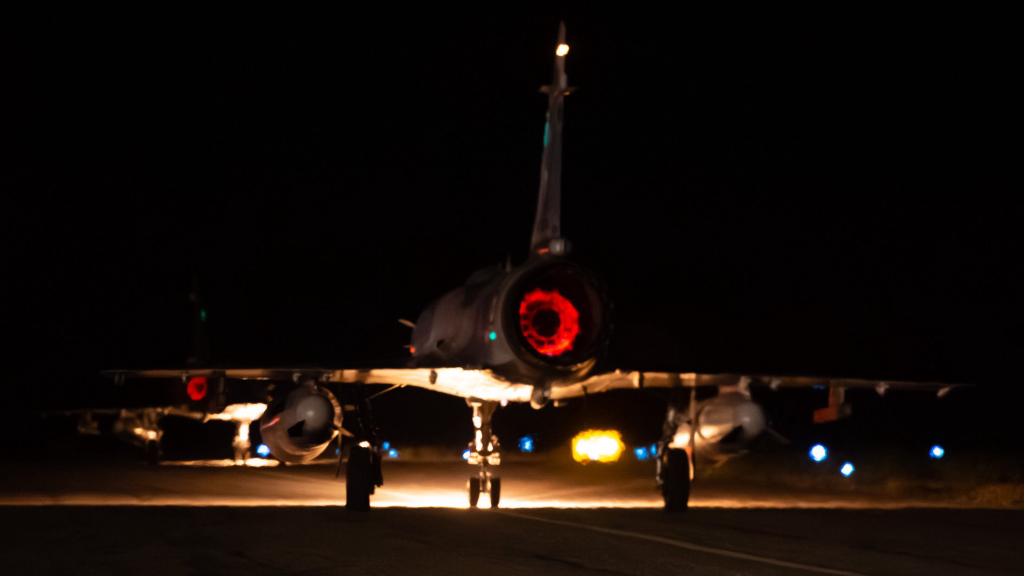
The March edition of the Poker exercise took place from Brittany to the Massif Central, spanning over the Atlantic Ocean and the Mediterranean. The training scenario was designed to simulate a real operational environment as closely as possible. In consequence, the exercise constituted a complex air operation combining several phases, including the coordinated launch of the nuclear force from multiple air bases, in-flight refuelling, penetration of contested airspace at various altitudes (including very low-level flight), and, finally, the simulated delivery of a nuclear strike.
In order to ensure the exercise was as close as possible to operational reality, the Rafale B fighters carried full-scale mock-ups of the ASMP-A nuclear missiles.
Air-Sol Moyenne Portée-Amélioré (literally “medium-range air-to-surface, improved”) is an upgraded variant of the French ASMP nuclear missile. It can reach speeds of up to Mach 3 and carry a 300 kt thermonuclear warhead. Compared with the base version, the ASMP-A is characterised by an extended range of approximately 500 km.
The French Strategic Air Forces were established on 14 January 1964 to serve as the country’s nuclear strike force. Initially, the unit operated Dassault Mirage IV jets armed with AN-11 bombs and supported by Boeing KC-135 Stratotanker aircraft. In later years, the Mirage IV was upgraded to the Mirage IV-P standard capable of carrying the aforementioned ASMP missiles, before being supplemented and ultimately replaced by Mirage 2000N aircraft.
In 2008, the role of nuclear deterrence aircraft within the FAS was taken over by the Rafale B multirole fighters. In recent years, the KC-135 tanker fleet assigned to the force has been replaced by the A330 Phénix aircraft. This transition has enabled the Strategic Air Forces to maintain a global strike capability, deployable through a force of approximately twenty Rafale fighters and ten MRTT aircraft.
Information from the press releases of the French Ministry of Defence – published on the MoD page in March 2026 – were used, in accordance to the etalab-2.0 licence.