 On Tuesday, 7 July 2026, during the NATO Summit Defence Industry Forum held in Ankara, Türkiye, four countries — Denmark, Finland, Germany and Norway — signed a Letter of Intent (LOI) announcing their intention to procure up to five Northrop Grumman MQ-4C Triton unmanned aerial vehicles (UAVs). The agreement marks the first formal step towards expanding NATO Intelligence, Surveillance and Reconnaissance Force (NISRF) with an enhanced maritime ISR capability.
These high-altitude, long-endurance aircraft would bolster NATO’s intelligence, surveillance and reconnaissance abilities, complementing the Alliance Ground Surveillance (AGS) fleet of RQ-4D Phoenix aircraft operating from Sigonella Air Base in Italy. Derived from the Global Hawk family, the MQ-4C shares a common lineage with the Phoenix fleet, offering opportunities to leverage cost-saving synergies in operations, maintenance and training.
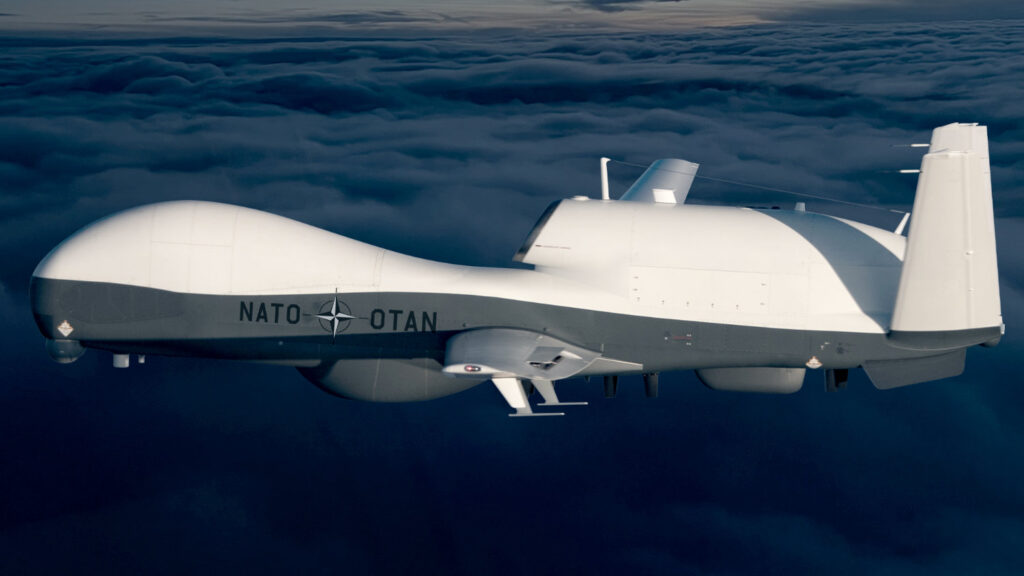
Designed specifically for maritime surveillance, the autonomous high-altitude, long-endurance (HALE) MQ-4C Triton is able to operate above 50,000 feet (15,240 metres) for more than 24 hours and has a range of approximately 7,400 nautical miles (13,704 kilometres). According to Northrop Grumman, the Triton´s persistent maritime intelligence, surveillance and reconnaissance potential enables the aircraft to detect, track and classify objects over vast areas while rapidly sharing data to support military coordination. As a multi-intelligence platform developed for the U.S. Navy and the Royal Australian Air Force, the aircraft is capable of supporting missions including maritime patrol, signals intelligence, and search-and-rescue operations. It also operates collaboratively with crewed platforms across domains through the intelligent and timely exchange of data, while its sensor suite provides early warning of missile threats, as well as enables detection and targeting from stand-off range.
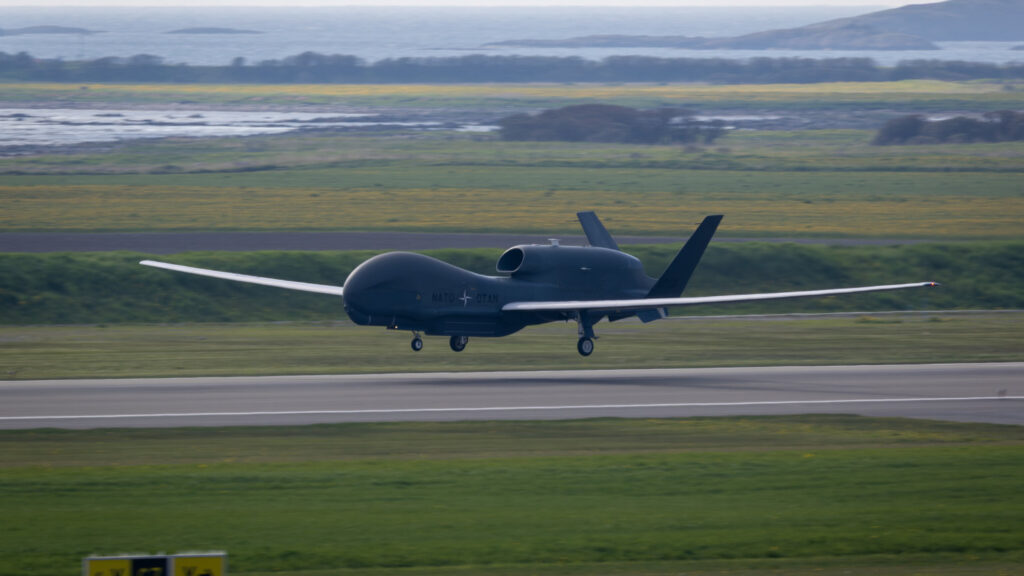
Thanks to its long-range sensor suite, Triton would enable Allied forces to detect potential threats earlier and at greater distances, protect vital sea lines of communication and improve situational awareness across strategically important regions, including the Mediterranean, the Arctic and the High North. The new proficiency is also expected to strengthen surveillance coverage along NATO’s northern, eastern and southern flanks.
“Our collaboration with NATO and the U.S. Navy strengthens the Alliance’s ground and maritime surveillance capabilities,” said Jane Bishop, Vice President and General Manager of Northrop Grumman’s Global Surveillance Division. “Like Phoenix, Triton conducts ISR at higher altitude and with longer endurance than medium-altitude systems, and is poised to provide NATO new levels of capability and operational flexibility to monitor and protect maritime interests from the Mediterranean to the High North.”
To deliver this capability, a transatlantic industrial consortium is being formed. Northrop Grumman would manufacture and deliver the MQ-4C aircraft, while Airbus Defence and Space, together with other European industry partners, would provide the ground segment, including elements of the ground station, data processing infrastructure, command and control systems, as well as mission support and data management services. Building on the work and transatlantic relationships established over the past decade, the initiative is intended to further develop a modern, integrated and interoperable NISRF.
Cover photo: NATO intends to expand its ISR Force fleet with MQ-4C Triton’s unmatched maritime surveillance capabilities. (Photo Credit: Northrop Grumman)
Northrop Grumman press release materials were used.