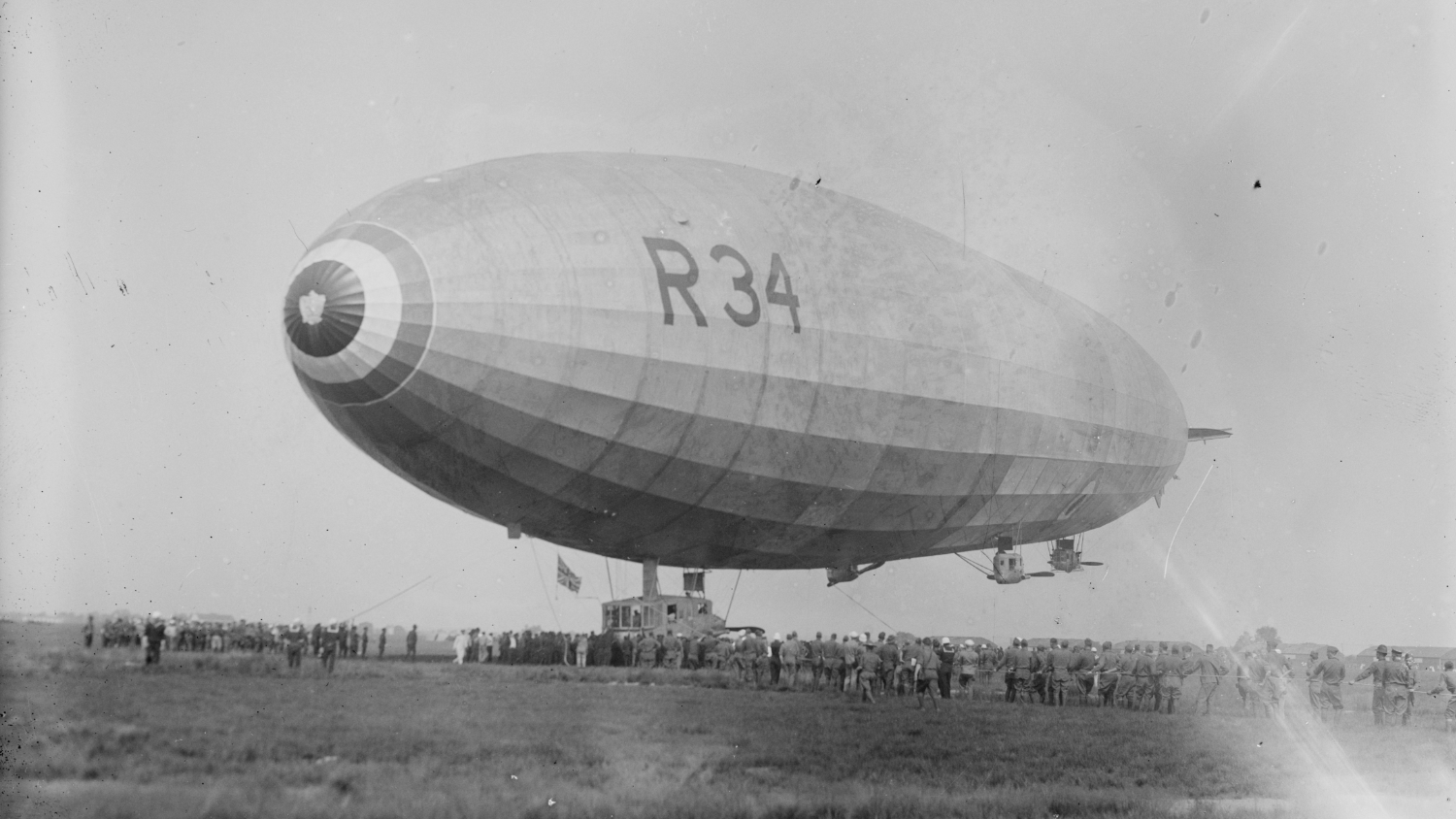
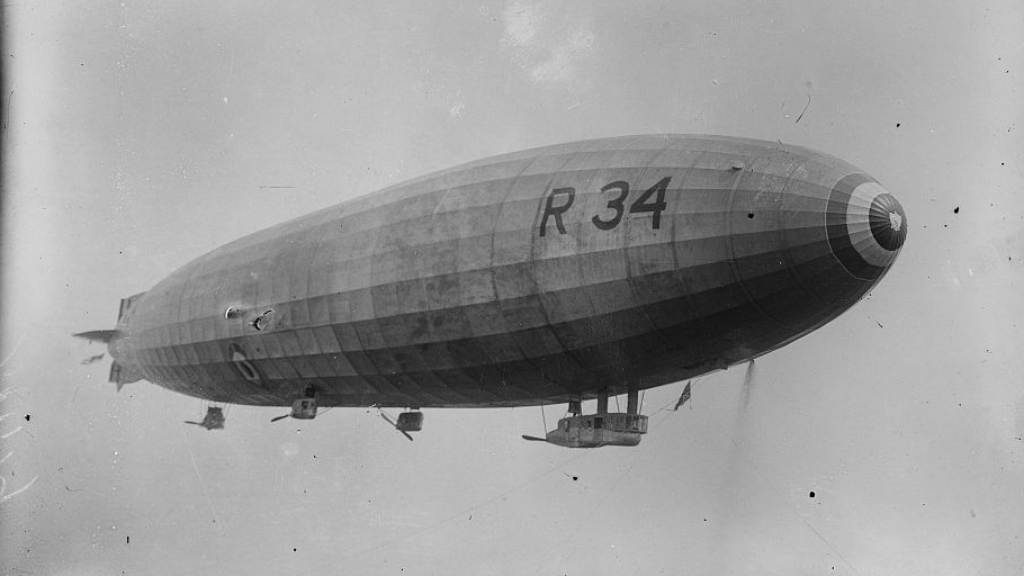
 On 10 July 1919, the British rigid airship R.34 set out on its return journey to England. Having flown for 75 hours, it reached RNAS Pulham station on 13 July. This made the R.34 the first aircraft to complete a two-way crossing of the Atlantic.
The airship belonged to the R.33 class, developed for the Royal Naval Air Service (RNAS) during the First World War. However, the aircraft were not completed before the end of the war and entered service in 1919, by which time the RNAS had already become part of the newly established Royal Air Force.
The R.34 was built by William Beardmore and Company and was the second, and last, airship of the class. The aircraft made its first flight on 14 March 1919. Already in June of the same year, the R.34 completed an endurance flight over the Baltic lasting 56 hours.
Shortly afterwards, it was decided to send the aircraft on a transatlantic flight. On 2 July 1919, commanded by George Herbert “Lucky Breeze” Scott, the R.34 set out from Scotland and headed for North America. One hundred and eight hours later, the airship reached Mineola on Long Island with almost no fuel left.
The transatlantic flight of the British airship made aviation history, with an impressive list of first-ever achievements. These included the first east-to-west crossing of the Atlantic Ocean by an aircraft, the first transatlantic flight completed by a lighter-than-air aircraft, the first transatlantic passenger flight, as well as carrying the first transatlantic stowaway, William Ballantyne.
The flight was also marked by a parachute jump by E.M. Pritchard, one of the R.34 crew members who was sent to the ground to instruct the landing crew at Mineola on how to handle the airship. As a result, Pritchard became the first person to reach North America from Europe by air.
What’s more, the R.34 also made aviation history by carrying the first pet animal to successfully cross the Atlantic. A tabby kitten named “Wopsie” (aka “Jazz”) was taken aboard by the aforementioned stowaway and discovered too late to be put ashore.
On 10 July, the R.34 began its return journey to England, reaching RNAS Pulham station on 13 July after 75 hours of flight. In doing so, the airship became the first aircraft to complete a two-way crossing of the Atlantic.
However, the operational service of the R.34 did not last long. In January 1921, the airship was damaged when she flew into a hillside on the North Yorkshire Moors. The aircraft managed to return to Howden, but next day the R.34 suffered further damage from strong winds. As a consequence, the airship was officially decommissioned and subsequently scrapped.
More about the pioneering transatlantic flights in Across the ocean – astonishing stories of transatlantic flights.
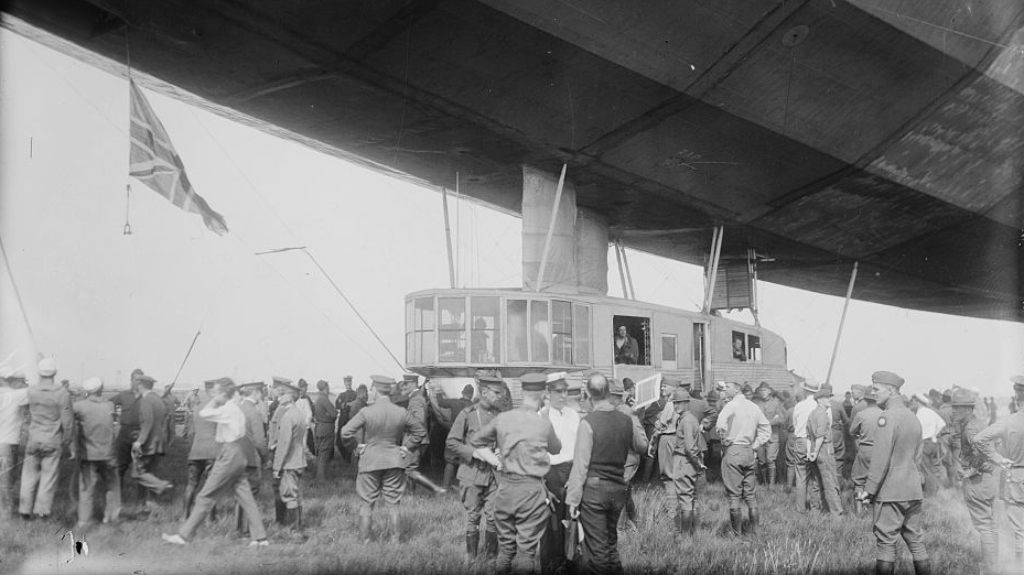
Cover photo: R.34 airship (photo: Library of Congress, LC-B2- 4966-10, George Grantham Bain Collection, cropped)