Rigid and semi-rigid airships first appeared in the late nineteenth century and were consistently developed in the following decades. Pioneers such as Alberto Santos-Dumont, Count von Zeppelin and Thomas Scott Baldwin transformed the dirigible from a mere curiosity into a practical means of transport and reconnaissance. During the First World War, German “zeppelins” – as they were commonly called – were widely used for bombing raids, scouting missions and long-range reconnaissance flights. Although slow and vulnerable to weather conditions, they offered a range and endurance unmatched by contemporary aeroplanes.
After the war, airships gradually lost their military importance, yet they still appeared attractive as passenger aircraft. Early aeroplanes were noisy, uncomfortable and capable of carrying only a few passengers over relatively short distances. In contrast, giant airships offered transcontinental range, spacious interiors and an unmatched level of luxury.
Germany became one of the leading nations in airship development. The famous LZ 127 Graf Zeppelin, which first flew in 1928, completed nearly 600 flights, including regular commercial services between Germany and Brazil. It also became the first airship to circumnavigate the globe.
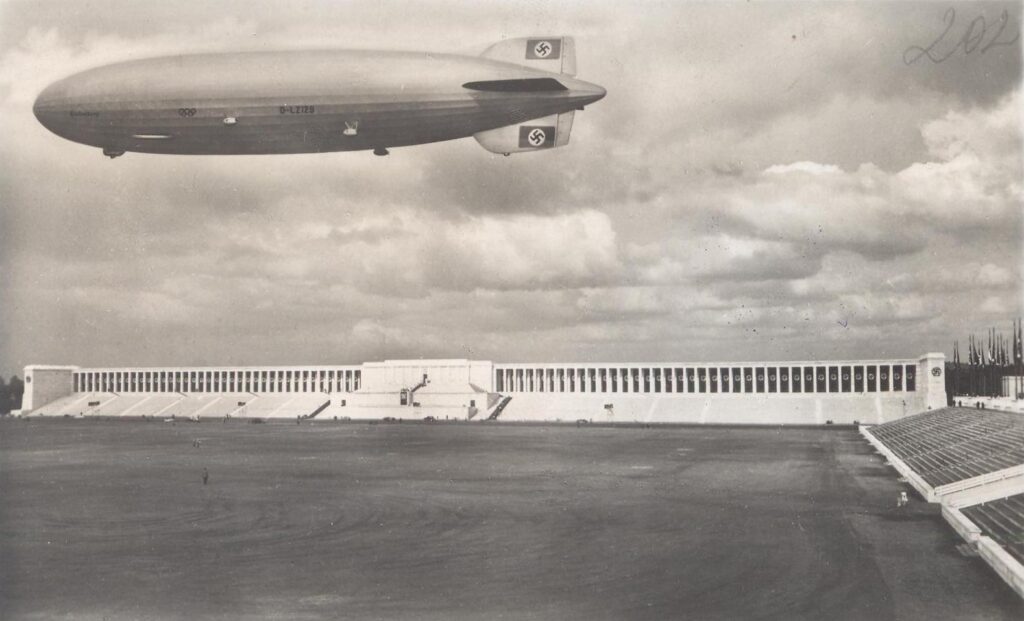
Its successor, the LZ 129 Hindenburg, made its maiden flight on 4 March 1936. Even larger and more luxurious than Graf Zeppelin, it remains the longest aircraft ever built. The airship could carry up to seventy passengers who were attended to by a crew of sixty. It offered comfortable cabins, a promenade deck, fine dining and other amenities associated with luxury ocean liners. Flights across the Atlantic usually lasted between two and three days.
The 1937 transatlantic season began with a successful journey to South America. On 3 May 1937, Hindenburg departed Germany for another flight to the United States. Having been delayed by storms, the airship finally approached the Naval Air Station at Lakehurst, New Jersey, on the evening of 6 May.
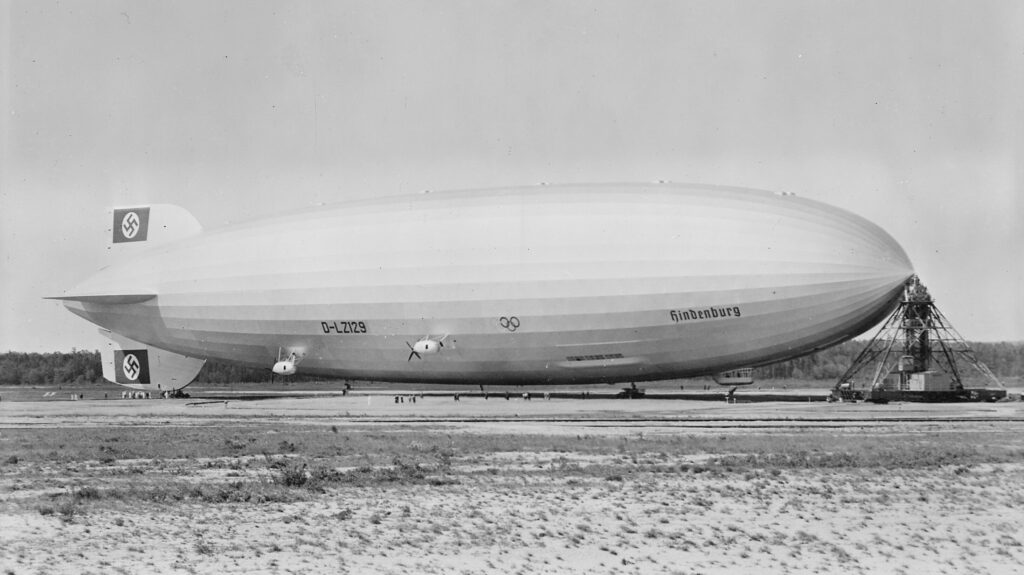
At approximately 19:21 hours, Hindenburg dropped its mooring lines during the landing procedure. Four minutes later, flames suddenly appeared near the tail section. The fire spread with terrifying speed, ignited the hydrogen-filled gas cells and engulfed the entire airship within seconds. The tail crashed to the ground first, followed moments later by the nose section. The entire disaster lasted little more than half a minute.
There were ninety-seven people on board the airship – sixty-one crew members and thirty-six passengers. Thirty-five people died in the crash, along with one member of the ground crew.
The catastrophe became one of the most recognised aviation disasters in history, largely due to the extensive documentation of the event. The arrival of Hindenburg attracted journalists, photographers, newsreel cameramen and radio reporters, as airship landings were regarded as public spectacles. Dramatic images of the burning dirigible and the emotional live radio commentary quickly spread around the world.
The exact cause of the fire has never been conclusively determined. Investigators considered several possibilities, including static electricity, leaking hydrogen, engine failure and sabotage. Even today, historians and aviation experts continue to debate what exactly triggered the disaster and why the fire spread so rapidly.
Although several major airship accidents had occurred before 1937, none had received such widespread attention. The destruction of Hindenburg shattered public confidence in dirigible travel and effectively marked the end of the great airship era.
Full story here.
Cover photo: ´Hindenburg´ burning, US Navy photo via Wikipedia Commons, Public Domain