 On 28 August 1910, Armand Dufaux, a Swiss aviation pioneer, flew a distance of about 66 km over Lake Geneva, setting the record for the longest flight over water to date.
Armand Dufaux was born on 13 January 1883 in Paris. His parents were Auguste Frédéric Dufaux, a Swiss painter and sculptor, and Noémie de Rochefort-Luçay, the daughter of a French politician. Armand, together with his brother and sister, spent his early years in both Paris and Geneva. He attended school in Paris and then studied mechanics there.
At the end of the 1890s, Armand and his brother Henri founded a company named H. & A. Dufaux Fils (H. & A. Dufaux Sons – HADF), based in Geneva. They developed an auxiliary motor for bicycles and successfully patented it in 1900. This led to the construction of a Motosacoche (literally a “motor bag”), a bicycle with a built-in motor installed in the frame triangle, like a bag.
Motosacoche then became the name of the Dufaux brothers’ new company, Motosacoche SA Dufaux & Cie – MSADC. Over the following years, it became the largest manufacturer of built-in motors and a renowned Swiss motorcycle manufacturer. The company survived until 1952 and, besides the aforementioned products, also produced bicycles, slot machines and even magnetic tape recorders.
At the beginning of the new century, the Dufaux brothers expanded their activities into aviation. In 1902, they developed a tilt-rotor and soon afterwards designed the Dufaux 1 rotorcraft, which they presented to the public in 1905.
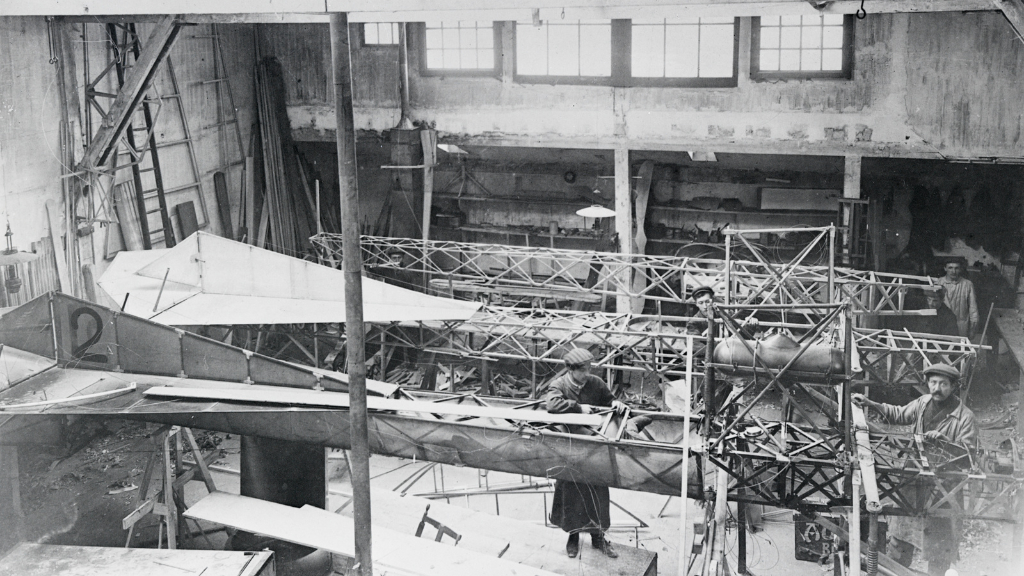
The Dufaux 2, which followed, was one of the most enigmatic designs created by Armand and Henri. Depending on the publication, it was described as either a rotorcraft, a triplane, or even an eight-winged aeroplane. However, this design – whatever it really was – turned out not to be airworthy. Then came the Dufaux 3 experimental triplane, which reportedly was damaged during its first flight. Interestingly, all the aircraft the Dufaux brothers made were powered by engines they developed themselves.
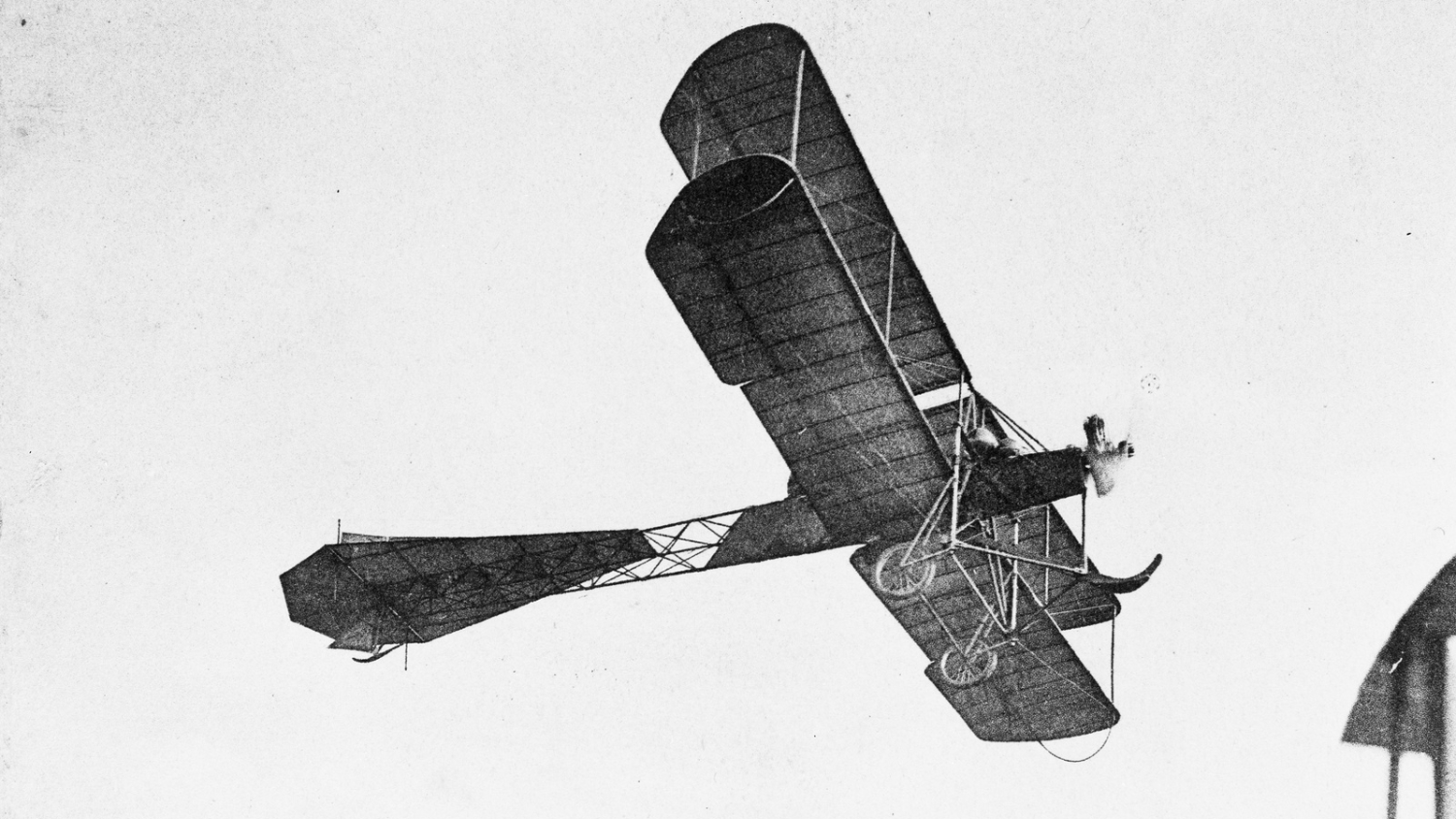
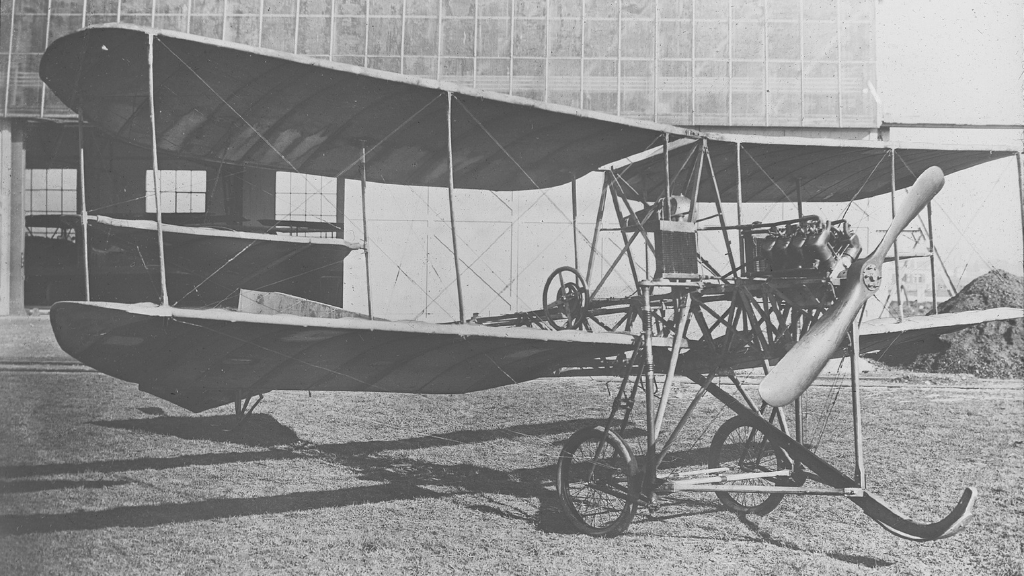
Nevertheless, the development that brought them fame was the Dufaux 4 aeroplane. Initially built by Armand and Henri with the intention of winning a 1,000 CHF prize for the first Swiss aircraft to fly a 1 km closed circuit, it was a two-bay biplane powered by a 25 hp three-cylinder Anzani engine.
In 1909, just one day after Louis Blériot crossed the English Channel, the Swiss company Perrot-Duval offered a prize of 5,000 CHF (equivalent to approximately 60,000 CHF today, according to the SWISSTOVAL CPI index) to an aviator who dared to fly over Lake Geneva along its 80 km length. It was approximately twice the distance Blériot had covered over the English Channel.
It should be mentioned here that Perrot-Duval was co-founded by Maurice Duval, a famous automobile pioneer and patron of early Swiss aviation. In September 1909, Duval became one of the founders of the Swiss Aviation Club. In the following years, he promoted the development of aviation by offering rewards for some spectacular stunts, such as flying over Geneva Cathedral.
Armand and Henri decided to take up the gauntlet and cross Lake Geneva in their latest development, the aforementioned Dufaux 4 biplane. Interestingly, Armand, who was to be the pilot of this record flight, had never flown over water before. In addition, the Swiss pioneers had no experience of flying over such a distance. At that time, aviation engines were not only expensive but also had a very limited lifespan. Therefore, extensive testing of the engine over land was not feasible. The Dufaux 4 made only a few short test flights in June 1910, then flying two more times in July and covering a distance of about 20 kilometres.
A flight across the lake may seem easy today, but during the dawn of aviation it was a complicated venture. Engine endurance was only part of the problem; the Dufaux brothers had to precisely estimate the amount of fuel and oil needed for the flight, as well as the maximum take-off weight of their aircraft.
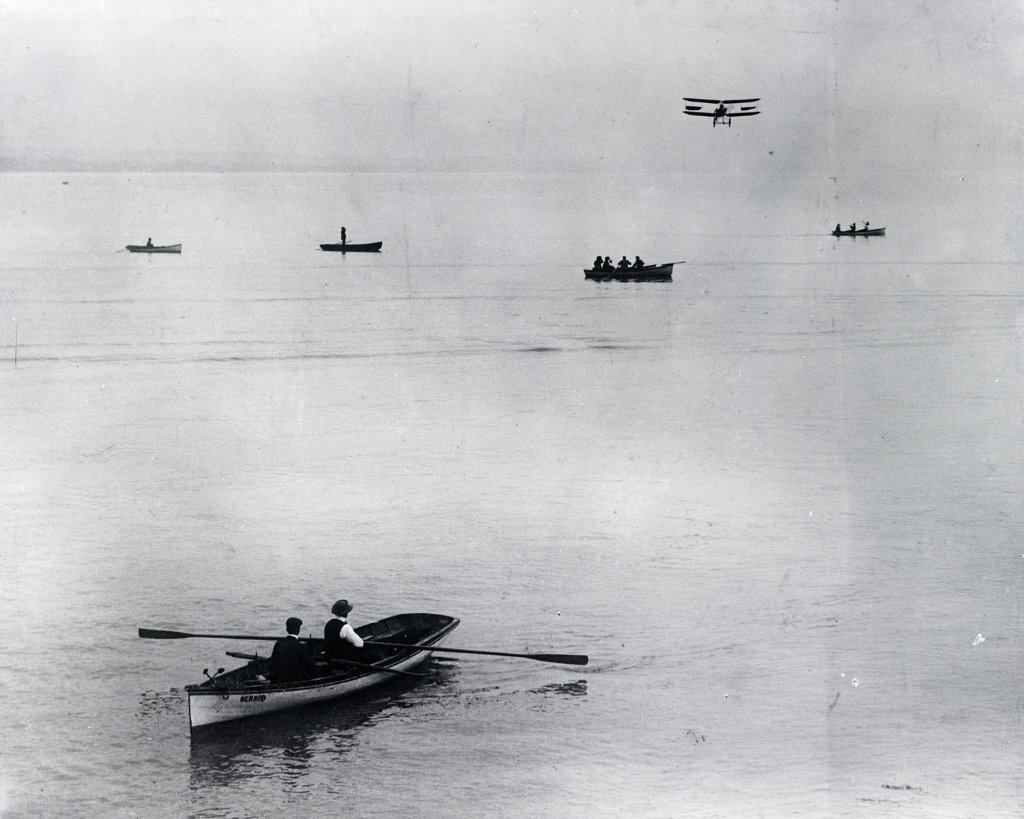
Finally, at 5:45 in the morning on 28 August 1910, Armand Dufaux took off for the record flight. The Dufaux 4 crossed Lake Geneva from St. Gingolph to Geneva, flying at an altitude of about 50 metres above the water. Armand covered a distance of approximately 66 kilometres in 56 minutes and 5 seconds, thereby winning the Perrot-Duval prize.
During the following months, the Dufaux brothers continued developing their successful aircraft. The Dufaux 4 was tested with two other engines – a 50 hp Gnôme-Rhône rotary powerplant and then the eight-cylinder Antoinette ENV V-engine. The aeroplane was also tested as a seaplane, equipped with a central float.
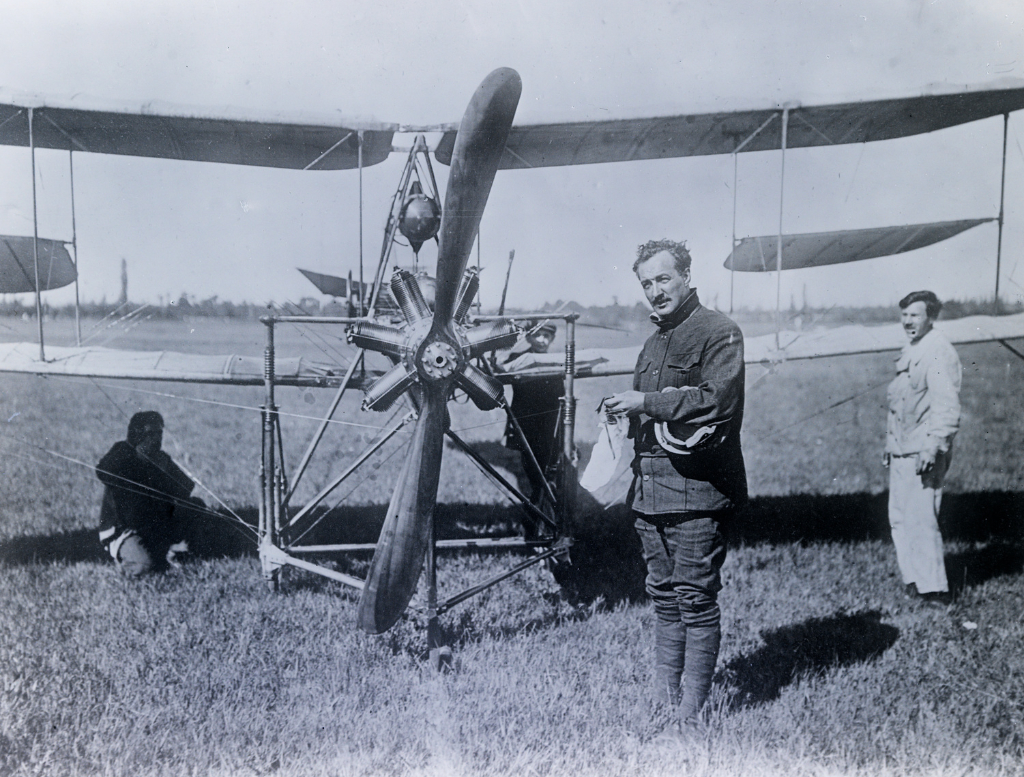
Their new development, a biplane named the Dufaux 5, was tested by the Swiss military in 1911. Those flights, performed by Ernest Failloubaz, marked the birth of the country’s military aviation.
Soon after, the Dufaux brothers went their separate ways. Armand moved to France, where he worked as an aviation technician and engineer. During the Great War, he developed two fighter aircraft for the French Air Force, known as the Dufaux C1 and C2. However, neither of them went beyond the testing phase.
Armand Dufaux remained active in aviation development until the 1920s. Then, he turned his attention to designing automobiles and racing sleds. He returned to Switzerland in 1939 and died in Geneva on 17 July 1941, aged 58.
Henri Dufaux left his aviation experiences behind and devoted himself to painting. He travelled to Africa and Oceania, being sometimes nicknamed a “colonial painter”. He passed away on 25 December 1980 at the age of 101.
Cover photo: Dufaux 4 in flight (ETH Library Zurich, Image Archive / LBS_SR01-02339, CC BY 4.0)