 On 20 March 1922, the United States Navy’s first aircraft carrier, USS Langley (CV-1), was officially recommissioned.
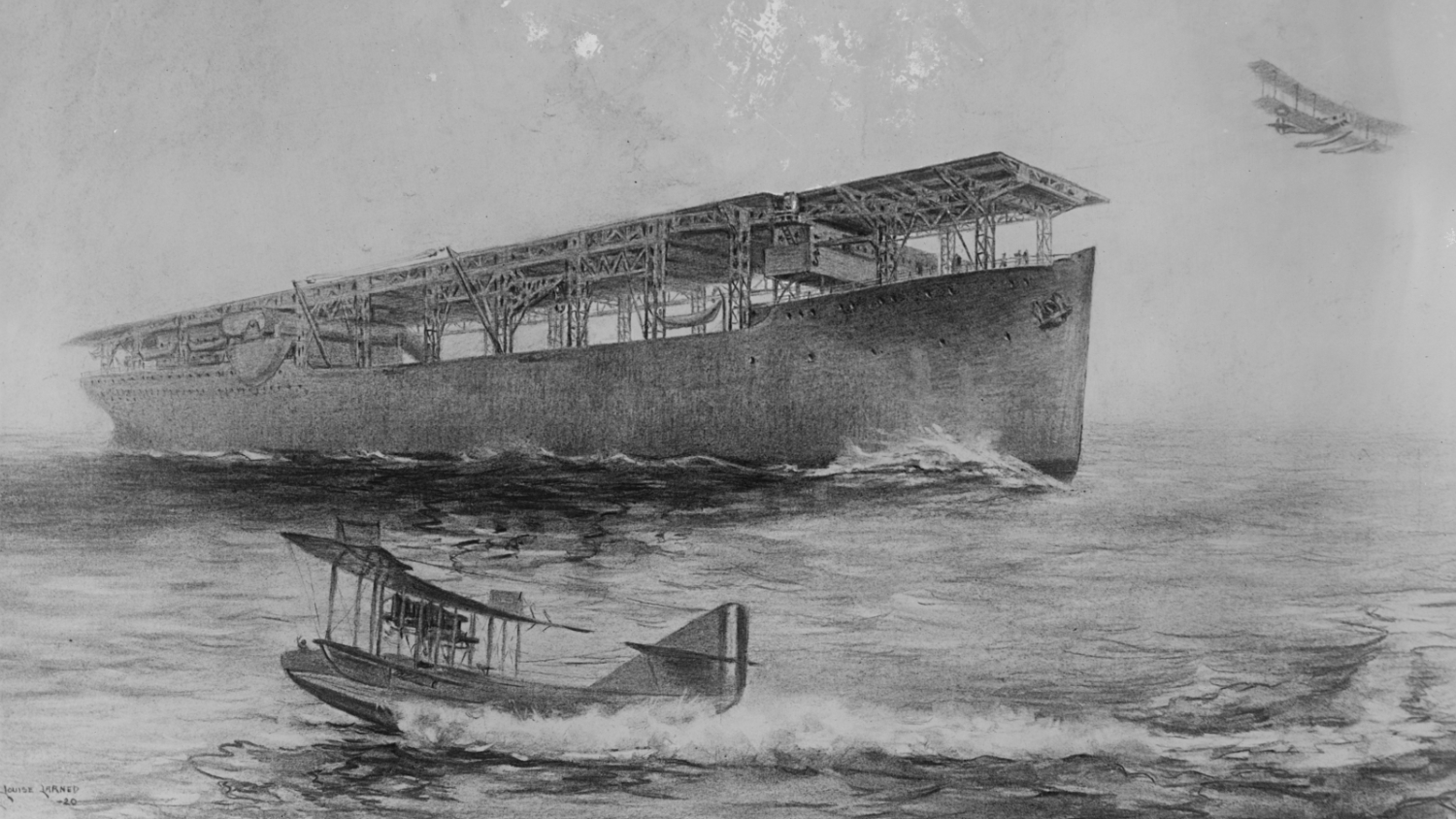
USS Langley (CV-1) was the first aircraft carrier of the US Navy. The vessel had originally been commissioned in 1913 as the bulk cargo ship USS Jupiter, also known as Navy Fleet Collier No. 3. Jupiter was also the first turbo-electric-powered ship in the US Navy’s fleet.
In July 1919, the American naval authorities approved her conversion into an aircraft carrier. In April of the following year, the ship was renamed Langley – after Samuel Pierpont Langley, an American astronomer, physicist, aeronautical pioneer and aircraft engineer – and given the hull number CV-1.
The US Navy’s first aircraft carrier was completed during the post-war wave of disarmament. At that time, American public opinion was largely against the construction of new warships, a trend that was soon formalised in the Washington Naval Treaty, which limited worldwide naval development.
The agreement, signed in February 1922, affected the construction of new battleships, battlecruisers and aircraft carriers. It allowed its signatories to build freely only ships of up to 10,000 tons displacement.
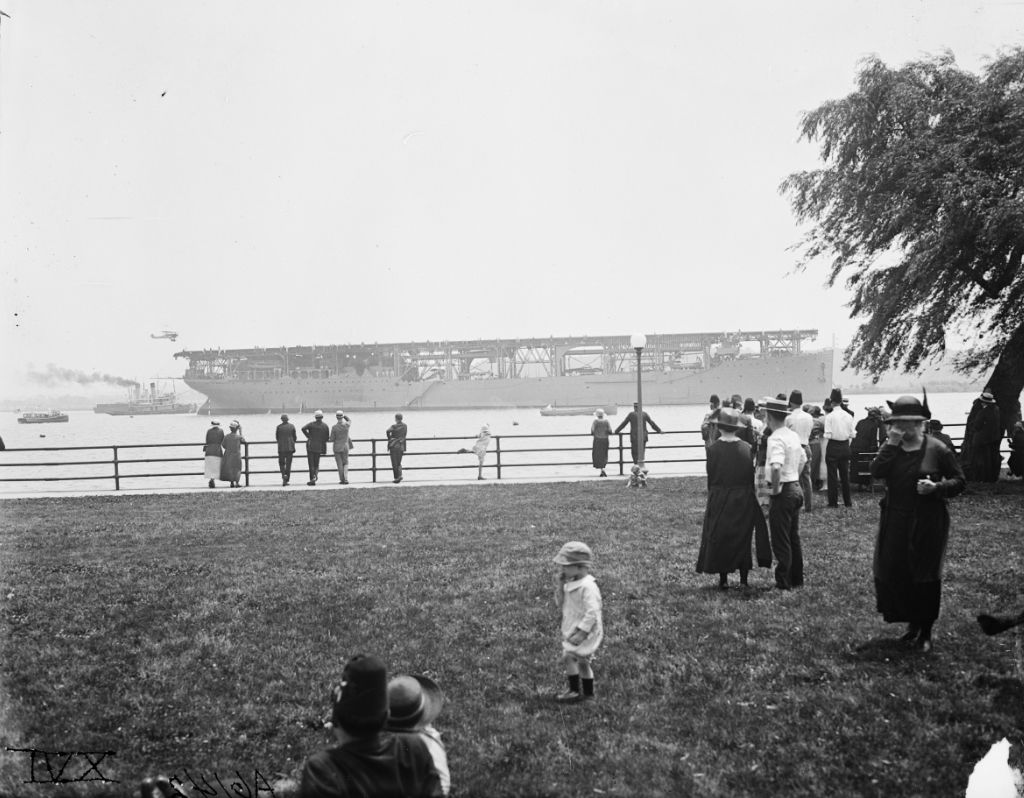
However, Article VII of the treaty provided an exemption for experimental vessels already under construction, which was exactly the case with USS Langley. The first American aircraft carrier was recommissioned on 20 March 1922, officially as a ship intended to carry out experiments in seaborne aviation.
On 17 October that year, Lieutenant Virgil C. Griffin made aviation history with the first take-off from the new carrier, thereby opening a new chapter in US naval aviation.
However, this was the first of many significant milestones for the US Navy that were directly linked to Langley. On 26 October 1922, Lieutenant Commander Godfrey de Courcelles Chevalier successfully completed the first landing on a US Navy aircraft carrier, flying an Aeromarine 39B biplane. In November that year, Commander Kenneth Whiting became the first person to be catapulted from the deck of an aircraft carrier.
USS Langley became the home of the first two fighter squadrons of the US Navy, designated VF-1 and VF-2, both operating VE-7 biplanes. The aircraft were officially retired from operational service in 1928.
The first aircraft carrier of the US Navy remained in service until 1936 and was then converted into a seaplane tender. Assigned the new hull number AV-3, she served in this role until February 1942, when she was scuttled following a Japanese air attack.
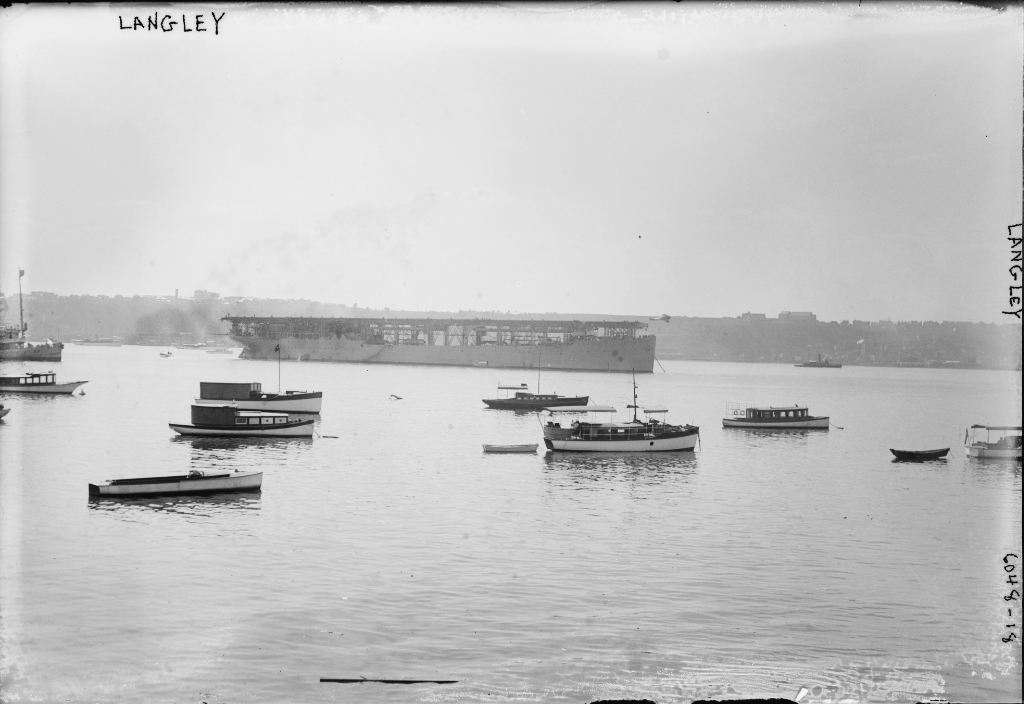
Cover photo: USS Langley, a drawing by Louise Larned, 1920 (Library of Congress, LC-DIG-npcc-29700)