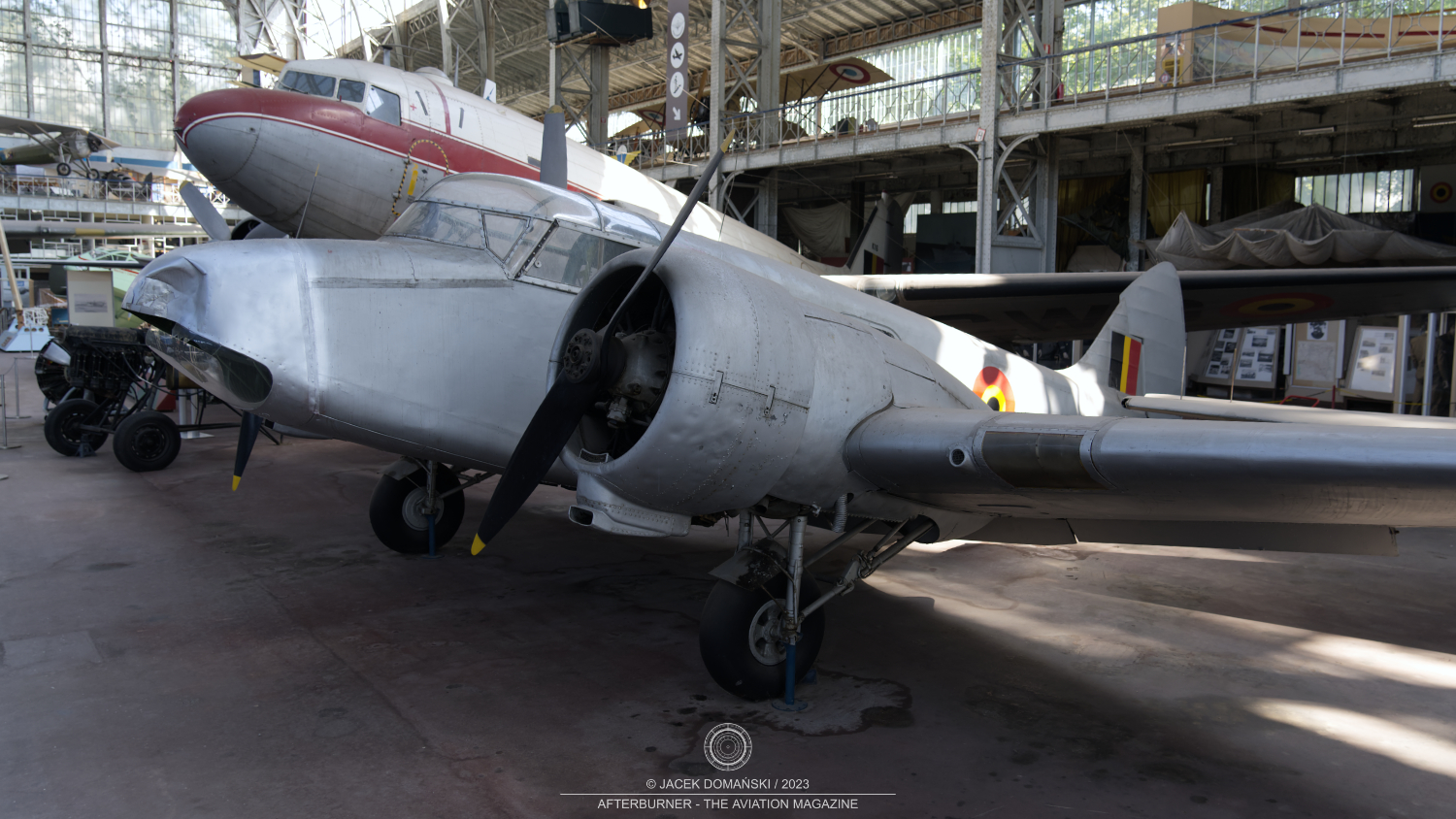
 On 19 June 1937, the Airspeed Oxford, a British twin-engine training and transport aircraft, performed its first flight.
The aeroplane was developed by Airspeed, following the British Air Ministry Specification T.23/36, and based on the company´s earlier design, the AS.6 Envoy passenger aircraft.
Prototype of the Oxford, as the aeroplane was officially designated, performed its maiden flight on 19 June 1937. Shortly after, the first order for two hundred aircraft was placed – one hundred of the Mark I variant, equipped with a gun turret, and one hundred of the Mark II version, which had dual controls.
The Oxford was a semi-monocoque, cantilever monoplane with a wooden tail and conventional landing gear. The aircraft was powered by two Armstrong Siddeley Cheetah X radial engines, each generating 350 hp, and was operated by a crew of three.
Due to the extremely huge demand for the new training aircraft, production of the Oxford was also assigned to other aviation companies, such as de Havilland, Percival Aircraft and Standard Motors. Until July of 1945, when manufacturing of the aircraft was ceased, all of those companies built a total of 8,751 examples of the Airspeed Oxford.
More information about the Airspeed Oxford can be found in our article from the Photo of the Week series, Airspeed Oxford Mk I.