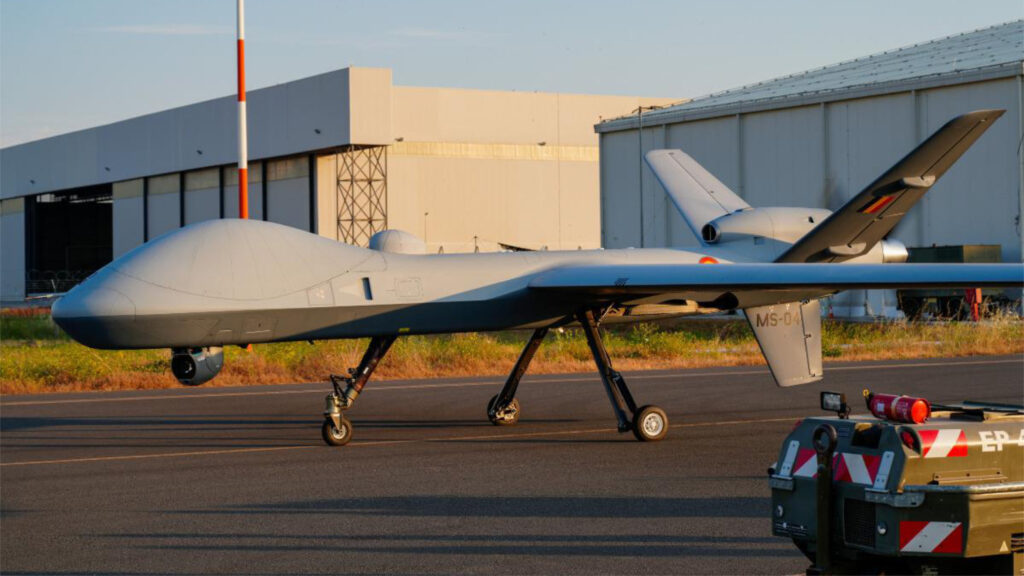
 Between April and July 2026, the NATO Intelligence, Surveillance and Reconnaissance Force (NISRF) supported the activities of two MQ-9B SkyGuardian unmanned aerial vehicles (UAVs) of the Belgian Air Component, which were temporarily deployed to Sigonella Air Base in Sicily, Italy.
The deployment demonstrated that the NISRF’s capabilities extend well beyond its routine operational responsibilities. Thanks to its well-developed infrastructure, secure operating environment, and multinational framework, NISRF successfully supported the deployment by arranging hangar space, coordinating activities and providing liaison assistance in close cooperation with Belgium and the Italian host nation.
The temporary relocation of the Belgian UAVs to Italy also proved that the NISRF’s infrastructure, partnerships and experience enables the Force to support a broad range of Allied activities whenever required. It also highlighted the importance of close collaboration between NATO, its Allies, and Italy in facilitating the deployment of complex remotely piloted aircraft systems.
In addition, the relocation marked a major milestone also for Belgium. Conducted under Operation Silent Spear, it was the first transfer flight of the SkyGuardian UAVs belonging to the 2nd Squadron, 2nd Tactical Wing of the Belgian Air Component from their home base at Florennes Air Base to Sigonella. During the deployment, the Belgian UAVs and their crews logged over 400 flying hours, providing NATO with accurate maritime situational awareness while maintaining a high level of operational readiness in support of NATO’s Sea Guardian and Noble Shield operations.
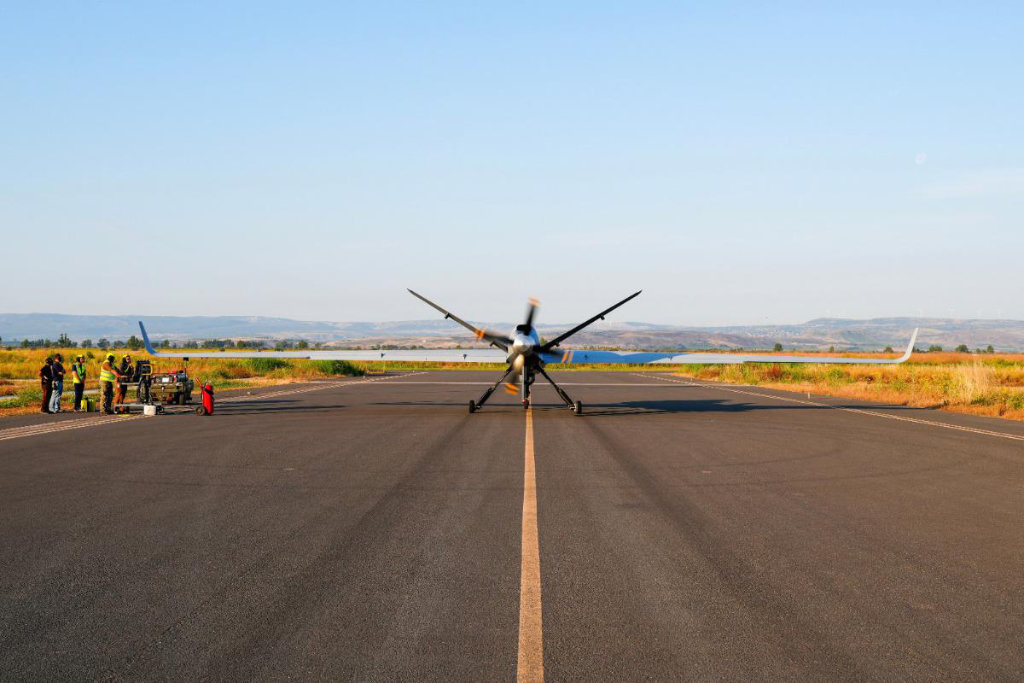
“This deployment is an excellent example of what multinational cooperation within the Alliance looks like in practice,” said Brigadier General John B. Creel, the Commander of NISRF. “By bringing together the expertise of Belgium, the support of our Italian Host Nation and the capabilities available at NISRF, we created the conditions for a successful deployment. That spirit of cooperation is one of NATO’s greatest strengths and something we are proud to contribute to every day.”
The deployment of the Belgian MQ-9B UAVs took place during one of the busiest operational periods for NISRF in recent years. While supporting the deployment of the SkyGuardian unmanned aircraft to Sigonella, NISRF simultaneously conducted the Agile Combat Employment deployment to Norway and Finland, in support of NATO’s Eastern Sentry activities and the Ramstein Flag 2026 exercise. These actions demonstrate the continuing development of NISRF as a mature multinational organisation capable of successfully carrying out multiple complex tasks in support of the Alliance.
As NATO continues to expand its intelligence, surveillance and reconnaissance (ISR) capabilities, NISRF is evolving in step with the Alliance. During the recent NATO Summit in Ankara, four member states announced plans to procure up to five MQ-4C Triton unmanned aircraft to complement the existing fleet of RQ-4D Phoenix UAVs operated by NISRF. This decision, together with developments such as the recent deployment of the Belgian SkyGuardian UAVs to the Sigonella Air Base, underscores the growing role of NISRF as NATO continues to strengthen its ISR capabilities.
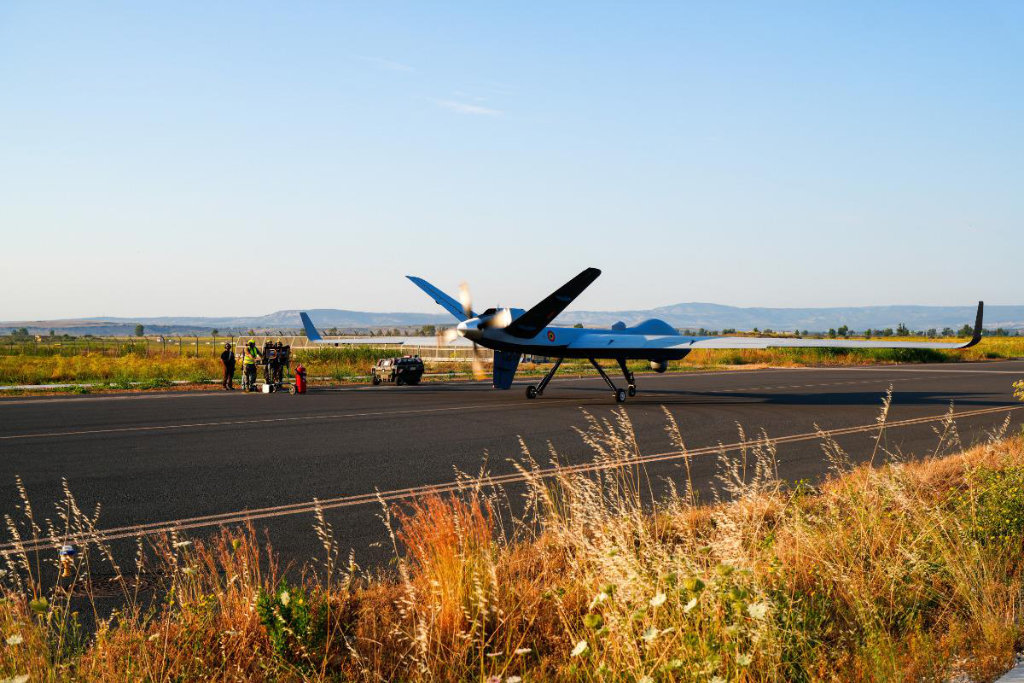
Cover photo: MQ-9B UAV of the Belgian Air Component during its deployment at the NISRF compound, Sigonella Air Base. (Photo: PAO NISRF)
Press materials of the NISRF Public Affairs Office were used.